India's job survey will count app workers and unpaid housework better from 2027
Version 1 of 1 saved 24 Oct 2026, 9:58 am IST · Chain line 202
As it was first published
India's job survey will count app workers and unpaid housework better from 2027
The statistics ministry wants the PLFS to find more delivery and cab app workers, and to measure cooking, caregiving and volunteer work for the first time.
Picture a delivery rider who brings your evening biryani, then drops a parcel across town, then picks up a cab ride. Ask an old-style job survey what this person does, and the answer can get lost. On Friday, 23 October 2026, India's statistics ministry said it wants to fix that. It proposed changes to its biggest job survey so that it counts app-based workers better and, for the first time, measures unpaid work at home separately.
The changes are planned to start in January 2027. Here is what is changing, in plain words, and why it matters to anyone starting a career.
First, what is this survey?
The survey is called the Periodic Labour Force Survey, or PLFS. Think of it as a giant class register for the whole country. A teacher marks who is present and who is not. The PLFS marks who has work, who is looking for work and who is not looking at all.
It is run by the National Statistics Office (NSO), and it has been running since 2017. Business Standard calls it the main source of official numbers on employment and unemployment in India. Its design was last changed in January 2025, so that it could give monthly numbers for villages and towns across India.
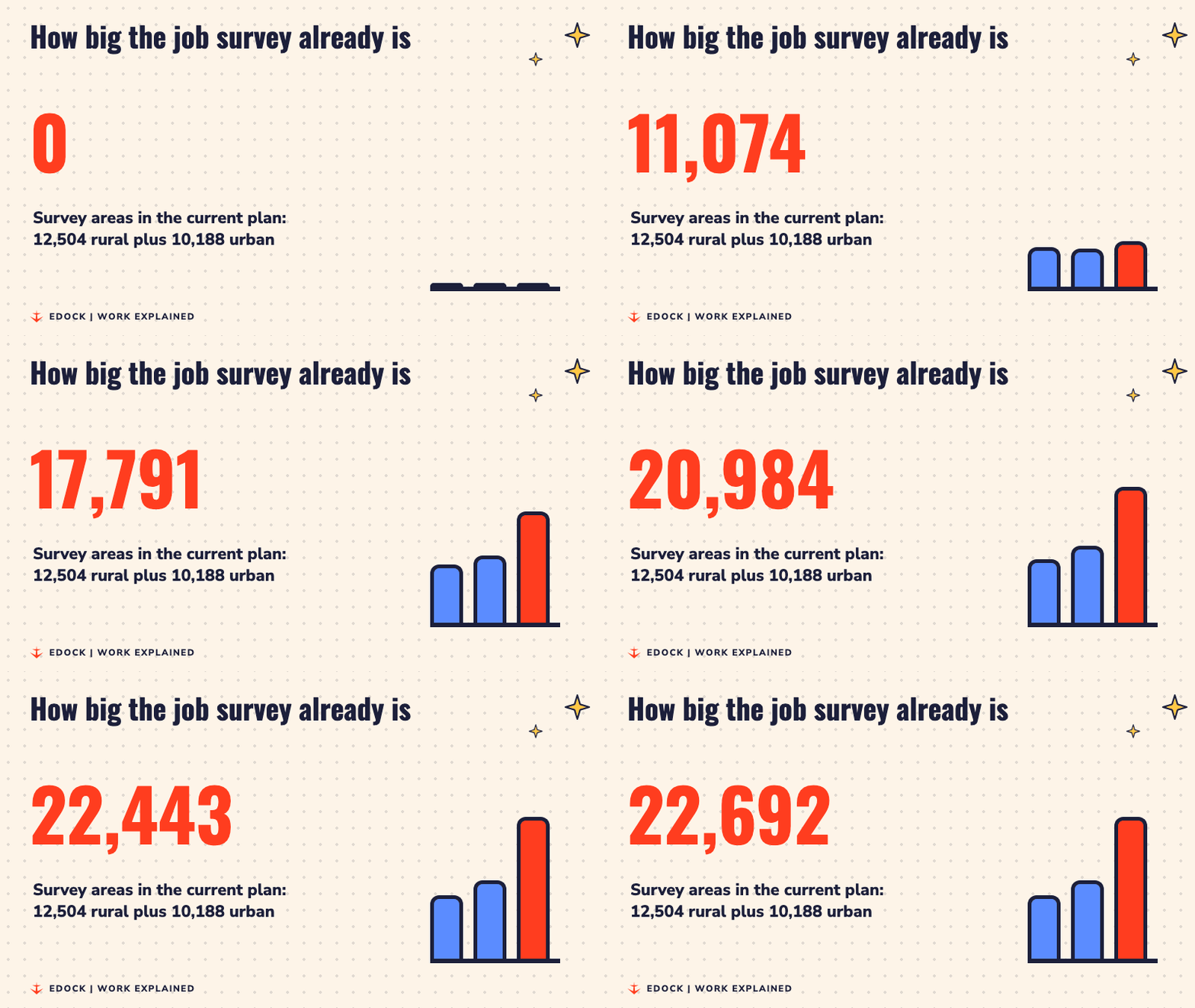
The survey cannot visit every home, just as a chai stall owner cannot taste every cup to check the sugar. So it picks a "sample": a smaller set of areas and homes that stand in for the whole country. In the current plan, the survey uses 12,504 rural areas and 10,188 urban areas, which Business Standard calls First Stage Units. The new plan will make that sample slightly bigger.
The headline unemployment rate from this kind of data is about 5%, BusinessLine reported. That means roughly 5 out of every 100 people who want work and are looking for it cannot find any. But people have long argued about whether that one number shows how good or how steady the work really is.
Why are gig workers so hard to count?
A "gig" is a short piece of work, like one delivery or one cab ride, paid one at a time. A "digital platform worker" is someone who gets those gigs through an app. Business Standard names apps such as Ola, Uber, Zomato, Amazon and Urban Company.
The NSO has been collecting data on these app workers on a trial basis since January 2026. But it found a problem. In its own words, the experience of 2026 showed that the current method "did not capture an adequate number of digital platform workers", as Upstox News quoted from the press note.
Think of fishing with a net that has holes too big for small fish. You throw it, pull it up and almost nothing is inside. That does not mean the lake is empty. It means the net is wrong. App workers are spread thinly across homes, so a random visit often misses them.
The fix: a new group just for app workers
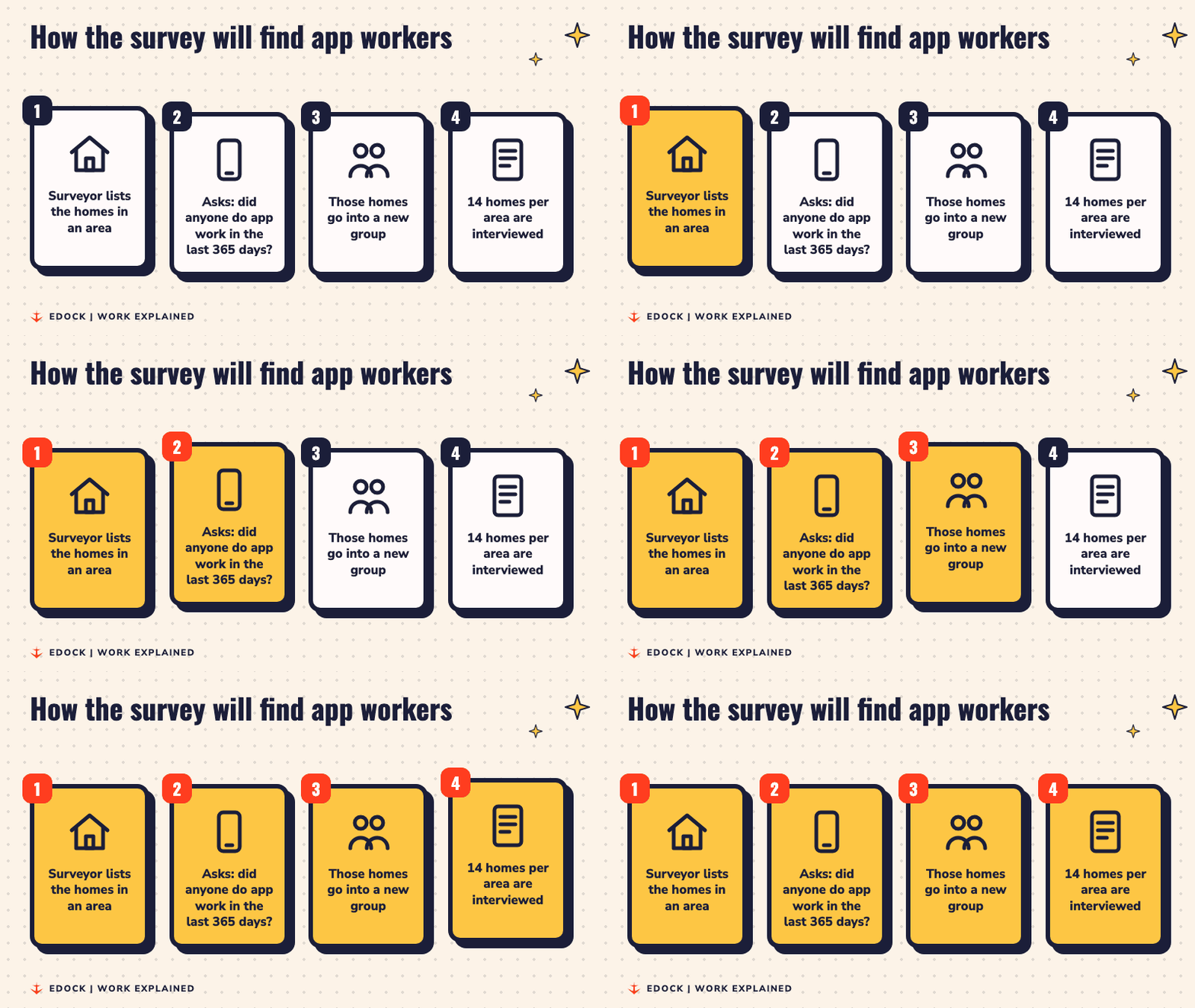
The plan adds one simple yes or no question when surveyors first list the homes in an area. It asks whether anyone in the home has done digital platform work at any time in the previous 365 days.
Homes that say yes go into a new group. The official word for such a group is a "Second Stage Stratum". A stratum is just a layer, like the layers in a cake. By putting app-worker homes into their own layer, the survey makes sure it always picks some of them.
After the change, there will be four such groups in rural areas and five in urban areas, with 14 households interviewed in each selected area, BusinessLine reported.
Unpaid work finally gets counted
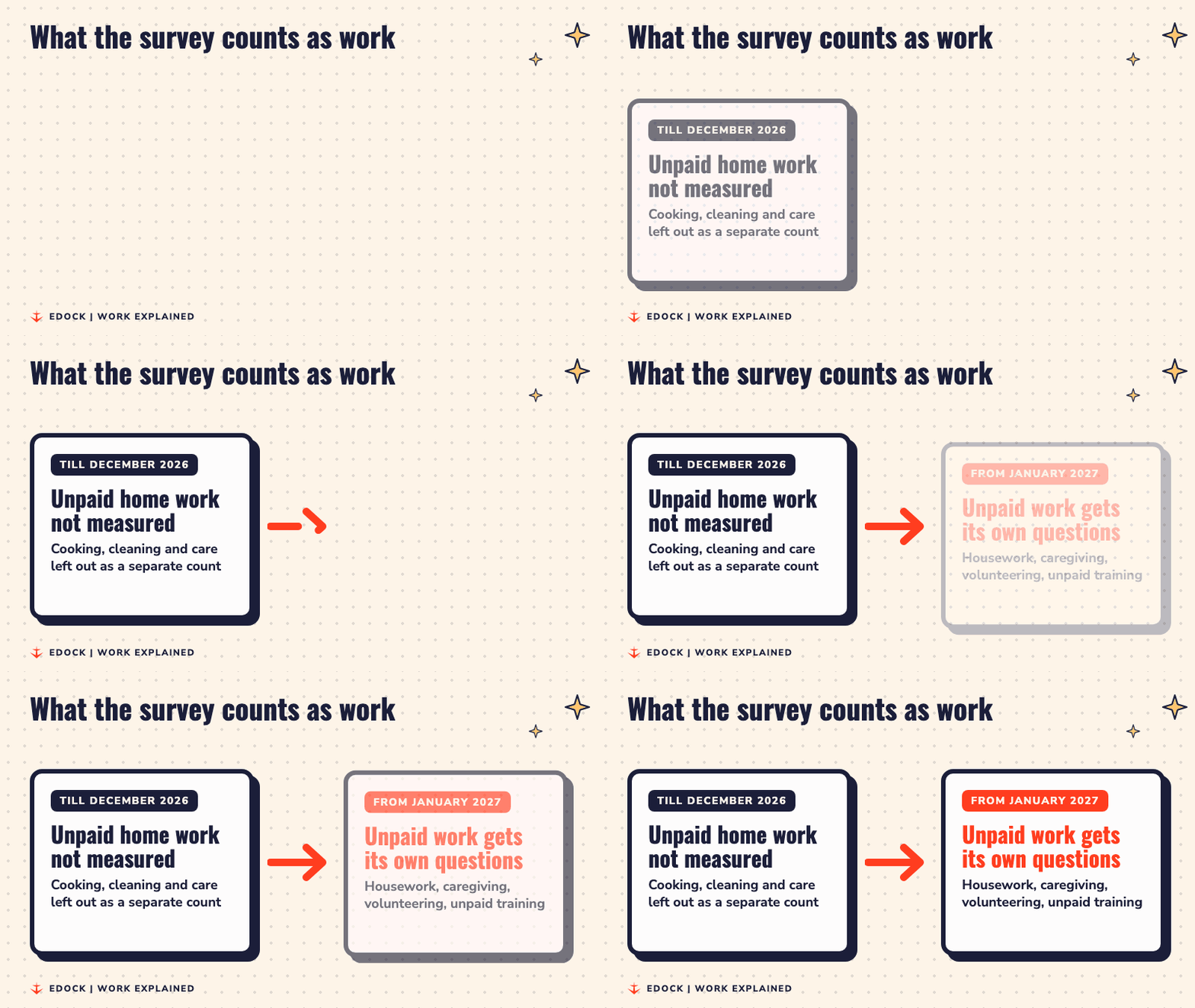
The second big change is about work that earns no money. Think of cooking dinner, cleaning the house, looking after a baby or caring for a grandparent. The survey will add new questions on own-use production of goods, unpaid household and caregiving work, volunteer work and unpaid trainee work.
"Own-use production" means making things for your own family instead of selling them, like growing vegetables for your own kitchen. "Unpaid trainee work" covers people who learn on the job without a salary.
The ministry's concept note said a large share of women in India spend a lot of time on unpaid housework and care. It added that this work helps other family members go out and earn, but the PLFS has not measured it separately until now. The new questions will be asked of people aged 15 and above in both villages and towns, during the first visit only. That allows a yearly report on this kind of work.
The survey will also try some extra questions on "labour underutilisation" on a trial basis. That is a long phrase for a simple idea: people who have some work but want more, like a part-time shop helper who would happily do a full shift.
When does all this happen?
The new plan starts when fresh samples are drawn for the two years 2027 and 2028. The current two-year cycle, called Panel 5, ends in December 2026. From January to March 2027, both the old and new samples will run together, and the monthly numbers for those months will mix data from both. From April 2027, monthly numbers will come only from the new Panel 6.
The new sample will also reflect how India has changed: new towns, villages that have become urban, and districts that have been created, split or merged. Before anything is final, the ministry has asked researchers, policymakers and the public to send comments within 15 days. The ministry shared the press note on X too.
Is everyone happy with it?
Not fully. Labour economist K.R. Shyam Sundar called the changes "half a step", BusinessLine reported, because many workers operate outside digital platforms. But he also said measuring unpaid work could one day change how India calculates its national income.
BusinessLine also noted a catch. When a survey changes, comparing new numbers with old ones gets harder, a bit like changing the size of a cricket ground and then comparing sixes across seasons.
Meanwhile, hiring took a pause in October
The same day brought another clue about work. A private monthly survey of company purchasing managers, compiled by S&P Global, said business activity grew at its fastest pace in four months in October. But hiring almost stalled, ending a nine-month run of hiring, because companies said their existing staff could handle the extra work.
Why this matters to you
Many students and first-jobbers do gig work, freelance or help at home while they study. If the country's biggest job survey cannot see that work, it cannot be planned for. Better counting is the first step before anyone can make good rules about pay, safety or support for these workers. From 2027, the register may finally have a column for them.
Sources
- BusinessLine: Statistics ministry proposes changes in PLFS to include unpaid work, 23 October 2026
- BusinessLine: Govt plans job survey changes to add unpaid work, improve gig workers data, 23 October 2026
- Business Standard: PLFS to expand coverage of platform workers and unpaid work from January, 23 October 2026
- Upstox News: Gig workers, unpaid household activities to get greater focus in labour survey from January 2027
- BusinessLine: October business growth hits 4-month high; hiring stalls, 23 October 2026
- Ministry of Statistics and Programme Implementation on X: press note on proposed PLFS changes
- Cover photo: A food delivery rider on an electric scooter in Bengaluru, by SerChevalerie, CC0
