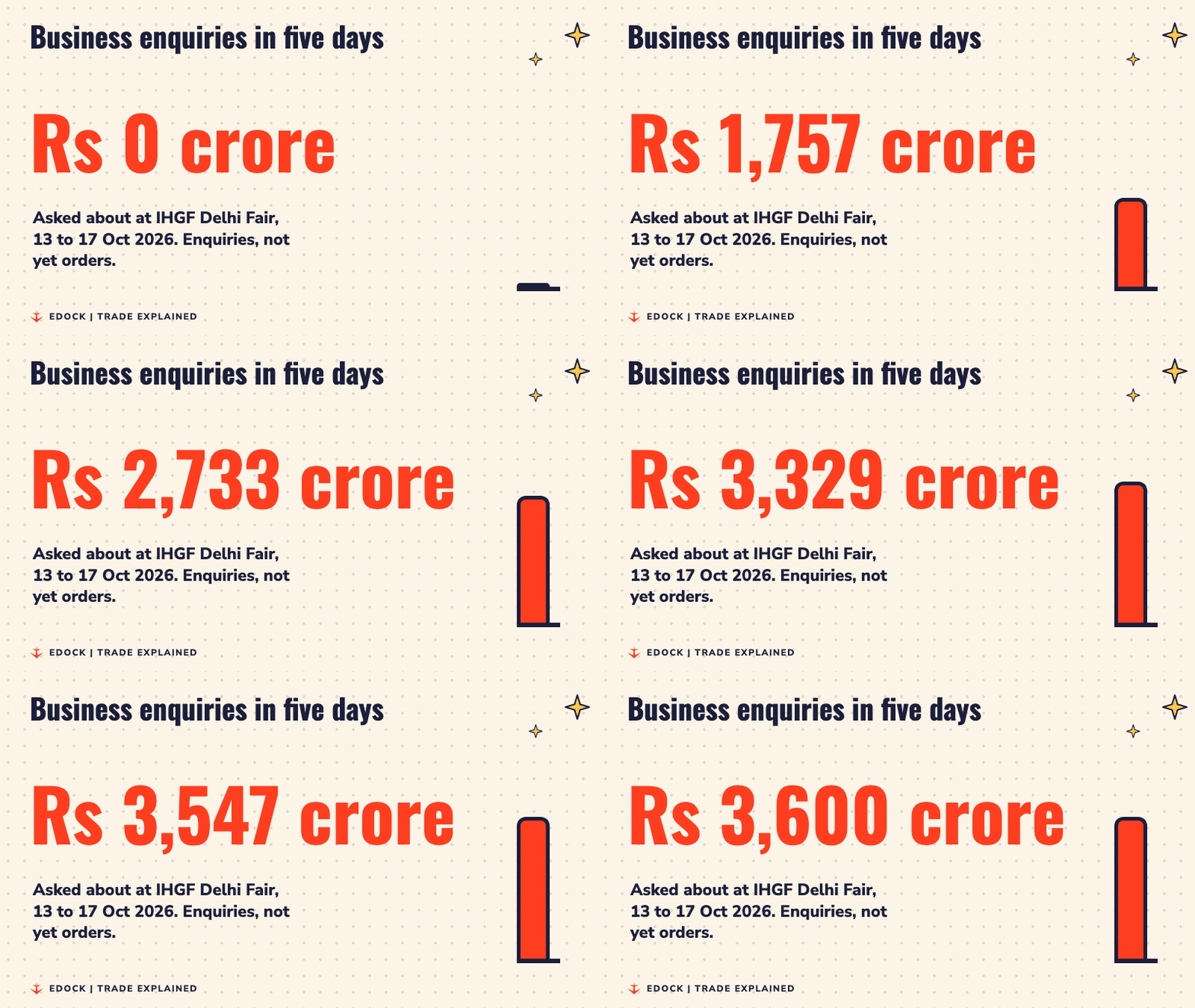
India's handicraft fair drew Rs 3,600 crore of buyer enquiries in five days
Version 1 of 1 saved 18 Oct 2026, 5:58 am IST · Chain line 84
As it was first published
India's handicraft fair drew Rs 3,600 crore of buyer enquiries in five days
Over 7,300 buyers from 105 countries came to the IHGF Delhi Fair. Here is why an enquiry is not yet an order, and why buyers are looking at India.
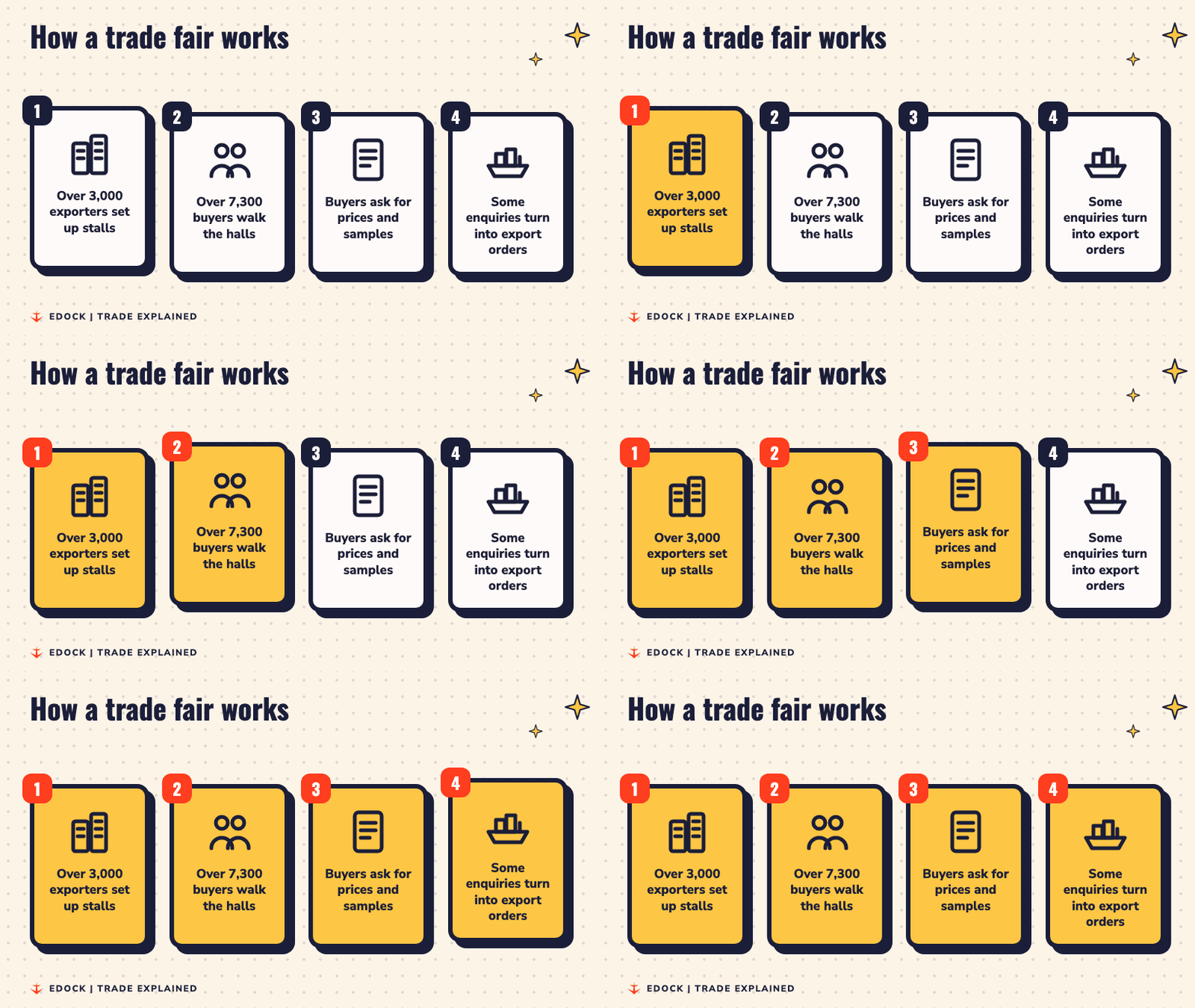
Picture a giant mela with more than 3,000 stalls of lamps, rugs, wooden toys and cushions. Now picture shoppers who do not buy one cushion, but ask for ten thousand. That is the IHGF Delhi Fair, and this week it ended with a big number.
On Saturday, 17 October 2026, the Export Promotion Council for Handicrafts (EPCH) told The Economic Times that more than 7,300 buyers from 105 countries came to the fair, and that it brought in business enquiries worth Rs 3,600 crore.
That sounds like Rs 3,600 crore of sales. It is not. Not yet. Let us see why.
What is this fair, anyway?
IHGF stands for Indian Handicrafts and Gifts Fair. This was its 62nd edition, held from 13 to 17 October at the India Expo Centre and Mart in Greater Noida, reports Hindustan Times. It had more than 3,000 exhibitors across 17 halls.
A trade fair is not a shop for you and me. It is a meeting place for businesses. Makers set up stalls. Big buyers, like store chains and wholesalers from abroad, walk around, touch the products and talk prices. Think of it as a giant first meeting between sellers and buyers, all under one roof.
The fair has run since 1994, says The Times of India. Apart from the halls, about 900 more makers show their goods in permanent showrooms at the venue, according to Ten News.
What was on show? Home decor, furniture, carpets and rugs, fashion jewellery, lamps, garden items, Christmas decorations, kitchenware and toys. Home Textiles Today listed 16 product groups before the fair began.
Who runs it? Meet the export promotion council
The fair is organised by EPCH. An export promotion council is a group set up to help Indian sellers sell to other countries. It is a bit like a school's sports coach who does not play the match, but finds tournaments, arranges kits and gets the team in front of selectors.
EPCH does this for handicraft makers. It brings foreign buyers to India, so a small carpet maker from a small town can meet a big store chain from Europe without flying there.
The big word: what is a "business enquiry"?
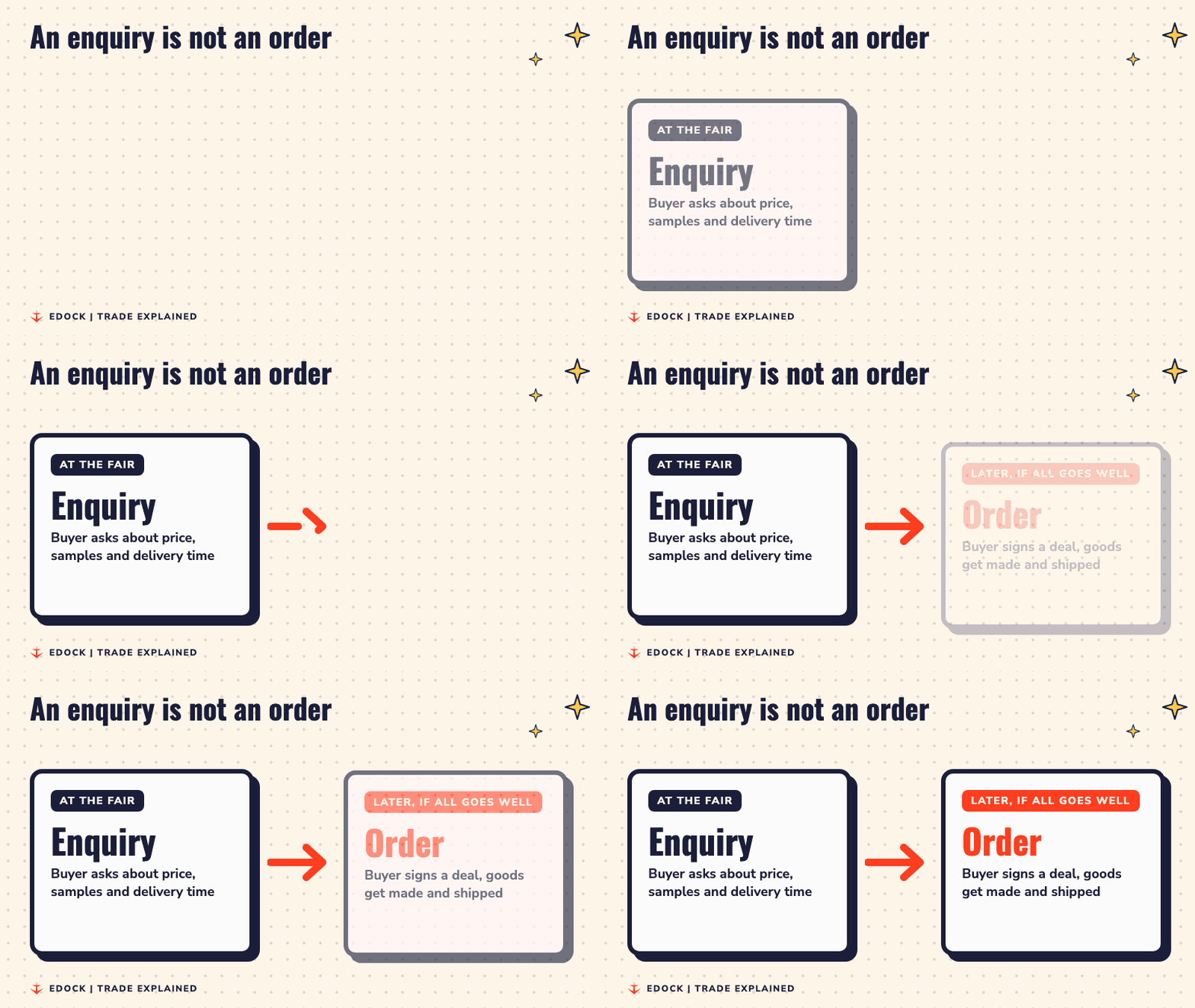
An enquiry is a buyer saying, "I am interested. Tell me more." The buyer may ask for the price of 5,000 lamps, ask for a sample, or ask how fast the goods can reach the port.
An order is different. An order is when the buyer actually signs the deal. Only then do the makers start making and shipping.
Think of a cricket trial. Many players get called for the trial. Fewer get picked for the team. An enquiry is the trial. An order is the team sheet.
So the Rs 3,600 crore figure tells us how much interest buyers showed. It does not tell us how much money will finally come to India. When the fair opened, officials told Hindustan Times that the business impact would depend on orders secured, not on how many buyers walked in.
Some quick maths
Rs 3,600 crore spread across 7,300 buyers comes to roughly Rs 49 lakh of enquiries per buyer, on average. Of course, some big chains would have asked for much more and some small shops much less.
For scale, India's handicraft exports in 2025-26 were Rs 33,168 crore, or about $3.75 billion, as EPCH's Rajesh Rawat said. So the enquiries from these five days alone equal a little more than a tenth of a whole year's handicraft exports. Even if only part of them turns into orders, that is a meaningful push.
Why are foreign buyers looking at India?
The most interesting line came from EPCH's Rakesh Kumar. He told The Economic Times that a big trend at the fair was "supply chain diversification". Some wholesalers and retailers already buy between 40% and 80% of their total imports from Indian makers, he said, and several plan to buy more from India.
Supply chain diversification is a long phrase for a simple idea: do not keep all your eggs in one basket. If a store buys everything from one country, a single problem there can empty its shelves. So buyers spread their orders across more countries, and India wants a bigger slice.
Buyers came from the US, the UK, France, Germany, Australia, the Netherlands, Spain, Japan, China, South Africa and more. Names with sourcing teams at the fair included Ross Stores and TJX Companies from the US, Nitori from Japan and Maisons du Monde from France, as listed by EPCH's Rajesh Rawat in the same report.
EPCH chairman Neeraj Khanna also pointed to India's trade agreements with the UAE, Australia, the UK, Oman, New Zealand and the European Free Trade Association, reports Hindustan Times. A trade agreement is a deal between countries that can cut import taxes, which makes Indian goods cheaper on foreign shelves.
A message for young people
At the opening on 13 October, Union textiles minister Giriraj Singh asked young people to join India's export business, Hindustan Times reported. He asked the organisers to bring at least 10% young people into export trade through the fair.
The fair also had a Young Designers' Collective, with designers from India's top design institutes, and seminars on 2027 buyer trends and on how exporters can use online visibility to win verified orders, says The Times of India.
Here is a short look at the first day, from EPCH's own channel.
What to watch next
The real test comes over the next few months. Buyers will go home, compare samples and prices, and decide. The orders they sign will show how much of the Rs 3,600 crore turns into real exports. Until then, it is a strong sign of interest, not money in the bank.
Sources
- The Economic Times: Rs 3,600 crore business enquiries at 5-day handicraft fair
- Hindustan Times: 62nd edition of IHGF Delhi fair opens in Greater Noida
- The Times of India: UK to UAE, 80 countries to participate in handicrafts fair in Noida
- Ten News: IHGF 2026, buyers commend the fair
- Home Textiles Today: IHGF Delhi Fair sets 62nd event for October
- Export Promotion Council for Handicrafts: Highlights, day 1, 62nd IHGF Delhi Fair (Autumn) 2026
- Cover photo: Handicraft shop at Shilparamam 2023, by Vis M, CC0
