India's exports to Germany could cross $50 billion by 2030, says ASSOCHAM report
Version 1 of 1 saved 24 Oct 2026, 8:18 am IST · Chain line 195
As it was first published
India's exports to Germany could cross $50 billion by 2030, says ASSOCHAM report
India sold Germany $11.52 billion of goods and $10.36 billion of services last year. The India-EU trade deal is the big reason the target looks possible.
Picture India's sales to one single country more than doubling in about five years. That is the target a new report has set for Germany. On 23 October 2026, an ASSOCHAM report said India's exports of goods and services to Germany could cross $50 billion by 2030. ASSOCHAM is one of India's big industry bodies, a club that speaks for thousands of companies.
The report was released in Berlin by Commerce and Industry Minister Piyush Goyal, during his trip to Germany. So how big is the trade today, what does India actually sell to Germans, and how do you get from here to $50 billion? Here it is, step by step.
First, two simple words
An export is something a country sells to another country. Think of a mango farmer in Ratnagiri packing boxes that end up in a shop in Berlin. An import is the opposite: something a country buys from abroad, like a German machine landing at an Indian port.
Exports are not only things you can hold. A services export is work done in one country for a customer in another, like coding or design work done from India for a company abroad. The money comes into India, even though no box was shipped.
How big is India and Germany trade today
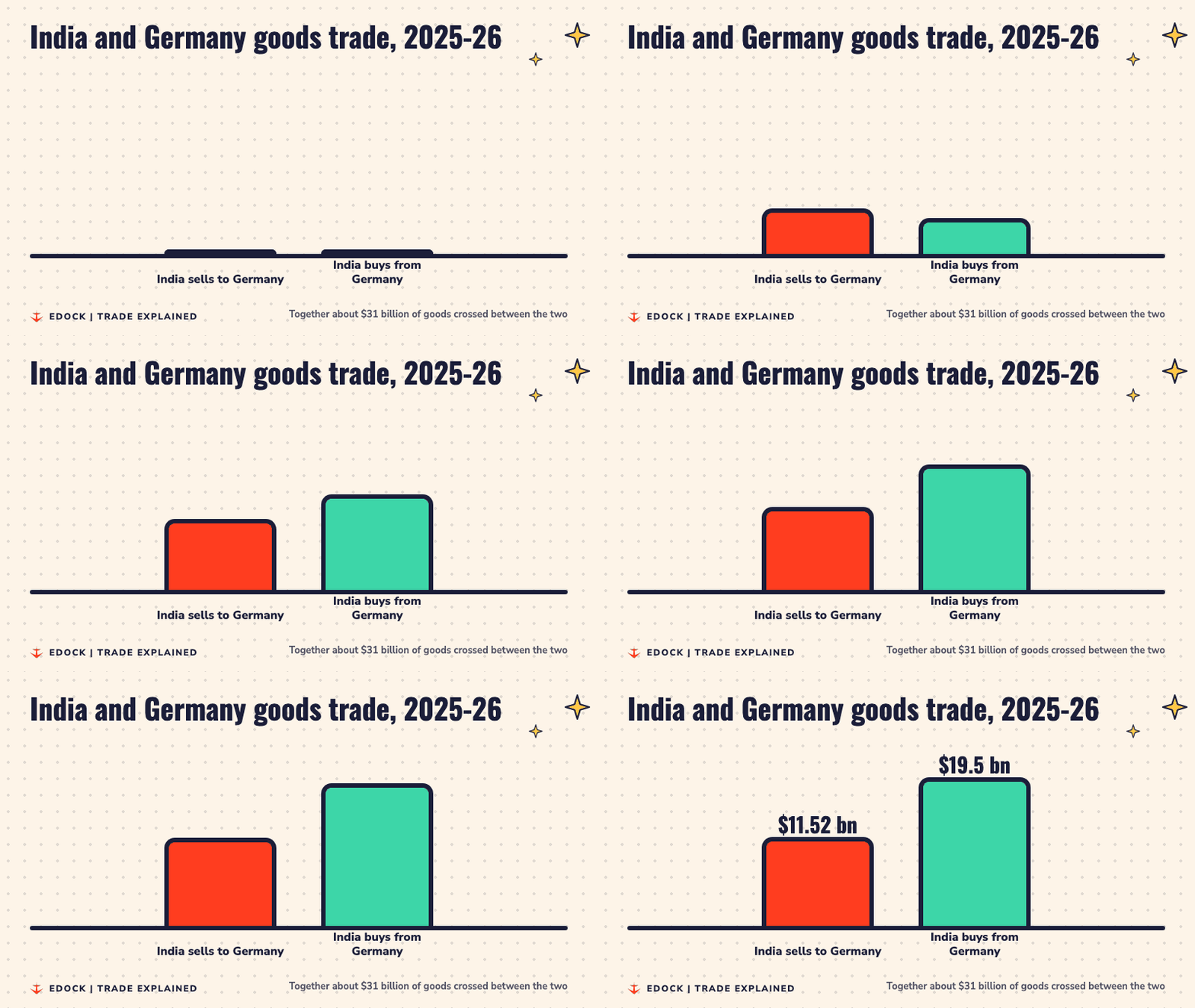
In 2025-26, trade in goods between India and Germany rose about 5% to $31 billion, according to a commerce ministry statement reported by PTI. Of that, India sold goods worth $11.52 billion to Germany and bought goods worth $19.5 billion from it.
Add the two and you get $31.02 billion, which is the $31 billion figure. Take one from the other and you see that Germany sells India about $8 billion more in goods than India sells Germany. This gap is called a trade deficit. It is like a chai stall that buys more milk and sugar from a shop than it sells back to that shop: money flows out more than it flows in.
Services tell a different story. The same report says Indian services exports to Germany were $10.36 billion in 2025, while India bought $6.40 billion of services from Germany. Here India sells more than it buys.
Germany matters a lot to India. It was India's 8th largest trading partner and its largest trading partner in the European Union, and it accounts for roughly one fourth of India's trade with the whole EU. More than 2,000 German companies work in India.
What India sells to Germany
The list is wider than most people think. India's main exports to Germany include machinery, clothing, chemical products, medicines, coal and petroleum items, steel and other metals, data processing equipment, electrical and optical products, leather goods and textiles, as listed in the ministry's figures.
Germany, in turn, sends India machinery, vehicles and parts, chemicals, electrical items, metals, and rubber and plastic products. So both countries sell each other machines. Each is good at different kinds.
How do you get from about $22 billion to $50 billion
The $50 billion target counts goods and services together. So start by adding India's two export numbers: $11.52 billion of goods plus $10.36 billion of services makes about $21.88 billion. One small catch: the goods figure is for India's financial year 2025-26 and the services figure is for the calendar year 2025, so this is a rough starting point, not an exact one.
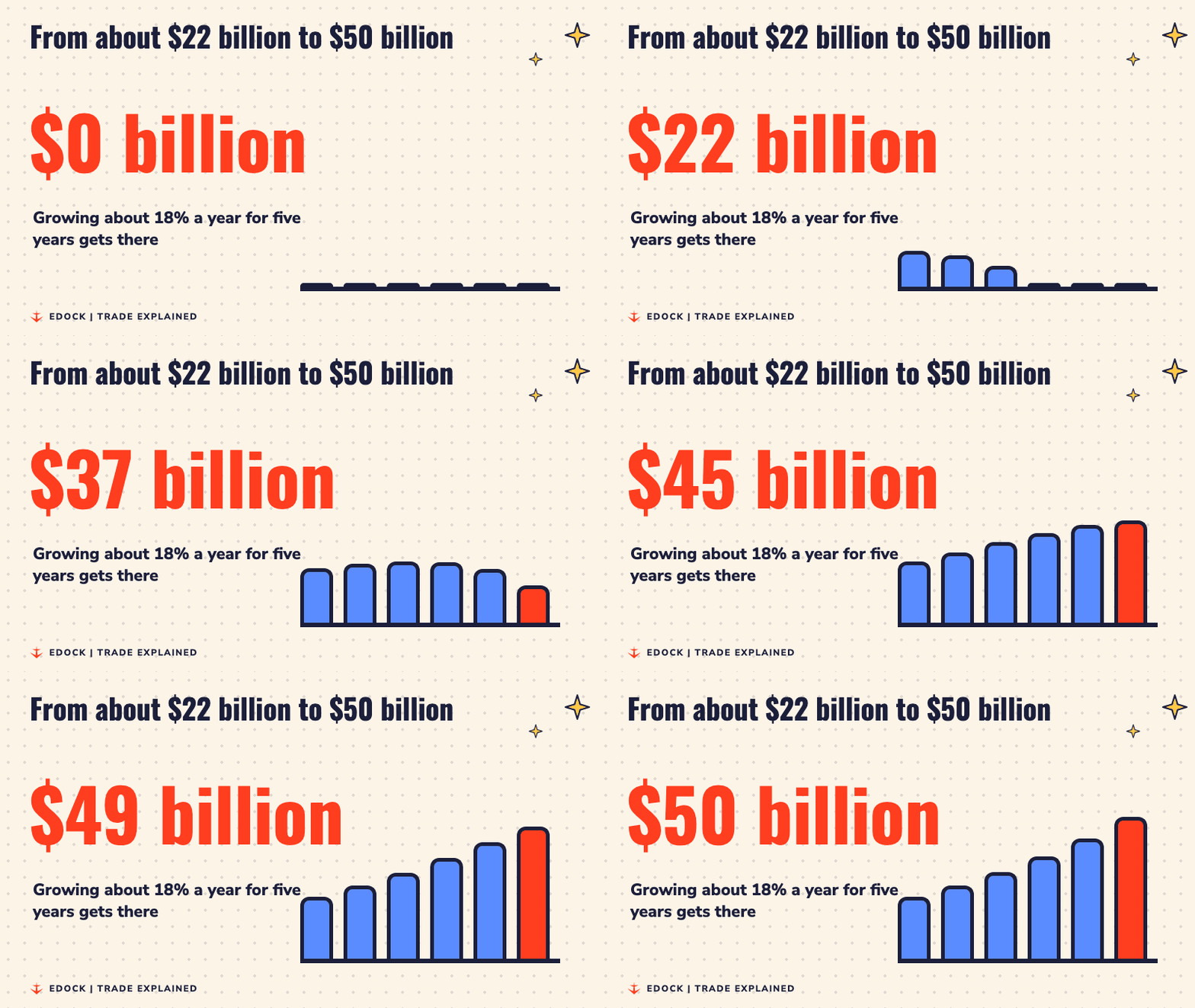
To go from about $22 billion to $50 billion is a jump of more than two times. If exports grow about 18% every year for five years, they reach roughly $50 billion: $21.9 billion becomes about $25.8 billion, then $30.5 billion, $36 billion, $42.4 billion and finally about $50 billion. That is fast. It is like a samosa stall that sells 100 samosas a day this year and needs to sell about 229 a day five years later.
The report's own economist went further. SP Sharma of ASSOCHAM said exports could even reach $60 billion, which is about 54 billion euro, by 2030, if Indian firms make full use of the new trade deal with Europe.
Why the India and EU trade deal is the key
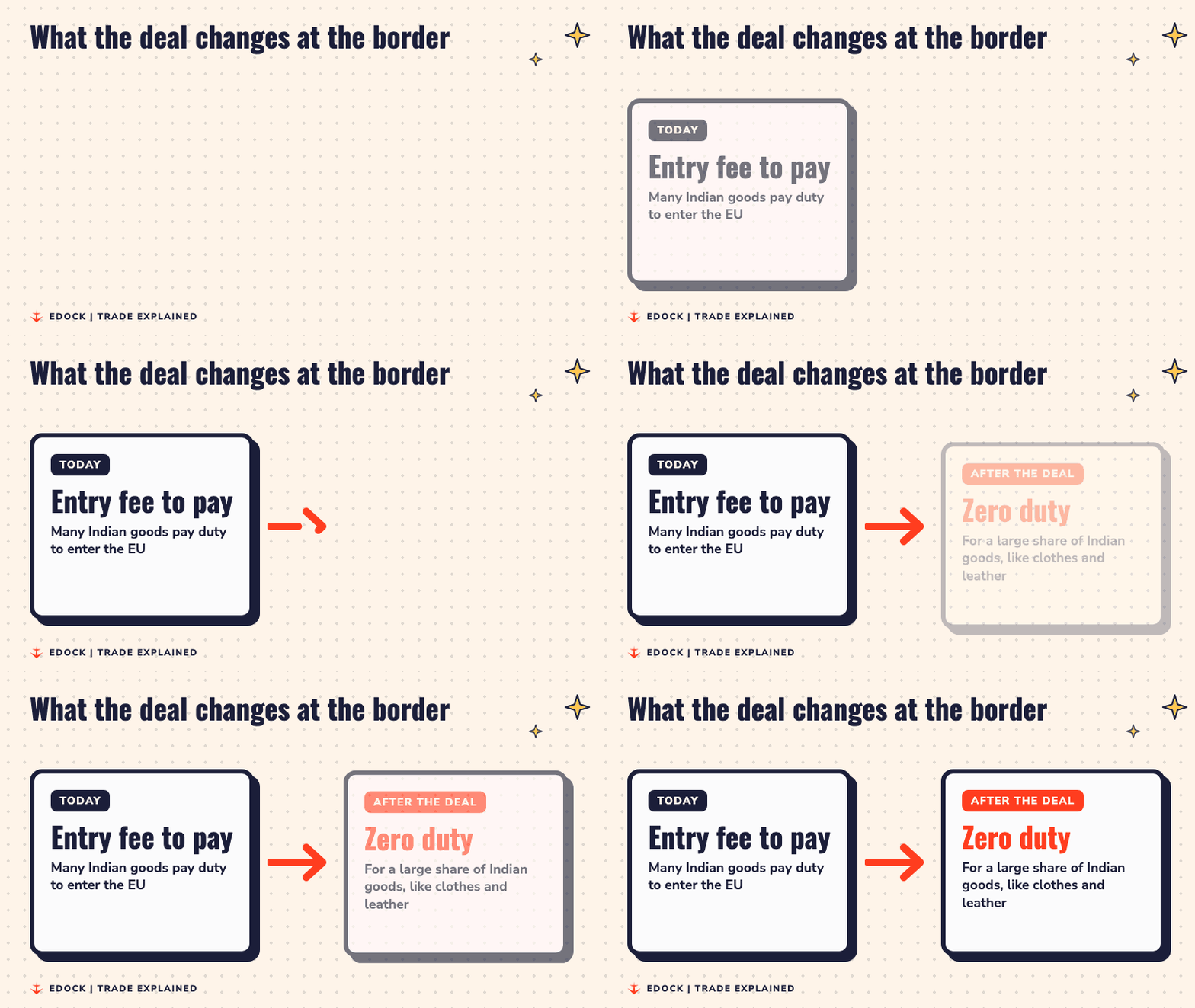
A free trade agreement, or FTA, is a deal between countries to cut the entry fees on each other's goods. That entry fee is called a duty or tariff. Imagine a school fair where every stall pays the organisers a fee to sell. If the fee is removed for your stall, you can sell your lemonade cheaper and win more customers.
India and the European Union finalised their FTA on 27 January, and it is expected to be signed in December, according to the PTI report. Germany is part of the EU, so the deal covers trade with Germany too.
According to ASSOCHAM, the EU is set to offer zero-duty access to a significant share of Indian exports. The sectors that could gain include textiles, clothes, leather, footwear, gems and jewellery, marine products like fish and prawns, engineering goods, medicines and electronics.
More than just selling things
The report also points to newer areas where the two countries could work together: advanced manufacturing, semiconductors (the tiny chips inside phones and cars), digital technology, critical minerals and defence.
ASSOCHAM Secretary General Saurabh Sanyal pointed to green growth too: renewable energy, green hydrogen, electric vehicles and battery storage. ASSOCHAM President Nirmal K. Minda said deeper ties could help small businesses, known as MSMEs, the small factories and workshops that make up a huge part of Indian industry.
The report also called for more meetings between buyers and sellers from both sides. A trade deal opens the gate, but someone still has to walk through it and find a customer.
The even bigger dream
During the same trip, Goyal said that India and Germany trade could grow ten times, from around $31 billion to $310 billion, if the two countries build things together. He did not give a date for that. German minister Katherina Reiche spoke of doubling it. He also met Reiche in Berlin on 22 October to talk about AI, chips, clean energy and supply chains.
Why it matters to young Indians
When exports grow, the money goes to the farms, factories and offices that make what is sold. Clothes, leather goods, medicines and software are all made by people, many of them young. A target is not a promise, though. Whether $50 billion happens by 2030 depends on the deal being signed on time and on Indian firms meeting German buyers' quality rules and prices.
Sources
- The Economic Times: India's exports to Germany could cross $50 billion by 2030
- The Hans India: India-EU FTA to propel exports to Germany beyond $50 billion by 2030
- ThePrint (PTI): Goyal to visit Germany, Netherlands from Oct 22-27
- The Economic Times: India-Germany trade can surge 10-fold, says Piyush Goyal
- The Morung Express (IANS): India, Germany to strengthen cooperation between industries
- Cover photo: Container handling on the JNPT Port, by Ccmarathe, CC BY-SA 4.0
