India rented record office space in 2026: what it signals for freshers
JLL counts 61.06 million sq ft leased in nine months, led by global companies' Indian centres, with Hyderabad and Pune growing fastest.

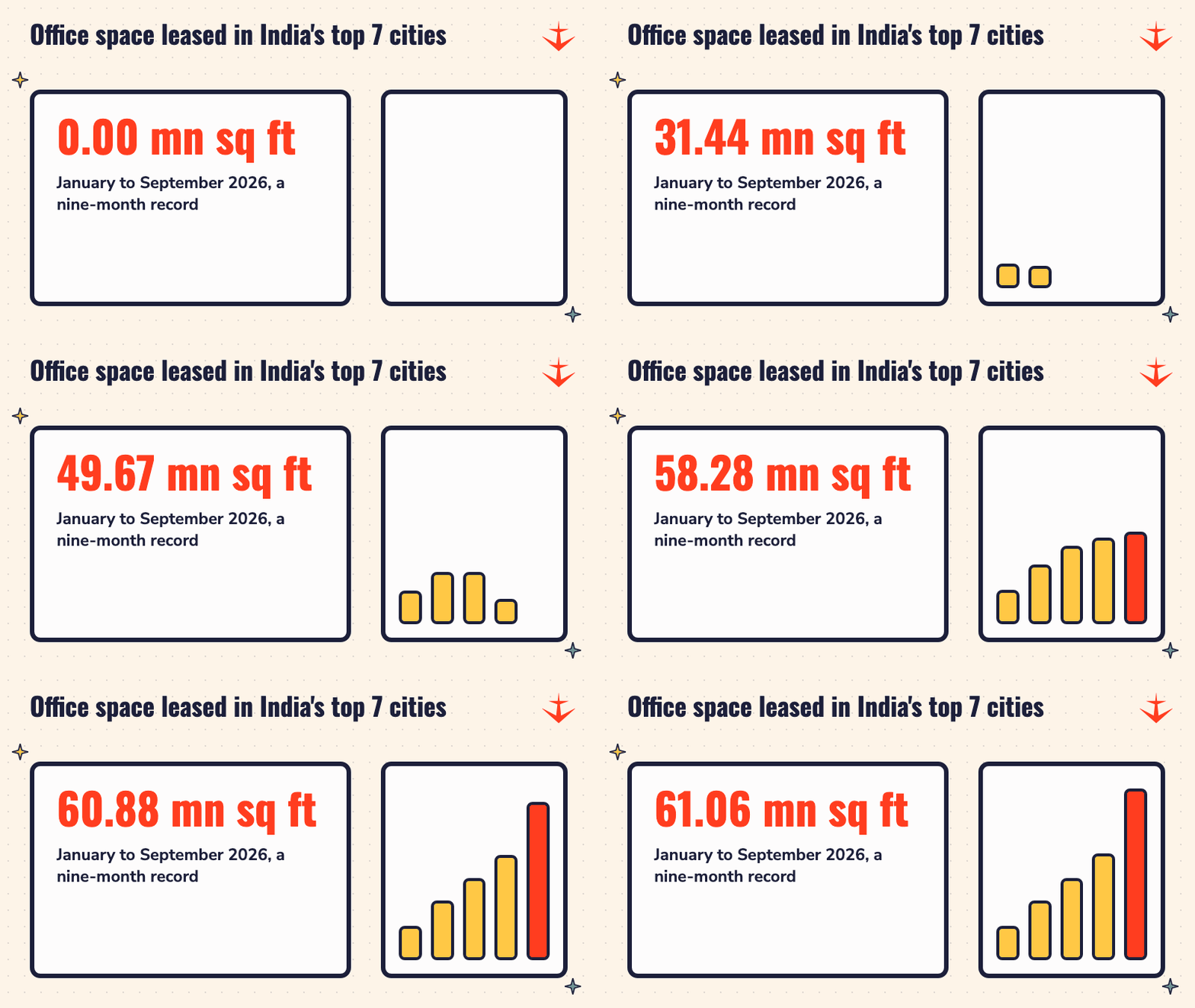
Picture 61 million floor tiles, each one foot by one foot, laid side by side. That is how much office space companies rented in India's seven biggest cities between January and September 2026. It is the most ever for the first nine months of any year, according to property firm JLL's report released on 26 October 2026.
Why should a student or a fresher care about empty floors in tall glass buildings? Because companies do not rent offices for fun. They rent them for people. So a record year for office space is one of the clearest signs of where companies plan to put their teams.
First, what does "61.06 million sq ft" mean?
"Sq ft" means square foot. Think of one square floor tile at home, about one foot on each side. That tile is one square foot. A small 1BHK flat is a few hundred of them.
The exact number is 61.06 million sq ft of "gross leasing" across the top seven office markets: Bengaluru, Delhi-NCR, Hyderabad, Mumbai, Pune, Chennai and Kolkata. "Leasing" simply means renting. "Gross" means every rental deal is counted, including a company that moves from one building to another.
A slow summer, then a rush
The year did not go in a straight line. The middle of the year was quiet. Then, in July to September, renting jumped 40.9% over the previous three months to 23.17 million sq ft. That made it the strongest quarter of the year.
Radha Dhir, JLL's India CEO, explained the rush in simple terms. She said, as quoted in The Hans India: "Deals that were on hold in Q2 got signed, and occupiers backed their growth plans with firm commitments." An "occupier" is just the company that moves into the space.

Who is renting all this space? Meet the GCCs
The biggest renters were GCCs, or Global Capability Centres. A GCC is a big foreign company's own office in India. It is not an outside vendor. Think of a global bank or a carmaker setting up its own team in Hyderabad to build its apps, run its finance work or do research for the whole world.
GCCs took 26.2 million sq ft from January to September, up 30.6% from a year ago. That is 42.9% of all the office space rented, so roughly 43 of every 100 square feet. JLL says this is already 84% of what GCCs took in all of 2025, which was itself a record year.
Dhir's line on why they keep coming was clear, as reported by ET: "They are building in India because this is where their talent and growth are." Talent here means skilled people, the kind of people who fill these offices.
How many people already work in GCCs? A Nasscom and Zinnov report from May 2026 counted 2,117 GCCs in India employing 2.36 million professionals. This short video explains what a GCC is.
Which cities are hot for freshers?
Here is the city scorecard for January to September 2026, from JLL's table:
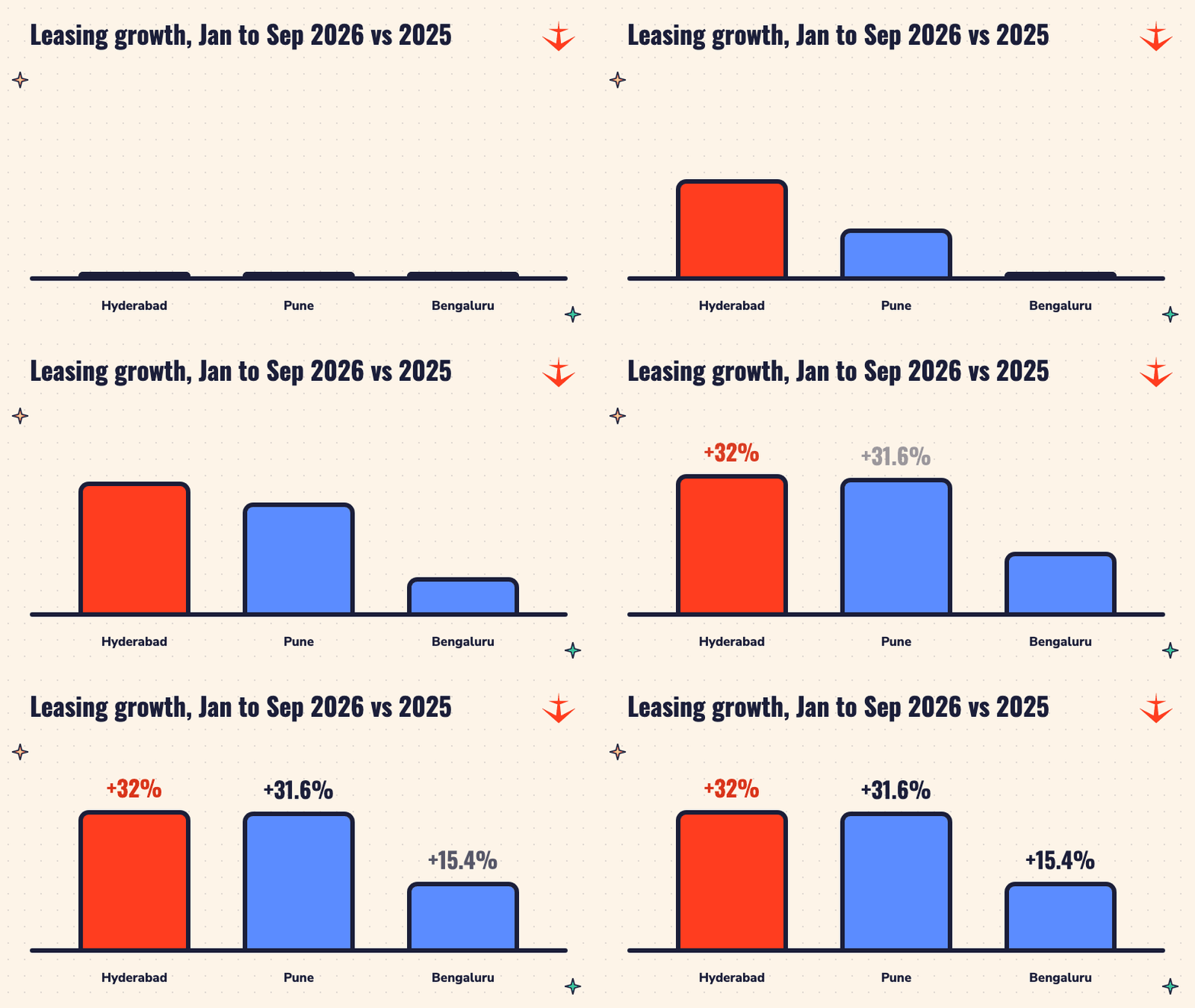
- Bengaluru: 17.11 million sq ft, up 15.4%. Still the biggest office market by far, with 28% of all space rented.
- Delhi-NCR: 10.78 million sq ft, down 17%.
- Hyderabad: 9.93 million sq ft, up 32%, the fastest growth among the seven.
- Mumbai: 8.75 million sq ft, up 17.7%.
- Pune: 8.25 million sq ft, up 31.6%.
- Chennai: 5.39 million sq ft, down 13.1%.
- Kolkata: 0.86 million sq ft, down 31.5%.
For freshers, the pattern is simple. Bengaluru is still the captain of the team. Hyderabad and Pune are the fast-rising players. Another property firm, CBRE, found that Bengaluru and Hyderabad together made up 64% of very large office deals (above 100,000 sq ft) in July to September.
This ET Now video looks at how Bengaluru became the home base for so many GCCs.
What is "vacancy", and why is it news in Mumbai?
Vacancy is the share of finished office space that is still empty. Think of a cinema hall. If 15 of every 100 seats are empty, vacancy is 15%.
Across the seven cities, vacancy was 14.8% at the end of September. That is slightly higher than three months ago, because builders finished 43.7 million sq ft of new offices in nine months. But it is lower than a year ago.
Mumbai and Delhi-NCR stand out. Their vacancy is the lowest in 16 years and 15 years. In plain words, it is hard to find an empty, ready office floor in these two cities right now. Companies are filling them up.
What is flex space?
Flex space is a ready-to-use office you rent by the desk or the room, often for a few months at a time. Think of the difference between buying a cricket kit and renting a box at a net session. Co-working centres are the best-known type.
Flex operators, the companies that run these spaces, rented a record 13.83 million sq ft in nine months. Flex is growing because companies like the freedom. CBRE's survey found that 67% of companies plan to include flex space in their offices over the next two years.
Which kinds of companies are renting?
In July to September, JLL says, tech firms took 25.6% of space. Banks, financial services and insurance companies, together called BFSI, took 25.3%. Manufacturing and industrial firms took 16.1%, and flex operators 15.5%. So the demand is not coming only from tech firms. Banks and factories also want more office desks in India.
CBRE's own count is a bit different, because each firm measures in its own way. It put renting at a record 66.4 million sq ft across nine cities. Its survey also found that nearly 77% of companies expect to grow their India offices over the next two years.
What this does and does not tell you
Office space is a strong signal, not a promise of a role for you. These reports count square feet, not new hires. A company may rent a bigger, nicer office for the same team. Some space is for people who already work there.
Still, the direction is clear. Global companies are renting more space in India, and they say it is for talent. On the numbers, Bengaluru has the most office demand, while Hyderabad and Pune are growing the fastest. CBRE also expects Chennai and Pune to see more interest. JLL thinks yearly leasing could touch 100 million sq ft in the next two to three years.
Sources
- JLL release: India's office gross leasing hits a record 61.06 million sq ft (India Education Diary, 26 October 2026)
- The Economic Times: India office market sets nine-month leasing record
- The Hans India: India office leasing hits record 61 million sq ft
- Fortune India: CBRE report on India's office market in 9M 2026
- Business Today: Nasscom and Zinnov India GCC Landscape Report FY26
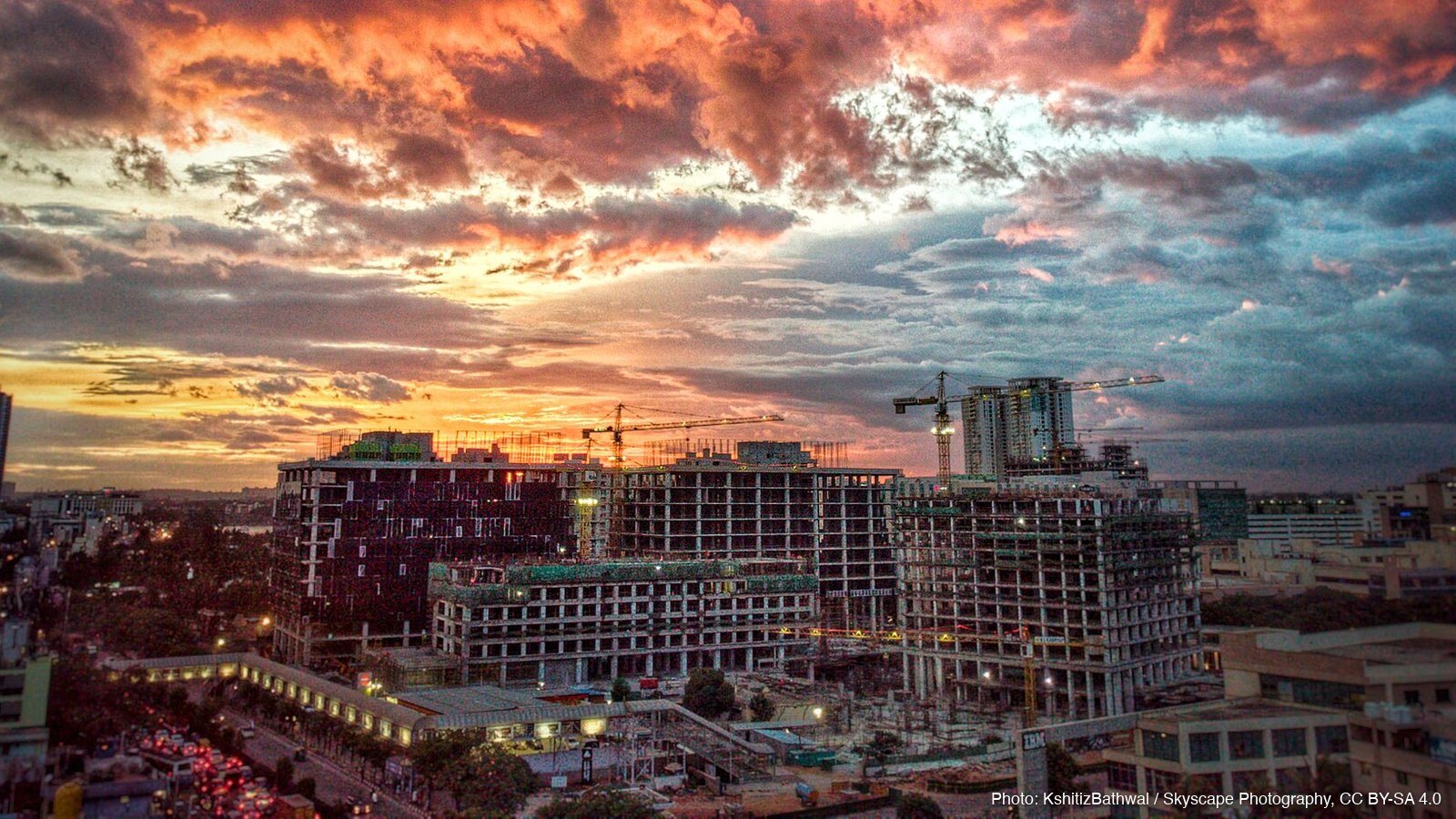
- Cover photo: Manyata Embassy Business Park, Bengaluru, by KshitizBathwal / Skyscape Photography, CC BY-SA 4.0

You may republish this story under CC BY 4.0: credit Arshdeep Singh and link to this page.