India raised the tax on petrol exports and cut it on diesel overnight
From 16 October, exporting a litre of petrol costs ₹2.5 in duty and diesel ₹8.5. Here is what a windfall tax is and why it keeps changing.
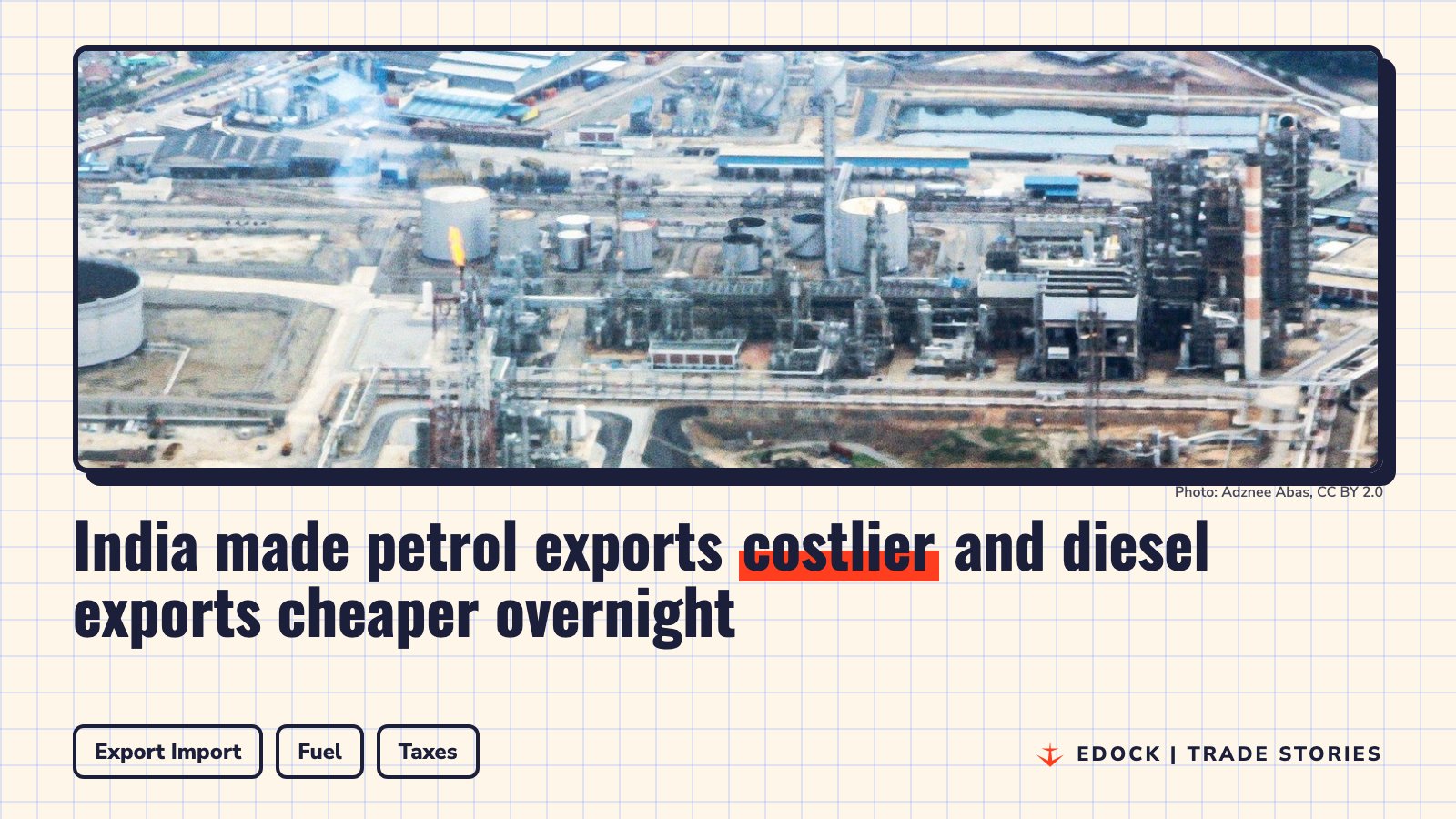
Overnight, the tax on sending one litre of petrol out of India became five times bigger. And on the same night, the tax on sending out one litre of diesel was cut by nearly half. Both changes kicked in on 16 October 2026, under a government order issued late on Thursday, as Reuters reported via Business Standard.
This tax is on fuel that Indian companies sell to other countries. Here is what changed, and why the government keeps changing it.
The new numbers
- Petrol exports: the duty went up to ₹2.5 a litre, from ₹0.5.
- Diesel exports: the duty went down to ₹8.5 a litre, from ₹16.
Check the sums: ₹2.5 is five times ₹0.5. And ₹16 minus ₹8.5 is ₹7.5, which is a cut of about 47%, so almost half.

What is an export duty?
An export is something made in one country and sold to buyers in another. A duty is a tax the government charges on it. So an export duty is a tax a company pays for every unit it sends out of the country.
Think of a mango farmer who can sell in the village market or ship mangoes to a big city far away. If the village council charges ₹5 for every mango that leaves the village, the farmer has a reason to sell more of them at home.
And what is a windfall tax?
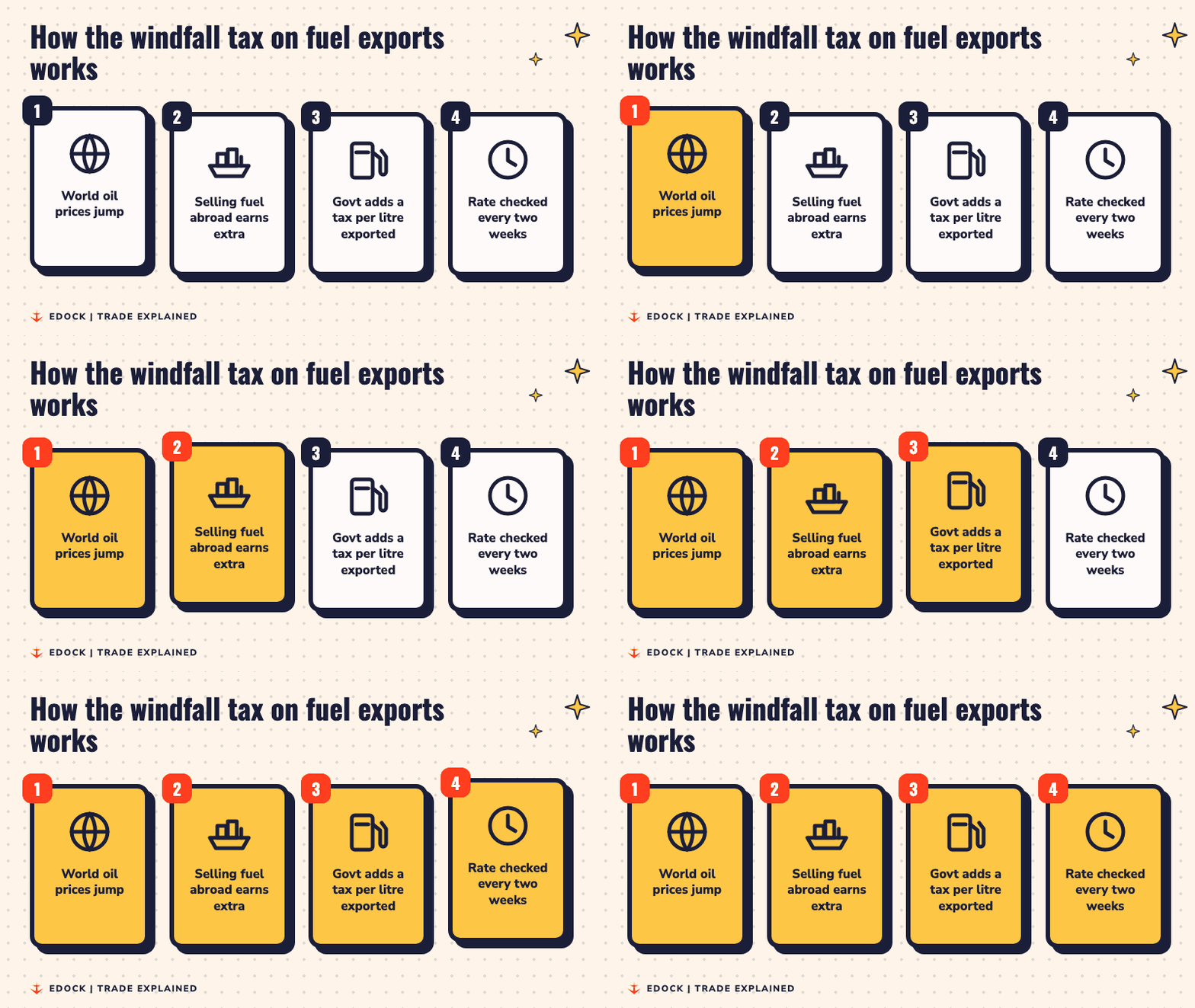
A windfall is money that falls into your lap by luck, like finding ₹500 in an old jacket. Outlook Business explains that a windfall tax is an extra levy on companies that earn unusually high profits because prices jumped, not because they suddenly became better at their work.
When world oil prices shoot up, Indian refiners can earn a lot more by selling petrol and diesel abroad. The government taxes those extra export earnings. It also has another aim: reporting on an August revision, Republic said the move was meant to discourage exports and keep more petrol, diesel and jet fuel available at home.
Why does the rate keep changing?
Because the government looks at it again every two weeks. These export duties are reviewed every fortnight and adjusted in line with world crude oil and fuel prices. A fortnight is simply two weeks.
It is a bit like a school canteen that changes the price of samosas every two weeks depending on how much potatoes cost in the market. When potatoes get expensive, the price goes up. When they get cheap, it comes down.
A quick look back at 2026
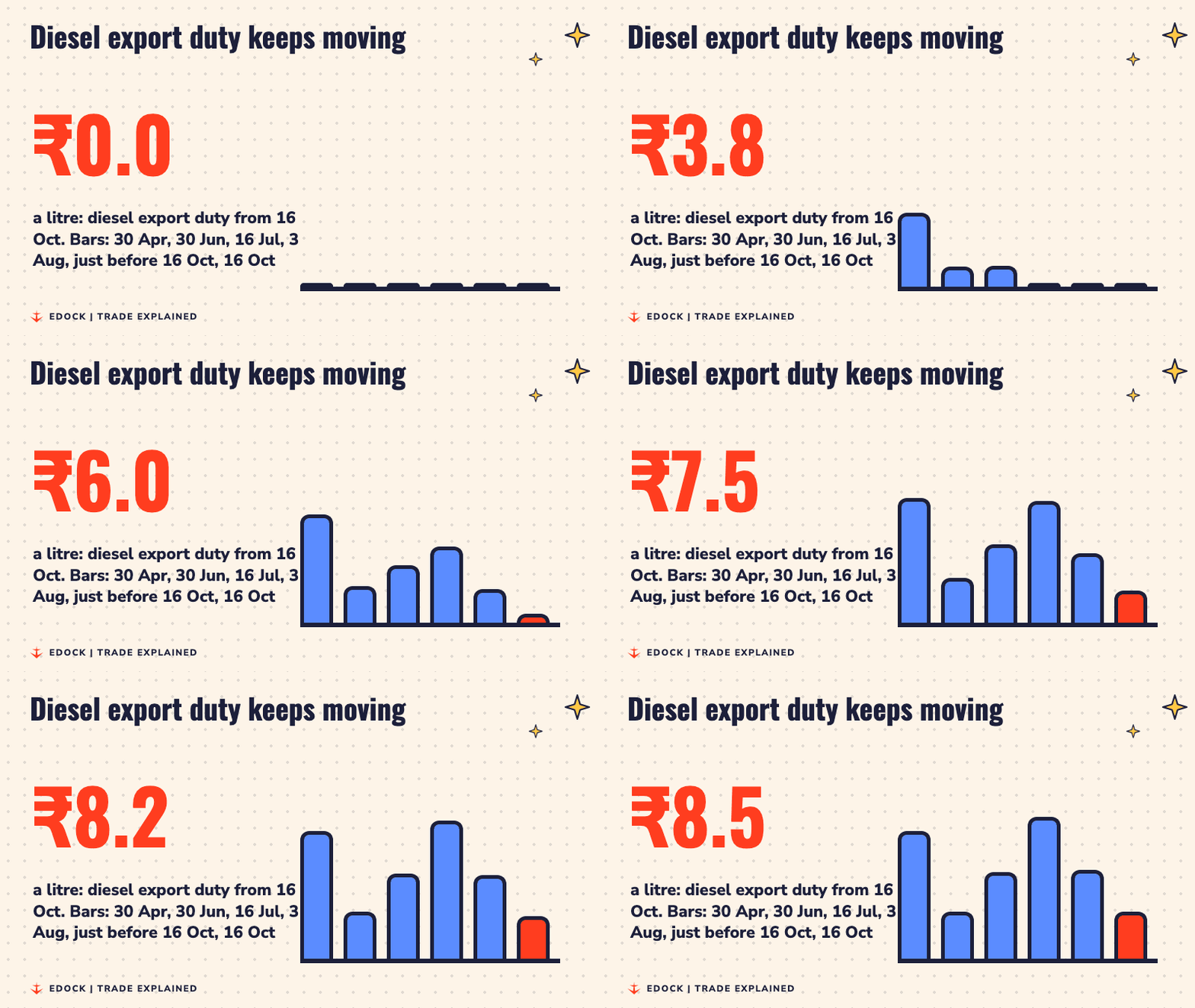
India first brought in windfall taxes on fuel exports in July 2022 and removed them two years later. It brought them back in March 2026, after crude oil prices jumped. Since then, the diesel export duty has moved up and down a lot:
- 30 April: diesel duty fixed at ₹23 a litre, according to Republic.
- 30 June: diesel at ₹8.5 and petrol at ₹4 a litre.
- 16 July: diesel up to ₹15.5 and petrol down to ₹2.5, as Outlook Business reported.
- 3 August: diesel up again to ₹25.5 and petrol to ₹3.5.
- Just before 16 October: diesel at ₹16 and petrol at ₹0.5.
- 16 October: diesel at ₹8.5 and petrol at ₹2.5.
Here is ET Now's report on one of these fortnightly changes, when diesel duty was cut and petrol duty was raised:
Jet fuel is in the same club
Petrol and diesel are not the only fuels on this list. Aviation turbine fuel, or ATF, is the fuel that aeroplanes run on, and its exports have also faced these duties this year. On 16 July, the ATF export duty was raised to ₹14.5 a litre from ₹7.5, and on 3 August it went up again to ₹22, according to Republic. The 16 October report from Reuters only mentions the new petrol and diesel rates.
Who feels this change?
- Fuel exporters: Indian refiners now pay ₹7.5 less tax on each litre of diesel they export, and ₹2 more on each litre of petrol.
- The government: it earns money from these duties, and it uses them to manage how much fuel leaves the country.
Why should you care?
Because it shows how trade policy works in real life. Governments do not just set a tax once and forget it. When world prices swing, they can turn the dial every two weeks to balance two goals: earning money from lucky profits and keeping enough fuel at home. For anyone curious about trade, finance or energy, it is a live example of a government using one small number to steer a big industry.
The short version
From 16 October 2026, India's export duty on petrol went up from ₹0.5 to ₹2.5 a litre, while the duty on diesel exports came down from ₹16 to ₹8.5. These are windfall taxes, brought back in March 2026, and the government reviews them every two weeks based on world oil prices. They apply to fuel sold abroad.
Sources
- Govt raises petrol export duty to ₹2.5/litre, cuts diesel duty to ₹8.5, Business Standard (Reuters)
- Govt hikes windfall duty on diesel, ATF; cuts petrol export tax, Outlook Business
- India raises export duty on fuel from August 3, Republic
- Windfall tax revised: Govt cuts diesel and ATF export duty, raises petrol tax, ET Now on YouTube
- Cover photo: Oil Refinery in Port Dickson, by Adznee Abas, CC BY 2.0 (cropped)
You may republish this story under CC BY 4.0: credit Manpreet Kaur and link to this page.