India gives sugar importers two more months to bring in raw sugar duty free
Version 1 of 1 saved 22 Oct 2026, 11:33 am IST · Chain line 136
As it was first published
India gives sugar importers two more months to bring in raw sugar duty free
Only about 3 lakh of the 10 lakh tonnes allowed has arrived, so the deadline moved from 31 October to 31 December.
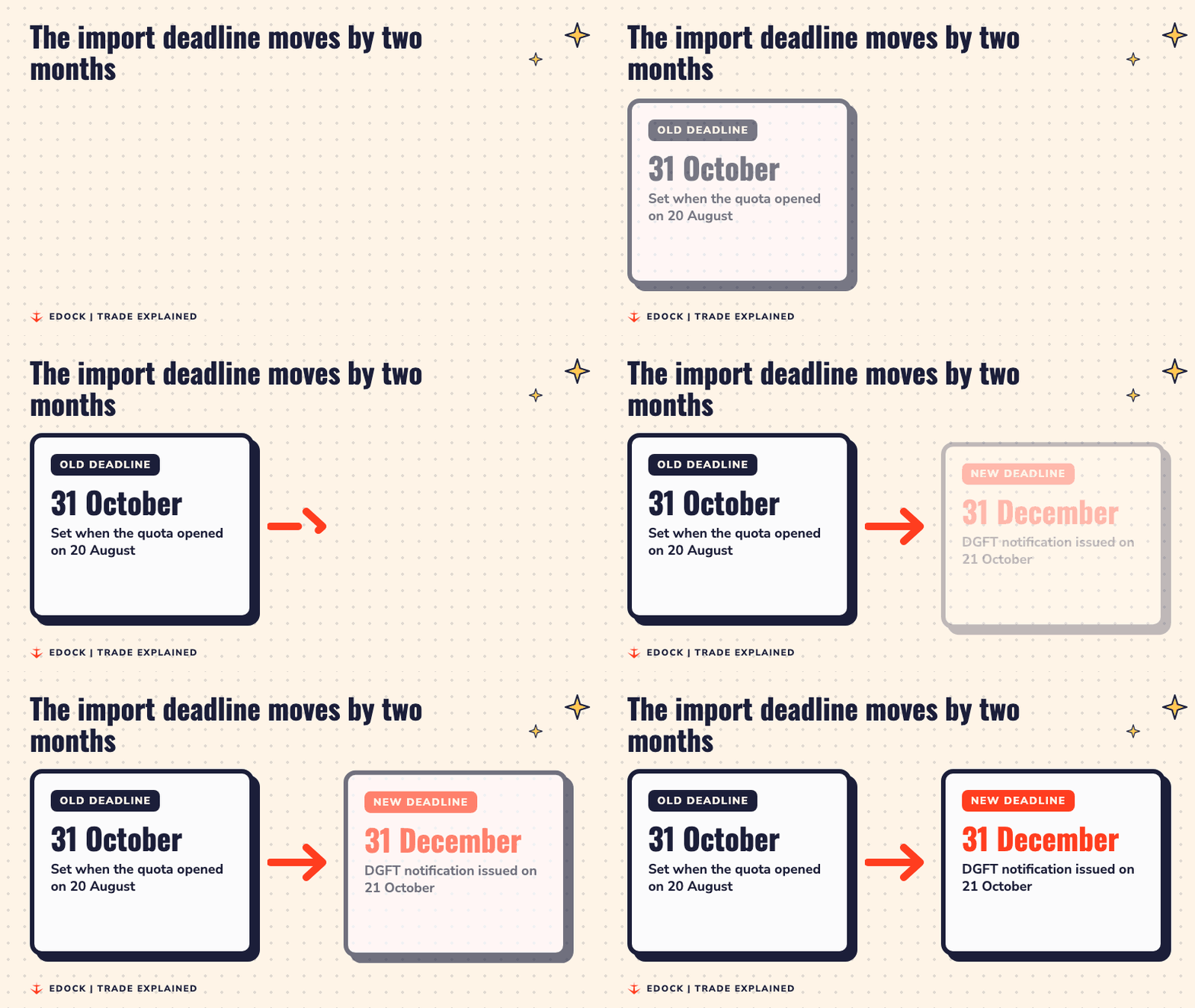
India opened a door for 10 lakh tonnes of foreign sugar to come in without any import tax. Two months later, only about a third of that sugar has walked through. So on Wednesday, 21 October 2026, the government kept the door open for longer. The deadline for duty free imports of raw sugar moved from 31 October to 31 December, as per a notification from the Directorate General of Foreign Trade (DGFT), the government office that writes India's import and export rules.
Why does a country that grows so much sugar need to buy it from abroad? And why are traders not rushing in? Let us break it down, one spoonful at a time.
First, what exactly happened?
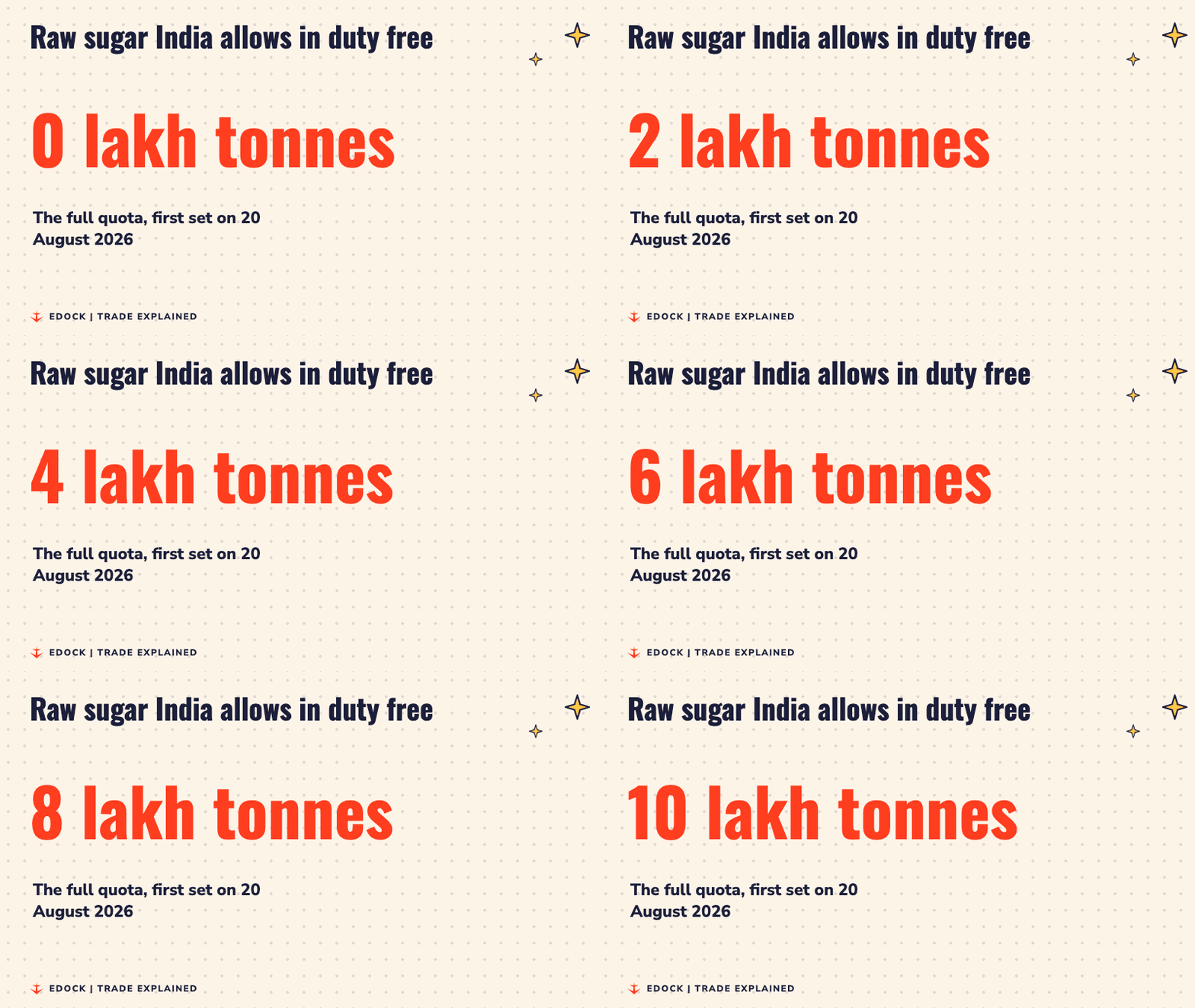
On 20 August 2026, the government allowed duty free imports of 10 lakh tonnes of raw sugar under something called a tariff rate quota, with a deadline of 31 October. The aim was to put more sugar in Indian shops and stop prices from climbing.
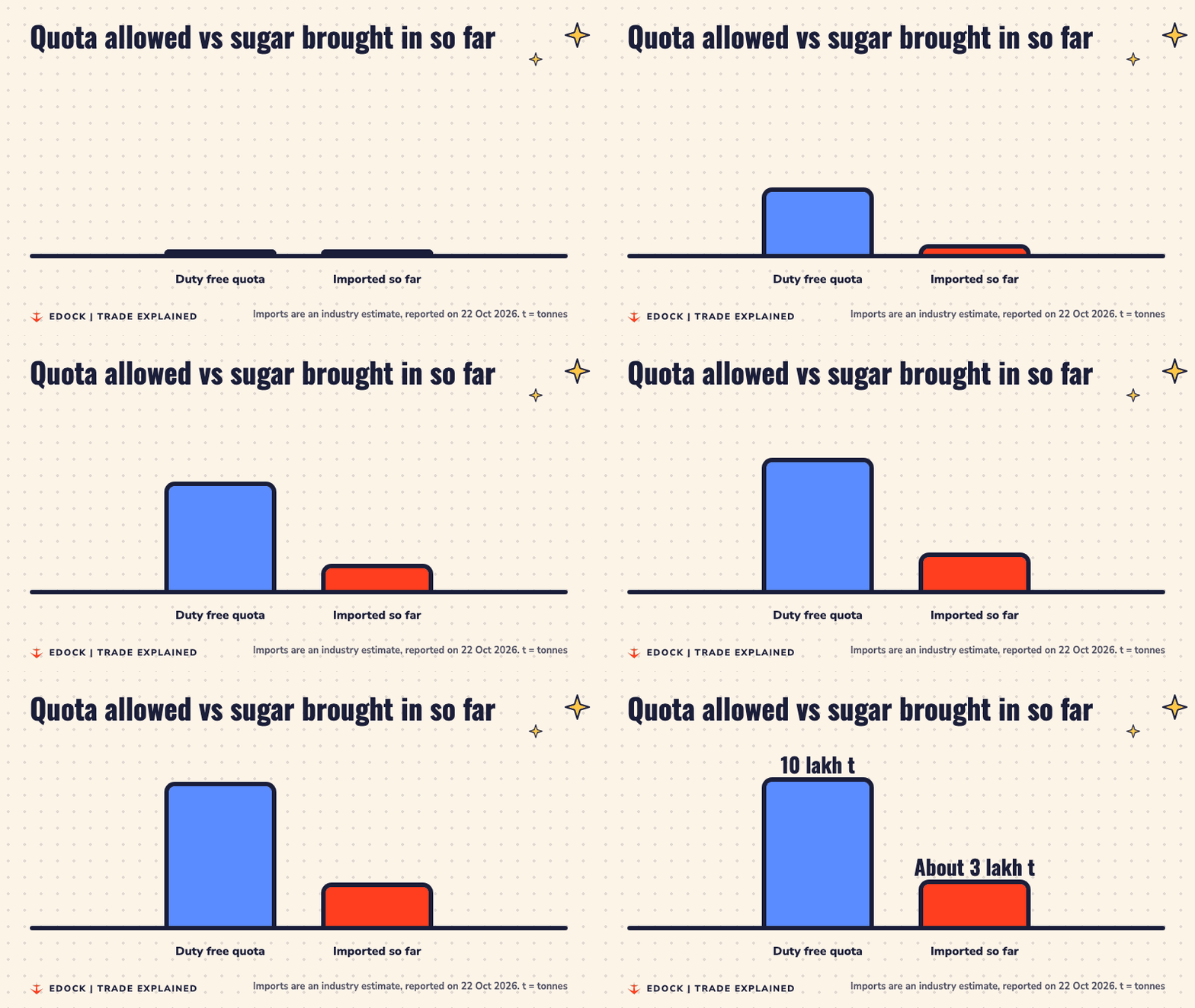
But the industry is estimated to have imported only about 3 lakh tonnes of the 10 lakh tonnes allowed. That leaves about 7 lakh tonnes of the quota unused. Hence the two extra months.
Raw sugar vs the sugar in your chai
The white sugar in your kitchen is refined sugar. Raw sugar is the earlier, unfinished form: darker crystals that still need cleaning. Think of it like paddy and rice. Paddy has to go through a mill before it lands on your plate. In the same way, the government has allowed only raw sugar to come in, and it must be refined before it can be sold in India. Traders said most of it was likely to come from Brazil.
Refining happens in a sugar refinery, a factory that turns raw crystals into clean white sugar. Companies with refineries located near ports are best placed to use the quota, because ships can unload close to the factory. For example, Shree Renuka Sugars has two sugar refineries in Gujarat, Rural Voice reported.
What do "duty", "tariff" and "quota" mean?
A duty, or tariff, is a tax a country charges on goods that come in from abroad. It works like an entry ticket at a fair: every item pays to get in. Governments use it to protect local farmers and makers.
A quota is a fixed limit. A tariff rate quota mixes the two: up to a set amount comes in at a low or zero tax. Picture a canteen that says the first 100 samosas today are free of the extra packing charge. After that, the normal charge is back. Here, the first 10 lakh tonnes of raw sugar pay no duty.
The "flour without tax" trick for exporters
India already has a small set of port based refineries that import raw sugar duty free, refine it and export the white sugar. This works through a scheme called Advance Authorisation. Imagine a baker who gets flour without tax, on a promise that every biscuit made from it will be sold abroad. The tax is skipped because the final product leaves the country anyway.
The August rules let refiners make a one time switch of their existing Advance Authorisations into the new quota, covering raw sugar already imported up to 20 August, as long as they paid back the GST that had been skipped at the time of import. In simple words: sugar that was meant for foreign buyers could now be sold inside India instead.
On 24 August, the DGFT also changed one more rule. Instead of one common cut off date, each importer had to refine and sell its shipment within two months of filing the bill of entry, the customs form filed when goods arrive.
Why did India need foreign sugar at all?
India is the world's second largest sugar producer. Yet this was the first time in nearly a decade that it planned to import sugar.
The reason is simple maths. In the current season, India made around 280 lakh tonnes of sugar but used about 5 lakh tonnes more than that. Earlier, the government had allowed exports of up to 20 lakh tonnes, then stopped them in May after about 8 lakh tonnes had left the country.
The stock at the end of the season was estimated at a multi year low of about 3.5 to 3.9 million tonnes, against a usual safety buffer of 6 million tonnes. A buffer is like the extra rice a family keeps in a dabba for guests. When it runs low, everyone gets nervous.
Prices hit a record
In August, the average ex-mill price, which is the price a sugar mill charges at its gate, rose to Rs 5,400 to 5,500 a quintal, up from Rs 3,900 a year earlier. One quintal is 100 kg. Retail sugar rose about 13% in a year to Rs 52.30 a kg as on 18 August, from Rs 46.34.
Timing mattered too. Sugar demand usually rises between August and November, when India celebrates Ganesh Chaturthi, Dussehra and Diwali. Think of all the laddoos and jalebis.
The government also put a limit on big buyers. Anyone using more than 10 tonnes of sugar a month could keep only 15 days of stock, so nobody could hoard sugar and create a fake shortage.
So why is the quota still mostly empty?
Because the plan partly worked before the ships even arrived. Within about a week of the announcement, domestic ex-mill prices fell nearly 20% from the record high. Imported sugar comes with freight, insurance and refining costs, so once local prices fell, buying from abroad made less money.
It is like a lemonade stall owner who plans to buy lemons from the next town because local lemons are costly. Then local prices drop. Suddenly the long trip is not worth it.
The ET report says the same thing: government steps to control local prices reduced the reason to import, according to industry sources. Back in August, traders had already said total imports were unlikely to cross 5 lakh tonnes.
Why keep the door open, then?
Because next year's crop may be small. The industry expects sugar production in the 2026-27 sugar season (October to September) to be lower than last year, because of a drought linked to El Nino, a weather pattern that can weaken rain. More time gives refiners the option to bring in raw sugar if local supply gets tight again.
What this means for you
- For shoppers: the quota is a safety valve. If sugar runs short, refiners can import more without paying duty.
- For trade students: this is a live example of how a government uses a tariff rate quota and a deadline to manage prices.
- For refiners near ports: they get two more months to decide if foreign raw sugar is worth buying.
Next time you stir sugar into your chai, remember: a ship from Brazil, a refinery in Gujarat and a government notice in Delhi may all be part of that spoonful.
Sources
- Import window for duty free raw sugar extended till Dec 31, The Economic Times
- Govt allows free imports of 10 lakh tonnes raw sugar until October 31, Deccan Herald
- India allows 10 lakh tonnes of duty free raw sugar imports, Rural Voice
- Why did Centre ease sugar import deadline, The Week
- India may import only half of 10 lakh tonnes duty free sugar quota, ChiniMandi
- Government allows duty free imports of 10 lakh tonnes of raw sugar, News On AIR
- Cover photo: Brown Sugar, by Alden Chadwick, CC BY 2.0
