India gets cheap crude, but the ship ride is eating the saving
Version 1 of 1 saved 28 Oct 2026, 12:24 am IST · Chain line 280
As it was first published
India gets cheap crude, but the ship ride is eating the saving
Indian Oil's chairman says record freight costs are wiping out oil discounts, and India must build its own tankers and storage.
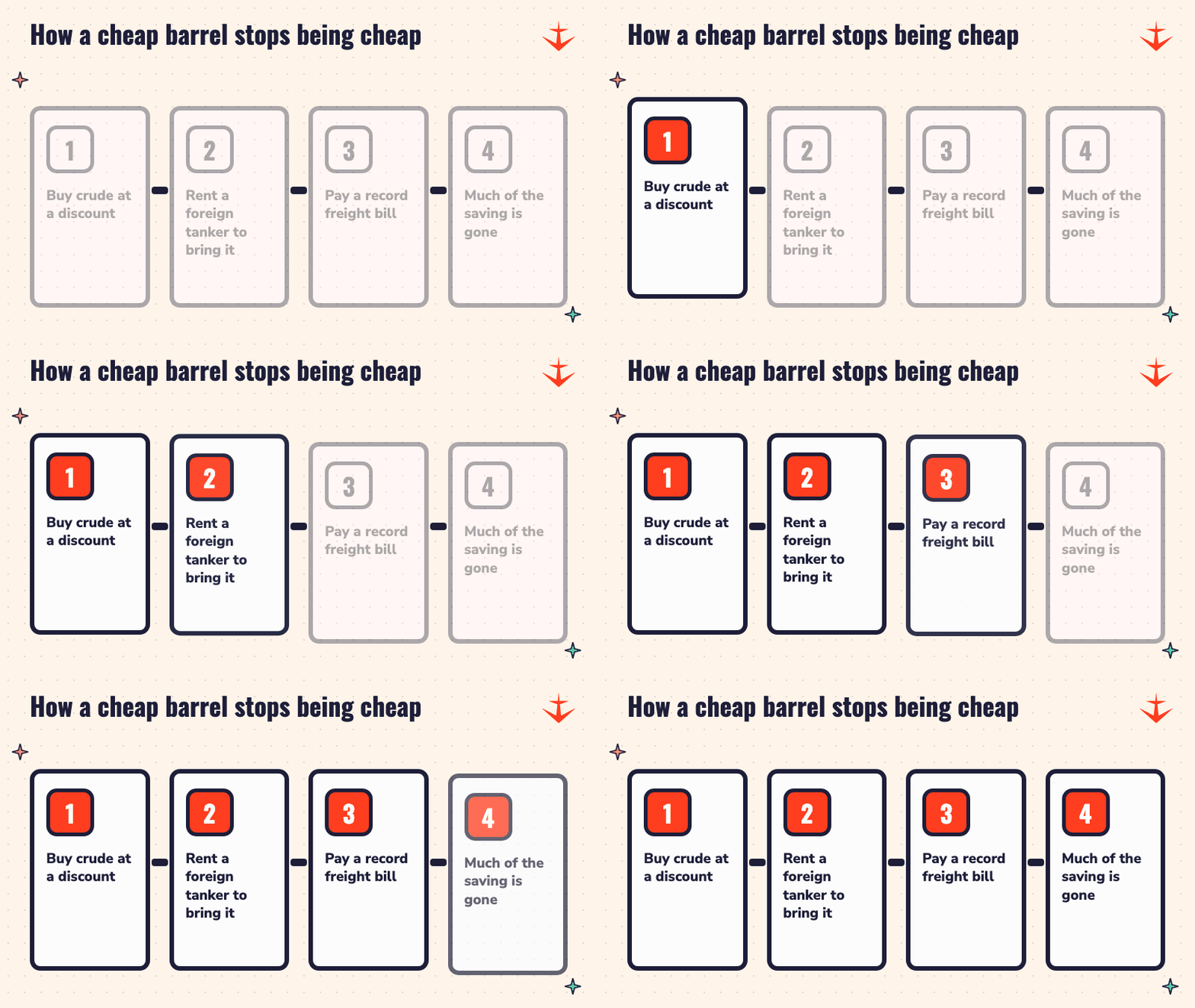
Picture this. You find a samosa stall selling samosas for two rupees less than the shop next door. Great deal. But the stall is across town, and the auto ride to reach it costs more than you saved. That is the problem the head of Indian Oil says the country now faces with crude oil.
On Tuesday, 27 October 2026, A S Sahney, the chairman of Indian Oil Corporation, told an industry meet in Goa that India is getting crude at a discount, but freight is eating up the saving. His fix: India must build its own shipping strength, and store more oil and cooking gas at home.
What did the Indian Oil boss say?
Sahney spoke on a panel at the Energy Technology and Innovation Meet in Goa. He was pointing to a lack of tankers to carry crude. His words, as reported by The Economic Times:
"We have been neglecting shipping... we have to build our capabilities in shipping. Today we are getting crude at discount but freight is eating that up. Freight is a killing factor."
He also said India needs to invest in more storage for crude oil and LPG, the gas in a home cooking cylinder, so the country gets a few more days of cushion if supplies are cut.
Indian Oil is not a small voice here. The company is owned by the Government of India and works under the Ministry of Petroleum and Natural Gas. Its revenue was more than Rs 9 lakh crore in 2026.
First, what are crude, tankers and freight?
Crude oil is raw oil pumped out of the ground. Refineries turn it into petrol, diesel and many other things. India buys a lot of this crude from other countries, and it comes by sea.
A tanker is a giant ship that is basically a floating set of oil tanks. A Suezmax tanker, for example, is the biggest kind of ship that can pass fully loaded through the Suez Canal in Egypt. These ships typically carry about 160,000 tonnes.
Freight is the fee you pay to move goods. Think of the delivery charge on a food app. The pizza price is one thing. The delivery fee is extra. If the delivery fee shoots up, your "cheap" pizza is not cheap any more.
How costly did the ride get?
Very. Freight rates for Russian oil shipped from Russia's western ports to India hit fresh record highs in early October, according to trading and shipping sources quoted by Reuters. Two reasons were given: higher risks in the Black Sea and a rally in tanker fees around the world.
Here are the numbers from that report:
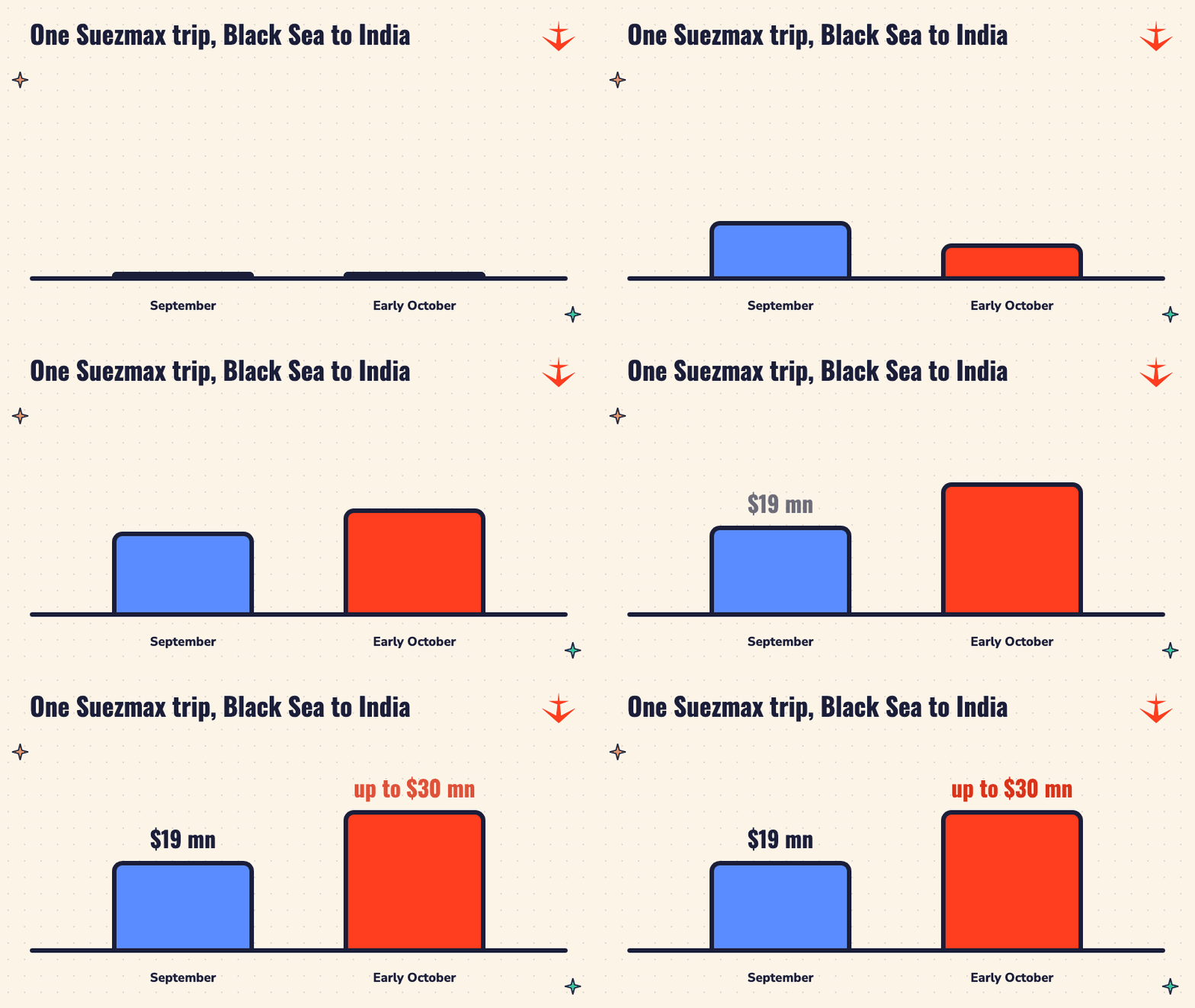
- Moving Russian Urals crude from the Black Sea to India on a Suezmax tanker of about 140,000 tonnes cost a record $27 million to $30 million for one trip, up from around $19 million in September.
- Moving about 100,000 tonnes on a smaller Aframax tanker from Baltic ports to western India cost $21 million to $23 million a trip on average, up from roughly $13 million to $16 million in September.
- Freight for sending Urals crude to Asia came to around $30 per barrel or more.
Do the sum on the first line. Going from $19 million to $30 million is a jump of about 58% at the top end, in just a few weeks. The same report said record global shipping costs sit behind the rise.
Why does India feel this so much?
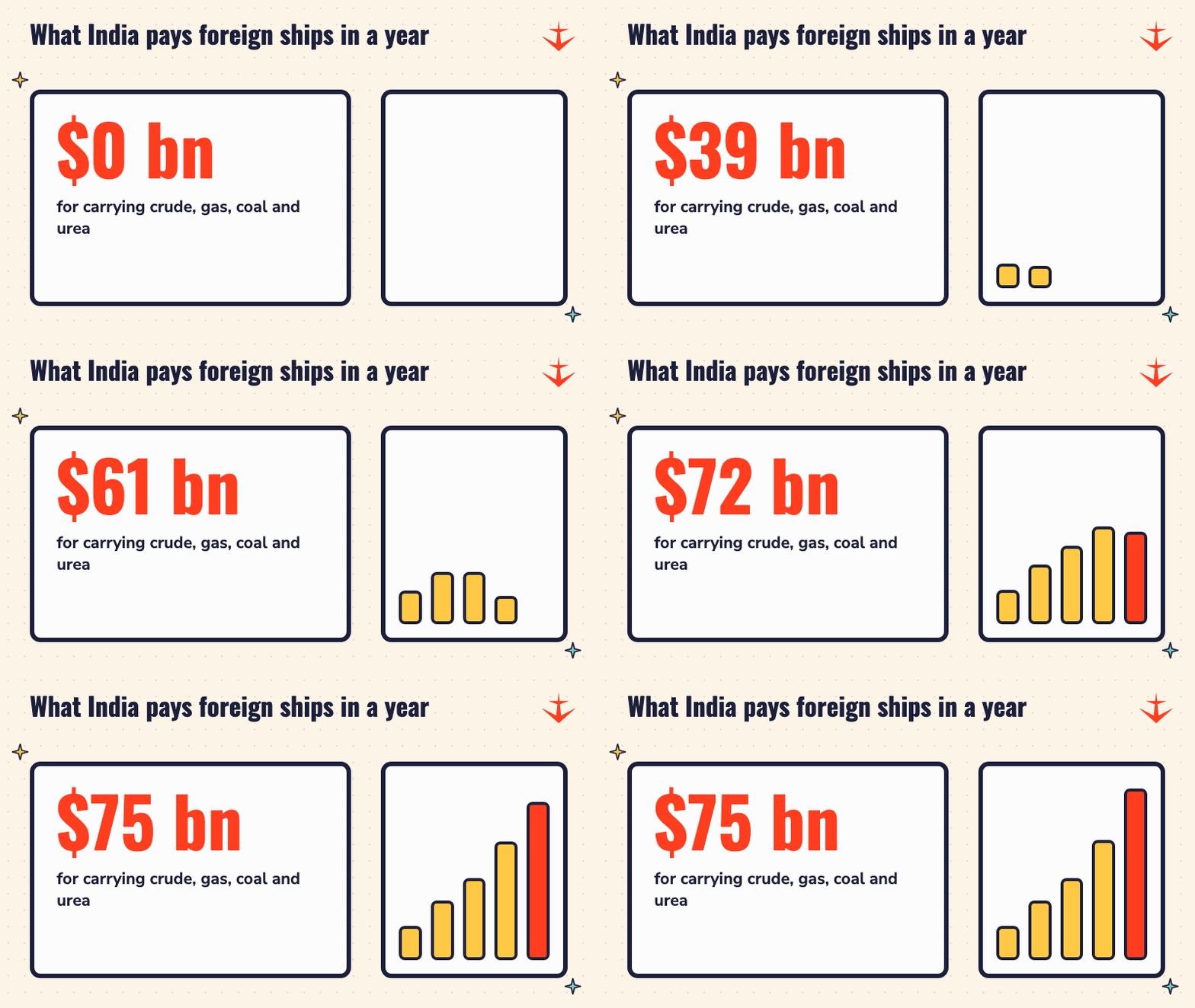
Because India mostly rents other countries' ships. Shantanu Thakur, the minister of state for ports, shipping and waterways, said India pays close to $75 bn every year to foreign shipping lines to carry crude oil, natural gas, coal and urea.
Every ship has a "flag", which is the country where the ship is registered. Think of the flag as the ship's passport. Today, about 90 percent of Indian trade moves on foreign-flagged ships, and Prime Minister Narendra Modi has set a goal for at least 20 percent of India's exports to travel on Indian-flagged ships.
Why not just use Indian ships? Industry representatives say Indian-flagged ships face a 16 to 20 per cent cost disadvantage against foreign ones, because of taxes on imports, maintenance and costlier loans at home. India's fleet has 1,544 vessels, of which 492 sail overseas and 1,052 work along the coast, the same report said.
What is India doing to fix this?
The push started well before Sahney's comments. In April 2026, after the closing of the Strait of Hormuz showed how exposed India's sea supplies were, shipping minister Sarbananda Sonowal announced that India would add 62 vessels in FY 2026 to 27, backed by Rs 51,383 crore. The list covers container ships, LPG and crude carriers, and tankers.
A few more pieces of the plan:
- A joint venture between the Shipping Corporation of India and state-run oil companies is set to buy 59 vessels together, pooling their buying power.
- The government has projected that India will need 112 domestically owned crude oil carriers, according to the Shipping Corporation's chairman, Capt. Binesh Kumar Tyagi.
- A National Shipping Board panel said 100 ships could be added to India's merchant fleet in five years, with cheaper loans and tax changes.
- India wants to be one of the top five shipbuilding nations by 2047.
The Shipping Corporation of India itself was set up on 2 October 1961, and the Government of India owns 63.75% of it.
This video covers an earlier step in the same story: petroleum minister Hardeep Puri's plan for India to build its own fleet of oil tankers.
Why storage matters too
Ships are one half of Sahney's point. Storage is the other. Think of a spare gas cylinder at home: if the delivery is late, you still cook dinner.
India keeps an emergency store of 5.33 million tonnes of crude in underground stores at Mangaluru, Visakhapatnam and Padur. That is enough for about 9.5 days of use. Indian refiners hold another 64.5 days of crude, so the country's total cushion is about 74 days. More tanks would stretch that cushion further when ships get stuck or prices jump.
What does this mean for young Indians?
Three things. First, a cheap deal on oil only helps if India can bring the oil home at a fair price. When freight jumps, the discount shrinks.
Second, building ships and running them means work. Labour ministry officials have said India's pool of seafarers could become a significant source of employment as world demand grows. Shipyards, ports and ship crews all need trained people.
Third, this is a long game. The targets run to 2030 and 2047, which is roughly the working life of anyone in college today.
Curious what life on one of these giant ships looks like? This video goes inside a working oil tanker.
Sources
- The Economic Times: India needs to build up shipping capacity to cash in on cheap crude, IOC chairman says
- Baird Maritime (Reuters): Record-high tanker rates to India are eating into Russia's oil profits
- Hellenic Shipping News: Russia oil freight rates to India hit record high in October
- Construction World: India plans 100 new ships to cut foreign freight bill
- The Maritime Executive: India moves to accelerate expanding shipping capacity by adding 62 vessels
- The Week: India plans 62 new ships worth Rs 51,383 crore
- Maritime Gateway: SCI to build medium-range crude oil tankers
- Wikipedia: Indian Oil Corporation
- Wikipedia: Shipping Corporation of India
- Wikipedia: Suezmax
- Wikipedia: Strategic Petroleum Reserve (India)
- Cover photo: the tankers Desh Prem and Desh Rakshak in dry dock at Colombo, by Darshanc, public domain
