India-EU trade deal could start working four to five months after signing, says Goyal
Signing is expected before 2026 ends. Here is what a free trade deal is and what it means for Indian clothes, leather and seafood sellers.

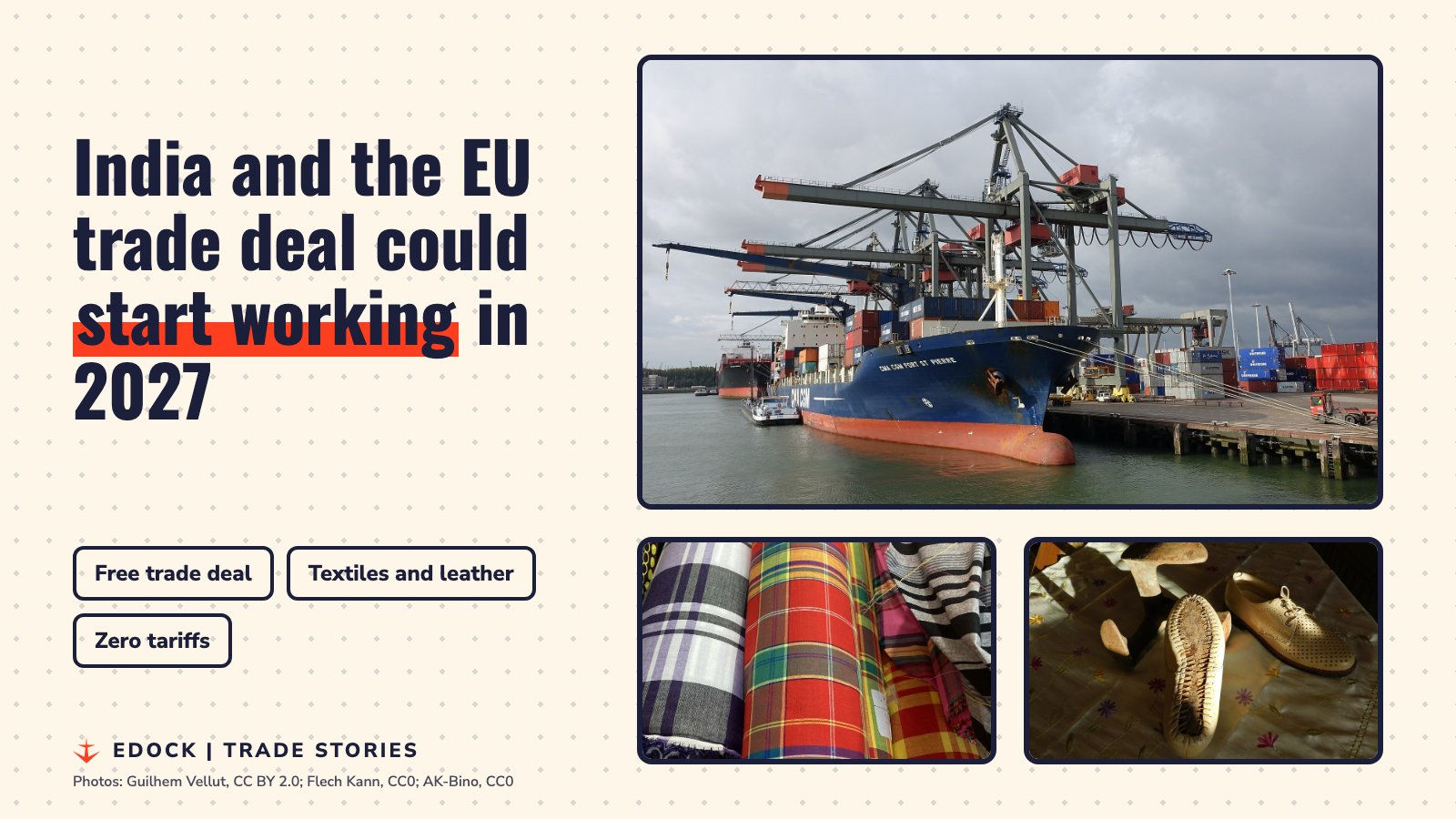
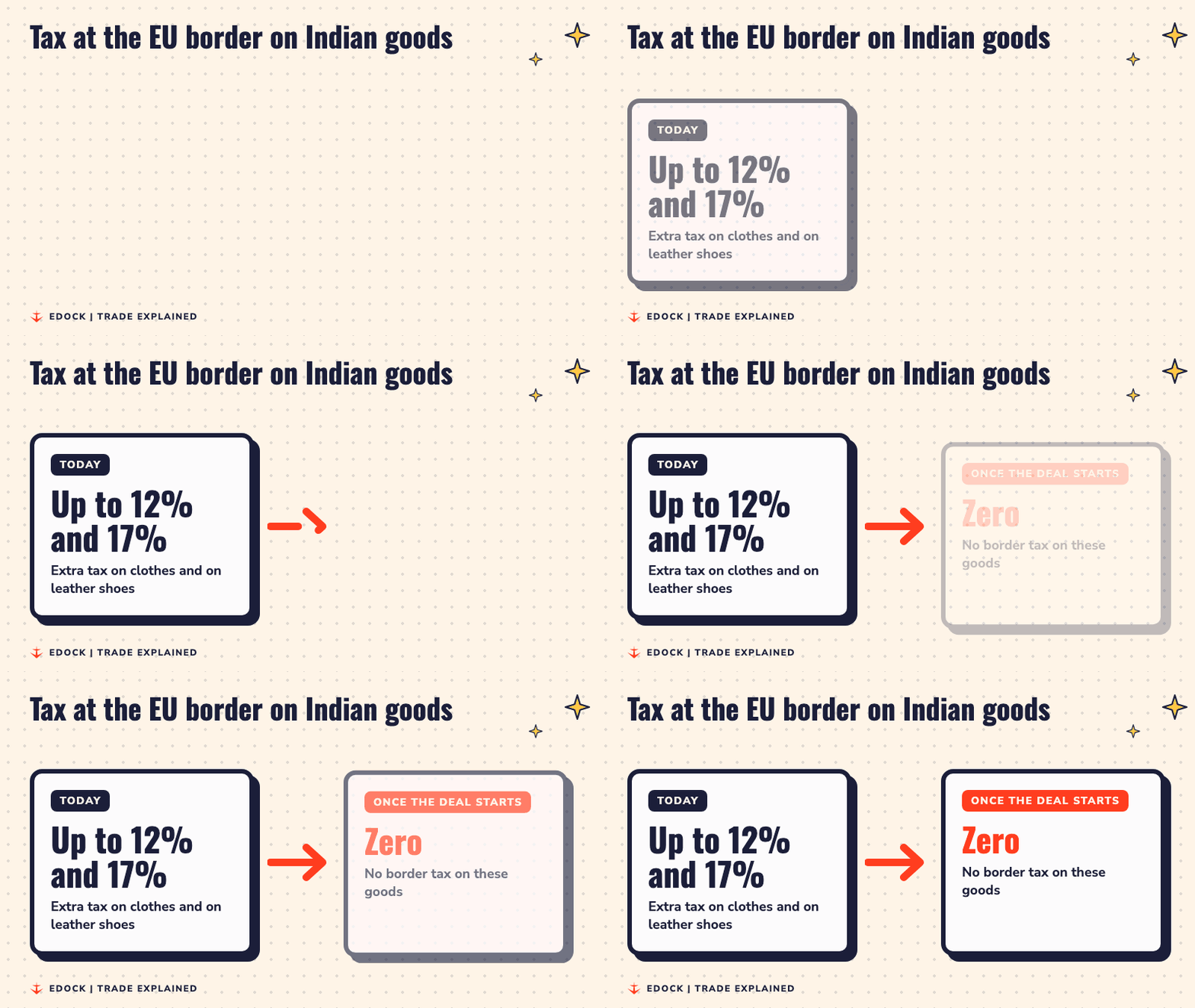
Picture a kurta stitched in Tiruppur or a pair of leather shoes made in Agra. Today, when it lands in a shop in Germany or France, a border tax of up to 12% or 17% is added to it. A new deal between India and Europe plans to bring that tax down to zero. And now there is a rough date for when that could begin.
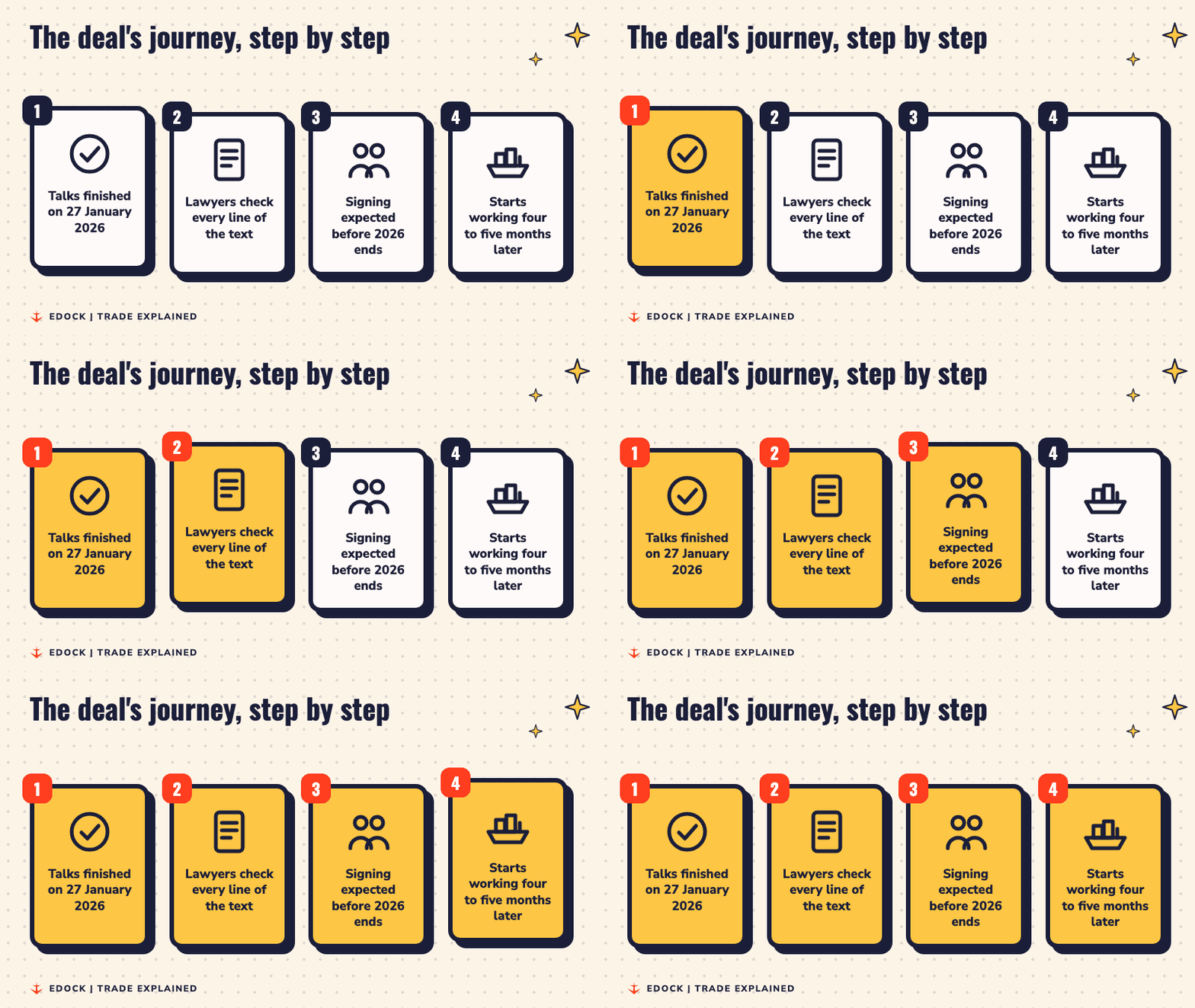
On Thursday, 22 October 2026, Commerce Minister Piyush Goyal said the India-EU free trade agreement could become operational within four to five months after it is signed. He said the deal is expected to be signed before the end of this year. He spoke during a visit to Germany.
So if the signing happens in the last weeks of 2026, the deal could start working in 2027. Here is what that means, in simple words.
First, what is a free trade agreement?
Think of two neighbouring housing societies. Each one charges an entry fee to sellers from outside. One day, the two societies agree: "Our sellers can enter your gate for free, and yours can enter ours for free." That promise is a free trade agreement, or FTA. Two sides agree to cut the extra charges on goods they sell to each other.
The European Union, or EU, is a group of 27 countries in Europe, such as Germany, France and the Netherlands. They trade with the world as one team. So India makes one deal with the whole group, not 27 separate deals.
And what is a tariff?
A tariff is a tax that a country adds to goods coming in from another country. It works like a toll on a highway. Say an Indian shirt costs ₹1,000 to make and ship. If Europe adds a 12% tariff, the shirt now costs ₹1,120 before it even reaches the shop shelf. A shirt from a country with no tariff can sell cheaper, so buyers may pick that one.
Remove the toll, and the Indian shirt can compete on price. That is the big hope behind this deal.
Where does the deal stand right now?
The talks took a very long time. They went on and off for nearly two decades. India and the EU announced the end of the talks on 27 January 2026, at the 16th India-EU Summit. The deal has been called the "Mother of All Deals."
But finishing talks is not the same as signing. After talks end, lawyers on both sides check every line of the text. This is called legal vetting. In January, an Indian official told Reuters that this check was expected to last five to six months, and that the deal would be signed after it.
A report this week said the agreement is expected to be signed in December this year and may come into force next year. "Come into force" simply means the rules actually start working at the border.
What changes for Indian sellers?
Here is what the deal promises, as listed in a summary of the agreement:
- The EU will remove tariffs right away on 70.4% of product types. These cover 90.7% of the value of what India sells to the EU.
- Another 20.3% of product types will become tax free over three to five years.
- Textiles and clothes: tariffs of up to 12% are cut.
- Leather and footwear: tariffs of up to 17% are removed.
- Seafood and marine goods: tariffs of up to 26% are removed.
- Jewellery: tariffs of up to 4% are removed.
In total, the concessions cover over 99% of India's trade value with the EU. It is not one way, though. India also opens its doors. India's offer covers 97.5% of the value of goods the EU sells to India, with some taxes going away at once and others slowly over five to ten years.
Some items stay out. The EU has kept things like dairy, rice, sugar and honey out of the tariff cuts.
How big is this trade?
Trade between India and the EU stood at $136.5 billion in the year to March 2025, about ₹11.5 lakh crore. The EU is India's biggest trading partner.
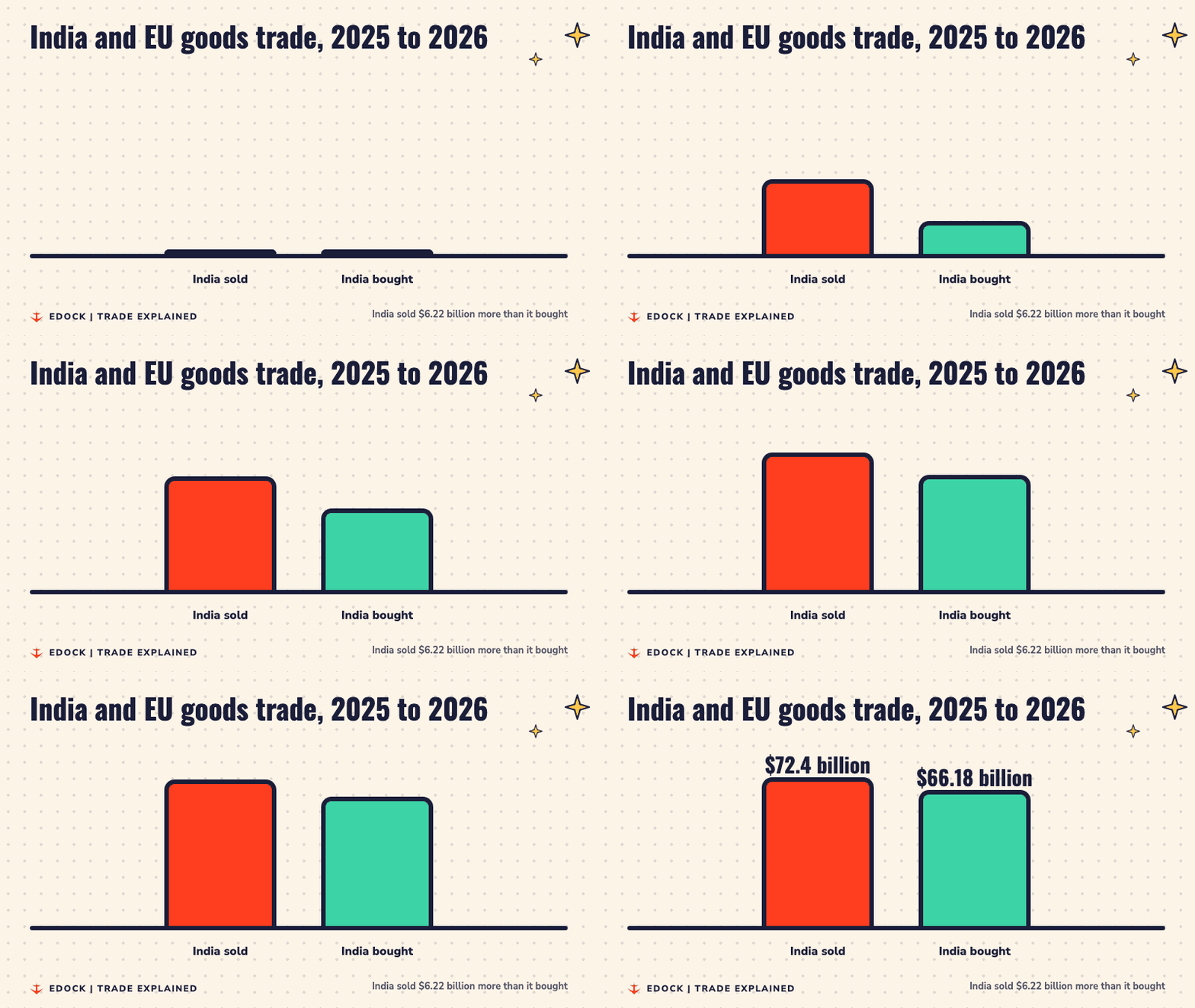
In 2025 to 2026, India's exports to EU countries dipped 4.57% to $72.4 billion. Exports are things India sells abroad. Imports from the EU, the things India buys, rose 9% to $66.18 billion. India sold more than it bought, so the gap of $6.22 billion was in India's favour.
Is a zero tariff enough to win?
Not on its own, says industry group FICCI. Its Secretary General, Anant Swarup, said tariff cuts alone will not lead to higher exports. Indian firms will need to find the products where the tax cut matters most, build ties with European buyers and improve quality.
Europe also has strict rules on product safety, sustainability and carbon. One example is CBAM, a carbon border charge on some goods. Think of it like a school that lets you in free, but still checks your uniform at the gate. Smaller firms, often called MSMEs (micro, small and medium enterprises), may find these checks hard. FICCI wants more testing centres, help desks and cheaper loans for such firms.
What is happening on this trip?
Goyal is visiting Germany from 22 to 24 October and the Netherlands from 25 to 27 October, with around 100 businesses and startups. Germany is India's largest trading partner inside the EU. The meetings cover areas like cars, engineering, IT, food, textiles and clean energy.
Why should a young Indian care?
Clothes, leather goods, seafood and jewellery are made in many small and big units across India. These are the very goods where Europe plans to drop its border tax. FICCI says small firms can also gain by supplying larger Indian and European companies in areas like textiles, leather, engineering parts, chemicals and processed food. More orders from Europe can mean more work for designers, factory teams and people who handle shipping and paperwork.
For now, the key dates to watch are simple. First, the signing, expected before the end of 2026. Then, a wait of four to five months. After that, the toll at Europe's gate could start to fall.
Sources
- India-EU free trade agreement could become operational within four to five months of signing, The Economic Times
- Domestic companies need strategic approach to tap India-Europe FTA gains: FICCI, The Economic Times
- Piyush Goyal to explore trade, investment avenues in Germany and Netherlands, The Economic Times
- India, EU wrap up talks on landmark trade deal, Reuters via Yahoo Finance
- India-EU Free Trade Agreement explained, SCC Online
- Cover photos: Container crane at a container terminal, Rotterdam, by Guilhem Vellut, CC BY 2.0; Rouleaux de Madras, by Flech Kann, CC0; Handgefertigte Schuhe, by AK-Bino, CC0


You may republish this story under CC BY 4.0: credit Pranav Sharma and link to this page.