India brings back a $460 to $681 a tonne duty on Chinese titanium dioxide
The white powder in paint, paper and toothpaste will cost more to import from China for five years. A simple guide to dumping and anti-dumping duty.
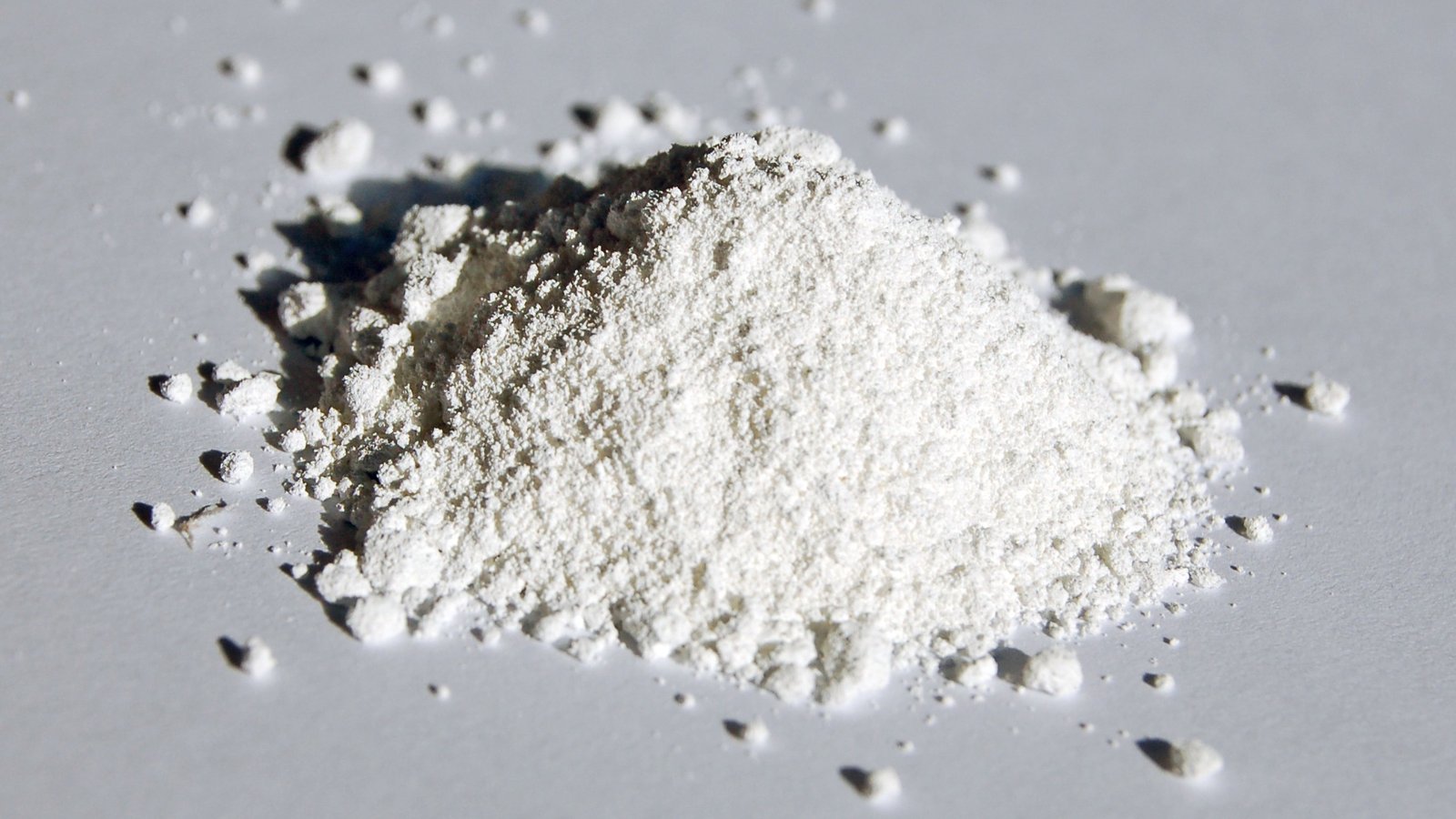
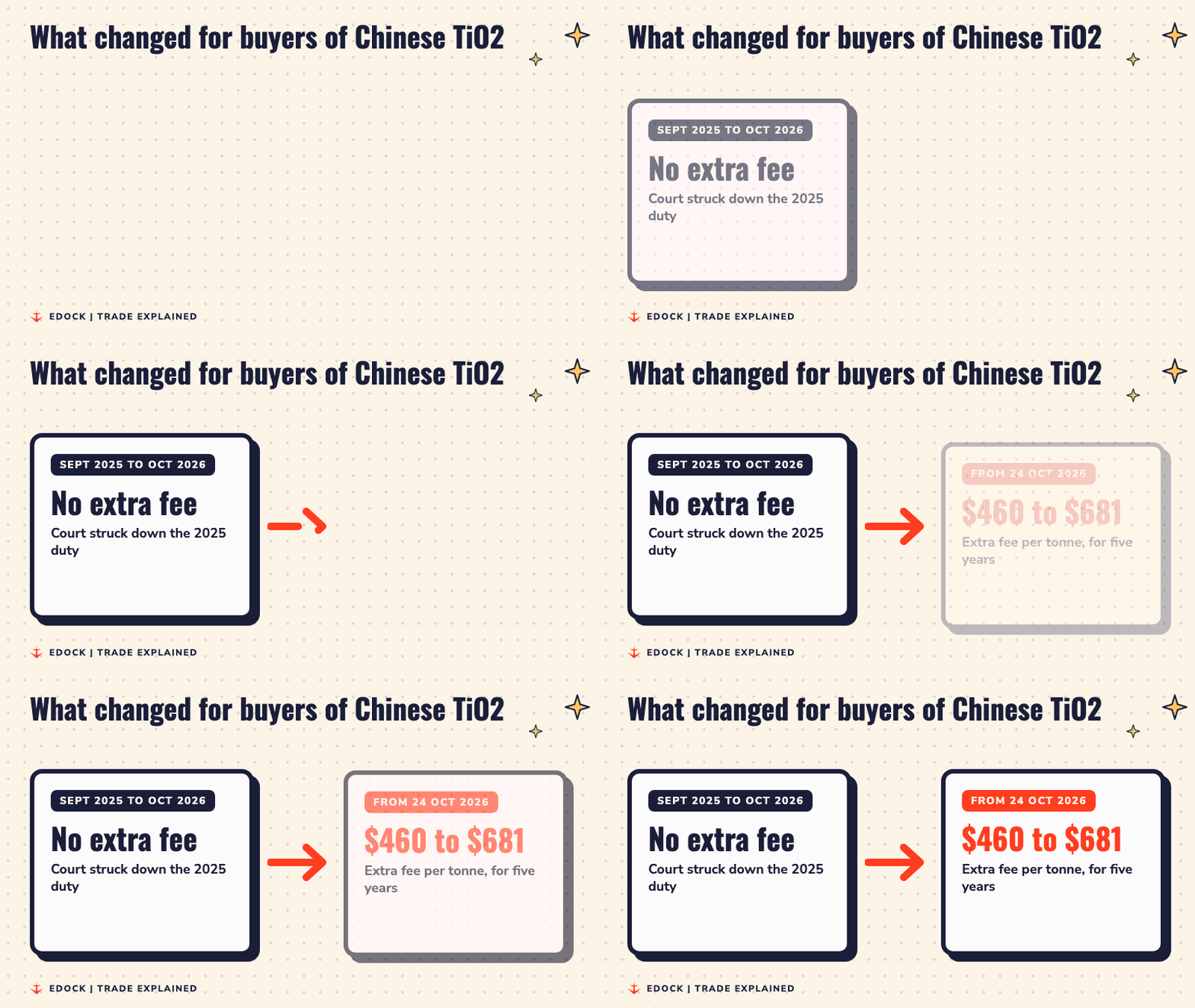
Look at a freshly painted white wall, a sheet of printer paper or a blob of toothpaste. A lot of that bright white comes from one powder: titanium dioxide. On Saturday, 24 October 2026, India's Finance Ministry notified an anti-dumping duty of $460 to $681 on every tonne of this powder coming in from China. The extra fee will stay for five years.
The same kind of duty had already been put in place once, in 2025. A court struck it down. Now it is back. Here is the full story in simple words.
First, what is this white powder?
Titanium dioxide, often written as TiO2, is a white solid that does not dissolve in water. Wikipedia's page on it says it is used to give whiteness and cover to paints, coatings, plastics, papers, inks and most toothpastes. Paint makers love it because it hides what is under the paint, the way a thick white kurta hides a dark vest under it.
It is a big deal in world trade too. The same page says world capacity to make this pigment (a pigment is a powder that gives colour) was about 9.9 million tonnes a year in 2025, and China alone had about 6 million tonnes of it.
The Economic Times report calls it an important raw material for the paints and coatings industry, and for plastics.
What does "dumping" mean?
Picture a samosa stall near your college that sells each samosa for Rs 15. One day a giant seller from another town parks a cart next door and sells samosas for Rs 8, below what it costs to make them. Students rush to the cheap cart. The local stall cannot match that price and may have to shut. That is dumping: selling goods in another country at a price that is unfairly low, and hurting the sellers there.
An anti-dumping duty is the fix. It is an extra fee the government charges on those cheap imports at the port, so the price becomes fair again. The ET report explains that such duties are meant to give relief to local makers, not to work as a general tax on all imports.
Who decided that dumping was happening?
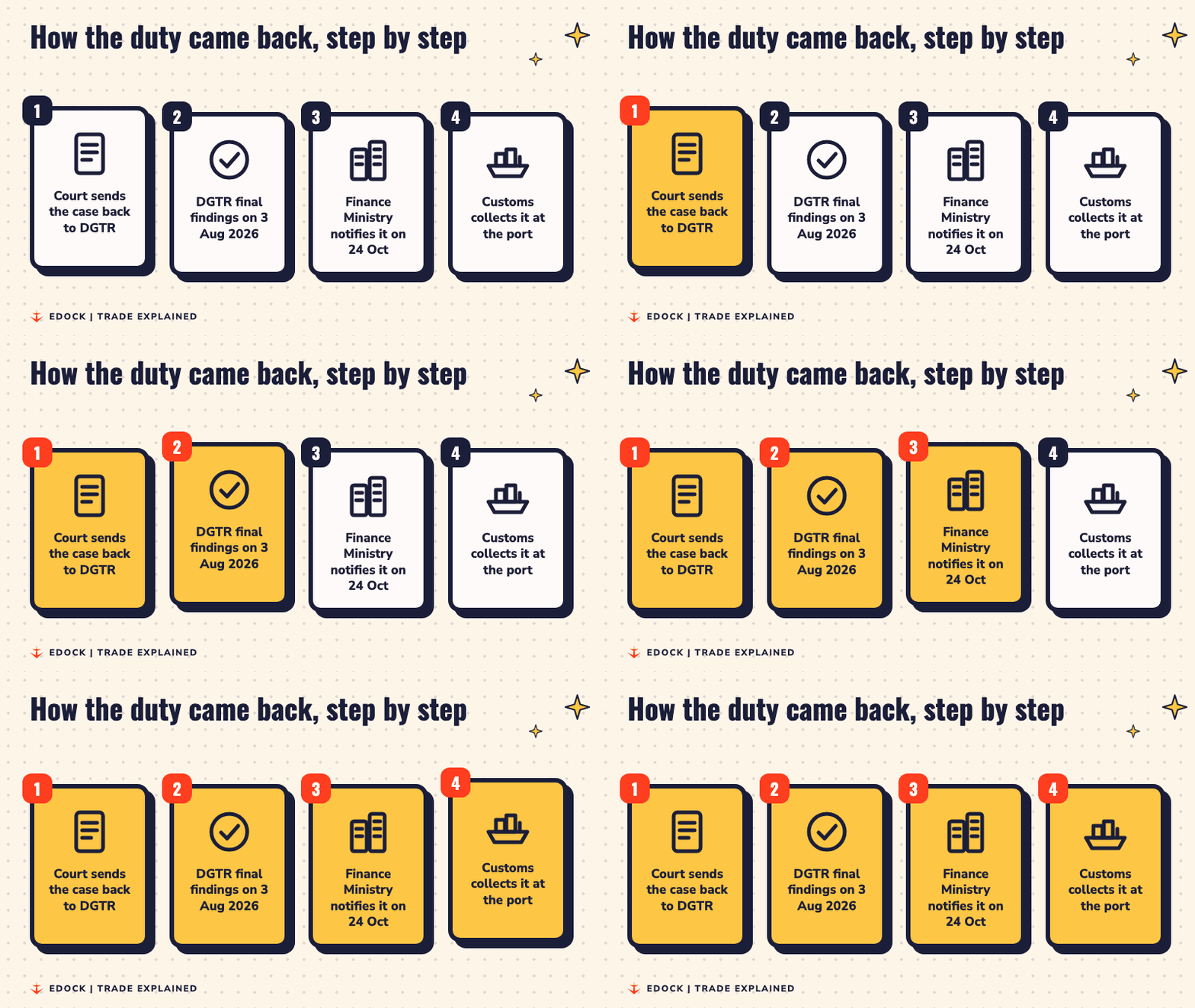
In India, the checking is done by the Directorate General of Trade Remedies, or DGTR. Think of it as the match referee for trade. It studies prices, talks to buyers and sellers, and then makes a recommendation. In its final findings issued on 3 August 2026, the DGTR recommended a duty for five years. The same report says imports from China made up 57% of total Indian demand for the powder during the period it studied.
The DGTR found that the Chinese powder was being sold in India at dumped prices, that it had caused "material injury" (real damage, such as lost sales) to Indian makers, and that it could cause more harm, ET reports. A recommendation is not a duty yet, though. It starts only when the Finance Ministry notifies it, which is what happened on 24 October.
Wait, why did it need to come back?
India first put this duty in place through a notification dated 10 May 2025, with the same range of $460 to $681 per tonne. Then the Indian Paint Association, a group of paint makers who buy a lot of this powder, went to court.
In September 2025, the Calcutta High Court quashed the 2025 duty. The court said the checking process was not fair to everyone, because the affected parties did not get enough access to the data they needed to argue their side. The case was sent back to the DGTR to be done again. Customs then stopped collecting the duty.
So the powder came into India with no extra fee for about a year. ChemAnalyst reports that the DGTR fixed the problems the court pointed out and reached the same answer as before.
How much is the fee?
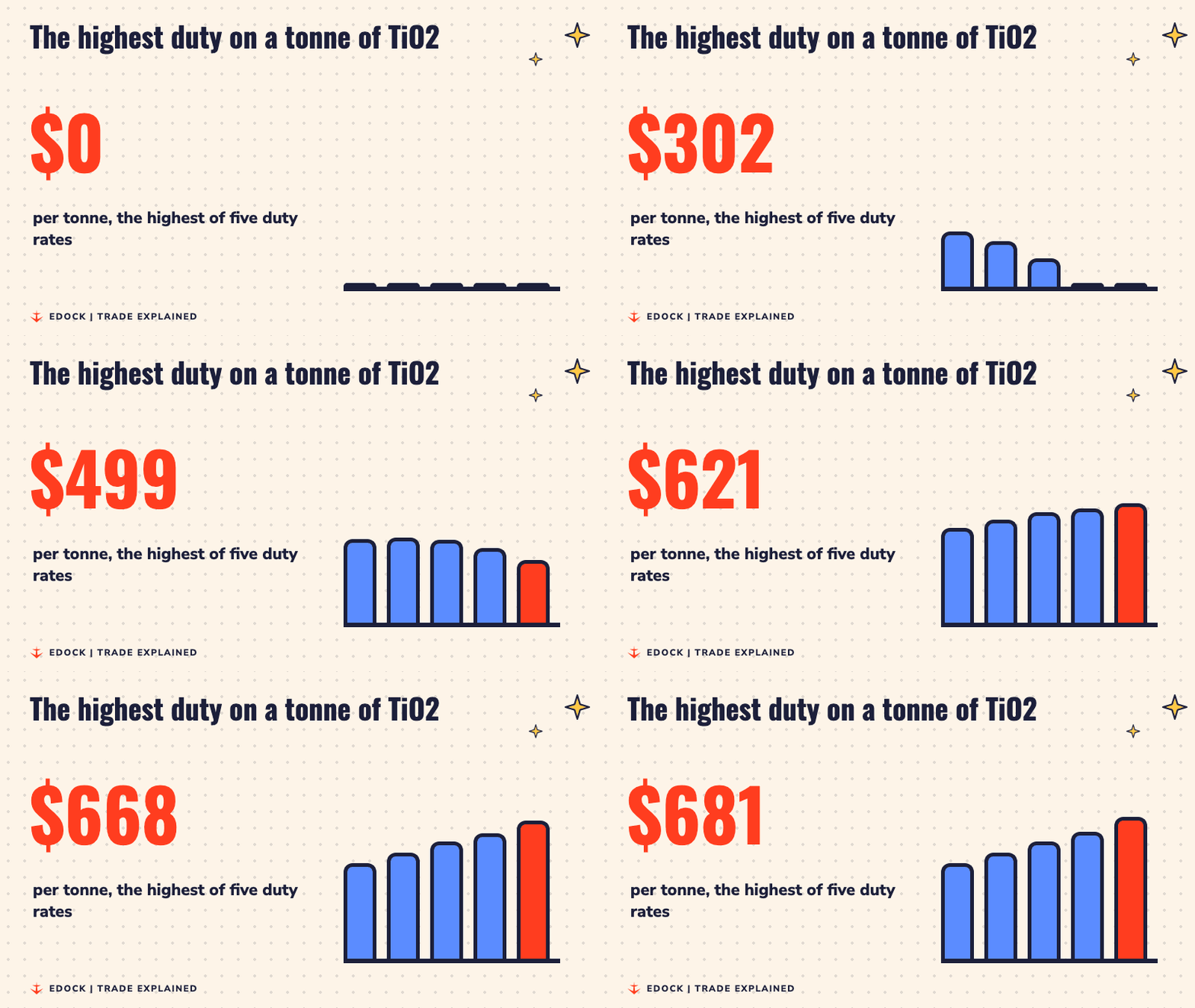
The fee depends on which Chinese company made the powder. According to the rates listed by ET:
- $460 per tonne for LB Group companies and some other listed makers
- $510 per tonne for listed makers that helped the probe but were not studied one by one
- $563 per tonne for makers such as Shandong Jinhai and Shandong Xianghai
- $609 per tonne for Anhui Gold Star Titanium Dioxide
- $681 per tonne for all other makers
The gap between the lowest and highest rate is $221 a tonne. There is a catch too. To get a lower rate, the importer must show a proper bill that names the factory. Without that bill, the top rate of $681 applies. The duty is paid in rupees.
How big is that? ChemAnalyst estimates that a tonne of this powder landed in India at roughly Rs 2.05 lakh during the period studied. On that base, it says the duty adds about 19% to the cost for the lowest rate and close to 28% for the top rate.
What is left out?
Not every kind of titanium dioxide pays the fee. The notification leaves out some special grades: those used as food additives, in coatings on medicine tablets, in cosmetics and sunscreen, in making textile fibres, and very tiny "nano" grades for some uses. So the duty mainly hits the powder used in paint, plastics and similar goods.
Who wins and who pays more?
Indian makers of the powder are the clear winners. ChemAnalyst names Travancore Titanium as one of them. With the cheap imports now costing more, they get a fairer shot at selling to Indian buyers.
Paint makers and other users sit on the other side. Their raw material from China will cost more. ChemAnalyst also reports that buyers had argued Indian supply of one grade is very small compared with demand, but the DGTR kept that grade inside the duty.
Will the paint on your wall cost more? Not for sure. ET notes that a higher cost for raw material does not always lead to higher shop prices. It depends on how much stock companies already hold, whether they can buy from other countries or Indian makers, and how much extra cost they can carry on their own.
Watch: the story in short
A short video from ChemAnalyst on the duty coming back:
And how the white powder is made, from mine to pigment, by Tronox, one of the world's big makers:
The big picture
Trade works best when the price on the tag is fair. When one country's sellers sell far below cost, the local stall can shut down and buyers may end up with fewer choices later. When a duty is too wide, buyers pay more for a key raw material. India's decision on 24 October picks the first worry for this powder, for the next five years. The next time you see a bright white wall, you will know there is a trade story hidden in the paint.
Sources
- The Economic Times: China faces fresh Indian duties on titanium dioxide imports
- Asian Metal: DGTR recommends anti-dumping duty on Chinese titanium dioxide
- ChemAnalyst: Indian Paint Association loses ground as TiO2 duty comes back
- European Coatings: India withdraws anti-dumping duty on titanium dioxide imports from China
- TaxGuru: India imposes anti-dumping duty on China's titanium dioxide (2025 notification)
- Wikipedia: Titanium dioxide
- Cover photo: Titanium dioxide sample, by Benjah-bmm27, public domain

You may republish this story under CC BY 4.0: credit Manpreet Kaur and link to this page.