India bought a record 1.1 million tonnes of soybeans from Africa
A short crop and high prices pushed Indian mills to buy non-GM beans from Niger, Benin, Togo and Nigeria, while soymeal exports halved.

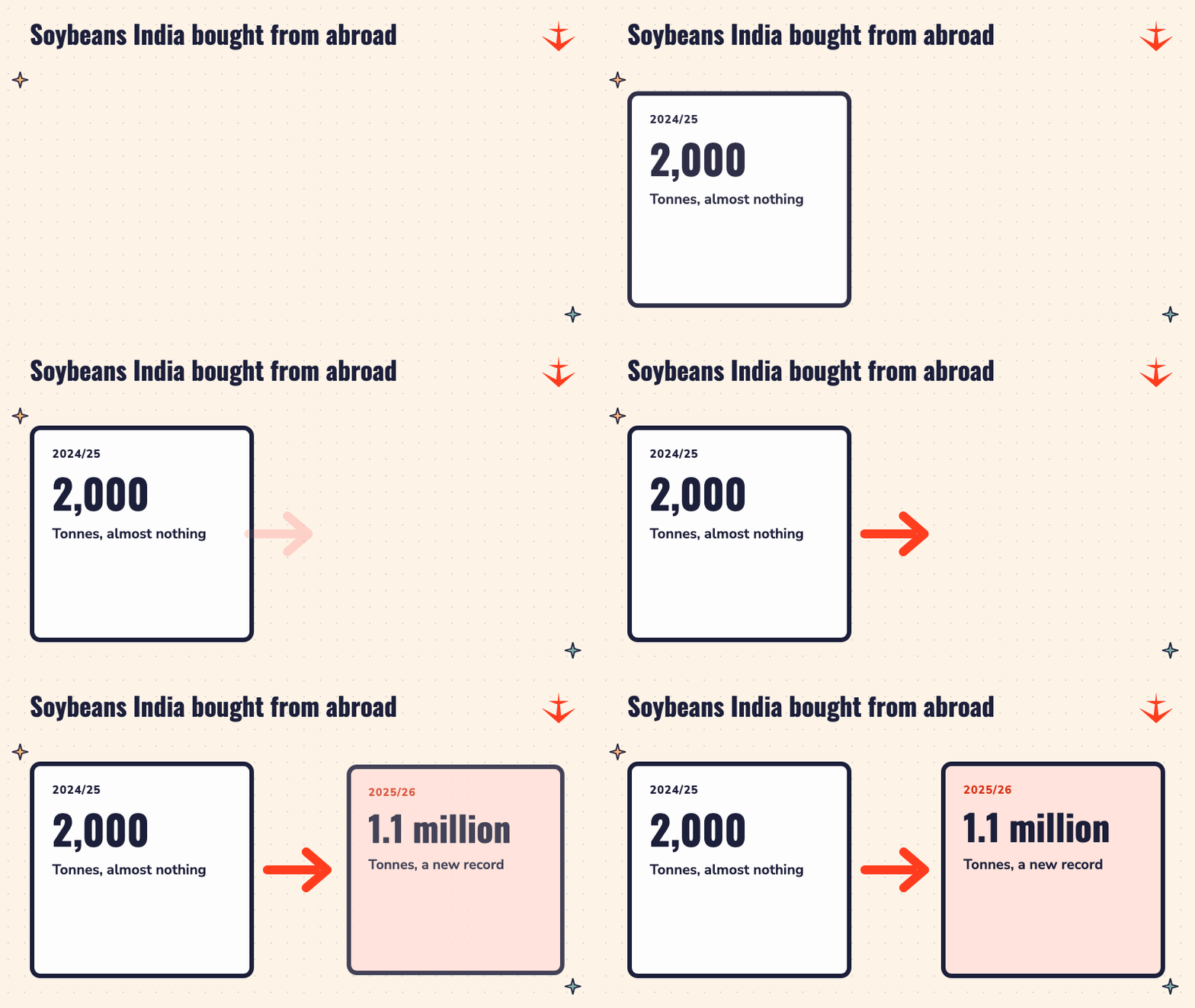
Picture this. In one year, India bought about 2,000 tonnes of soybeans from other countries. The next year, the same number jumped to 1.1 million tonnes. That is about 550 times more.
This is not a guess. On Wednesday, 28 October 2026, the Soybean Processors Association of India, known as SOPA, said India's soybean imports hit a record 1.1 million tonnes in the 2025/26 year, which ran from October 2025 to September 2026. SOPA is the trade body of the mills that crush soybeans in India. The year before, imports were only about 2,000 tons.
So why would a country that grows plenty of soybeans suddenly buy so many from Africa? The answer is a simple story of a short crop, high prices and a strict rule about seeds.
First, what is a soybean used for?
A soybean is a small, round bean. Most of it does not end up on your plate as beans. Mills crush it, like you squeeze a lemon. Out comes oil for cooking. What is left is a dry, powdery cake called soymeal.
Soymeal is rich in protein. That is why it goes mostly into animal feed, as a protein boost. Think of it as the protein shake of the chicken and cattle world. So when soymeal gets costly, poultry farms and dairy farms feel it too.
Why did India run short?
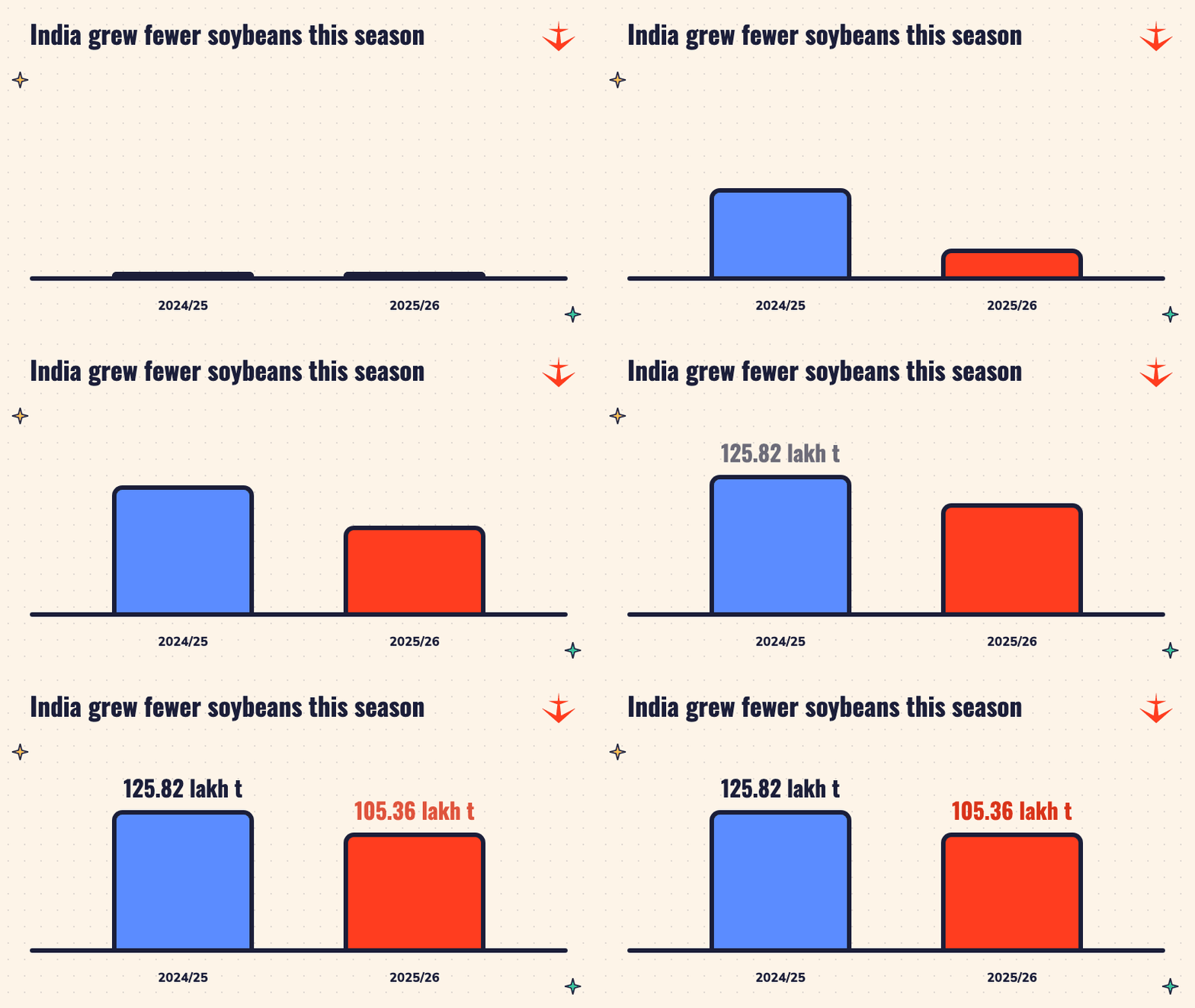
India grew fewer soybeans this season. In December 2025, SOPA estimated the 2025/26 crop at 105.36 lakh tonnes, down from 125.82 lakh tonnes the year before. That is about 20 lakh tonnes less, a fall of roughly 16%.
Reports say dry weather hurt the crop after the floods of the year before. Fewer beans came to the market, and the mills still needed beans to keep running.
When something is short, the price goes up. Think of onions. When a city's own onion crop fails, onion prices shoot up, and traders start bringing onions from far away. The same thing happened here, with soybeans.
How high did prices go?
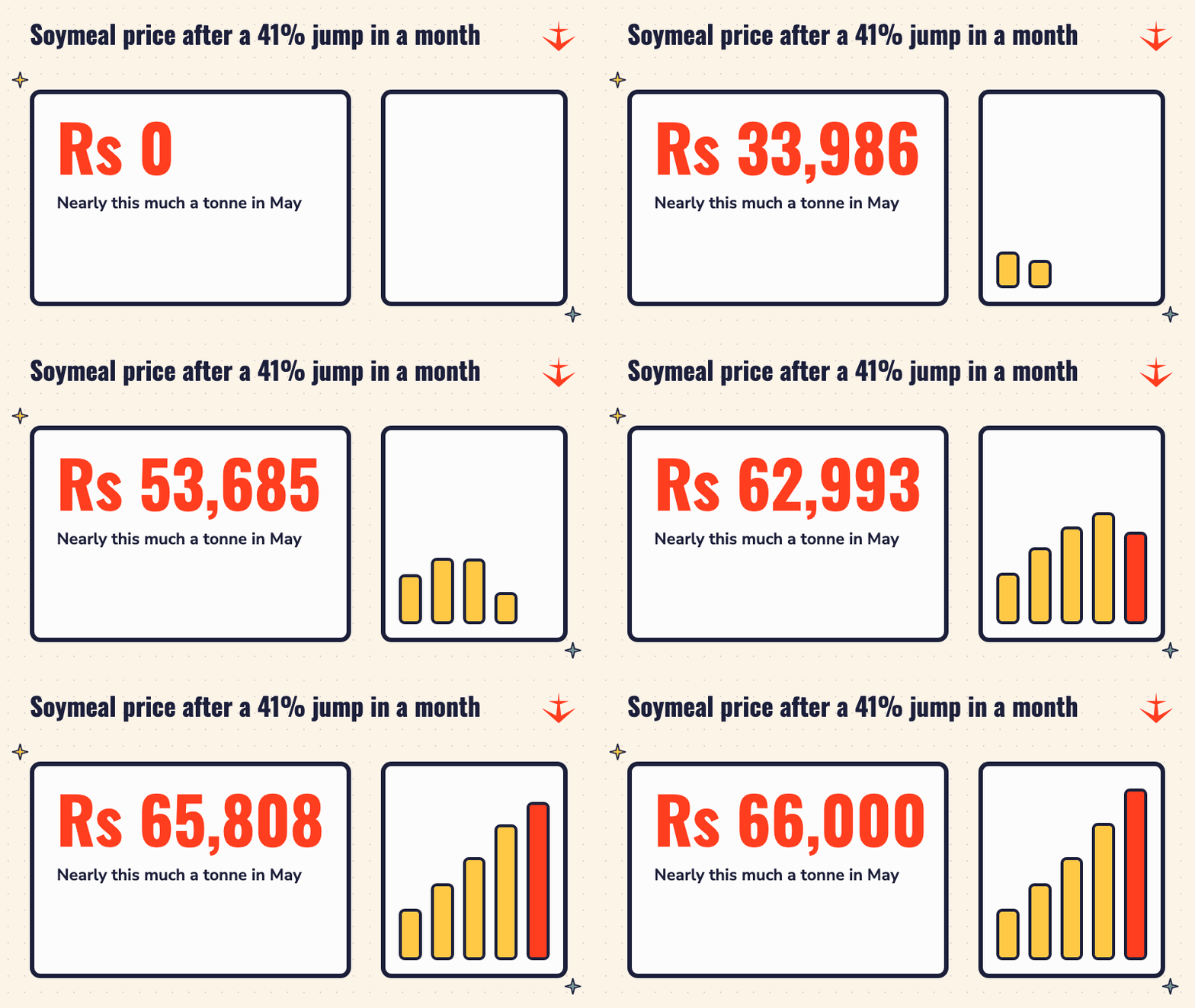
Very high, very fast. In May 2026, Indian soymeal prices climbed around 41% in one month to nearly Rs 66,000 a tonne, a four-year high, as per a Reuters report. Traders even cancelled export deals for about 25,000 tonnes of soymeal, the first such cancellations reported in this trade since 2021.
At such prices, buying beans from abroad started to make sense for the mills. Once more, high local prices pulled in imports, just like the onions.
Why Africa, and not the US or Brazil?
Here comes the strict rule. India does not allow imports of genetically modified soybeans. A genetically modified, or GM, soybean is one whose DNA has been changed in a lab, for example to make the plant survive weed killer. Around the world, GM soybeans covered 82% of the soybean area in 2014.
So India can only buy non-GM beans, the natural kind. Few countries grow them in big amounts. That limits India to a handful of African countries, including Benin, Niger, Togo and Nigeria. Since buyers have so few places to go, non-GM beans sell at a steep premium. A premium means an extra price on top of the normal one, like paying more for a cricket bat signed by a star.
The big surprise: Niger
The biggest seller to India was Niger. Traders estimate Niger shipped more than 430,000 tons in the year to 30 September. That is around 40% of all of India's soybean imports, as per traders.
This raised eyebrows. In notices to importers, Indian customs wrote that Niger's soybean production is very small, so the import amount seemed higher than Niger's usual capacity, Reuters reported.
Why would the label "Niger" matter so much? Because of import duty, which is a tax paid at the border. India lets goods from the poorest countries, called least developed countries, come in duty free. Niger is one of them. Nigeria is not. If cargoes are found to be mislabelled, importers would have to pay the full 45% import tariff, as per sources familiar with the probe.
Indian customs is investigating soybean imports declared as coming from Niger. It suspects some cargoes may have come from Nigeria instead. No final finding has been published yet. In October, about 1,500 tonnes, or 60 containers, were held at the port near Mumbai while importers were asked for papers proving where the beans grew.
What happened to soymeal exports?
India also sells soymeal to other countries. In 2025/26, those exports halved to 1 million tons, SOPA said.
The reason is simple. When Indian soymeal became so costly, buyers abroad looked elsewhere. Back in June, SOPA had expected soymeal exports of 11 lakh tonnes and imports of 9 lakh tonnes. In the end, imports beat that forecast and exports came in a little lower.
Fewer exports mean less foreign money coming in for Indian mills, and buyers abroad, who once bought Indian soymeal, now buy from other places.
What this means for farmers, mills and your plate
Here is the short version, like a samosa stall that runs out of potatoes.
- Mills: they needed beans to keep their machines running, so they paid more and bought from Africa.
- Poultry and dairy farms: soymeal is a key feed, so they pay more when its price jumps.
- Exporters: Indian soymeal lost buyers abroad because it got too costly.
- Farmers: a smaller crop meant fewer beans to sell, even though prices were higher.
Now picture the size of all this. India's crop was about 105 lakh tonnes, and imports were about 11 lakh tonnes. So imports were roughly a tenth of what India grew. That is a big change for a country that bought almost nothing a year earlier.
Want to know more?
This video from The Core explains how India's soybean trade works, including the GM rules and the minimum support price for farmers. It was made before this year's record, so the numbers in it are older.
What to watch next
Two things matter now. First, the new crop: processors and traders had expected supplies to stay short until the new crop arrives in September and October. A good harvest would cut the need to buy from abroad. Second, the customs probe. Its result will decide whether some importers owe duty on cargoes declared as coming from Niger.
For now, one small bean has told a big story about how a short crop in India can change trade all the way to West Africa.
Sources
- Devdiscourse (Reuters feed): India's soybean imports surge to record as domestic prices rally
- The Economic Times: India's soybean imports surge to record
- UkrAgroConsult: India's soybean imports rise to 1.1 mln tons
- Global Agriculture: SOPA crop estimate for 2025/26
- NewsDrum (PTI): SOPA raises import estimate to 9 lakh tonnes
- Angel One: India cancels 25,000 ton soymeal export deals
- Nairametrics: India probes Niger soybean imports
- Zawya (Reuters): India holds soybean cargoes over doubts about Niger origin
- Wikipedia: Soybean meal
- Wikipedia: Genetically modified soybean
- Cover photo: Soyabean field in Hingoli, Maharashtra, by Albert Deccan, CC BY-SA 3.0

You may republish this story under CC BY 4.0: credit Arshdeep Singh and link to this page.