India and the EU start the customs homework for their trade deal: who gains and when
Version 1 of 1 saved 3 Nov 2026, 7:35 am IST · Chain line 345
As it was first published
India and the EU start the customs homework for their trade deal: who gains and when
India's Commerce Secretary met European Commission trade and customs chiefs in Brussels to plan how the deal will work at the border.
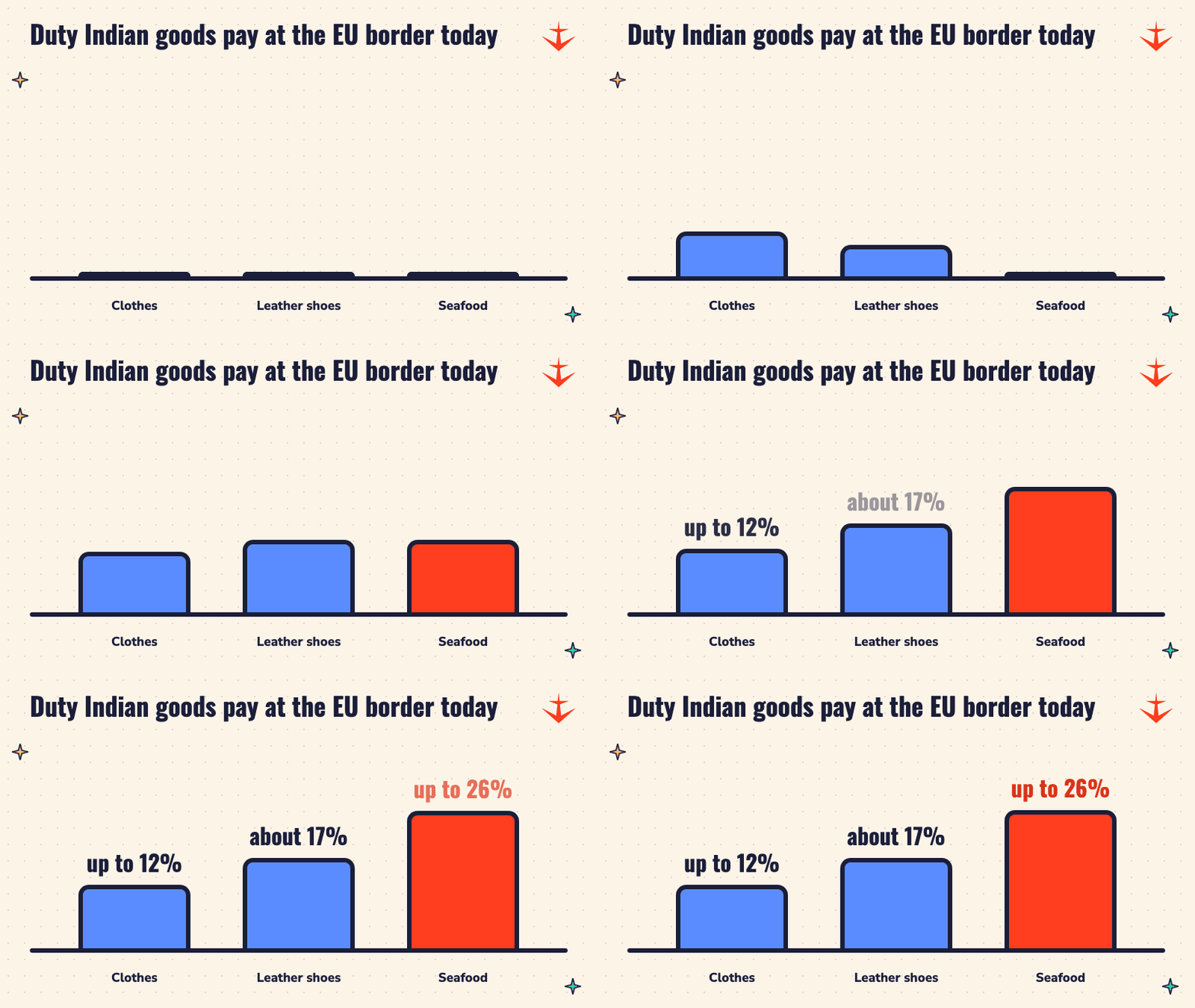
Picture a T-shirt made in India and sold in a shop in Paris. Today, Europe charges an entry fee of up to 12% on clothes like this one at the EU border. Under the trade deal between India and the European Union (EU), that fee is set to fall to zero. On Monday, 2 November 2026, India's commerce ministry said the two sides had met in Brussels to plan how the deal will work at ports and customs desks.
The deal will only be signed in December. But the quiet work of getting it ready has already begun.
What happened in Brussels
Commerce Secretary Rajesh Agrawal, the top officer of India's commerce ministry, held meetings in Brussels with three senior heads at the European Commission. They were Ditte Juul Jorgensen, who leads trade, Koen Doens, who leads international partnerships, and the head of the department for taxation and customs.
The visit was last week, and the official statement came on Monday, PTI reported. With the trade chief, both sides talked about more two-way trade, easier entry into each other's markets and stronger supply chains. They agreed to keep working on the remaining "procedural and implementation-related issues", the ministry said.
The customs meeting was about customs cooperation, smoother trade and getting ready to put the deal into practice. Both sides agreed on the need for "efficient, transparent and digitally enabled customs procedures", the ministry said.
Agrawal also met people from the diamond trade linked to Antwerp, in Belgium. The ministry named Antwerp, Mumbai and Surat as major diamond centres.
First, what is a free trade deal?
Think of two neighbours who run samosa stalls. Each one charges the other a fee to sell in his lane. One day they agree: no more fees for each other. Both now sell more.
A free trade agreement, or FTA, works the same way between countries. The fee is called a tariff, or duty. It is a tax paid on goods when they cross a border. If a Rs 1,000 shirt pays a 12% duty, someone pays Rs 120 more before the shirt even reaches the shop.
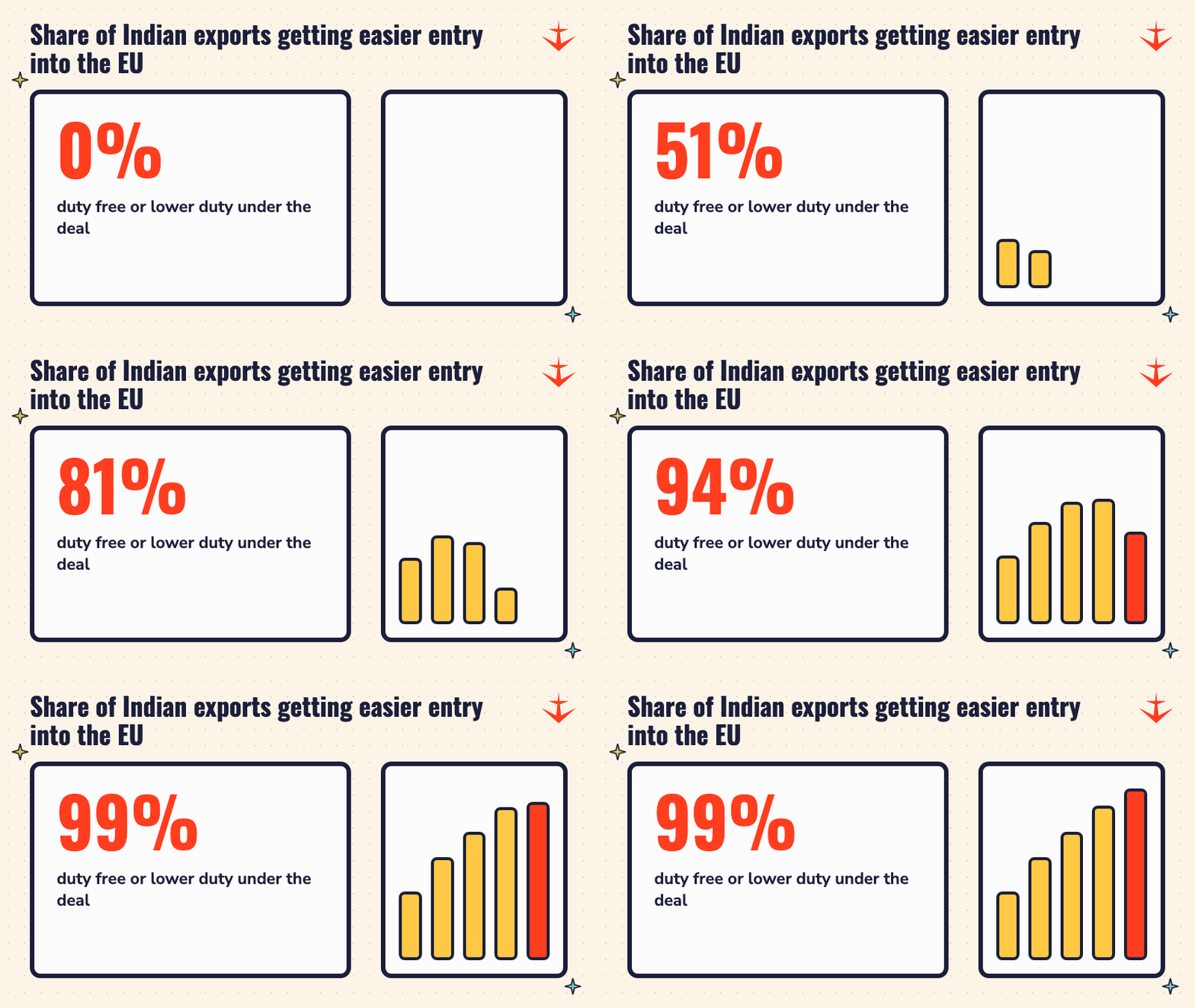
Under this deal, India gets lower or zero duty on more than 99% of Indian exports to the EU, Business Today reported. Duty goes to zero on 90% of Indian exports on day one, rising to 93% over seven years. Another 6% gets lower duties or entry under a quota, a set limit explained further down.
The EU gets a lot too. India will remove or cut duties on 96.6% of EU goods sold to India, the European Commission says. The Commission puts the saving for European sellers at around 4 billion euros a year in duties.
What does "implementation" mean?
Agreeing a deal is like agreeing the rules of a cricket tournament. Implementation is everything after that: the umpires, the scoreboard, the ground staff and the entry gates. Without them, no match is played.
Here, the umpires are customs officers. Customs is the team at a port or airport that checks goods coming in, reads their papers and collects the duty. If an Indian leather bag is to enter Europe at zero duty, the customs officer in Europe must know the rules and have the right papers in front of him.
That is why "digitally enabled" matters. If papers move online and both sides read them the same way, a container waits less at the port. The ministry said this helps by "reducing transaction costs". A transaction cost is the extra money spent just to get a deal done: agents, forms, phone calls and days of waiting.
Which Indian makers gain
Trades that need many workers, like a tailoring unit with rows of sewing machines, are called labour intensive. The deal gives these trades duty free entry: leather, textiles, and gems and jewellery, PTI reported.
Here is the fee these goods pay in Europe now, from Business Today's breakdown:
- Seafood and other marine products: up to 26%
- Leather goods and footwear: about 17%
- Clothes and textiles: 11% to 12%
- Gems and jewellery: 4%
- Toys and sports goods: 4.7%
Together, these trades make up roughly $33 billion to $35 billion of Indian sales to the EU, the report said. Zero duty could help Indian clothing makers win back buyers from rivals like Bangladesh and Vietnam.
What Indian buyers get: cheaper European cars, with a limit
India charges a 110% duty on cars from the EU. Under the deal, this falls to 10% for a quota of 250,000 cars a year, the European Commission's factsheet says.
A quota is like a limited number of discount tickets for a match. Once 250,000 cars have come in at the low rate, the rest pay more. Cars priced below 15,000 euros are left out, and the cuts come in steps over five years, Business Today reported.
When will the duties actually fall?
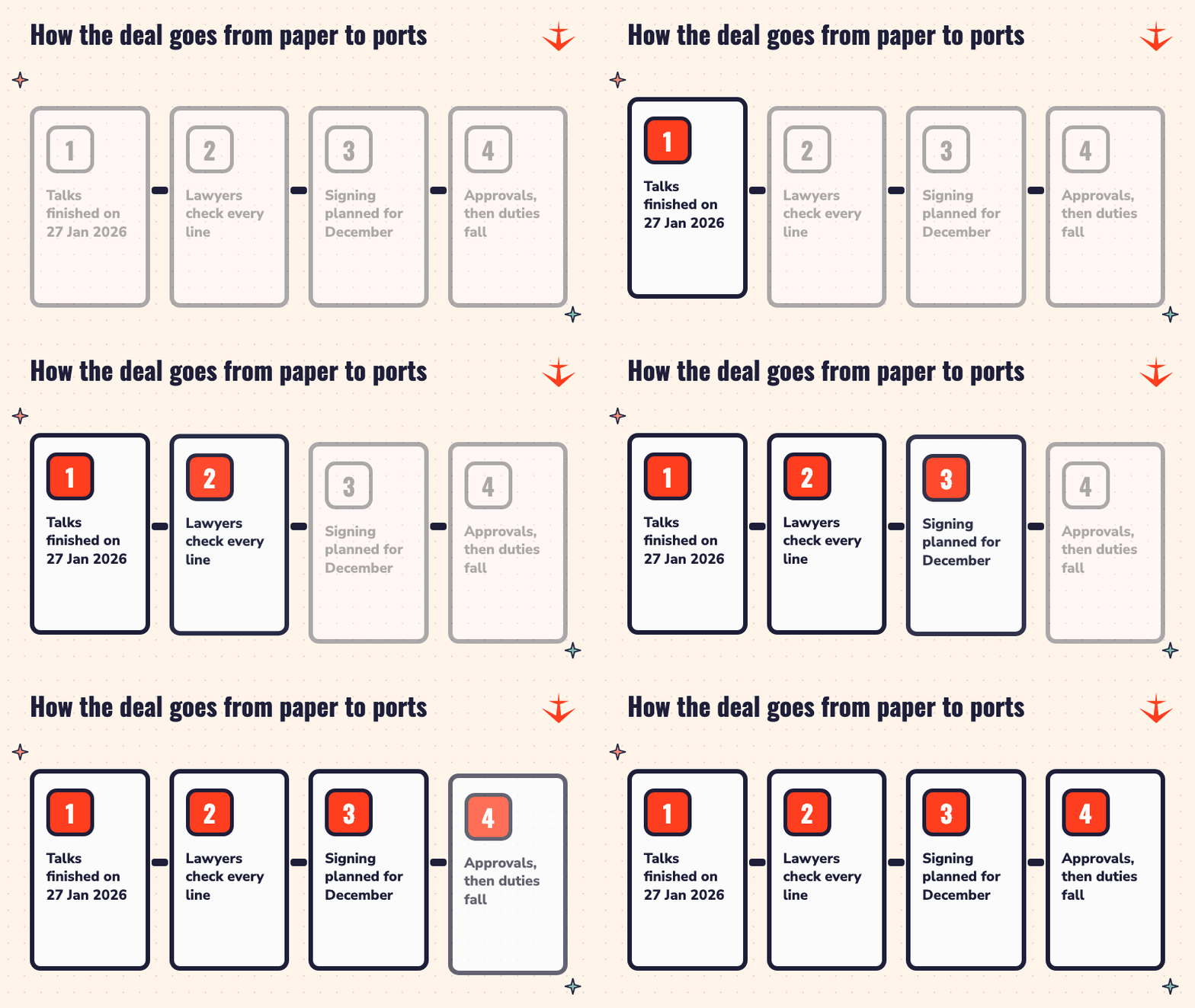
Not yet. The two sides finished talks on 27 January 2026, and the signing is planned for December, PTI reported. The European Commission has sent proposals to the EU Council to allow the signing.
After signing, more approvals are needed. The deal needs a yes from the Council of the European Union, consent from the European Parliament and approval from India's Union Council of Ministers, Wikipedia's page on the deal notes.
On 22 October in Berlin, Commerce Minister Piyush Goyal said the deal could start working within four to five months, Republic reported. He asked companies to start now: send product samples, share quality needs and talk prices with buyers, so that India can "be the first off the block".
This video shows Goyal explaining, in simple words, how a trade deal works:
And this NDTV explainer, made when the talks ended in January, walks through what gets cheaper:
Why this matters to you
The EU is India's largest trading partner. Goods worth 120 billion euros moved between them in 2024, or 11.5% of all of India's goods trade, the European Commission says.
Business Today says the deal is set to support export growth and more work for MSMEs, the small and mid-sized firms that make many of these goods. A smooth customs desk in Europe is where those gains start: a shirt that clears the port in one day sells sooner than one stuck for a week.
So the Brussels talks were not about big speeches. They were about forms, computers and border checks. That is the part that turns a deal on paper into cheaper Indian goods on European shelves.
Sources
- Commerce ministry statement on the Brussels meetings, 2 Nov 2026 (India Education Diary)
- India, EU discuss FTA implementation ahead of December signing (The Economic Times, PTI)
- EU India agreement (European Commission)
- Factsheet: EU India free trade agreement, main benefits (European Commission)
- India EU FTA: textiles, leather, labour intensive exports boost for India (Business Today)
- India EU FTA may be operational in 4 to 5 months, Piyush Goyal (Republic)
- India and European Union Free Trade Agreement (Wikipedia)
- Cover photo: Berlaymont building, Brussels, Belgium, by Romaine, CC0 1.0 (public domain dedication)
