India and Mexico start talks on a trade deal to ease tariffs on Indian cars
The two countries signed the rules for the talks on 28 October, ten months after Mexico raised entry fees on Indian cars, phones and steel.

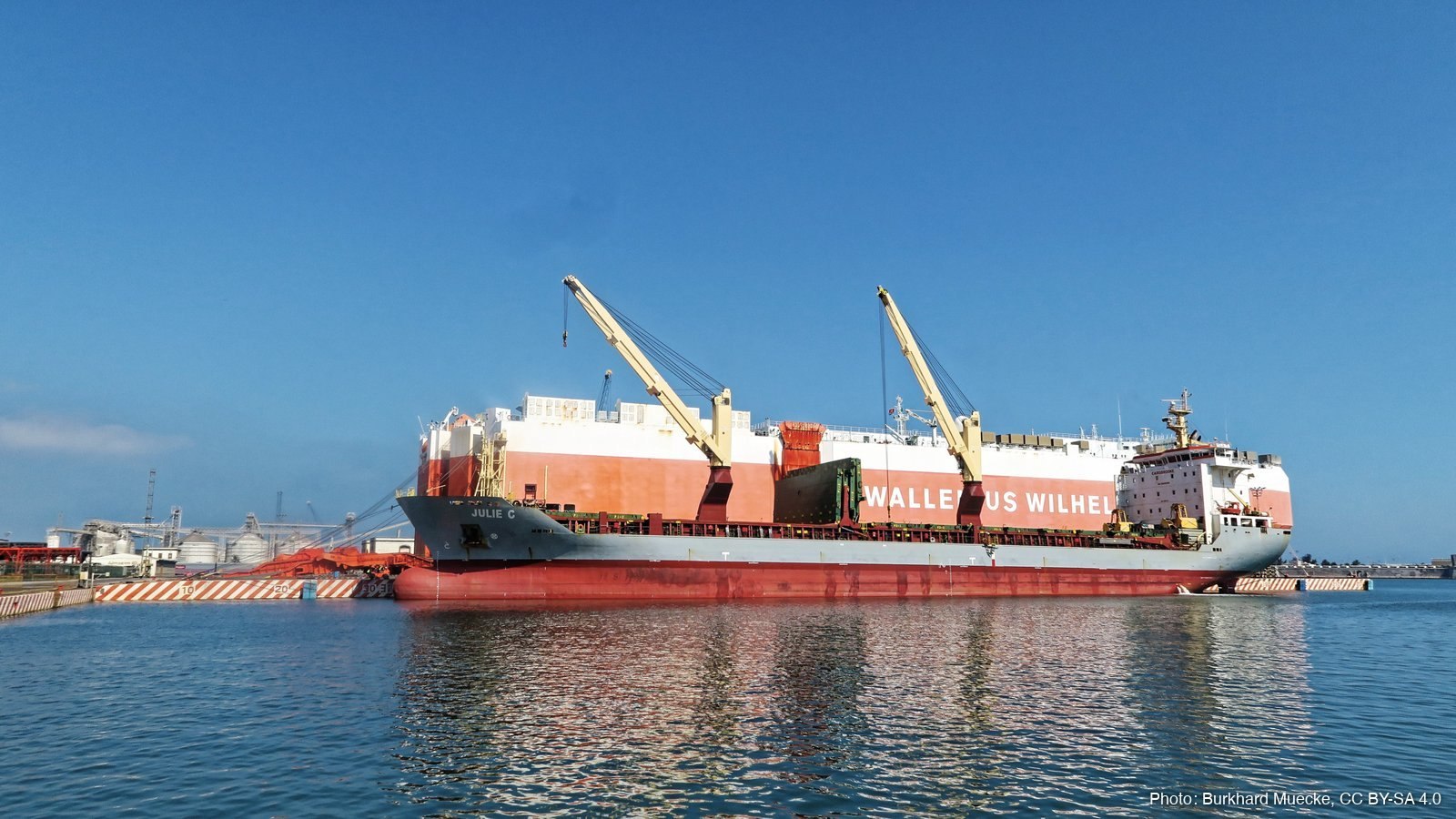
Picture a car built in a factory in India. It sails halfway around the world to Mexico. At the Mexican border it now pays a much bigger entry fee than it did a year ago, so it reaches the shop floor at a higher price than before. That is the problem Indian exporters have faced since January. On Wednesday, 28 October 2026, India and Mexico signed the Terms of Reference for a Preferential Trade Agreement, which formally starts talks on a deal that could bring some of those fees down.
Here is what that means, in plain words.
What happened on Wednesday?
India's Commerce Secretary Rajesh Agrawal and Mexico's Undersecretary of Foreign Trade, Luis Rosendo Gutierrez Romano, signed the papers during Agrawal's two-day visit to Mexico City. India's Department of Commerce wrote on X: "Our shared ambition: expand trade, unlock investment, strengthen supply chains and create new opportunities for businesses in both countries."
The step follows a meeting between Prime Minister Narendra Modi and Mexico's President Claudia Sheinbaum at the G7 summit in Canada in June 2025, where the two leaders agreed to deepen ties, the Commerce Ministry said.
First, what is a tariff?
A tariff is an entry fee a country charges on goods arriving out of another country. Think of a toll booth on a highway. The truck pays before it can enter, and that cost usually lands in the price the buyer pays at the end. A Mexican opposition senator said this plainly when the tariffs were approved: "the tariff is an additional tax that citizens pay when they buy a product," said Mario Vazquez.
In December 2025, Mexico's Senate approved higher tariffs on about 1,400 product lines, starting in 2026. They apply to nations that have no trade deal with Mexico, such as China, India, South Korea, Thailand and Indonesia. The goods include autos, auto parts, textiles, clothing, plastics and steel. Most of the new rates go as high as 35%.
The new duties range between 5% and 50%, and they took effect on 1 January 2026.
Why should India care so much?
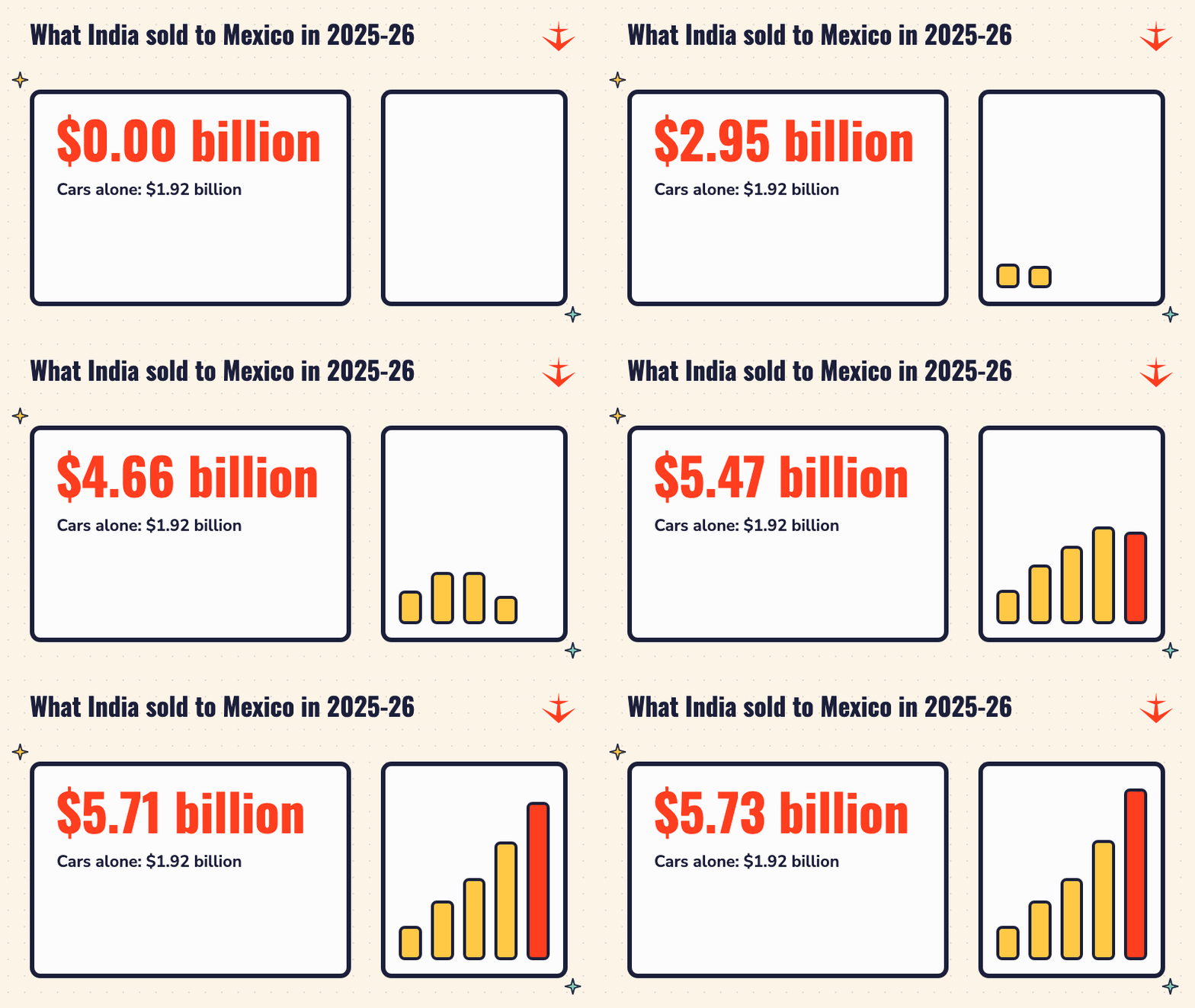
Mexico is a big buyer of Indian goods. India's exports to Mexico were $5.73 billion in 2025-26, as per official trade data. Automobiles were the largest share, at $1.92 billion. In other words, about one in every three dollars India earned selling goods to Mexico came out of cars.
Trade in both directions added up to $7.83 billion a year. So India sells far more to Mexico than it buys back.
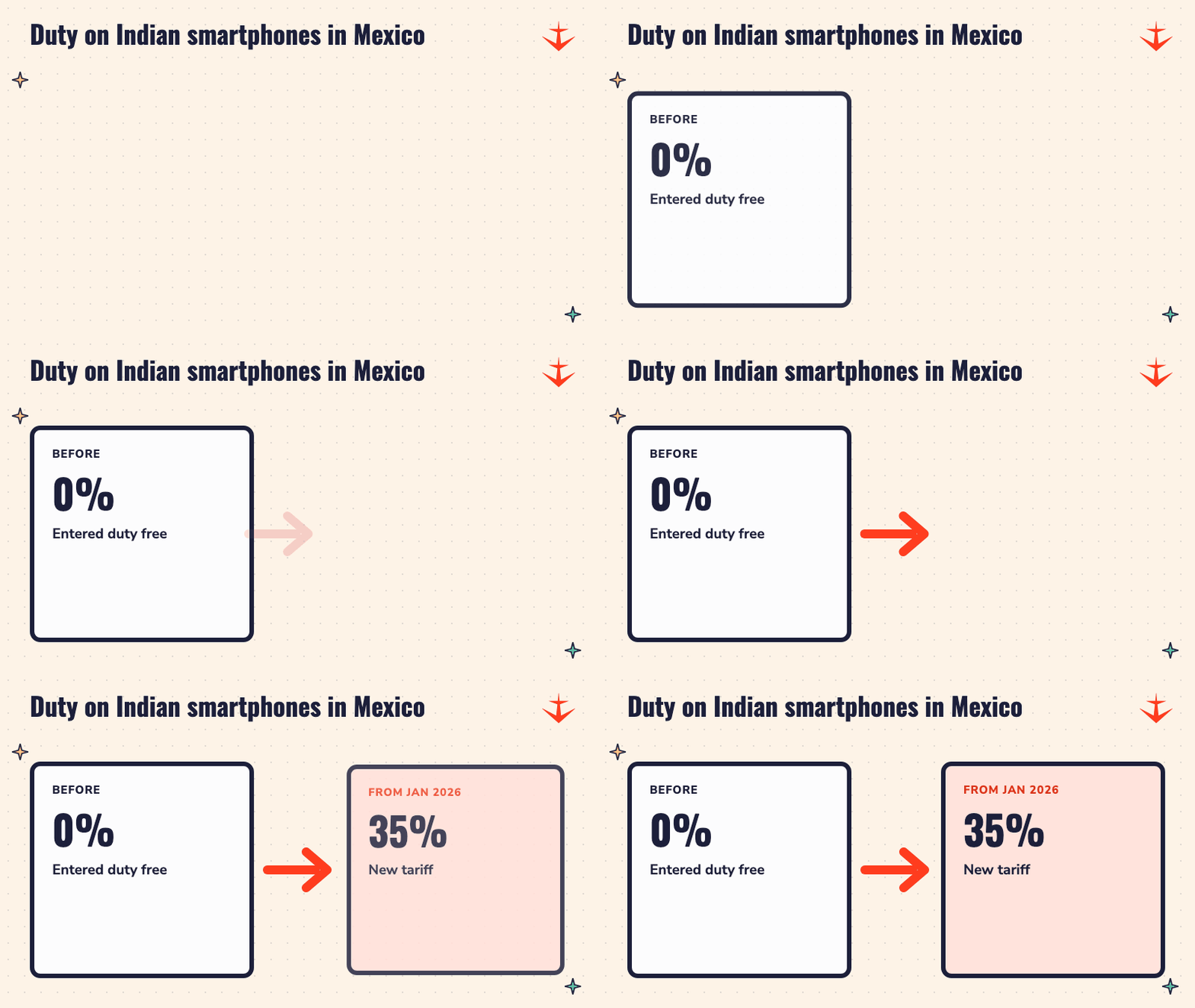
When Mexico raised its fees, a Delhi think tank called GTRI said the new tariffs touch nearly three quarters of India's exports to Mexico. Its examples were sharp. Indian smartphones used to enter Mexico with no duty at all. From January 2026, they face a 35% tariff. Duties on Indian motorcycles rose to 35% as well, up by 15 points.
Imagine your samosa stall suddenly has to pay a 35% fee to sell in the next street, while the stall next door, which has a deal with that street, pays nothing. Customers drift to the cheaper samosa. That is the worry for Indian exporters.
So what is a PTA?
A trade agreement is a promise between two countries to lower these entry fees for each other. There are two common kinds. In a free trade agreement, or FTA, two partners cut or remove duties on most goods they trade. In a preferential trade agreement, or PTA, duties are cut or removed on a limited number of products.
Think of two neighbouring shops. In an FTA, they agree on lower fees for nearly the whole menu. In a PTA, they pick a short list, say chai and samosas, and leave the rest as it is.
Why a PTA and not a full FTA? Agrawal explained it to reporters after the tariffs were announced: "The only fast way forward is to try to get a preferential trade agreement (PTA) because an FTA (free trade agreement) will take a lot of time." He added that India would seek the cuts its supply chains need and offer Mexico cuts where Mexican sellers want to sell in India.
And what is a "terms of reference"?
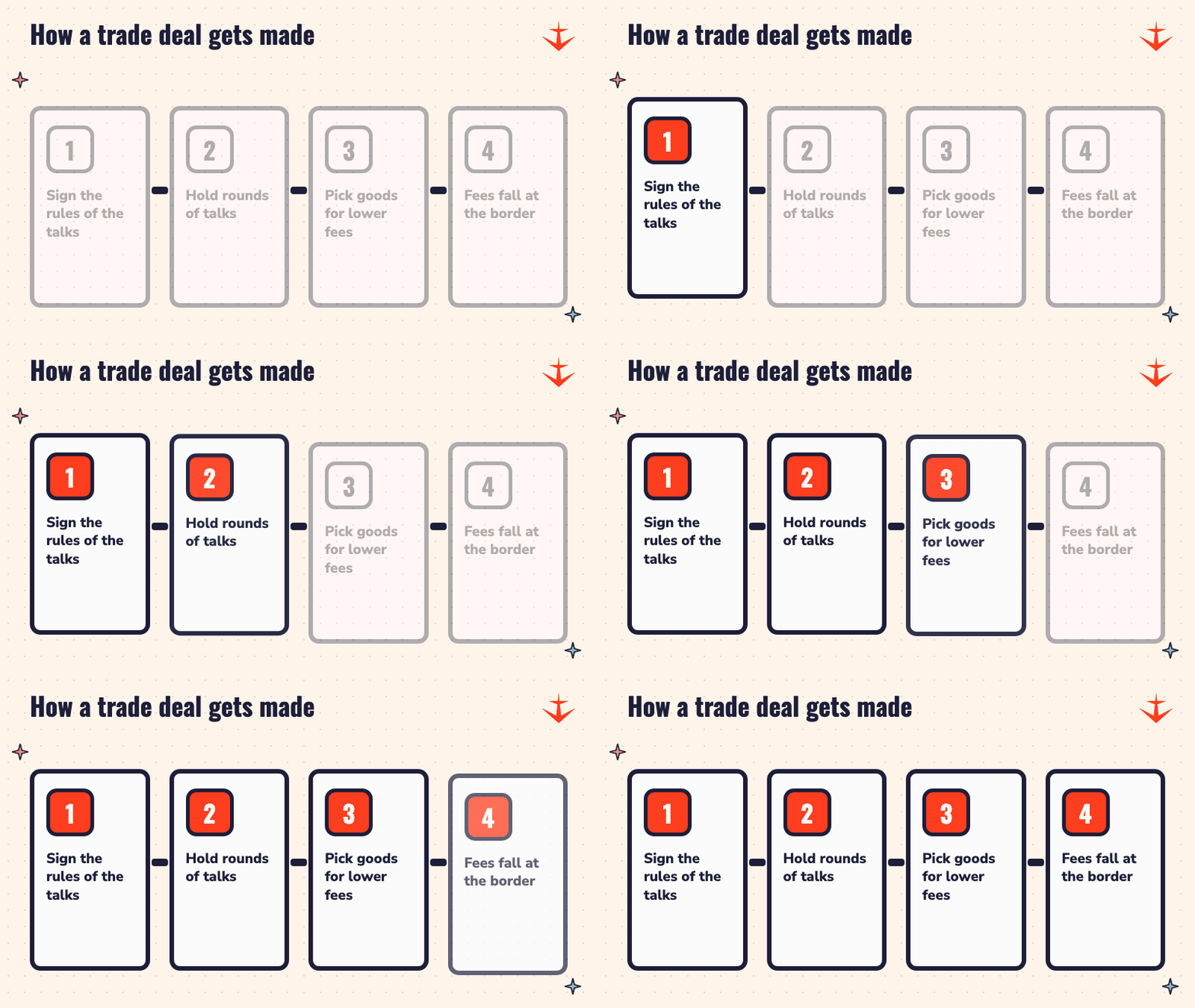
Before a cricket match, the captains agree on the overs, the pitch and the umpires. Only then does the first ball get bowled. A terms of reference is that agreement for trade talks. It lays down the framework, scope, methods and roadmap for the talks. This one lists the topics on the table:
- Market entry for goods: which products get lower fees.
- Rules of origin: proof that a product was really made in India or Mexico, so goods made elsewhere cannot sneak in through the back door for the lower fee.
- Customs procedures and trade facilitation: faster, simpler border paperwork.
- Sanitary and phytosanitary measures: safety rules for food, animals and plants.
- Technical barriers to trade: product standards and testing rules.
- Trade remedies: an emergency brake if imports of one item suddenly flood in.
- Dispute settlement: the umpire, for when the two sides disagree later.
What could car and medicine makers gain?
The Commerce Ministry named the sectors with the most room to grow: automotive, chemicals, electronics, pharmaceuticals, agri-food, energy, critical minerals, medical devices and advanced manufacturing. It said Mexico matters to Indian exporters because of its strong links to global value chains, the long chains of factories that together make one product.
For a car maker in India, a lower fee would mean its cars reach Mexican showrooms at a price closer to rivals that already have deals. For medicine makers, rules on safety and standards decide how fast a product can reach shelves. Both sit inside the topics this terms of reference covers.
Mexico can also act as a gateway to Latin American markets, and a route into the US, Mexico and Canada trade region as global companies move factories closer to the US.
The deal is meant to work both ways. The ministry said it would also expand chances for Mexican products and businesses in the Indian market.
This WION video, made when Mexico approved the new tariffs, shows what changed for nations without a deal.
What happens next?
Signing the terms of reference does not cut any fee by itself. It only starts the match. The two sides now have to agree on which goods get lower duties and by how much.
Both sides also discussed sending a Mexican business delegation to India in the first quarter of 2027, the ministry said, to set up meetings between companies on both sides.
For a student or a young worker in India, this is worth watching. Car plants, parts makers, phone factories and steel units all hire people, and every export order they win abroad helps keep those lines running. If the talks go well, an Indian car or phone could once again sell in Mexico without the extra fee holding it back.
Sources
- The Economic Times: India, Mexico sign terms of reference to kickstart trade pact negotiations
- Swarajya: India and Mexico formalise trade negotiations
- Punjab Kesari (IANS): India, Mexico formally launch preferential trade agreement negotiations
- The Tribune: Mexico announces tariffs on goods from India, other Asian nations
- Outlook Business: Mexico's tariffs to hit India's auto, electronics exports
- Outlook Business: India proposes preferential trade agreement with Mexico
- Cover photo: Hafen von Veracruz 02, a cargo ship at the port of Veracruz, Mexico, by Burkhard Muecke, CC BY-SA 4.0

You may republish this story under CC BY 4.0: credit Pranav Sharma and link to this page.