India and Canada sign business deals and aim to seal a trade pact by the end of 2026
Agreements were signed in Karnataka on 16 October as talks on a trade pact speed up. Here is what each side wants and who could gain.

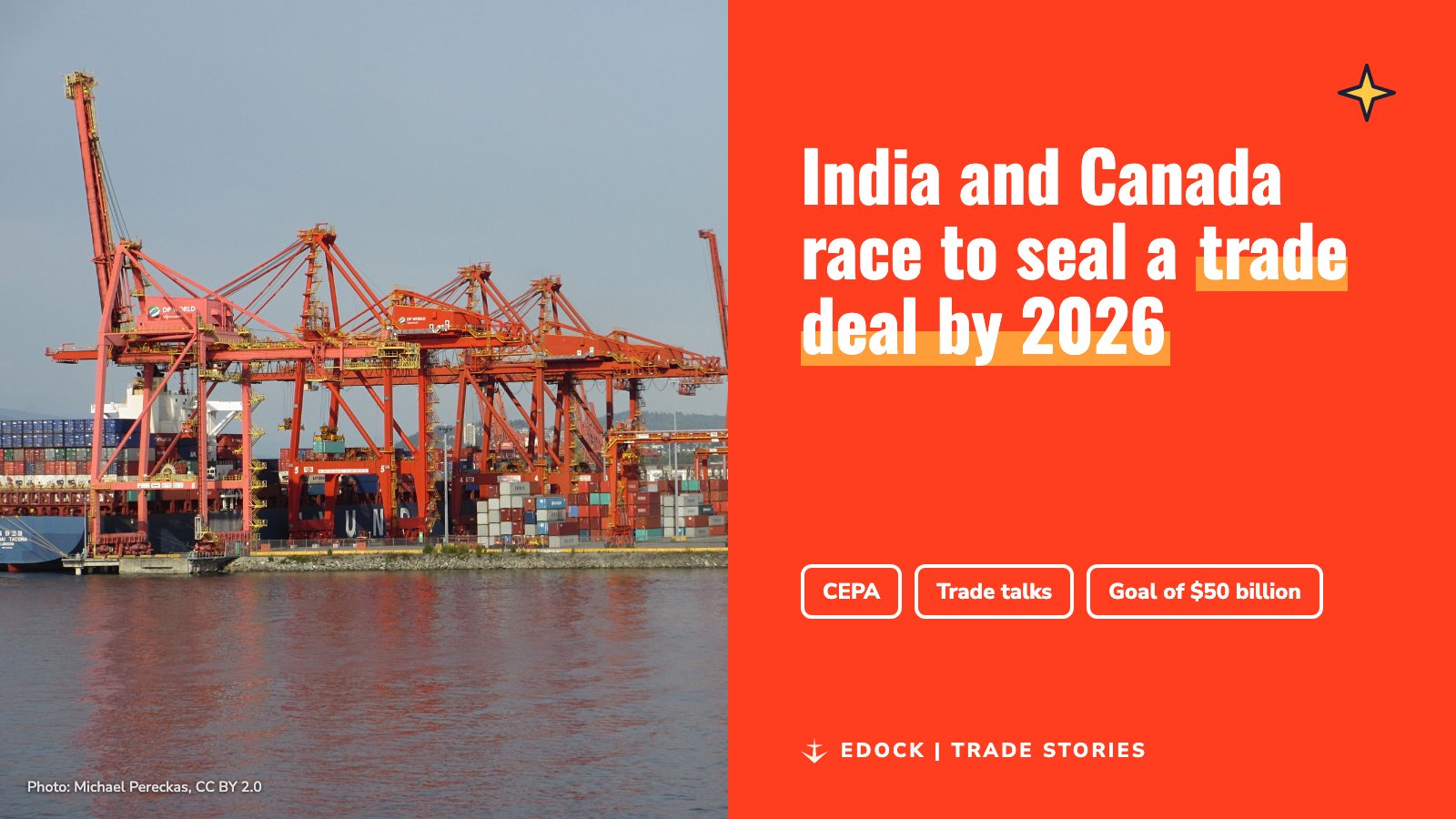
Picture nearly 300 Canadian business people landing in India in one week, all hoping to sell, buy and build things here. Canada says it is its largest trade group to India in over 30 years.
On Friday, 16 October 2026, Indian and Canadian organisations signed a series of business agreements and memoranda of understanding at a Canada-India Business Ceremony in Karnataka. Canada's Minister of International Trade, Maninder Sidhu, was there. At the same time, both countries are working on a big trade pact that they aim to finish by the end of 2026.
Here is what is going on, in plain words.
First, what is a CEPA?
CEPA stands for Comprehensive Economic Partnership Agreement. Think of it as a rule book that two countries write together for buying and selling with each other.
Imagine your school canteen charges outsiders an extra fee to sell samosas inside the gate. A trade pact is like two schools agreeing to cut that fee for each other's stalls. The extra fee on goods coming from another country is called a duty or a tariff. Lower duties make things cheaper to sell across the border.
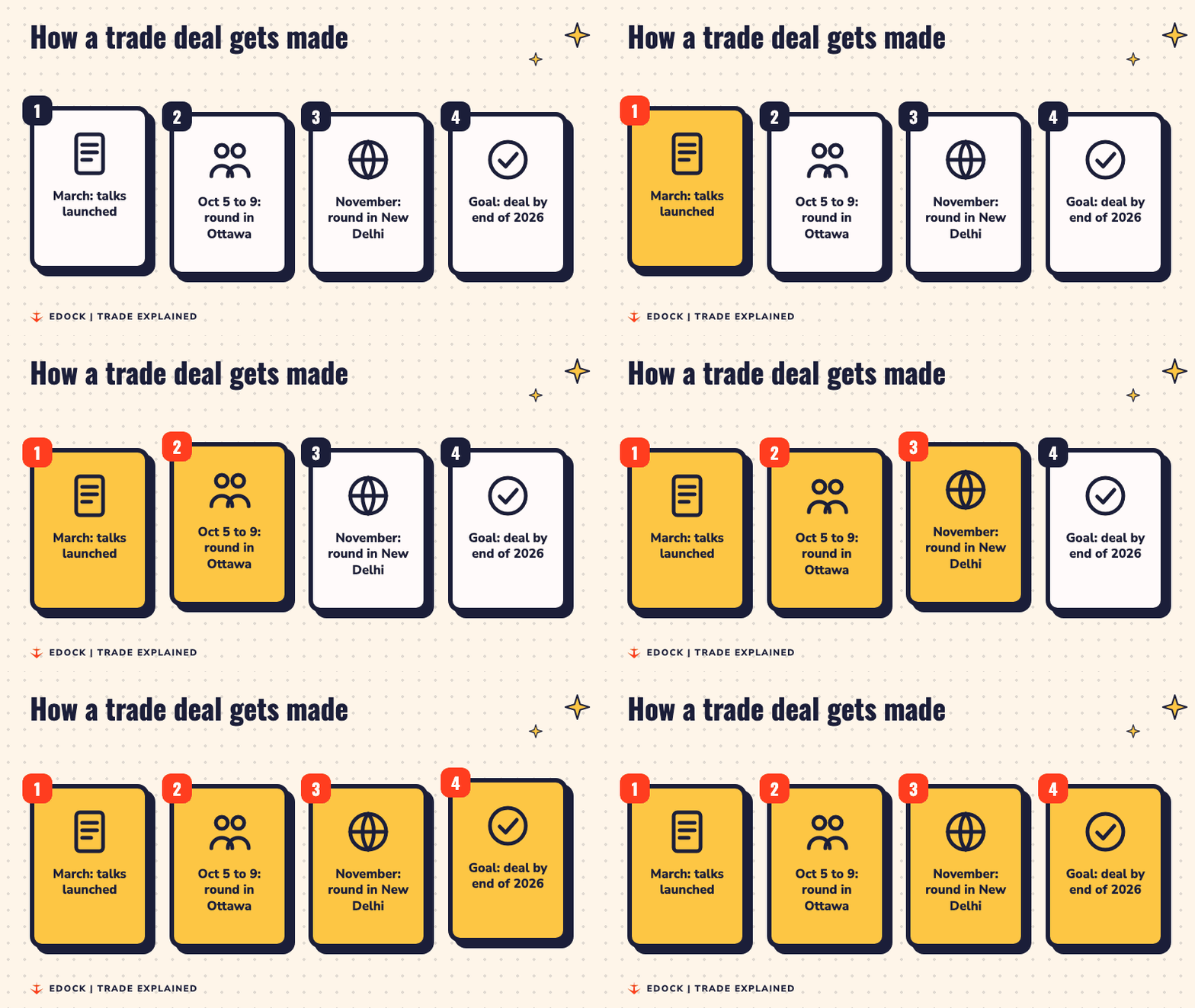
A CEPA goes further than goods. The latest round of talks, held in Ottawa from 5 to 9 October, covered goods, services, investment, rules of origin (rules that decide which country a product really "comes from"), intellectual property (who owns ideas, designs and brands) and trade remedies. The next round is planned in New Delhi in early November.
How did we get here?
Formal talks on this deal were launched in New Delhi in March 2026. Commerce and Industry Minister Piyush Goyal and Sidhu signed the Terms of Reference, a kind of plan for how the talks will run, in front of Prime Minister Narendra Modi and Prime Minister Mark Carney.
The road was not smooth. Canada paused the talks in 2023 after ties between the two countries broke down, and both sides agreed in November 2025 to restart them.
The trade mission ran through Delhi, Mumbai and Bengaluru from 12 to 17 October. It comes ahead of Modi's visit to Canada in December. Carney has said both leaders want to close the talks by the G20 summit in Miami in mid-December.
How much do the two countries trade today?
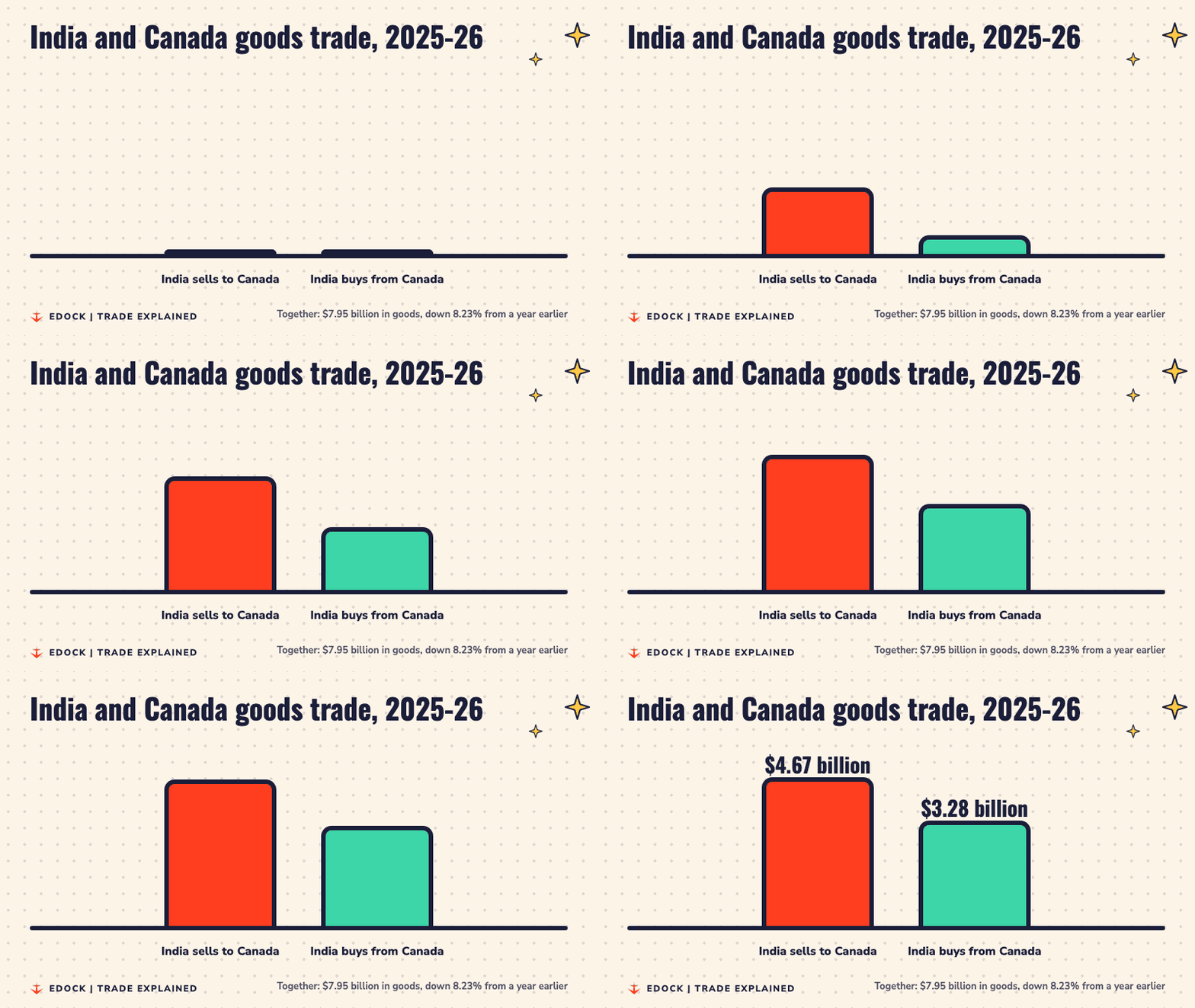
Not a lot, for two big economies. In 2025-26, India's goods sales to Canada rose 10.63% to $4.67 billion. India's purchases from Canada fell 26.14% to $3.28 billion. Add the two and you get $7.95 billion of goods trade, which is 8.23% less than the year before.
Services tell a different story. Services are things you pay for but cannot hold, like software, consulting or a phone network. In 2025, services trade was C$19.62 billion (C$ means Canadian dollars), with India buying C$15.17 billion and selling C$4.45 billion, according to India's High Commission in Ottawa, as reported by The Economic Times.
Counting goods and services together, two-way trade was C$30.4 billion in 2025, according to the Canadian government.
The big goal
When the talks were launched, Modi set a goal of $50 billion of trade by 2030. He had put total trade at nearly $9 billion in 2024-25. Canada's own target is C$70 billion by 2030.
Official estimates say the pact itself could add $4.4 billion to $6.5 billion to trade between the two and give Canada's economy a gain of $3.8 billion to $5.9 billion by 2035.

What India wants
- Room for its factories: Goyal has said the deal could help textile and leather companies, and that it should cover energy and critical minerals.
- More Canadian companies here: Both sides want the number of Canadian companies in India to rise from about 600 to 1,000.
- Services and travel for work: India's main services sales to Canada are telecom, computer and business services. Easier business travel matters for these.
- Fuel sales: Supplying refined petroleum products from India to Canada was on the table in March.
What Canada wants
- Buyers beyond the US: The US took 71.7% of Canada's goods sales abroad in 2025. Canada wants to double its sales to other markets over the next ten years. Sidhu pointed to India's growth of around 7% a year and its 1.4 billion people.
- Energy and minerals: India's government and the Canadian company Cameco signed a C$2.6 billion uranium supply deal, Reuters reported, as cited by The Economic Times.
- Aircraft and tech: Sidhu has said India will need more than 2,000 aircraft in the coming years. In Bengaluru he also talked about artificial intelligence, quantum computing and smart mobility.
- Food and farm goods: Pulses, such as yellow peas, are the first item on the list of what India buys from Canada.
Who could gain, and the tricky part
Neither side has made its offers public, so nothing is final. Going by what already sells, Indian makers of medicines, steel, seafood, clothes and car parts are the likely winners if duties come down. IT companies could gain if business travel becomes easier.
The tricky part is farm trade. India put a 30% import duty on yellow peas from 1 November 2025 after its own farmers asked for protection from cheap imports. India is the world's biggest buyer of yellow peas, mostly from Canada and Russia. Think of it like a cricket team that wants to play away games but also wants to keep its home pitch to itself. Both sides will need to give a little.
Canadian companies are already here. Firms like Kinaxis, OpenText, CGI and CAE work in India, and Fairfax Financial has money in Bengaluru airport. Canadian direct investment in India reached C$11.4 billion in 2025, while Indian direct investment in Canada was C$9.7 billion.
What happens next
The next round of talks is in New Delhi in early November, and the leaders want to close by mid-December. With about two months left, the coming weeks will show how much of each side's wish list makes it into the final text.
Sources
- India, Canada sign commercial pacts as talks on proposed FTA target end-2026 conclusion, ANI
- The $50 billion question: who gets what as India and Canada aim to strike a trade deal, The Economic Times
- India and Canada launch negotiations for CEPA, All India Radio News
- Canada sends largest trade mission to India in 30 years, Telangana Today
- Cover photo: Vancouver Container Port, by Michael Pereckas, CC BY 2.0

You may republish this story under CC BY 4.0: credit Pranav Sharma and link to this page.