India allows 6,500 tonnes of silver imports for the next six months
Version 1 of 1 saved 22 Oct 2026, 11:19 pm IST · Chain line 151
As it was first published
India allows 6,500 tonnes of silver imports for the next six months
Bullion dealers got permits to bring in silver for the festive season, months after strict rules cut supply and pushed up local premiums.
Picture 65 lakh kilograms of shiny silver. That is how much metal India has now allowed traders to bring in from other countries. On Thursday, 22 October 2026, The Economic Times reported, citing news agency Reuters, that India has approved silver imports of around 6,500 metric tonnes for the next six months, to meet demand in the festive season.
The news came from four bullion dealers who received the permits, Reuters said. Bullion simply means precious metal in bulk, like bars and big blocks, before it becomes a ring or an anklet.
The size of this number surprised many people in the silver trade. Here is why.
First, what does "importing" mean?
Importing means buying something from another country and bringing it home. Think of a cricket bat made in another country that a shop in Pune orders and sells to you. The shop is the importer.
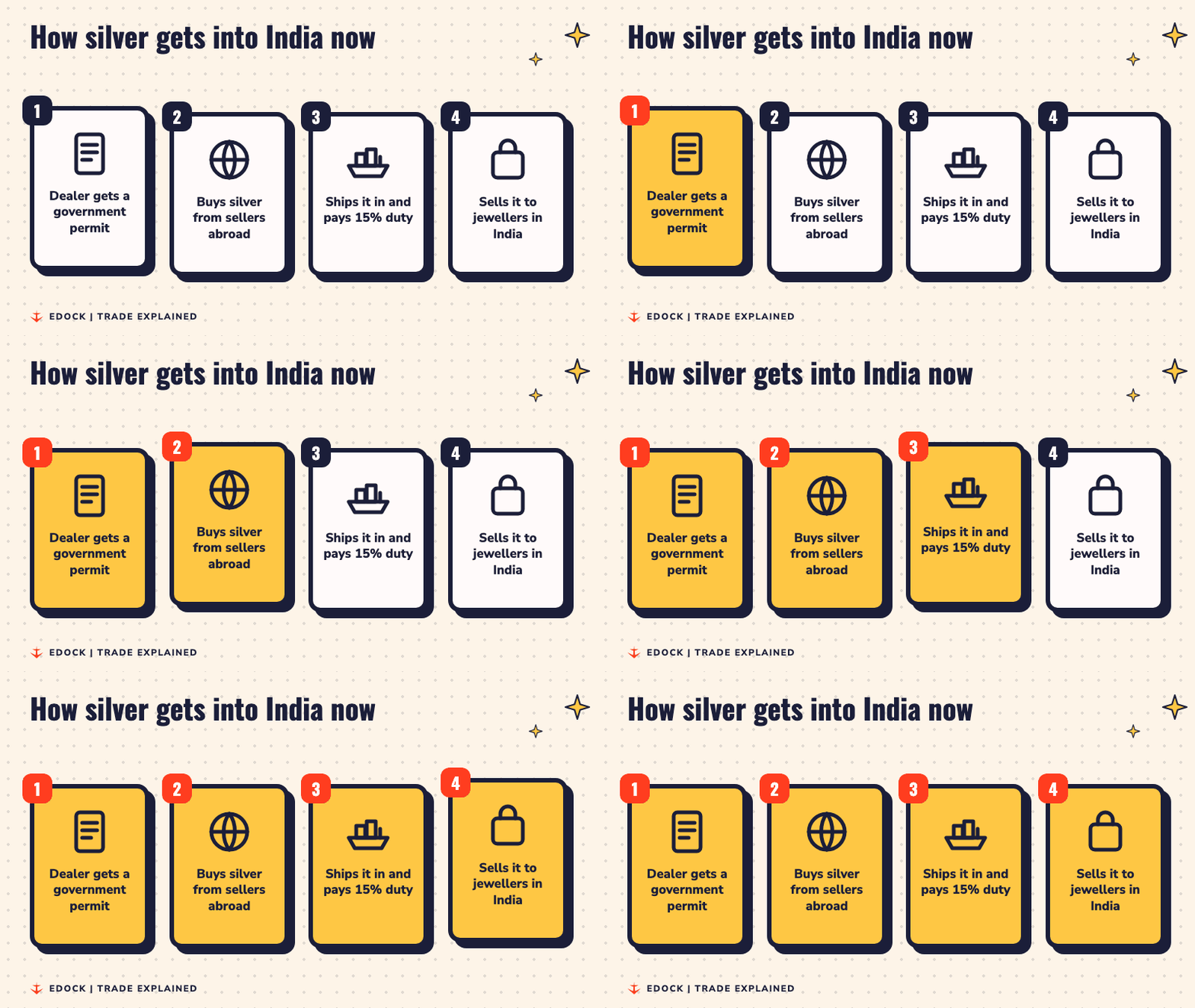
With silver, the importers are big dealers and banks. They buy silver bars abroad, ship them to India, and sell them to jewellers, coin makers and factories.
India needs a lot of help here. The country relies on overseas purchases for more than 80% of its silver demand, Reuters reported. So for every ten silver anklets sold in India, the metal for more than eight came from outside. Reuters also calls India the world's biggest consumer of silver.
How big is 6,500 metric tonnes?
A metric tonne is 1,000 kilograms. Picture 1,000 packets of sugar, each weighing 1 kg. That is one tonne. So 6,500 tonnes is 65 lakh kilograms of silver.
On 22 October, pure silver cost ₹2,04,720 per kg in India, according to Mint. At that price, 65 lakh kg would be worth about ₹1.33 lakh crore. That is a rough sum only, because the permits allow imports over six months and prices change every day.
Why did India need permits at all?
Earlier this year, the rules got much stricter. In mid-May, India restricted imports of silver in nearly all forms, with immediate effect. In June, it added silver grain and powder to the list, so these too needed permission before they could come in.
A permit works like a hall pass at school. Without it, you cannot walk out of class. Without an import permit, a dealer cannot bring that silver into the country.
Why do this? India has been trying to reduce precious metal imports to ease pressure on its foreign exchange reserves and support the rupee. Foreign exchange reserves are like the country's piggy bank of dollars. Every time India buys silver abroad, dollars leave that piggy bank.
The government also raised the import duty on gold and silver to 15% from 6%. Import duty is a tax paid at the border, like an entry fee the goods pay to come in. The new duty applied from 13 May, according to Commerce Ministry data reported by PTI.
What happened to imports after the new rules?
Silver coming into India dropped. In September 2026, silver imports fell 49.11% to $665.08 million, the second monthly fall in a row. From April to September, silver imports fell 25.17% to $2.4 billion.
In August, there were early signs of change. A Bloomberg report, cited by Free Press Journal, said around 89.81 tonnes of silver entered India in August through the bullion exchange in GIFT City, Gujarat, after six months with no shipments through that route. At the time, research firm Metals Focus estimated that about 400 tonnes of import licences had been approved.
So the jump to around 6,500 tonnes in permits is a very big step up from those earlier numbers.
The "premium" problem
When less silver comes in, there is less to go around. Think of a samosa stall during a cricket match break. The crowd is big, the samosas are few, so people end up paying a little extra to get one fast.
In trade, that extra is called a premium. It is the amount paid above the official price. Reuters said tight supplies had pushed up these premiums in India.
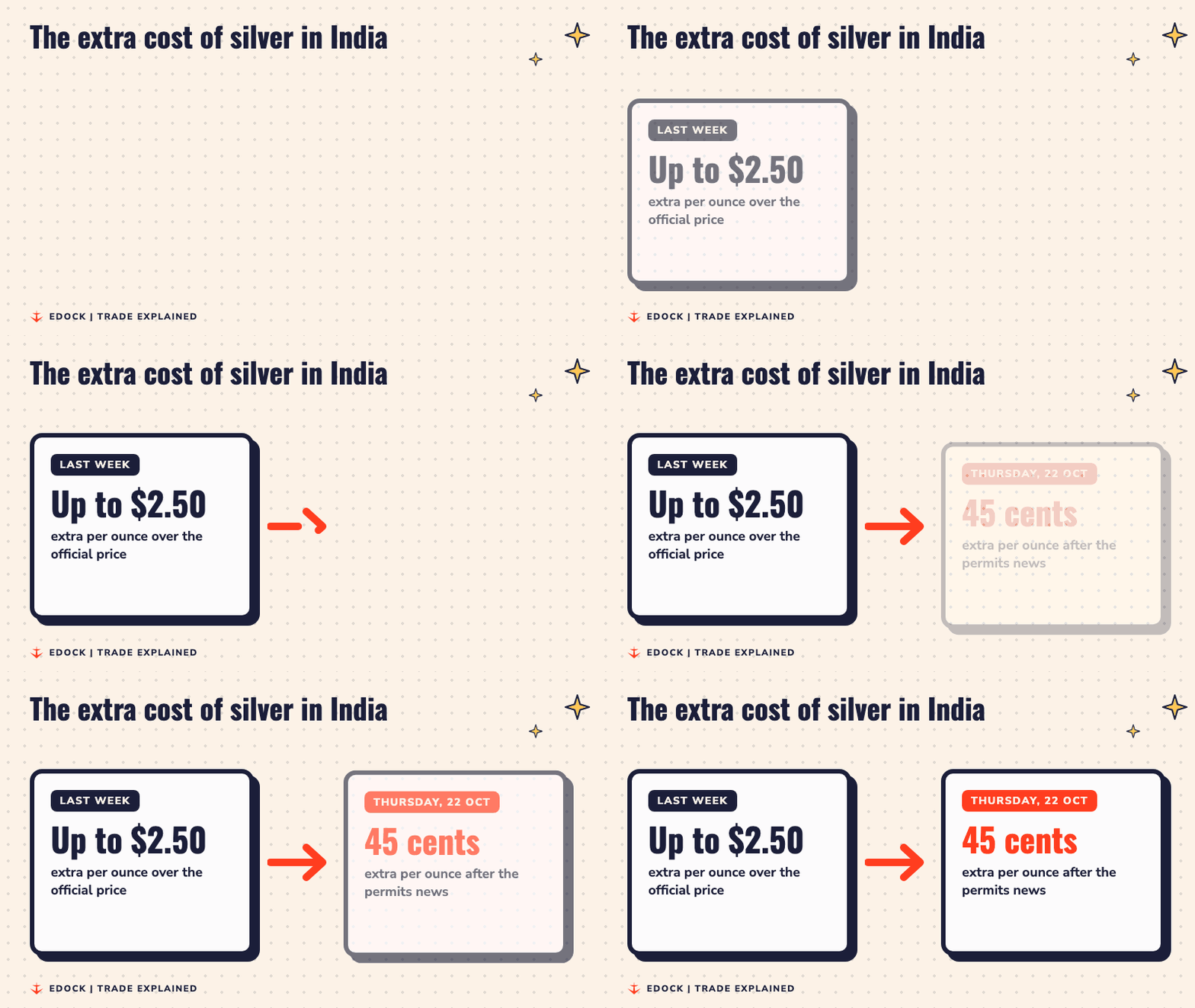
After the permit news, the premium fell sharply. Silver premiums over official domestic prices fell to 45 cents per ounce on Thursday, down from up to $2.50 the week before, dealers told Reuters. An ounce is a small unit of weight used for precious metals.
Chirag Thakkar, chief executive of silver importer Amrapali Group Gujarat, told Reuters that the government "has allowed much more silver to be imported than the country is likely to need" over the next six months. He said this should help bring premiums down.
But are people actually buying?
Here comes the twist. Demand is weak right now. Dealers told Reuters that demand for silver jewellery and investment has remained weak amid falling prices, which is why the big allocation surprised the market.
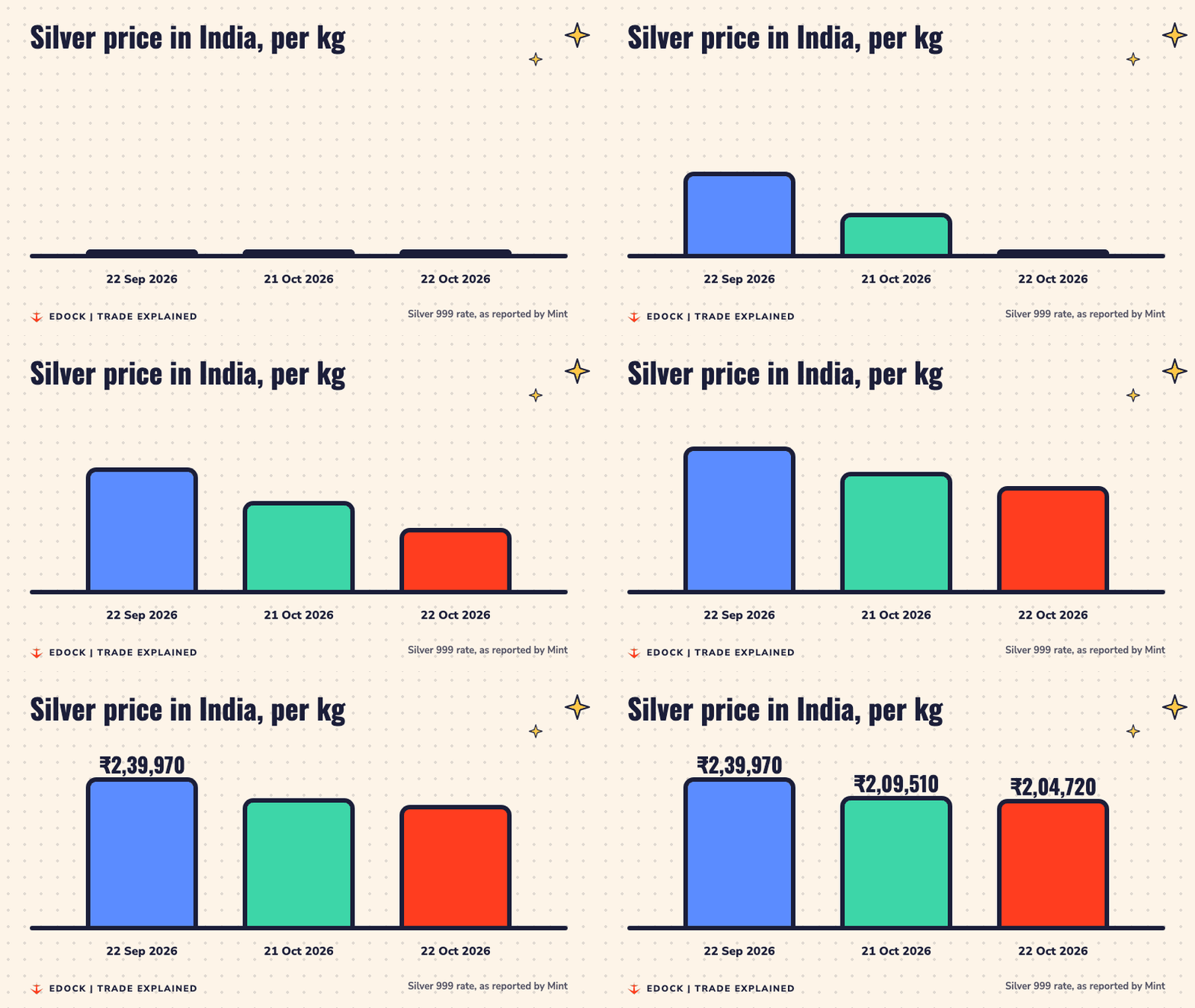
The price numbers show the fall. Silver 999 in India was ₹2,39,970 per kg one month earlier, on 22 September, and ₹2,09,510 on 21 October, Mint reported. Mint's own table showed silver down 14.52% over one month. On 22 October alone, silver fell 2.29% in the domestic market.
A Mumbai dealer with a bullion importing bank told Reuters that festive demand had not picked up yet, and that many investors were staying away after the recent sharp fall in prices.
How silver now travels to a jeweller
Getting a permit is only step one. Free Press Journal noted in August that shipping, customs checks and refining can take several weeks. Each shipment was also expected to carry a certificate showing which country produced the silver, which slowed things down at customs.
Why should a student care?
Silver is not only for anklets and pooja plates. It shows how a country manages trade. When a government wants to save dollars, it can make imports harder with permits and taxes. When supply gets too tight and prices inside the country run above the official rate, it can open the door again.
It is a bit like a hostel warden who limits the number of snack packets each room can bring in. Too strict, and snacks become costly inside the hostel. Ease the rule, and the extra cost drops.
The silver story also links India to the world. Reuters said higher imports by India could support global silver prices, because the world's biggest buyer is shopping again.
What to watch next
Three things will tell the story over the next six months. How much of the 6,500 tonnes actually arrives. Whether premiums stay low. And whether festive and wedding season buying picks up. The monthly trade data from the Commerce Ministry will show the import numbers as they come in.
Sources
- The Economic Times: 6,500 metric tons incoming in next six months
- Business Recorder (Reuters): India permits large silver imports despite weak domestic demand
- Devdiscourse (Reuters feed): India permits large silver imports
- Mint: Gold and silver prices today, 22 October
- ThePrint (PTI): Gold and silver imports fall in September
- Free Press Journal: India's silver imports resume after six-month halt
- Cover photo: Silver Anklet, by Yercaud-elango, CC BY 4.0
