IGL sold record CNG and piped gas, yet profit fell 93.5%
Version 1 of 1 saved 1 Nov 2026, 7:40 am IST · Chain line 338
As it was first published
IGL sold record CNG and piped gas, yet profit fell 93.5%
Imported gas got far costlier after the West Asia crisis and CNG prices rose only part of the way. Here is what this means for autos, taxis and kitchens.
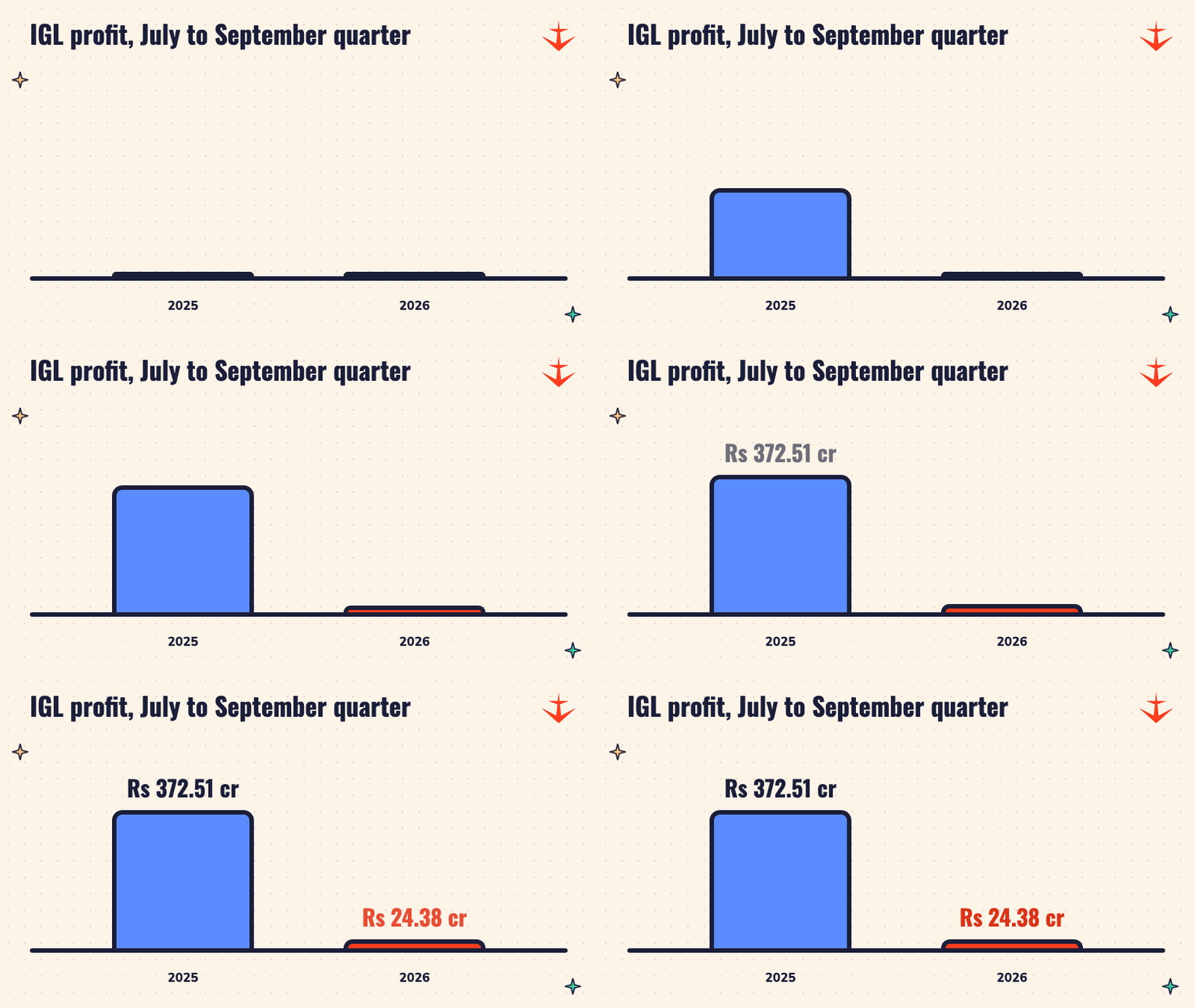
Picture a chai stall that sells more cups than ever before, yet ends the month with almost nothing in the cash box. That is roughly what happened to Indraprastha Gas Ltd (IGL), the company that fills CNG into Delhi's autos and sends cooking gas through pipes into lakhs of kitchens. On 31 October 2026, IGL reported a 93.5% fall in standalone net profit for July to September, down to Rs 24.38 crore. In the same three months of 2025, the profit was Rs 372.51 crore.
The strange part: IGL sold more gas than ever. So what went wrong, and what does it mean for people who ride autos or cook on piped gas? Here is the story in simple words.
First, who is IGL?
IGL is a city gas distributor. Think of it as the milkman of natural gas. It buys gas in bulk, then delivers it in two ways:
- CNG (compressed natural gas): the gas is squeezed into tanks and sold at pumps to autos, taxis, buses and cars.
- PNG (piped natural gas): the gas travels through pipes straight to a home's stove, like water from a tap.
According to the same Business Standard report, IGL is the country's largest city gas distributor. It works in 34 districts across Delhi, Uttar Pradesh, Haryana and Rajasthan. It runs more than 30,000 km of pipelines and over 1,000 CNG pumps. More than 2.5 million CNG vehicles fill up with it, and over 3.5 million homes cook with its piped gas.
A quick word on "standalone": a big company can own smaller companies. Standalone numbers count only the main company, not the smaller ones it owns. All the profit figures here are standalone.
More customers, record sales
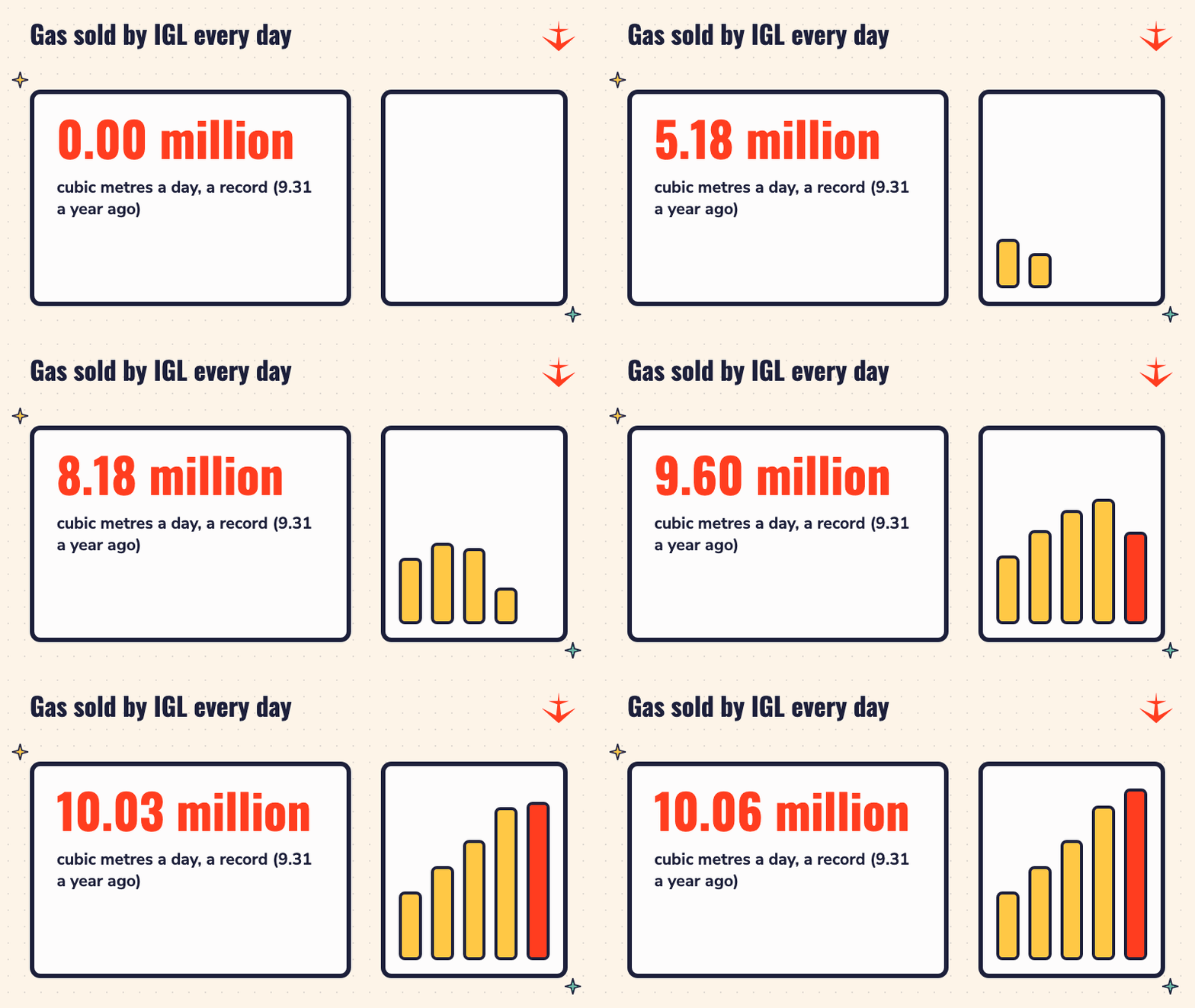
Sales were not the problem. IGL said its average daily sales of gas crossed 10 million standard cubic metres a day for the first time. It sold 10.06 million cubic metres a day in July to September, up from 9.31 million a year earlier. That is a rise of about 8%.
Both sides of the business grew. CNG volumes rose 9%, and PNG volumes rose 8%. Gross sales, the total money that came in before any costs, rose to Rs 5,999.13 crore, up on Rs 4,431.63 crore a year before. Part of that jump came simply because gas itself got costlier, so each unit sold brought in more rupees.
So where did the money go?
Back to the chai stall. Say milk, tea leaves and sugar cost Rs 8 per cup, and the cup sells for Rs 12. The Rs 4 left over is the stall's margin, the money it keeps on each cup. Now milk prices shoot up, and the cost per cup becomes Rs 11.50. If the stall keeps selling at Rs 12, it still sells plenty of chai, but keeps almost nothing.
IGL faced the same squeeze. Its profit fell because the gas it buys, its input cost, became much costlier, and it could not raise selling prices by the same amount. Indian PSU reported that IGL's EBITDA was negative Rs 31.11 crore. EBITDA is the money a business makes from its daily work before interest, tax and the wear and tear of machines are counted. A negative figure means the day to day business itself ran at a loss in the quarter.
Why did gas get so costly?
Not all of IGL's gas is produced in India. A big part of the gas for its CNG comes from abroad as LNG (liquefied natural gas), gas cooled until it turns liquid so ships can carry it. This LNG is bought on the spot market, which means buying a cargo at the day's price, like buying vegetables at the morning mandi rate instead of on a fixed monthly deal.
The company raised CNG prices in August and explained the reason. Since July 2026, the West Asia crisis has disrupted LNG ships moving through the Strait of Hormuz, a narrow sea route that carries a large share of the world's energy. IGL said global LNG prices nearly doubled compared with the time before the crisis. Europe, rushing to store gas before winter, added more demand. IGL also said it needs more imported spot LNG because CNG demand keeps rising.
In its own words, quoted by The Week, the price rise was needed "to partially offset the increase in input gas cost". In plain English: the price rise covered only a part of the extra cost. The rest stayed with IGL, and the results report says higher input gas costs ate into its margins this quarter.
What happened to CNG prices this year?
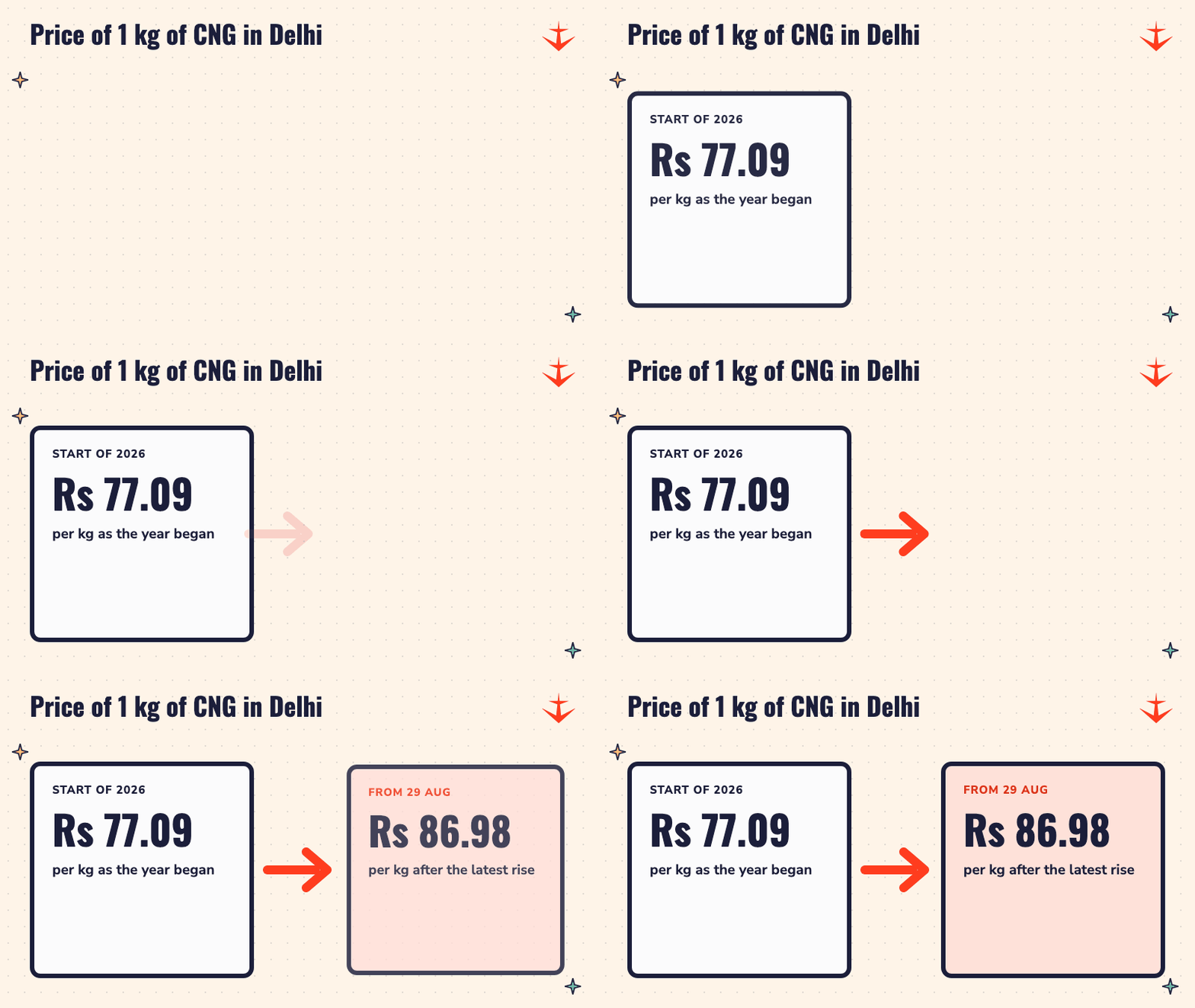
Delhi's CNG price has already moved a lot in 2026. As DT Next reported, CNG cost Rs 77.09 per kg in Delhi at the start of the year. IGL raised it by Rs 6 per kg in four steps in the second half of May, taking it to Rs 83.09. On 29 August came another Rs 3.89 per kg, taking it to Rs 86.98. That adds up to nearly Rs 10 per kg more this year.
Prices are higher in nearby cities because of local taxes. After the August rise, CNG cost Rs 95.59 per kg in Noida and Ghaziabad and Rs 92.01 in Gurugram, per the same report. Piped cooking gas for Delhi homes stayed unchanged then, at Rs 49.59 per standard cubic metre.
This India Today video reports on the August price rise in Delhi:
What does this mean for autos, taxis and kitchens?
The results reports do not mention any new CNG or PNG price change. What they show is the gap: gas costs went up faster than the prices people pay at the pump and on the gas bill, like the chai stall still selling Rs 12 chai when each cup costs Rs 11.50 to make.
Who feels a CNG price change? When it raised prices in August, IGL itself listed its CNG users as private car owners, auto and taxi drivers, public transport users and other price-sensitive sections of society, as Business Standard reported. For homes, the price of piped cooking gas in Delhi did not change in August, according to the DT Next report.
There is a quieter side to the story too. Demand for gas keeps growing. IGL has also signed a deal with the Delhi division of Northern Railway to supply piped gas to 22 railway sites, such as laundries and kitchens, The Economic Times reported. Those sites will use gas in place of around 500 kg of LPG and 2,500 litres of diesel a day.
The big lesson
Selling more does not always mean earning more. Profit is what is left after paying for what goes into the product. When a far-away crisis makes that input costlier, even a record quarter for sales can leave the cash box nearly empty. IGL's July to September results show exactly that.
Sources
- Business Standard: IGL Q2 result, net profit down 93.5% on higher gas costs (31 Oct 2026)
- Indian PSU: IGL Q2 sales volume rises 8%, negative EBITDA
- Business Standard: IGL raises CNG price by Rs 3.89 per kg in Delhi (29 Aug 2026)
- The Week: What led to the CNG price rise in Delhi
- DT Next: CNG price raised Rs 3.89 per kg in Delhi and nearby cities
- The Economic Times: IGL and Delhi division of Railways sign piped gas deal
- Cover photo: Indraprastha Gas filling, by Nikhilb239, CC BY-SA 4.0
