Hyundai launches the Bayon SUV in India to win back mid-size buyers
Version 1 of 1 saved 26 Oct 2026, 2:27 pm IST · Chain line 245
As it was first published
Hyundai launches the Bayon SUV in India to win back mid-size buyers
The new SUV sits between the Venue and the Creta, as Creta sales slip and Maruti and Kia gain in India's busy middle segment.
Picture a chai stall that sells only a small cup and a big cup. One day a customer wants something in between, so she walks across the road to the stall that sells a medium cup. That, in short, is the problem Hyundai has been facing in India. On Monday, 26 October 2026, it brought out its answer: a new SUV called the Bayon.
Hyundai Motor India launched the Bayon on 26 October. It sits between the smaller Venue and the bigger Creta in Hyundai's family of SUVs. And here is a surprise: the Bayon is Hyundai's newest SUV anywhere in the world, and India is the first country to get it.
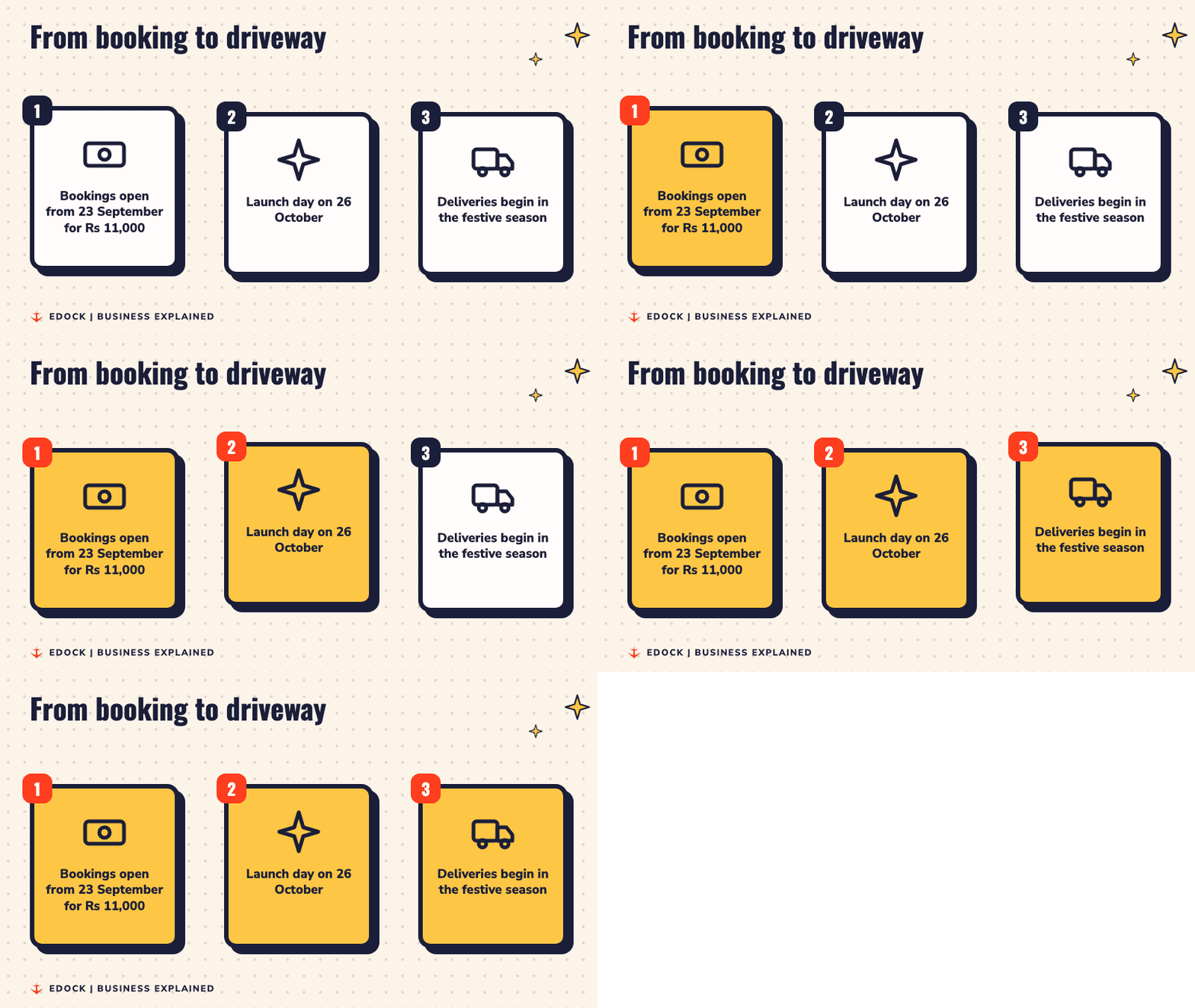
Hyundai has been taking bookings for Rs 11,000 through its own site and its dealers. A booking amount is like paying a small advance at a tailor so your slot is kept. Bookings opened on 23 September, and Hyundai says deliveries will begin during the festive season.
When this post was written on launch day, the final prices had not yet been shared in the reports. Before the event, Moneycontrol expected the starting price to be below Rs 10 lakh ex-showroom. That word means the price at the showroom door, before road tax, registration and insurance are added. It is like the menu price of a meal before the bill adds taxes and the tip. The price you pay to drive home, the on-road price, is always higher.
Small, medium or large: what is a segment?
Car companies sort cars into groups called segments. A segment is like the cup size at a chai stall. Small cars under four metres long are one segment. Bigger, costlier SUVs are another. In between sits the mid-size SUV segment, for buyers who want more room than a small SUV but do not want to pay for a large one.
The Bayon is about 4.2 metres long. That puts it right in the middle cup. The Financial Express explains the idea: the Bayon is for people who want a bigger car than the Venue without stretching all the way to the price of a Creta.
This middle cup matters a lot to Hyundai. In the money year that ended in March 2026, called FY26, mid-size SUVs made up 35% of Hyundai's sales in India: 201,921 cars out of 584,906. So about one in every three Hyundai cars sold was from this one segment.
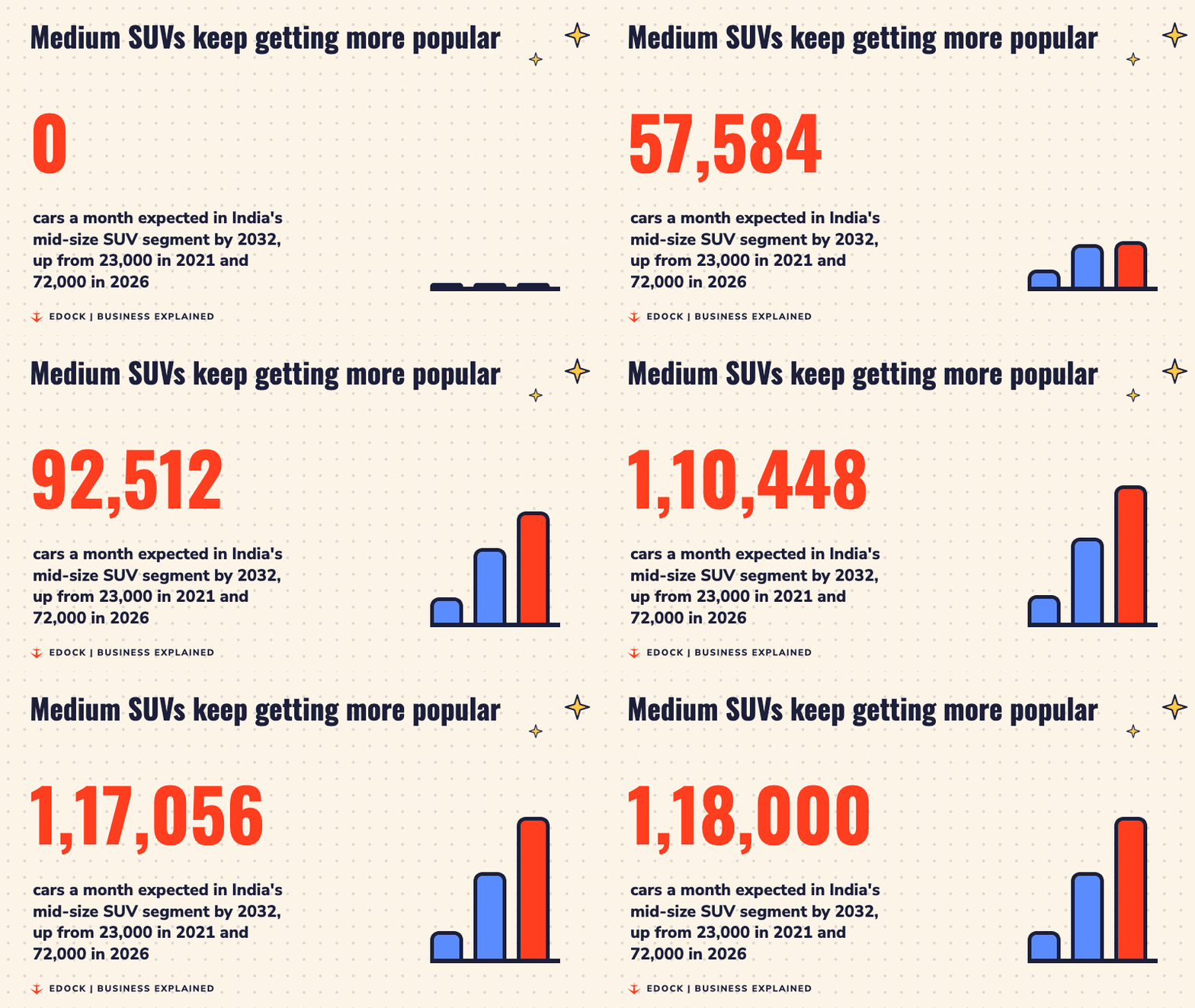
The segment is also growing fast. In 2021, Indian buyers took home about 23,000 mid-size SUVs a month. In 2026 that is about 72,000 a month. Industry forecasts say it could reach 118,000 a month by 2032. Those are guesses about the future, not promises, but they show why every carmaker wants a seat at this table.
Why did Hyundai need a new car here?
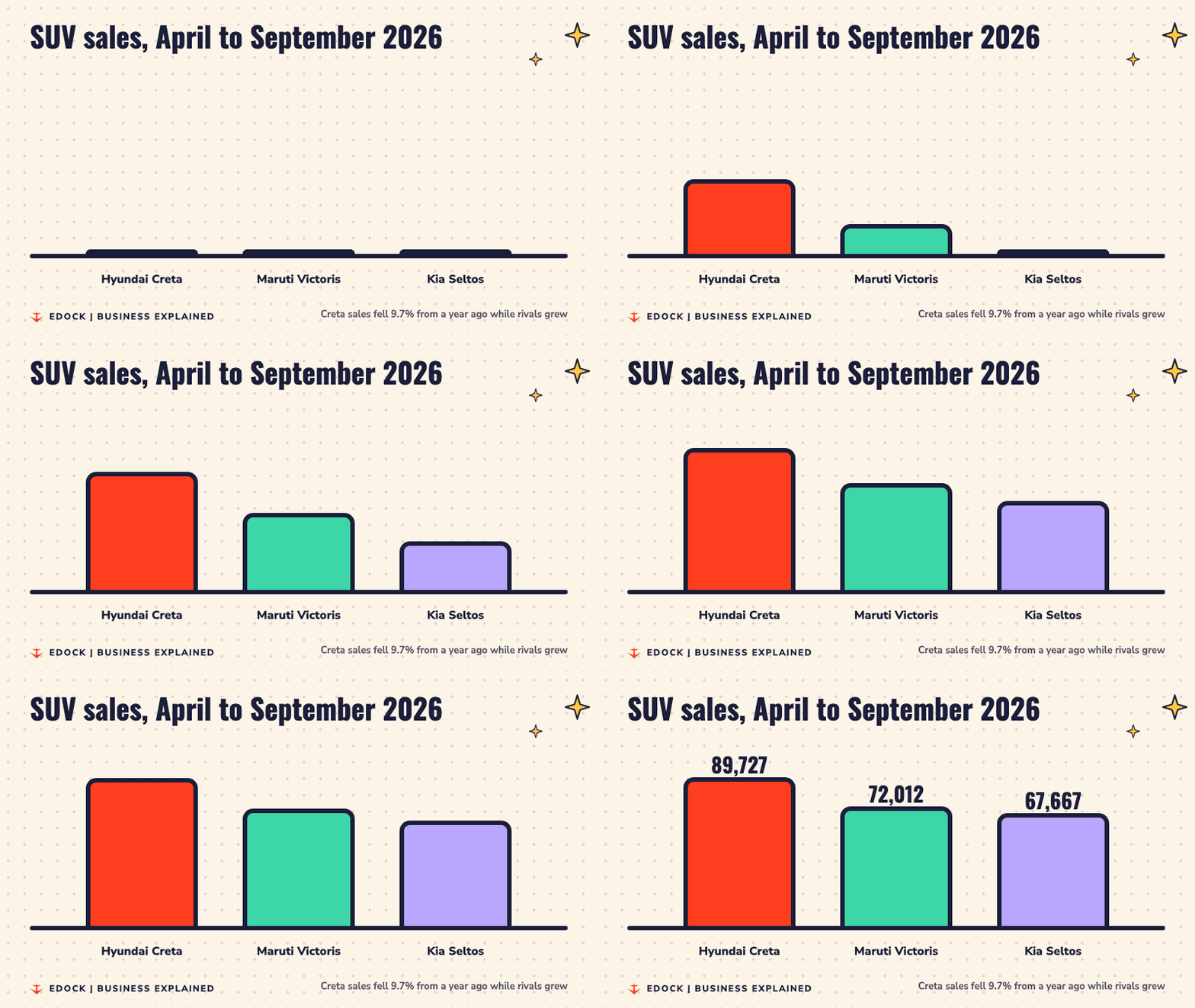
Until now, Hyundai had just one car in this segment: the Creta. For years the Creta was a star. But rivals have caught up. Between April and September 2026, Creta sales fell 9.7% to 89,727 cars, from 99,345 a year earlier.
In the same six months, Maruti Suzuki sold 72,012 units of its Victoris. Kia's Seltos nearly doubled to 67,667 from 33,955. Maruti has three models in this space, the Grand Vitara, the Victoris and the Ertiga, and together they sold 239,796 cars, up 78.3%.
Think of it like a cricket team with only one good fast bowler. When that bowler has an off day, the whole team suffers. Hyundai wants a second bowler. One expert, Gaurav Vangaal of Mobility Global, told the Financial Express that the Bayon "should bring incremental volumes for Hyundai". In plain words: extra sales on top of what Hyundai already sells.
There is a catch. Some people who might have bought a cheaper Creta may pick the Bayon instead. Companies call this cannibalisation, when your new product eats into sales of your own old one. Vangaal said some of that is likely, but that on balance the Bayon should widen Hyundai's net.
What is under the bonnet?
The Bayon runs on a 1.5-litre petrol engine that makes 115 PS of power. PS is a unit of engine power, a bit like counting how many horses would pull the car. Hyundai says it has sold more than 6 lakh cars with this same engine since 2020, so it is not new and untested.
Buyers can choose a six-speed manual gearbox, where the driver changes gears by hand, or an automatic called iVT, where the car does it. The automatic gets a Dash Boost Mode for quick overtaking, plus Eco, Normal and Sport driving modes.
A car that talks back
Inside, the Bayon has two 12.3-inch curved screens. It also has Hyundai India's first voice assistant that uses generative AI, the same kind of tech behind chatbots. It is powered by Perplexity and SoundHound AI. You can ask it to plan a trip, find a restaurant, check the weather or get sports scores.
More than 500 voice commands work even without the internet, in English, Hindi, Hinglish, Tamil, Bengali and Telugu. The screens support 10 Indian languages and two foreign ones.
Safety first
Every Bayon gets six airbags, electronic stability control and more than 35 safety features as standard. The car also has ADAS, short for advanced driver assistance systems. Think of ADAS as a careful friend in the passenger seat who warns you when a car is in your blind spot or when you drift out of your lane, and can even brake for you. On the Bayon, this system has 23 functions.
Made in India, for the world
The Bayon will not only be sold here. Hyundai plans to build it in India for markets around the world, both for countries that drive on the left and those that drive on the right. That means Indian factories, and Indian workers, will make a car that people in other countries drive too.
Watch the launch event from Hyundai India:
The big picture
A new car launch is a bit like a new shop opening in a busy market. The market is already crowded with Maruti, Kia, Toyota, Tata and others. Hyundai is betting that a medium cup between its small and large ones will win back buyers it has been losing. Whether that works will show up in the sales numbers over the coming months.
Sources
- Financial Express: Hyundai steps up mid-size SUV fight with Bayon
- Moneycontrol: Hyundai Bayon launch today, price, engine, features, safety, bookings
- The Economic Times: Hyundai Bayon launch in India, engine options and tech features
- India Today: Hyundai Bayon to launch today
- CarWale: Hyundai Bayon India launch live updates
- Cover photo: Hyundai Bayon 2027 N Line at a motor show, by Bagstar1990, CC BY 4.0
