Hunar.AI raises Rs 40 crore so AI can help hire India's frontline workers
Version 1 of 1 saved 21 Oct 2026, 3:23 am IST · Chain line 101
As it was first published
Hunar.AI raises Rs 40 crore so AI can help hire India's frontline workers
The Bengaluru startup's AI agents call, screen and onboard delivery and store staff in over 20 languages. Blume Ventures led the round.
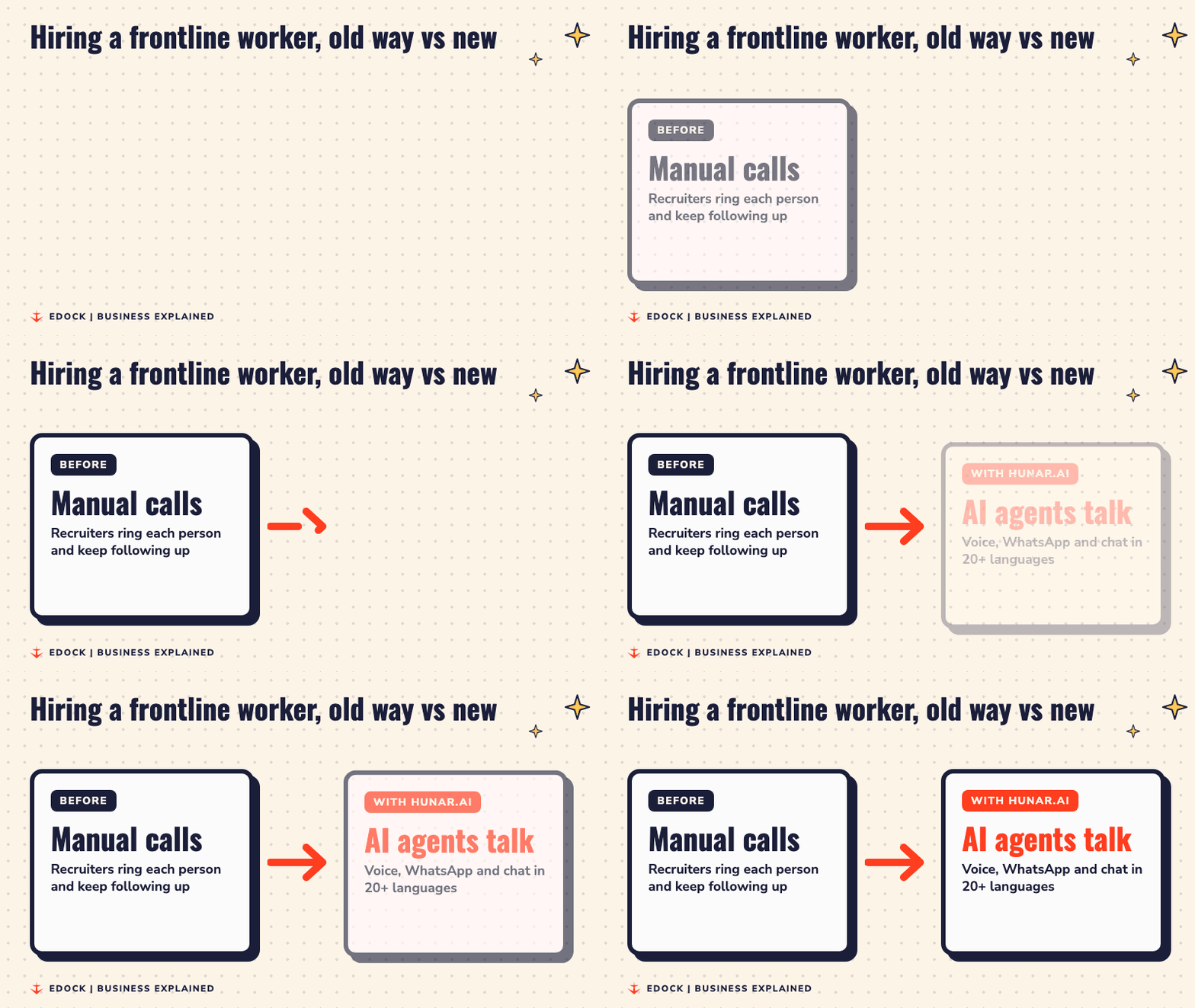
Picture this. A quick commerce company needs 500 new delivery riders in five cities before Diwali. Someone has to call every person who applied, in Tamil, Telugu, Kannada or Hindi, ask a few questions, fix an interview time and then keep calling to check they show up. Now picture a computer doing all of those calls, and talking back like a person.
That is what Bengaluru startup Hunar.AI builds. On 19 October 2026, it announced that it has raised Rs 40 crore, about $4.2 million, to grow its AI tools for hiring and managing frontline workers. The news was carried by ET HRWorld and YourStory too.
First, who are frontline workers?
Frontline workers are the people who do the work you can see. The rider who brings your groceries in ten minutes. The person at the store counter. The worker packing parcels in a warehouse. Inc42 describes them as employees who directly provide goods and services to people.
Big companies hire these workers in huge numbers, across many cities, in many languages. And the hiring never really stops, because many people leave and new ones have to be found. Inc42 notes that hiring spikes during festive seasons, when every company wants more hands at the same time.
Doing this by phone, one call at a time, is slow and tiring. Think of a class teacher who has to call every parent before a school trip. Now make it thousands of parents, every week.
What Hunar.AI actually does
Hunar.AI was founded in 2022 by Krishna Khandelwal and Shantanu Bhattacharyya. Its platform has two parts, Hunar Voice and Hunar Connect. Both use conversational AI agents. A conversational AI agent is a computer program that can talk or chat with a person, understand the reply and take the next step on its own.
These agents work over voice calls, WhatsApp and chat. According to YourStory, they handle steps like finding and screening candidates, scheduling interviews, onboarding (the first days of settling a new worker in), training, keeping workers engaged and stopping them from leaving.
Language is a big part of the idea. Inc42 reports that the startup offers voice AI in more than 20 languages, including Tamil, Telugu and Kannada. So a worker in Chennai and a worker in Lucknow can both get a call in the language they are most at ease with.
How busy are these AI agents?
Quite busy, as per the company. Inc42 reports that Hunar's AI agents had handled more than 1.5 crore conversations up to September 2026, with volumes doubling every quarter. A quarter is three months. Doubling every quarter is like a samosa stall that sells 100 a day in January, 200 a day by April and 400 a day by July.
Its customers are names most young Indians use every week. Inc42 lists Swiggy, Zepto, Aditya Birla Capital, Bajaj Finserv, Croma, 1mg and Starbucks. YourStory adds Delhivery, Instamart, Pronto, Blue Dart and Flipkart.
Who put in the money?
This was a Series A round. Startups raise money in stages, a bit like moving up classes in school. A seed round is the first small cheque. Series A usually comes next, once the product is working and the company wants to grow fast.
The round was led by Blume Ventures. "Led" means Blume put in a big share and helped set the terms, like the captain who picks the batting order. Others who joined were Hyderabad Angels Fund, Together Fund, Seedstars and AVNM Ventures.
Some famous founders put in their own money too. ET HRWorld names PhysicsWallah co-founders Prateek Maheshwari and Alakh Pandey, and MediaMint co-founder Aditya Vuchi. When people invest their own money in a young startup, they are often called angel investors.
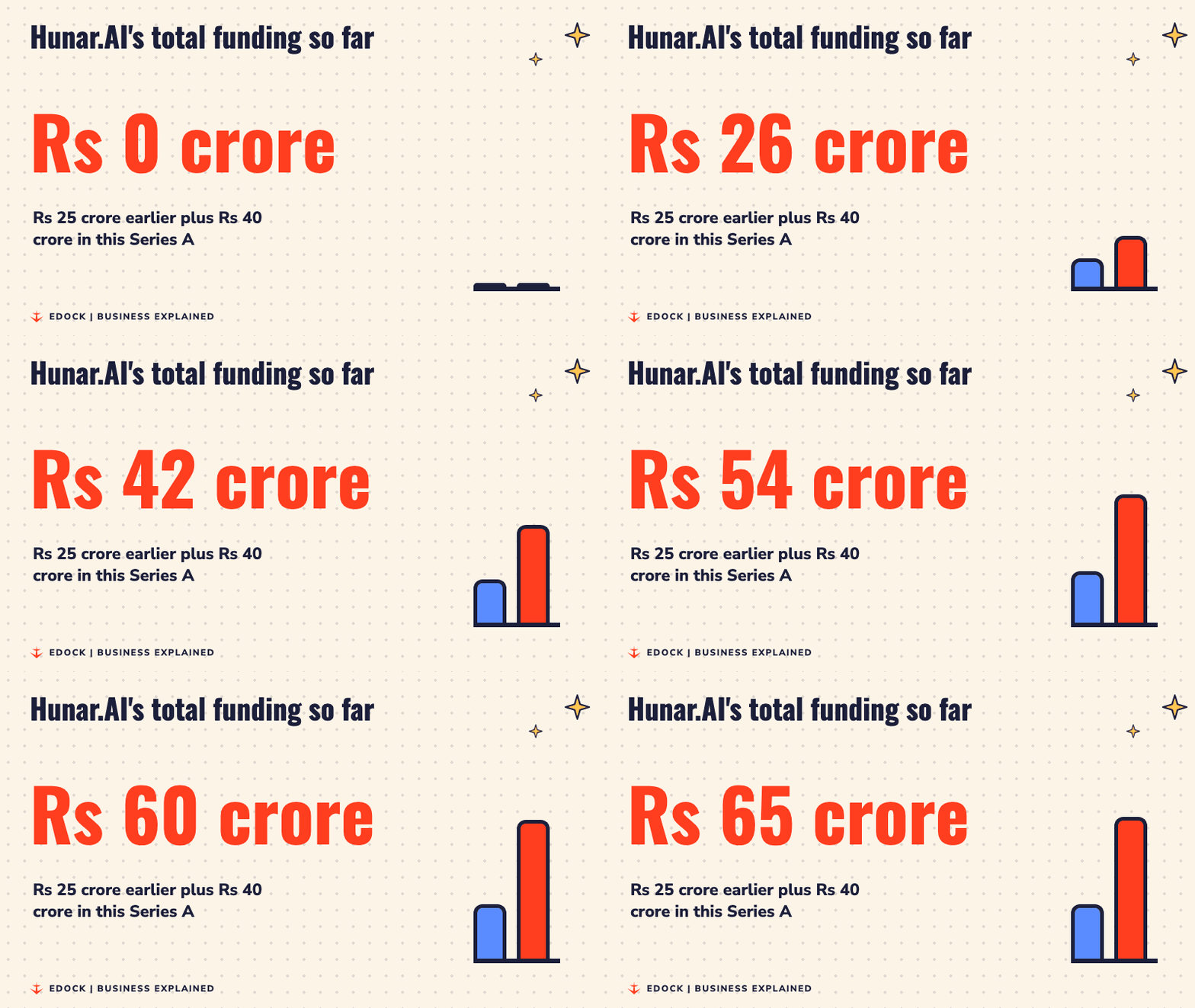
With this round, ET HRWorld reports that Hunar.AI has now raised Rs 65 crore in total. That means about Rs 25 crore came in before this round (Rs 65 crore minus Rs 40 crore).
What will the Rs 40 crore be spent on?
The startup says the money will go into three things: AI infrastructure, product development and go-to-market expansion. In simple words:
- AI infrastructure: the computers and systems that keep the AI agents running smoothly, even when lakhs of calls happen at once.
- Product development: making the tools smarter and adding new features.
- Go-to-market: the plan to sell the product to more companies, in more industries and markets.
ET HRWorld also says the company is moving towards outcome-based pricing. Many software firms charge "per seat", which means a fee for every person who logs in. Outcome-based pricing means the customer pays more when the tool delivers results. Think of paying a tuition teacher based on your marks going up, not just the number of classes.
Why one kind of AI for one kind of work?
Hunar calls its approach vertical AI. Instead of a general chatbot that tries to do everything, it builds technology around the exact steps of hiring and managing frontline workers. ET HRWorld says this focus is meant to make the system more reliable when big companies use it at huge scale.
CEO Krishna Khandelwal said solving this "requires more than applying general-purpose models to existing processes". Blume Ventures partner Arpit Agrawal said that Hunar "has the potential to build a category in India that can scale globally."
The bigger picture: India's growing gig workforce
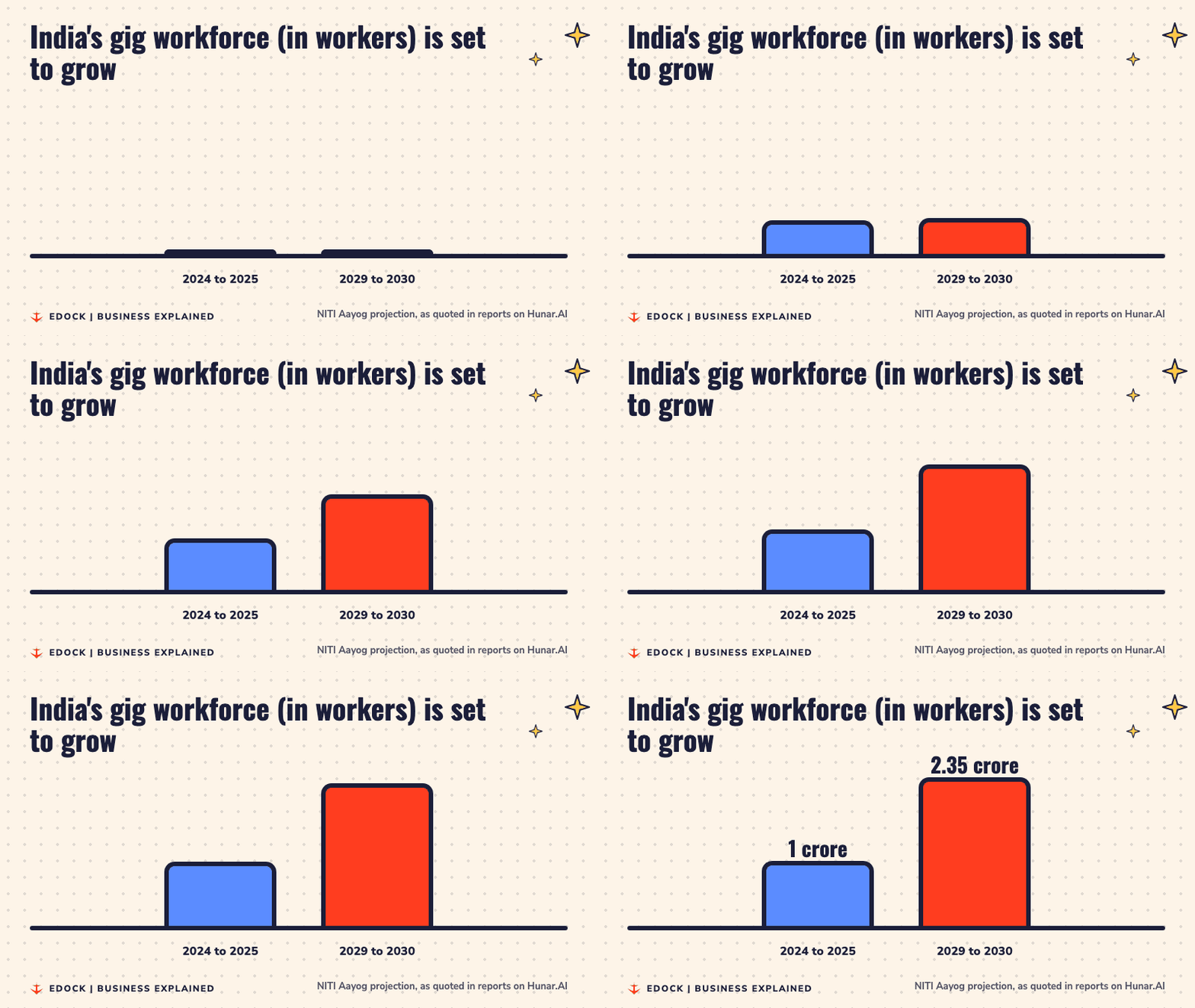
Gig workers are people paid for each task or shift, like a delivery rider paid per order, instead of a fixed monthly salary. Their number is rising fast. NITI Aayog, a government think tank, projects that India's gig workforce will grow from about 1 crore workers in 2024 to 2025 to 2.35 crore by 2029 to 2030. That is more than double in about five years.
Quick commerce, e-commerce, logistics, mobility and other service businesses are all managing larger and more spread-out teams, ET HRWorld notes. Every new dark store or warehouse needs people, and every person needs to be found, called, trained and kept happy.
That is the gap Hunar.AI wants to fill. For a young reader, the takeaway is simple. The next time you apply for a part-time role or a first shift at a store, the first voice you hear on the phone may not be a human at all.
Sources
- Inc42: Hunar raises Rs 40 Cr to scale agentic AI for frontline hiring
- ET HRWorld: Hunar.AI raises Rs 40 crore to expand AI-powered hiring and workforce management
- YourStory: Hunar.AI raises Rs 40 Cr in Series A funding round led by Blume Ventures
- Cover photo: Doing his job, by Maarten van den Heuvel, CC0
