How two state tax rules hit United Spirits' cheaper brands
Sales of its low-priced brands fell 22.7% in July to September as Maharashtra and Karnataka changed liquor taxes, while premium brands kept growing.
One part of a big Indian drinks company lost almost a quarter of its sales in just three months. Shoppers did not suddenly change their minds. Two state tax rules did the work.
On Wednesday, 28 October 2026, United Spirits, the Diageo-owned liquor maker, reported its results for July to September. Sales of its cheaper brands, which the company calls the "popular" segment, fell 22.7% to Rs 181 crore. The company blamed new tax rules in Maharashtra and Karnataka.
Yet the company as a whole still grew. Here is how a tax rule can decide which bottle wins on a shop shelf.
What did the company report?
United Spirits makes and sells whisky, vodka, rum and other spirits across India. Its own results release gives the main numbers for the quarter (a quarter is three months of business):
- Net sales value rose 2.8% to Rs 3,258 crore.
- Its premium group, called "Prestige & Above", grew 6.3% to Rs 3,065 crore.
- Its cheaper "popular" group fell 22.7% to Rs 181 crore.
- Profit after tax fell 2.1% to Rs 462 crore.
These are standalone numbers, meaning the main company on its own, as the release states. Premium brands now bring in 94.1% of net sales value. Cheaper brands bring in only a small slice.
One note on the maths. From this quarter, the company moved one big brandy brand out of the popular group and into the premium group, because of the price buyers pay for this brand. The company redid last year's numbers the same way, so the 22.7% fall compares like with like.
First, what is excise?
Excise is a tax that each state charges on liquor. Think of a samosa stall where the local body takes a fixed share of every samosa sold before the seller keeps anything. With liquor, that share is huge.
Look at the company's own figures for the quarter, as reported by exchange4media. Gross revenue, the full amount billed, was Rs 7,001 crore. Excise duty took Rs 3,743 crore of it. Take the excise away and Rs 3,258 crore is left. That is the net sales value.
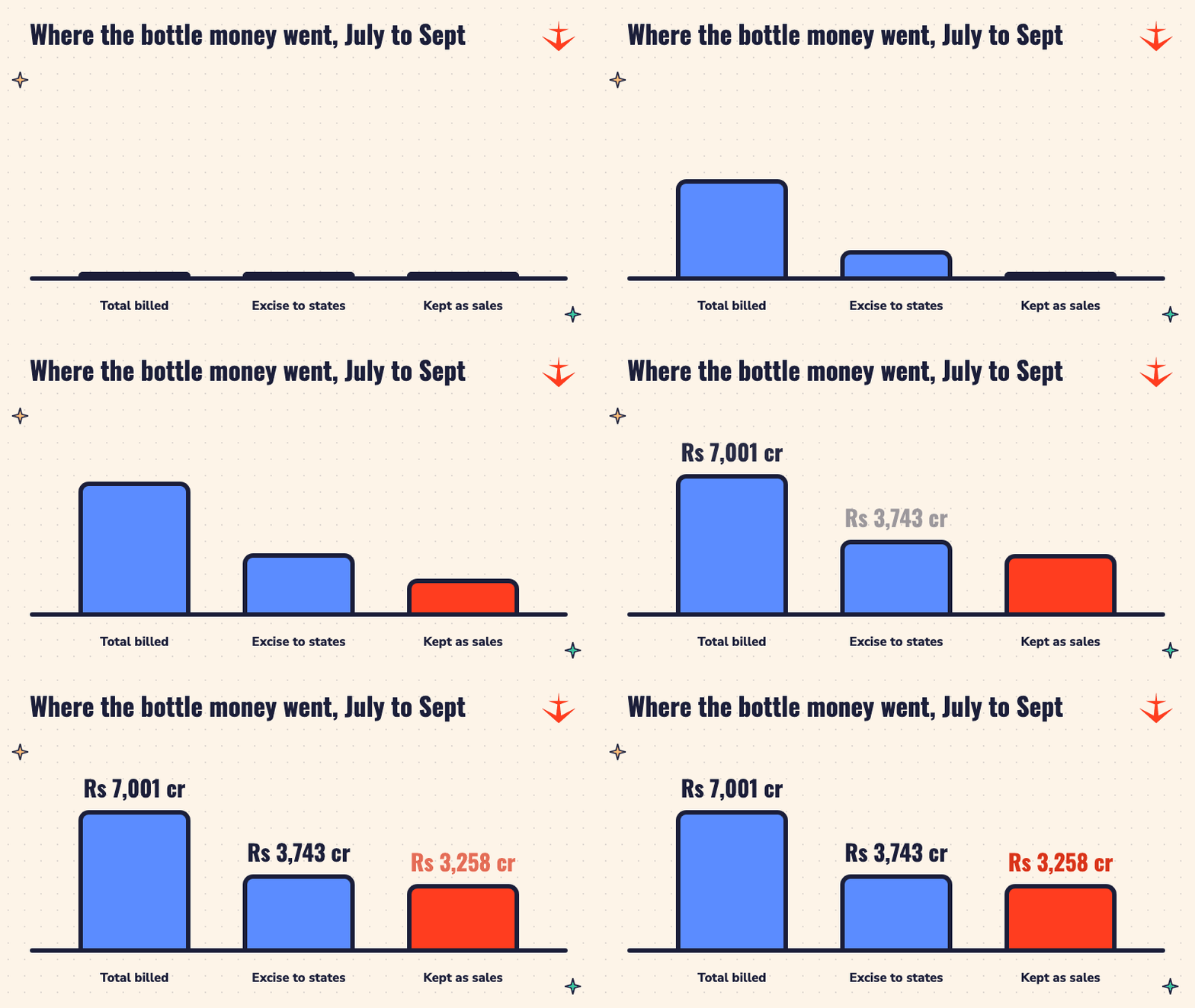
So more than half of the money went to states as tax. When a state changes how this tax works, it can change which bottle is cheap and which is costly overnight.
What changed in Maharashtra?
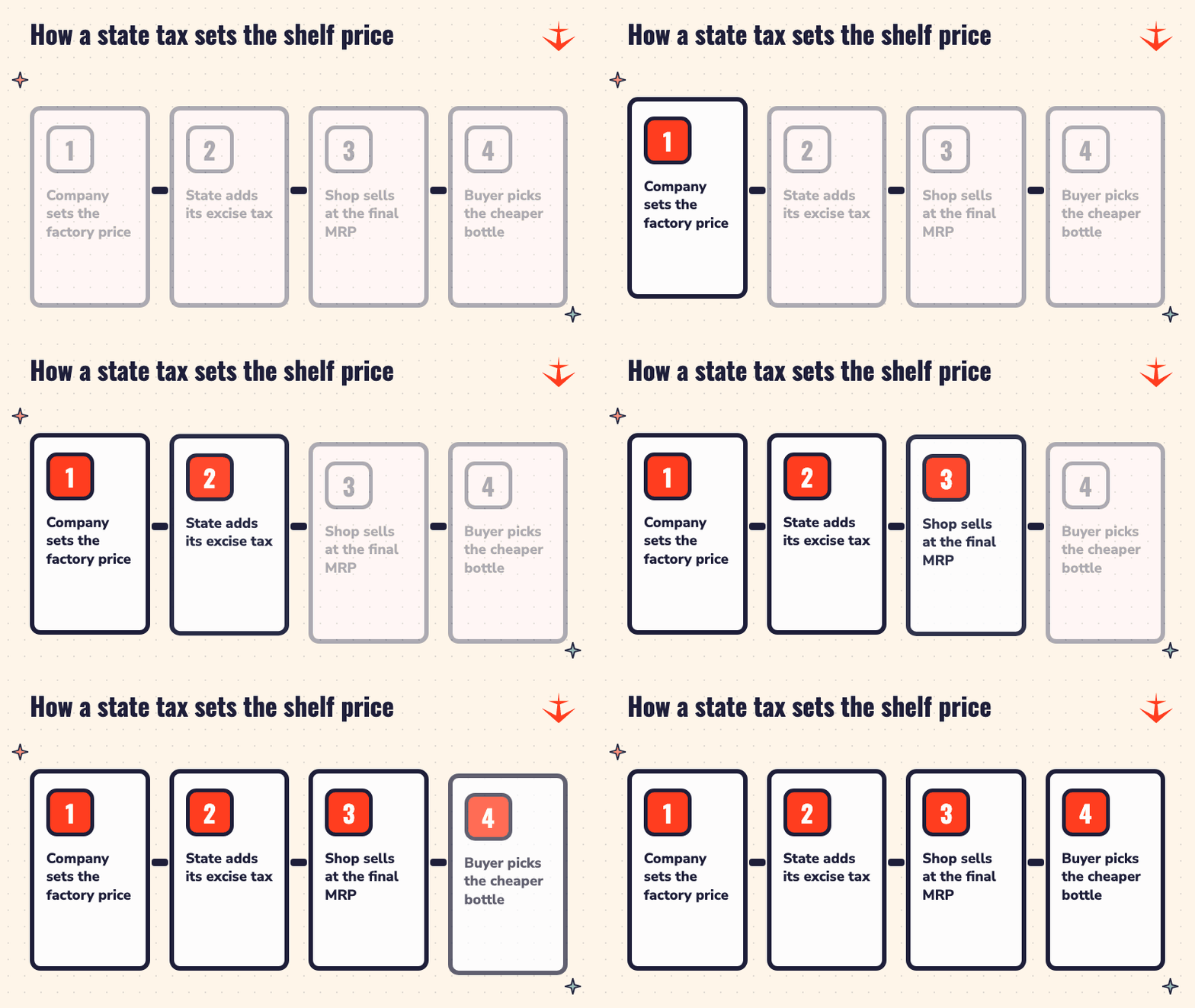
Maharashtra changed how it taxes liquor and added a new category called Maharashtra Made Liquor, or MML. These are drinks made locally in the state. At the same time, it changed excise duties on Indian-made foreign liquor (IMFL), the category where the big established brands sit.
The ET report explains the key point. Certain IMFL products face higher duties, while MML products get a lower duty rate. That gives locally made liquor a price edge. It is like two tea stalls side by side, where one pays a much smaller daily fee to the city. That stall can sell chai cheaper, even with the same tea leaves.
What changed in Karnataka?
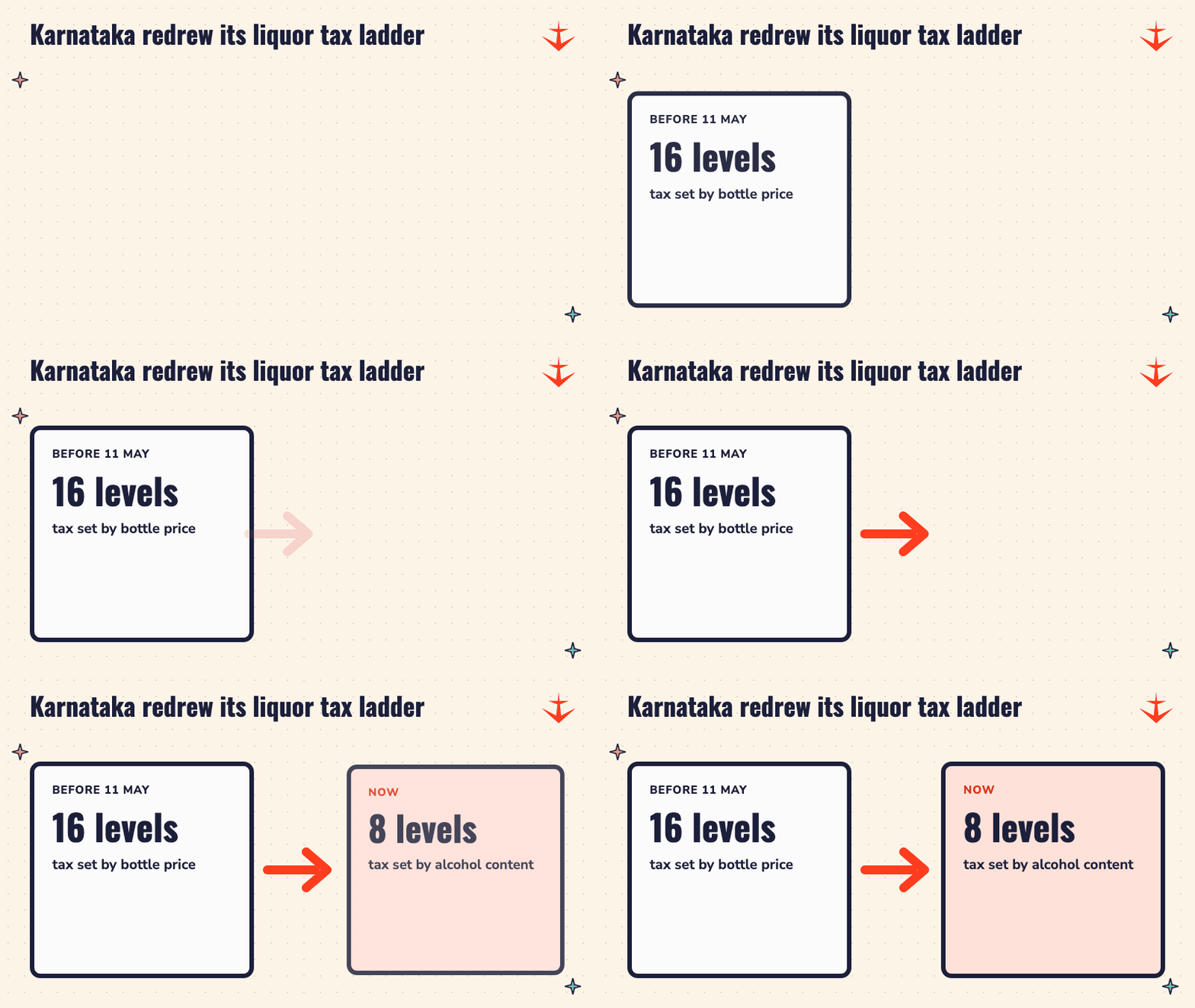
On 11 May 2026, Karnataka became the first state in India to tie liquor tax to the alcohol content of a drink. Before, the tax followed the volume and price of the bottle. The state also cut the number of tax levels, known as excise slab levels, from 16 to eight.
Before the change, the state also fixed the maximum retail price (MRP, the highest price printed on a pack) from the price the maker declared. The new system lets makers set their own MRPs.
Who pays more now? The News Minute, citing a Deccan Herald report, said a starting-level 180 ml bottle that cost Rs 80 was projected to rise to Rs 105. Premium and imported labels were expected to get 16% to 20% cheaper.
Karnataka is a big state for this company. Outlook Business reported that the state makes up nearly 12% to 15% of United Spirits' total sales volumes.
So what happened to the cheaper brands?
The release says the fall in the popular group came from the MML impact in Maharashtra and the new rules in Karnataka. In its words, these "adversely impacted the realisations and growth in the segment owing to excise slab changes".
Realisation is the money a company actually gets for each bottle after taxes and costs. If tax rules squeeze the shelf price, the maker earns less per bottle, or sells fewer bottles, or both.
Over the six months from April to September, popular sales fell 20.6% to Rs 354 crore. Across all brands, the company sold 15.77 million cases in the quarter, 5% fewer than a year earlier, exchange4media reported. Higher prices and a richer mix of brands made up for the drop.
Why did premium brands keep growing?
The premium group grew 6.3% in the quarter. The company credited local flavours of Smirnoff vodka, the relaunch of J&B Scotch, and growth in its luxury brands. It said the J&B relaunch was made possible by the India-UK trade deal.
Karnataka's change also helps here. The News Minute reported that the extra excise on the higher levels was cut by 10% to 15%.
The company also spent much more on marketing. Storyboard18 reported that advertising and promotion spending rose to Rs 378 crore from Rs 241 crore a year earlier, an increase of nearly 57%. That is 11.6% of net sales value, up from 7.6%, spent ahead of the festive season.
This heavy spending is one reason EBITDA, which means the profit from running the business before interest, tax and the cost of wear on machines, fell 4.3% to Rs 643 crore.
Chief executive Praveen Someshwar said in the release: "We delivered a resilient quarter despite a strong prior-year base and regulatory headwinds."
Why does this matter beyond one company?
This story is a lesson in how prices are made. For goods taxed by states, the shelf price is often more tax than product. A state can tilt the market toward local makers, as Maharashtra did, or toward premium labels, as Karnataka's new ladder does.
Small local makers feel this too. The News Minute reported a warning from Karnataka's local brewers and distillers: smaller regional makers that sell only budget liquor may face falling volumes and even shutdowns.
For a big company, the answer has been to lean harder on premium brands, where most of its money already comes from. Cheaper brands now carry more risk, because one tax notice can change their price overnight.
This video from The Hindu explains how Karnataka's alcohol-based tax system works.
Sources
- The Economic Times: United Spirits' popular segment sales fall 22.7% as state policies squeeze margins
- Equitybulls: United Spirits Ltd announces Q2, H1 FY27 results (company release)
- exchange4media: United Spirits Q2 results, ad spends surge 57%
- Storyboard18: Diageo India raises ad spend to Rs 378 crore in Q2 FY27
- The News Minute: Karnataka ties liquor tax to alcohol content
- Outlook Business: Karnataka's new liquor tax plan explained
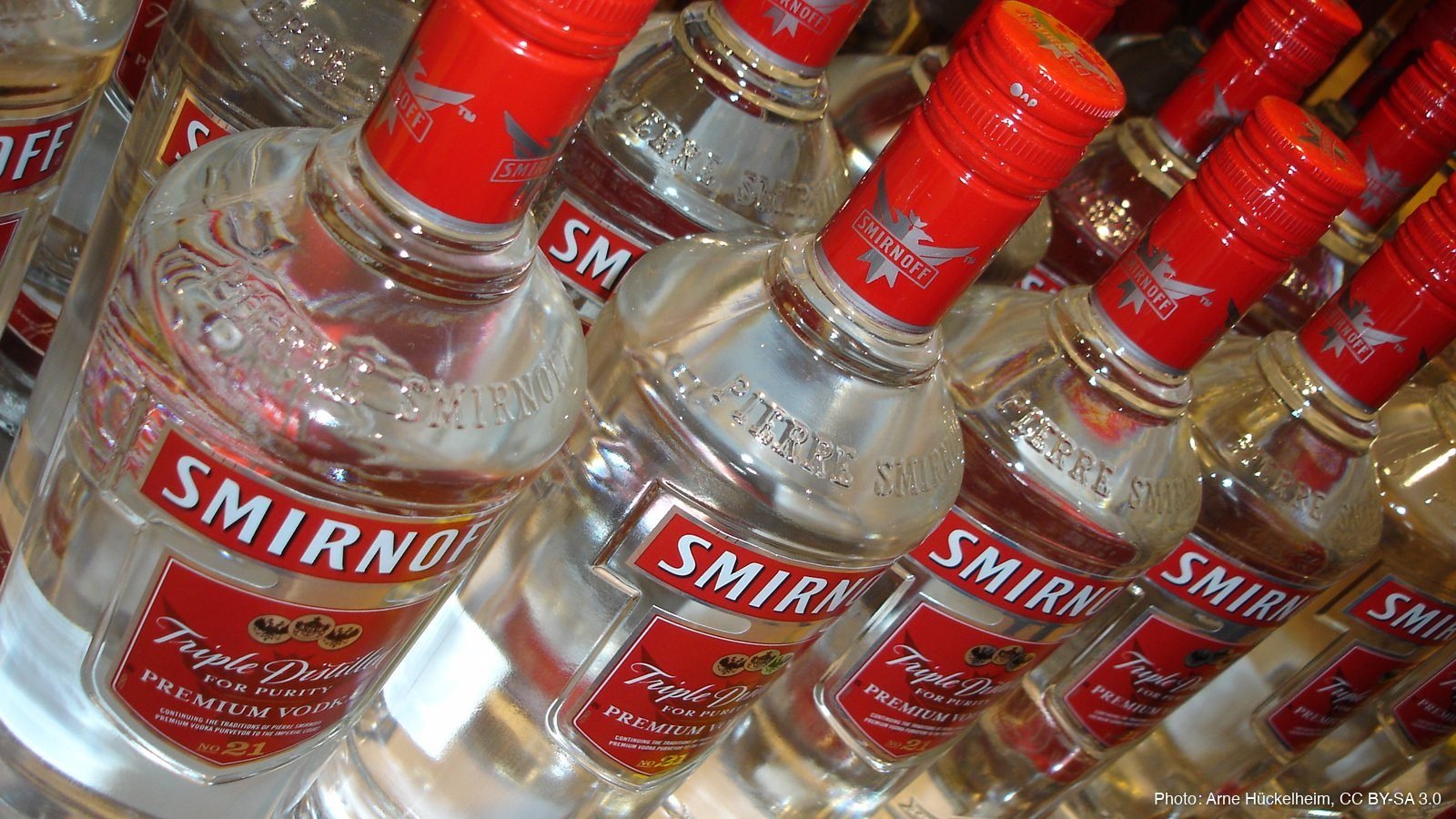
- Cover photo: Bottles of Smirnoff vodka in an airport duty free shop, by Arne Hückelheim, CC BY-SA 3.0

You may republish this story under CC BY 4.0: credit Manpreet Kaur and link to this page.