Hindustan Unilever is selling more packets again, while its costs climb
Version 1 of 1 saved 28 Oct 2026, 5:28 pm IST · Chain line 306
As it was first published
Hindustan Unilever is selling more packets again, while its costs climb
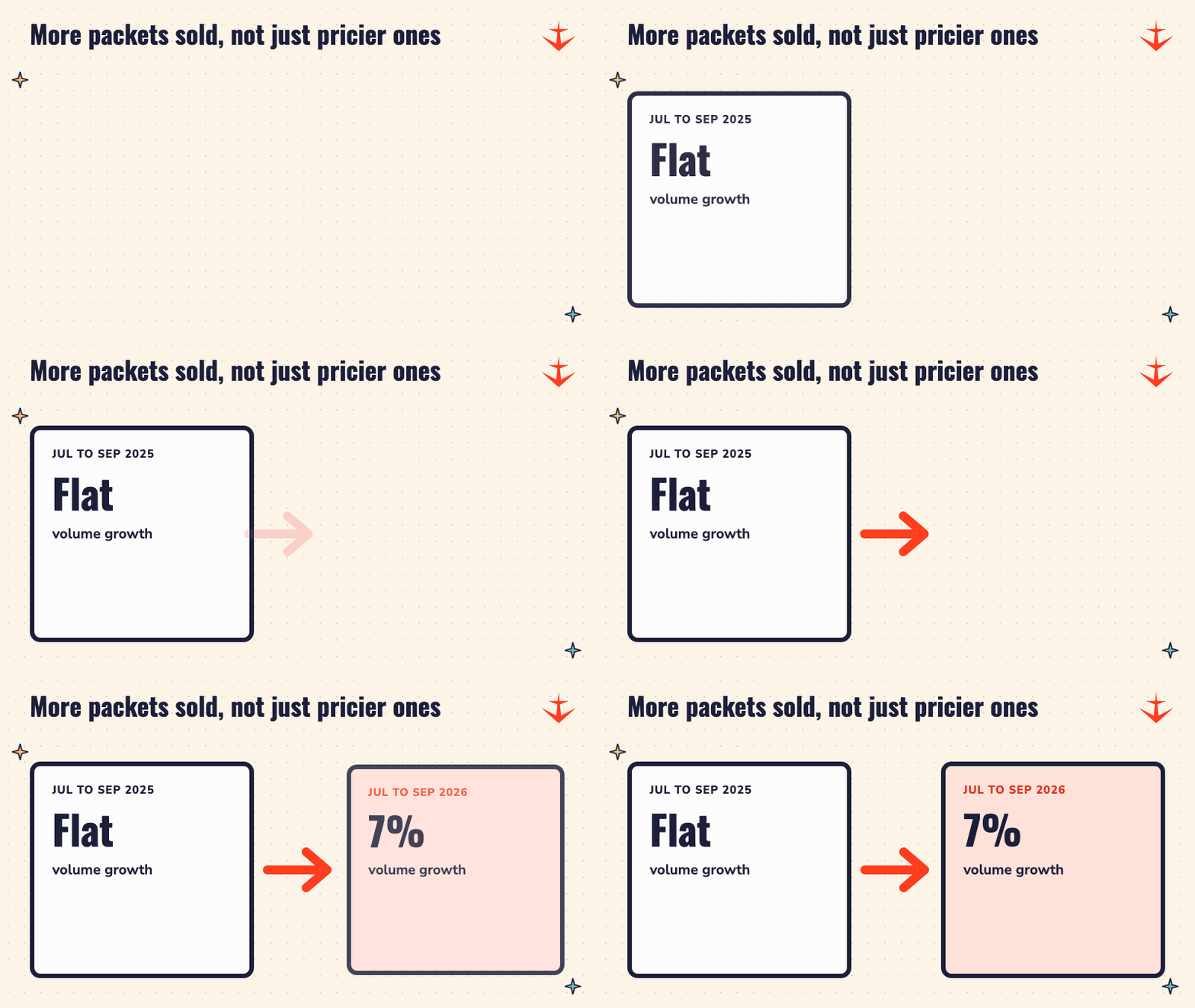
The Surf excel and Lux maker sold 7% more goods by volume in July to September 2026, its best sales growth in 14 quarters, while raw material costs climb.
Picture the kirana shop in your lane. A year ago, the shopkeeper sold about the same number of detergent packets every month. This year, the same shelf empties faster. That, in short, is what Hindustan Unilever (HUL) reported on Wednesday, 28 October 2026: in the three months from July to September, it sold 7% more goods by volume than in the same months last year.
HUL is the company behind many things in an Indian home: Surf excel, Rin, Lux, Dove, Pears, Vim, Horlicks and Kissan. So when HUL sells more, the result is a clue about how families across India are spending their money.
The big numbers, in plain words
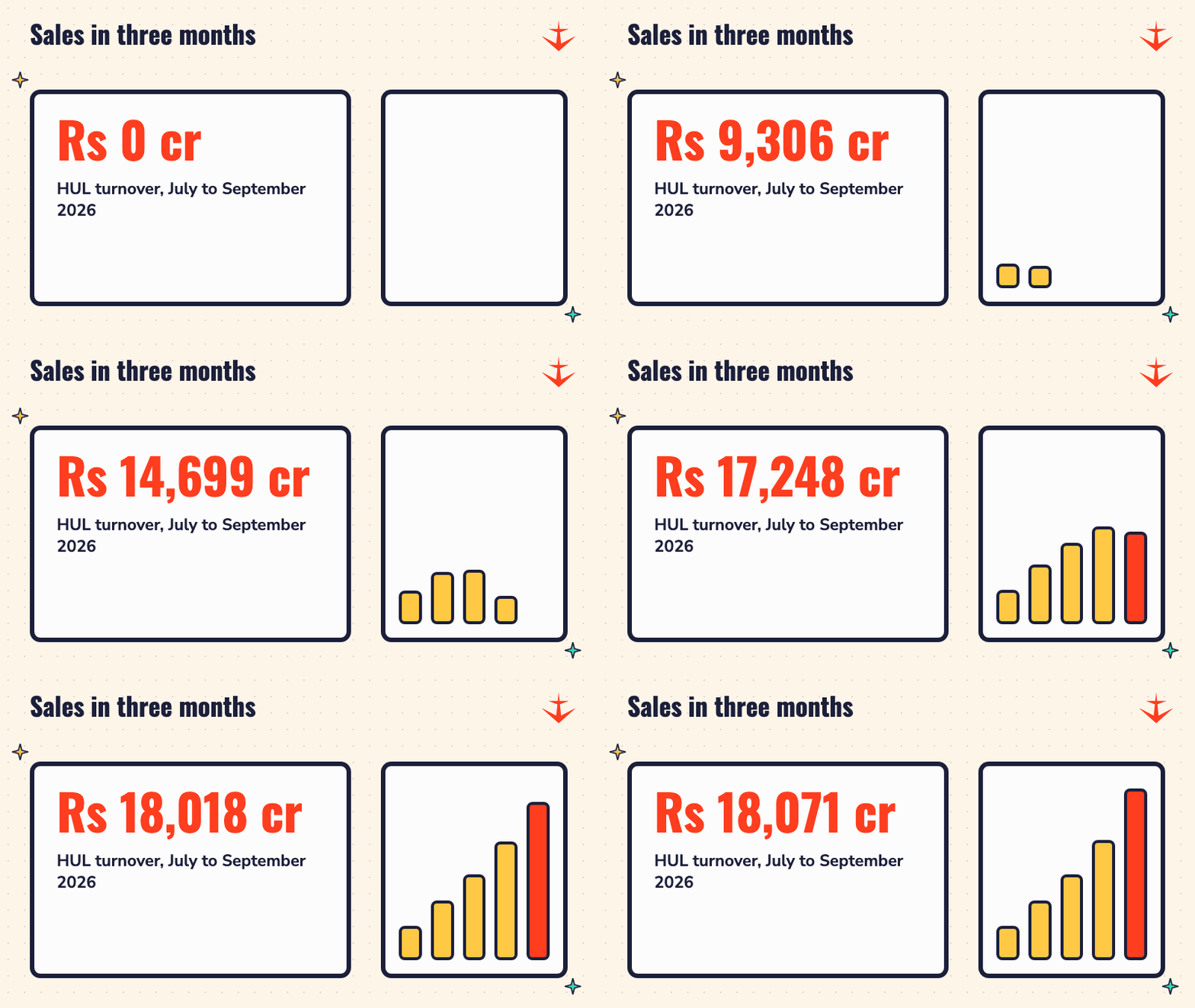
HUL's turnover for the quarter was Rs 18,071 crore. Turnover simply means all the money that came in from selling goods. Think of every packet of soap, shampoo and tea sold across India in three months, added together.
A quarter is three months. HUL said its underlying sales grew 15%, the fastest in the last 14 quarters. Fourteen quarters is three and a half years. "Underlying" means the company leaves out sales from brands it bought or sold, so the comparison stays fair.
Profit is a little more tricky. HUL's reported profit after tax was Rs 2,796 crore, almost the same as a year ago. The reason: last year's number had a one-off tax gain of Rs 273 crore. Imagine a cricket player whose score last season included one lucky innings that will not repeat. Leave that innings out, and his form looks better. In the same way, HUL said profit before such one-off items grew 9%.
One small note. News outlets printed slightly different figures. Business Standard reported net sales of Rs 18,226 crore and profit for shareholders of Rs 2,790 crore, up 4%. This post uses the numbers in HUL's own release.
What "volume growth" really means
A company can earn more in two ways. Picture a samosa stall. If the owner raises the price from Rs 10 to Rs 12, the day's earnings go up even when the stall sells the same 100 samosas. But if the stall sells 107 samosas instead of 100, more people are actually eating. That second kind of growth is volume growth: more packets leaving the shelf, not just costlier ones.
HUL's underlying volume growth was 7%. According to Mint, this is the highest since the April to June quarter of 2021, when it touched 9%.
The jump looks bigger next to last year. In July to September 2025, HUL's volume growth was flat and its sales grew only 2%, Outlook Business reported. The company then blamed a short-term effect of GST rate changes and a long monsoon in parts of the country.
This year started better too. For April to June 2026, HUL said sales grew 10%, then its best in 13 quarters, with growth coming equally from volume and pricing.
Which shelves grew fastest
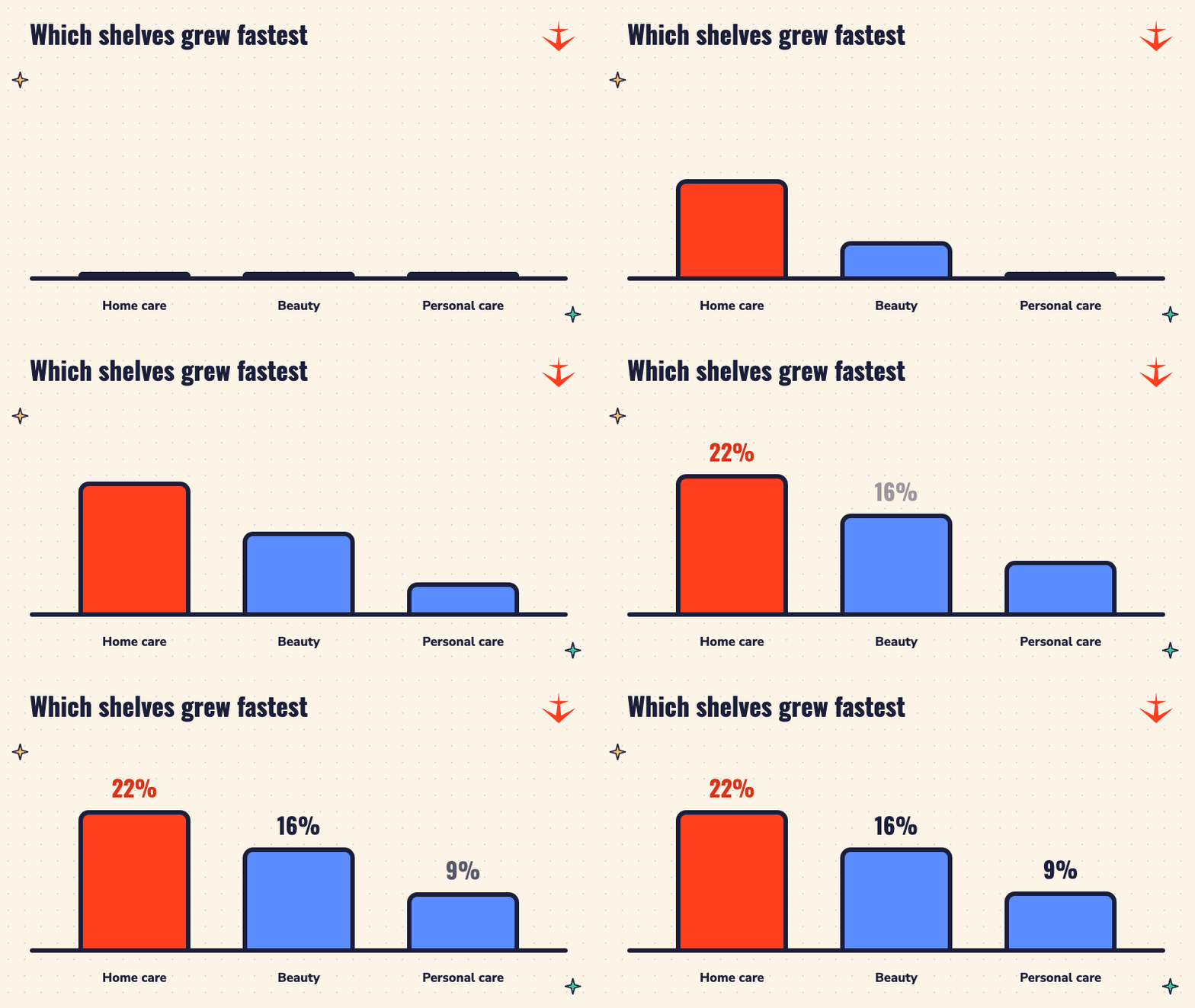
Home care, the detergents and dishwash products, grew 22%, with volumes up by double digits. HUL said market development work and careful pricing helped more homes start buying its products. It also named one pack: the Surf excel Easy Wash Rs 99 pack, which it said "continued to scale well". The company calls this premiumisation: getting buyers to move up to a slightly better product, the way a chai lover might switch from loose tea to a better branded pack.
Beauty and wellbeing grew 16%, led by premium skin care and hair care. Personal care, which includes soaps like Dove and Pears, grew 9%. But The Economic Times noted that volumes in this segment were flat, and Mint said soap sales were helped by price hikes. So here, more of the growth came from prices than from extra bars sold.
Foods grew 9%, but volumes rose only slightly. Rising costs weighed on tea, especially the cheaper everyday packs.
Why soap sales tell you about India's mood
Soap, detergent and tea are things most homes buy every week. So HUL's numbers say something about daily spending in India, not just about one company.
HUL's chief executive, Priya Nair, said in the release that the "Indian economy remains resilient". The company also said it expects the full year to March 2027 to be better than the year before. The results came in the middle of the festival season, a big time for shopping, The Economic Times reported.
Here is a short video of HUL's own press conference on these results.
The worry: costlier raw materials
There is a catch. HUL said commodity inflation is expected to continue in the short term. Commodities are raw materials, like crude oil based chemicals, packaging and edible oil. According to The Economic Times, the war in West Asia has pushed up these costs for consumer goods companies across India.
This shows up in HUL's EBITDA margin. In simple words, this tells you how much of every Rs 100 of sales is left after paying for materials, staff and running the business, before interest, tax and wear and tear on machines. HUL's EBITDA was Rs 4,089 crore, so about Rs 22.60 was left from every Rs 100. That margin was 1.4 percentage points lower than a year ago, though HUL said it stayed inside its target range of 22% to 24%.
Raw material costs had already been rising earlier this year. In April to June, personal care growth came mostly from higher prices, as palm oil costs stayed high for a second year in a row.
What this means at your kirana
When costs climb, a company has two choices. It can raise prices, or it can earn less on each packet. The Economic Times said consumer goods companies have been raising prices and cutting costs, but adding the full cost increase to prices could make people buy less.
HUL said it will keep its focus on selling more packets, using "calibrated pricing", cost savings and better productivity. Calibrated pricing means small, careful price changes instead of big jumps. HUL calls its plan "competitive, volume-led profit growth": growing profit mainly by selling more, not only by charging more.
For a young reader, the lesson is simple. Watch the shelf, not just the price tag. If more packets are moving, people are spending. If only prices are moving, they may be stretching their money.
Sources
- Hindustan Unilever: Results for the quarter ended 30th September 2026
- Mint: HUL Q2 results, volume growth
- The Economic Times: HUL reports highest sales growth in 14 quarters
- The Economic Times: Hindustan Unilever looks to stronger FY27, but commodity inflation threatens margins
- Business Standard: HUL Q2 results
- Outlook Business: HUL's September 2025 quarter
- Kotak Neo: Hindustan Unilever April to June 2026 results
- YouTube: HUL results press conference
- Cover photo: Hindustan Unilever, Garden Reach, by Soumava2002, CC0
