HealthKart crosses Rs 2,000 crore in sales: where each Rs 100 goes
Version 1 of 1 saved 28 Oct 2026, 1:49 pm IST · Chain line 301
As it was first published
HealthKart crosses Rs 2,000 crore in sales: where each Rs 100 goes
The company behind MuscleBlaze grew sales by 56.2% in FY26, and its filed accounts show how much of the money went on goods, ads and profit.
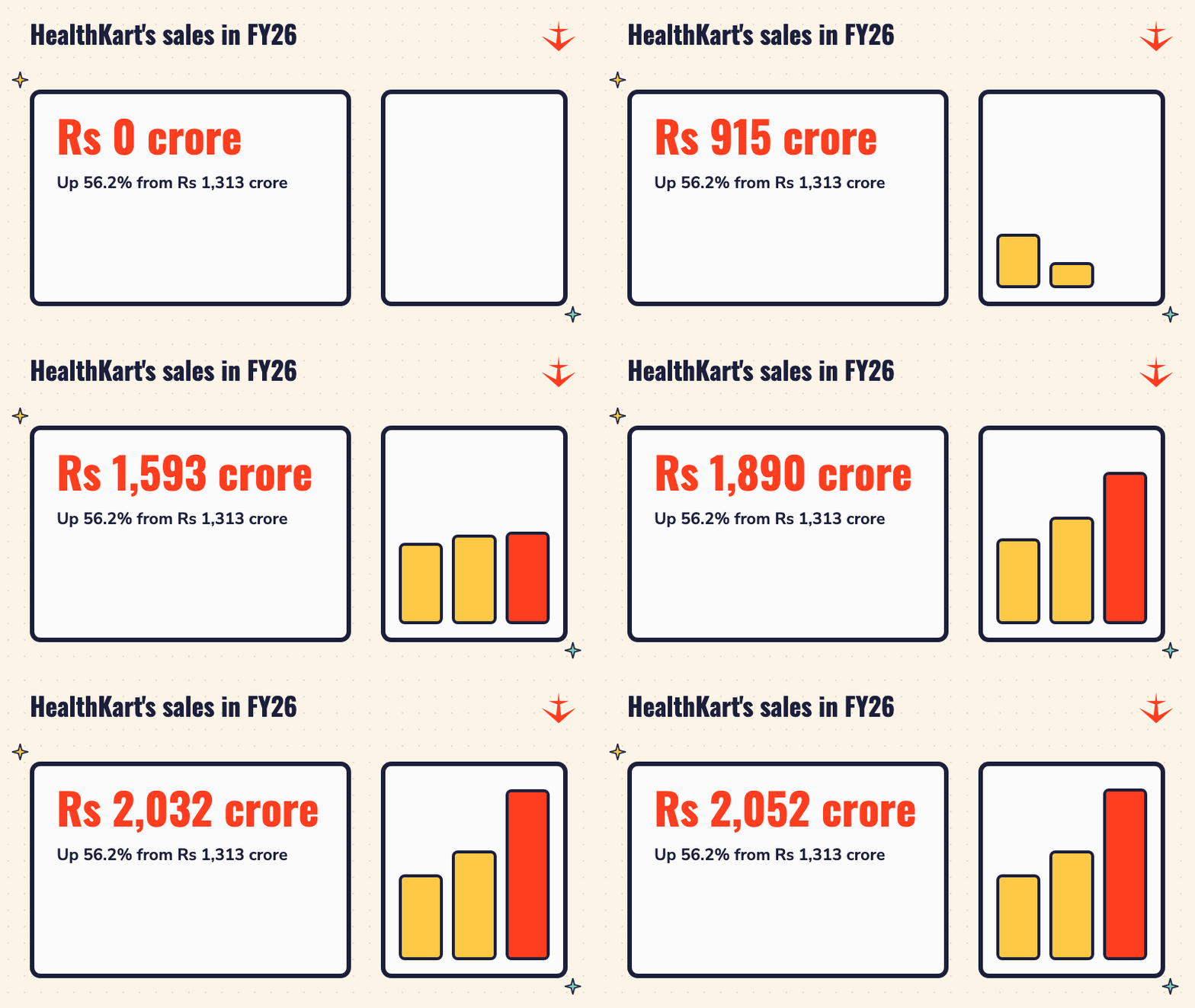
In one year, the company behind MuscleBlaze protein powder grew its sales by more than half. HealthKart made Rs 2,052 crore from operations in FY26, up 56.2% from Rs 1,313 crore the year before. Entrackr reported the numbers on Wednesday, 28 October 2026, from the yearly accounts the company filed with the Registrar of Companies (RoC). The RoC is the government office where Indian companies must file their accounts every year.
FY26 is the financial year from April 2025 to March 2026. Think of it like a school year for money. Companies add up their sales and costs from 1 April to 31 March, then file the totals.
The big number is only half the story. The same filing shows where the money went: how much went on buying goods, how much on ads, and how much was left as profit. That split tells you a lot about how a brand like this grows.
Who is HealthKart?
HealthKart is a Gurugram company founded in 2011 by Sameer Maheshwari. It sells nutrition and wellness products under its own brand names. Its list of brands includes MuscleBlaze, The Protein Zone, TrueBasics, HK Vitals, bGreen, Nouriza and Gritzo.
MuscleBlaze is the best known. YourStory calls it one of the most popular Indian brands in sports nutrition, especially protein powders. HK Vitals sells nutraceuticals (vitamin style health products), and Gritzo is a child nutrition brand.
The company did not start this way. According to Inc42's company profile, HealthKart began as an online store and later moved into offline selling too. Today it runs what YourStory calls digital-first brands, meaning brands that grew mainly by selling online.
Owning a brand means the company decides the recipe, the packet and the price. Picture a samosa stall owner who makes his own samosas, with his own name on the paper bag, instead of reselling samosas from another kitchen. If people ask for his samosas by name, they come back to him.
How big was the jump?
First, one business word. "Revenue from operations" is the money a company earns from its main work. For a chai stall, it is the money from selling chai, not the rent the stall owner earns by letting someone park a cycle next to the stall.
HealthKart's revenue from operations has climbed year after year:
- FY24: Rs 1,021 crore
- FY25: Rs 1,313 crore, up 29%
- FY26: Rs 2,052 crore, up 56.2%
So growth was almost twice as fast in FY26 as in FY25. Nearly 99% of the money came from selling products, worth Rs 2,033 crore. The company also had Rs 54 crore of other income, so its total income came to Rs 2,106 crore, up from Rs 1,368 crore. Inc42's data page shows the same Rs 1,368 crore total for FY25.
Where does each Rs 100 of sales go?
Now picture all those sales as a big pile of Rs 100 notes. The filing tells us how each note gets spent.
The biggest cost is procurement. That is a fancy word for buying stock: the powders, tablets, containers and packing a brand needs before it can sell anything. HealthKart spent Rs 1,071 crore on procurement, up 71.9% from Rs 623 crore.
Next come ads. Spending on advertising and marketing rose 53.2% to Rs 403 crore, from Rs 263 crore in FY25. That works out to about Rs 1.1 crore every single day of the year.
Then there is everything else: staff pay, commissions, freight (the cost of moving goods around) and other running costs. All costs together came to Rs 1,982 crore, up 55.7% from Rs 1,273 crore.
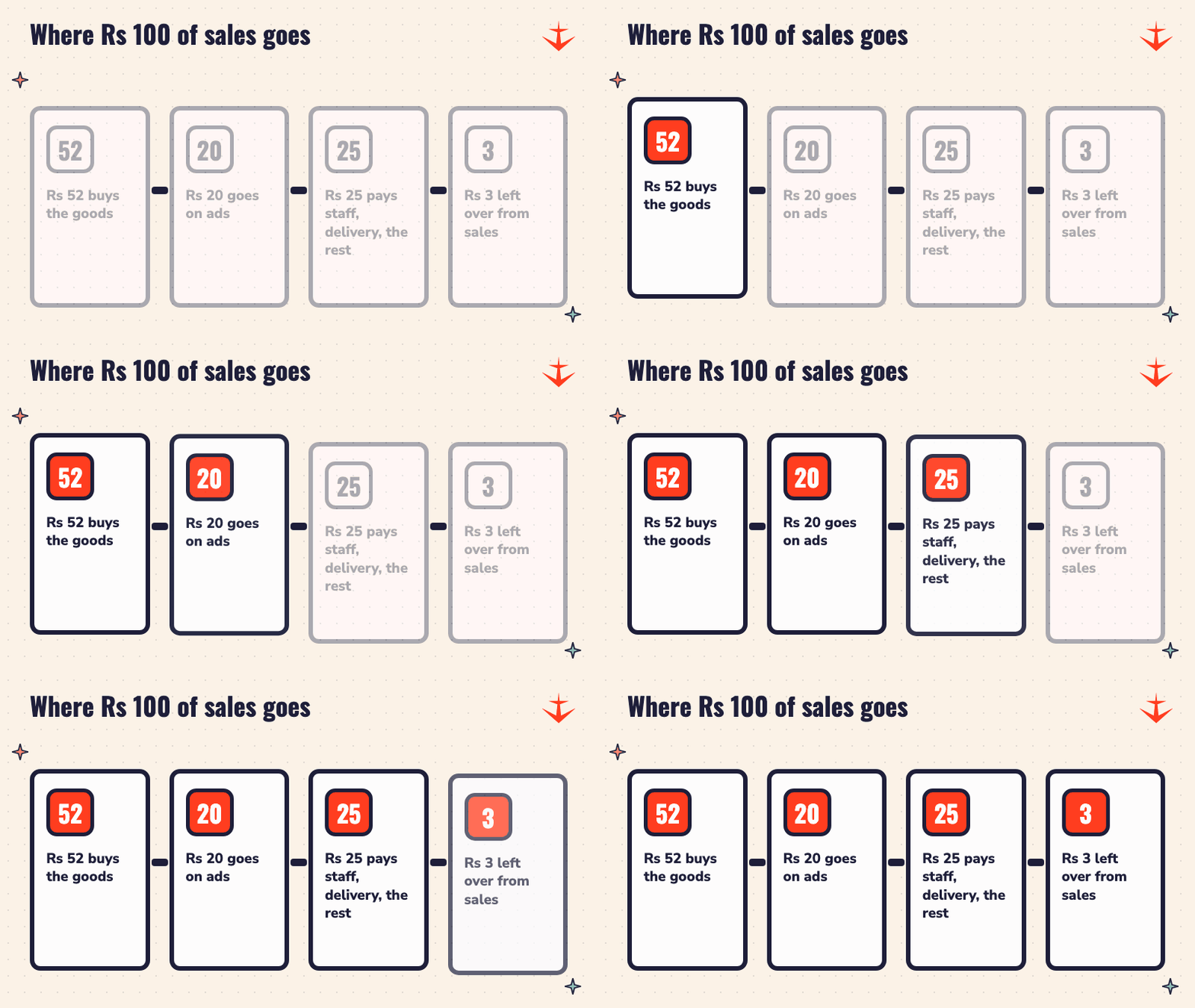
Put into a simple sum, rounded, every Rs 100 of FY26 sales went roughly like this:
- About Rs 52 to buy the goods
- About Rs 20 on ads
- About Rs 25 on everything else
- About Rs 3 left over from sales alone
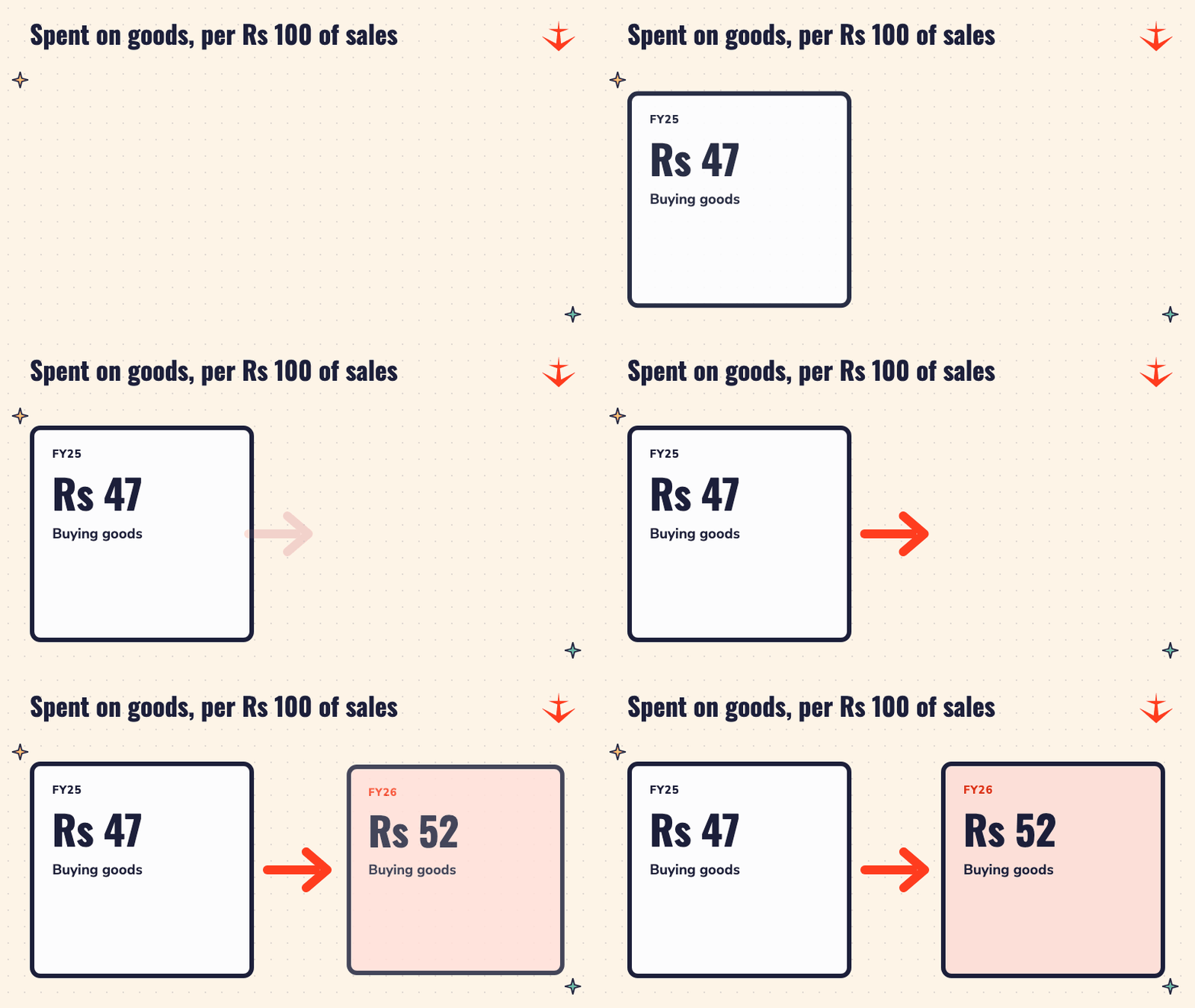
One thing changed from the year before. In FY25, buying goods took about Rs 47 of every Rs 100 of sales. In FY26, that rose to about Rs 52. The ad share stayed close to Rs 20 in both years. So the bill for stock grew faster than sales, while ads grew roughly in step with sales.
So is HealthKart making money?
Yes. Its profit before tax, leaving out exceptional items, rose 30% to Rs 124 crore from Rs 95 crore. Profit before tax is what is left after all costs, before the company pays tax to the government. "Exceptional items" are one-off events, like a one-time windfall or loss that will not repeat, so leaving them out shows the normal business.
The sum checks out. Total income of Rs 2,106 crore minus total costs of Rs 1,982 crore gives Rs 124 crore.
Notice one thing. Sales grew 56.2%, but profit grew 30%. The numbers show one clear reason: the stock bill grew 71.9%, faster than sales. A business can sell a lot more and still keep only a little more, if the cost of the goods rises quickly.
Who has put money into HealthKart?
HealthKart has raised around $382 million so far. Its investors include Peak XV Partners, Temasek and Sofina. In December 2022, it raised $135 million from Temasek and other investors.
In November 2024, it raised $153 million in a round led by ChrysCapital and Motilal Oswal Alternates. At the same time it announced its first ESOP buyback, worth Rs 55 crore. ESOPs are small pieces of the company given to staff as a reward. In a buyback, the company pays cash for some of those pieces, so employees get real money from them.
Entrackr also says HealthKart is reportedly gearing up for an IPO, an initial public offering. That means selling small pieces of the company to the public on the stock market for the first time. No date or size has been confirmed by the company in the pages above.
This podcast episode features MuscleBlaze founder Sameer Maheshwari talking about India's protein business and how the brand was built.
Why should a young reader care?
Three simple lessons sit inside these numbers.
The price of a pack pays for a lot more than the powder inside. Out of every Rs 100, only about half goes to buying the goods. The rest pays for ads, staff, delivery and the other costs of running a brand, plus a small profit.
Growing sales is not the same as growing profit. HealthKart grew sales by more than half, yet profit rose by less than a third. For anyone who dreams of starting a brand, even a small one on Instagram, this is why both lines matter.
Ads are a big part of the game. Rs 403 crore in a year is about one rupee out of every five the company earns from sales.
None of this is a view on whether anyone should take supplements. It is simply a look at how one well-known Indian brand earns and spends its money.
Sources
- Entrackr: HealthKart crosses Rs 2,000 crore revenue in FY26, PBT rises 30%
- Entrackr: HealthKart's revenue nears Rs 1,400 crore in FY25
- YourStory: MuscleBlaze parent HealthKart secures $153 million in funding
- Inc42: HealthKart company profile
- Inc42: HealthKart financials
- Cover photo: Whey protein packs on a shelf at FIBO 2019 in Cologne, Germany, by dronepicr, CC BY 2.0
