Gulf exporters get 95% risk cover till March 2027 as government extends RELIEF
The Commerce Department has stretched part two of its Rs 497 crore RELIEF plan, so exporters can keep insuring Gulf shipments at pre-crisis prices.

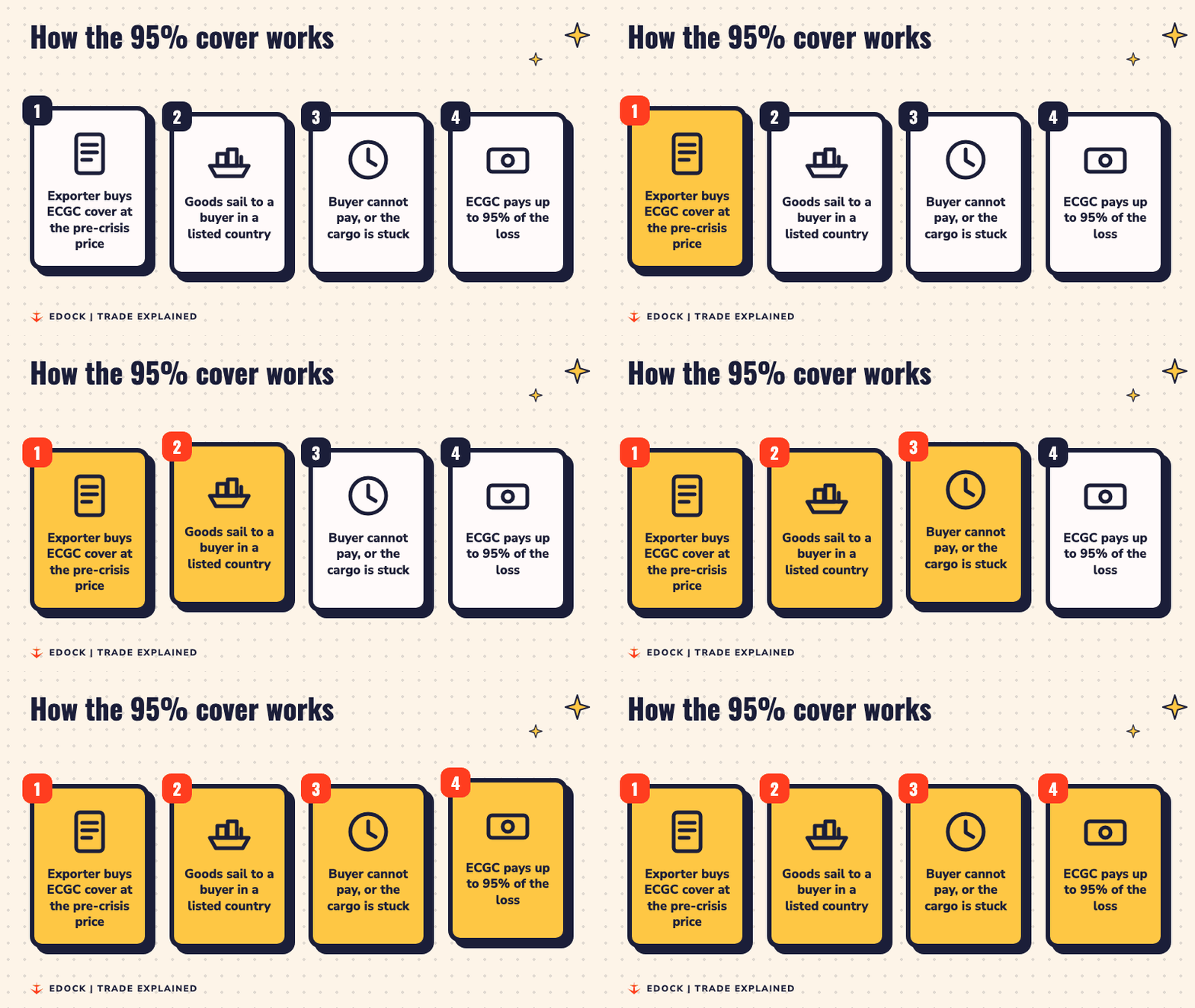
Picture a small Indian company in Tiruppur or Moradabad. It has packed a full container of goods for a buyer in Dubai. The ship leaves. Then the buyer stops answering calls, or the ship gets held up on a risky sea route. Who pays the company? For many exporters selling to the Gulf, the answer is now clear for another six months: a government insurer will cover up to 95% of the loss.
On Monday, 26 October 2026, the Department of Commerce said it has extended Component II of a support plan called RELIEF until 31 March 2027. The change was made through a notification dated 30 September 2026, and was announced to the public with the new end date on 26 October. Upstox reports that this adds six more months of cover.
First, what is RELIEF?
RELIEF is short for Resilience and Logistics Intervention for Export Facilitation. That is a long name for a simple idea: help Indian sellers keep selling abroad when shipping gets risky and costly.
The government approved it on 19 March 2026, with a budget of Rs 497 crore. It sits under the Export Promotion Mission, a bigger plan to grow India's exports.
Why was it needed? Since early 2026, tension in West Asia has made ships take longer routes, caused delays at ports and pushed up freight and insurance costs, according to the Commerce Ministry. Freight is simply the fare you pay to move goods, like a bus ticket for your boxes.
Meet ECGC, the exporters' insurance company
The plan runs through ECGC, which stands for Export Credit Guarantee Corporation of India. It is a company wholly owned by the Ministry of Commerce and Industry. Its job is to sell export credit insurance.
What is that? Think of a lemonade stall that sends 100 bottles to a shop in another town. The shop promises to pay next month. That promise is "credit". Export credit insurance is like a guarantee that the stall still gets most of its money even if the shop never pays, or the delivery truck gets stuck on a closed road.
The exporter pays a small fee for this safety net. That fee is called a premium, a bit like the yearly fee for a phone screen protection plan.
Under RELIEF, ECGC checks applications, processes claims, pays out money and keeps track of how the scheme is doing.
The three parts of the plan
When it was launched, the Director General of Foreign Trade explained that RELIEF has three parts:
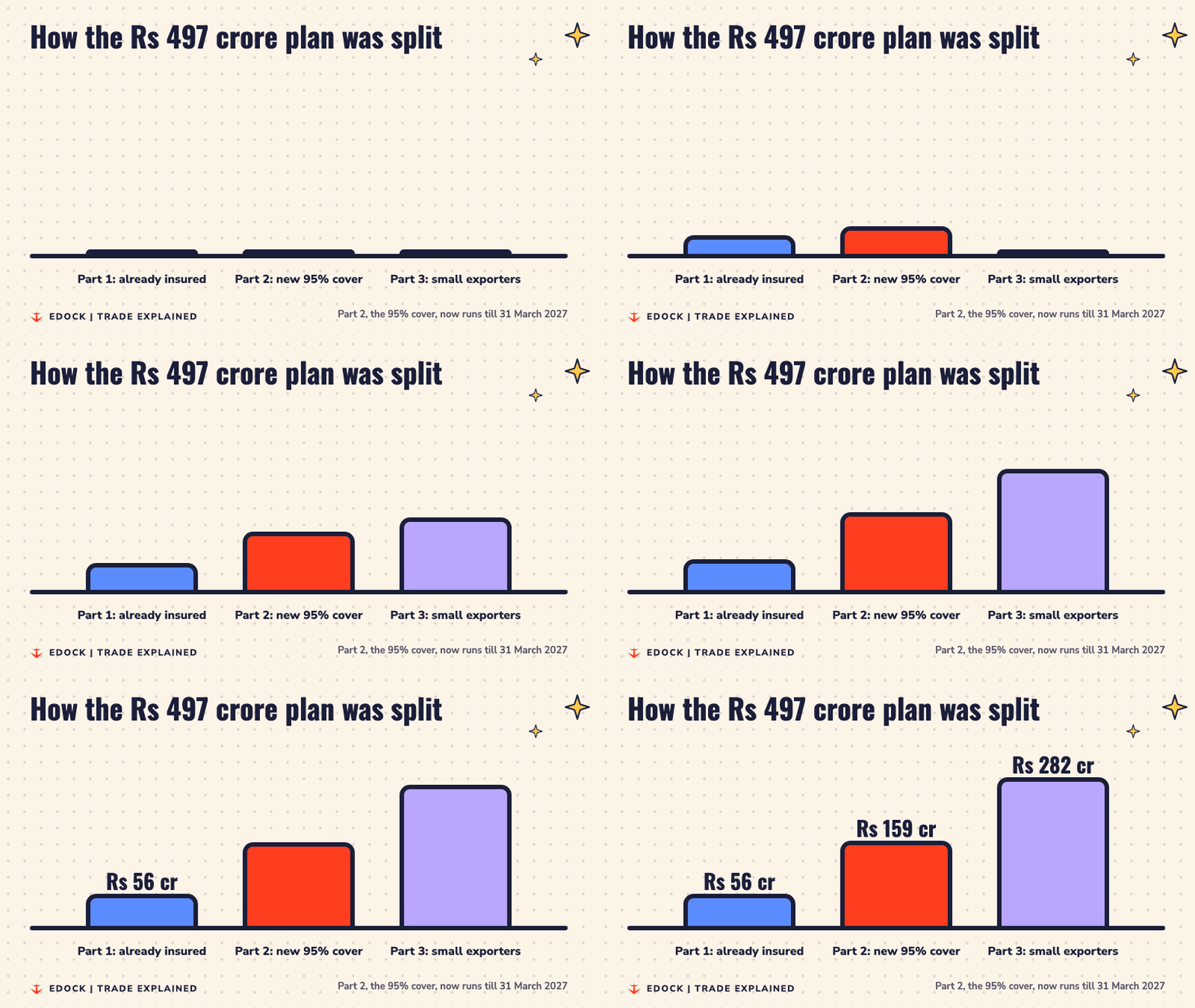
- Part 1 (Rs 56 crore): for exporters who already had ECGC insurance. Their goods shipped between 14 February and 15 March 2026 could get up to 100% cover at no extra cost.
- Part 2 (Rs 159 crore): for exporters who did not yet have ECGC cover and planned new shipments. They get up to 95% cover. This is the part now extended.
- Part 3 (Rs 282 crore): only for small and medium businesses (called MSMEs) without ECGC cover. It pays back part of their extra freight and insurance costs, up to Rs 50 lakh per exporter.
Add them up: 56 plus 159 plus 282 makes 497 crore, the full budget.
What exactly does Part 2 give an exporter?
The official release lists the key points:
- 95% risk cover from ECGC for shipments to the listed countries. So if Rs 100 of goods are lost, the exporter can get back up to Rs 95.
- No price jump. The premium cannot rise above what it was before the trouble began. Imagine your phone plan company promising not to raise your bill even though phones are breaking more often.
- Which policies count: both single-shipment policies and "whole turnover" policies, which cover all of a company's exports in one go, taken on or after 16 March 2026.
- Which cargo counts: full containers, shared containers and refrigerated "reefer" containers. A shared container is like a shared cab, where several small sellers split one box. Energy shipments, such as fuel, are not included.
Exporters file claims and papers on the ECGC customer portal, and ECGC has posted video guides on its YouTube channel.
Which countries are covered?
At launch, the list had ten countries, including the UAE, Saudi Arabia, Qatar, Oman, Kuwait and Bahrain. Later, the government added Egypt and Jordan. A policy circular dated 15 April 2026 also made clear that exporters taking a fresh whole turnover policy on or after 16 March 2026 can use Part 2.
These Gulf markets matter. West Asia is an important buyer of Indian farm products and engineering goods, ETBFSI reported.
Are exporters actually using it?
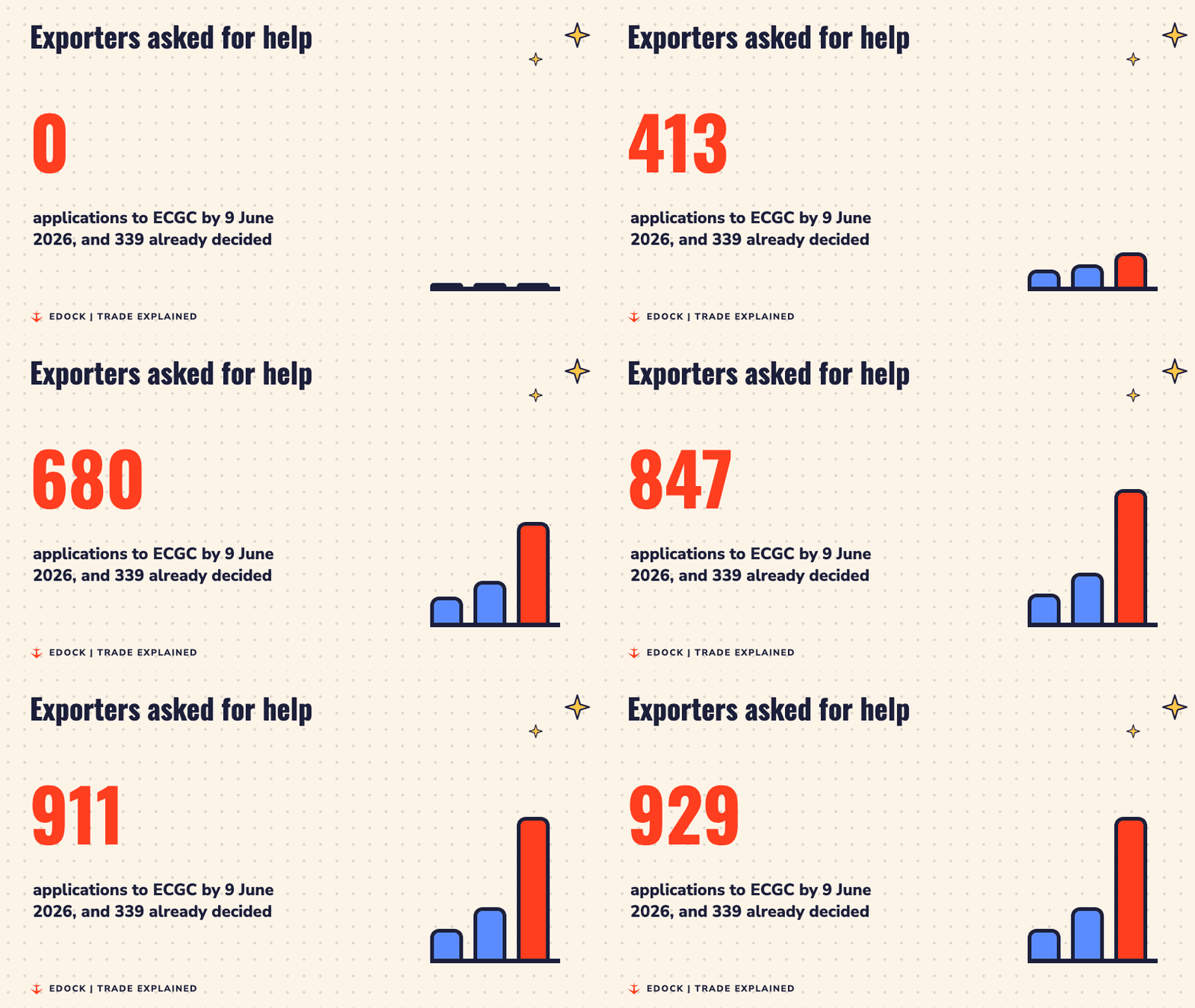
Yes. By 9 June 2026, ECGC had received 929 applications across the parts of RELIEF, an ECGC official told ETBFSI. Of these, 339 had been decided, and over 195 claims had been processed, worth Rs 6.68 crore in relief.
Not every request fits. The same official said some applications were for amounts above Rs 50 lakh and so could not be considered under the scheme.
Why this matters to you
Exports are not just about big ships and big companies. Many Indian exporters are small firms that make clothes, food, machine parts or handicrafts. When a buyer abroad does not pay, a small firm can lose months of earnings in one go.
Insurance at the old price helps such firms keep taking orders instead of turning them down out of fear. The ministry has said RELIEF aims to protect exporter confidence, prevent order cancellations and safeguard employment in export-linked sectors.
For a student or first-jobber, this is a good real-life lesson in how trade works. Selling abroad is not only about making a good product. It is also about getting paid, moving goods safely, and managing risk. Insurance is the quiet tool that makes all of that possible.
What happens next?
Part 2 now runs until 31 March 2027. The government said the extension shows its commitment to keeping trade flowing amid continuing uncertainty on sea routes. Whether it is stretched again will depend on how shipping in the region looks by then.
For now, an Indian exporter with a buyer in Dubai, Muscat or Riyadh can ship with a little more peace of mind, knowing that most of the money is protected even if things go wrong at sea.
Sources
- PIB: Department of Commerce extends RELIEF initiative until March 31, 2027
- Upstox: Govt extends RELIEF scheme for exporters by six months
- KNN India: Commerce Department extends RELIEF scheme benefits
- DD News: Govt launches RELIEF scheme
- The Hindu: Government announces Rs 497 crore RELIEF scheme
- India Shipping News: Govt expands coverage of RELIEF scheme
- ETBFSI: ECGC receives 929 claims under RELIEF
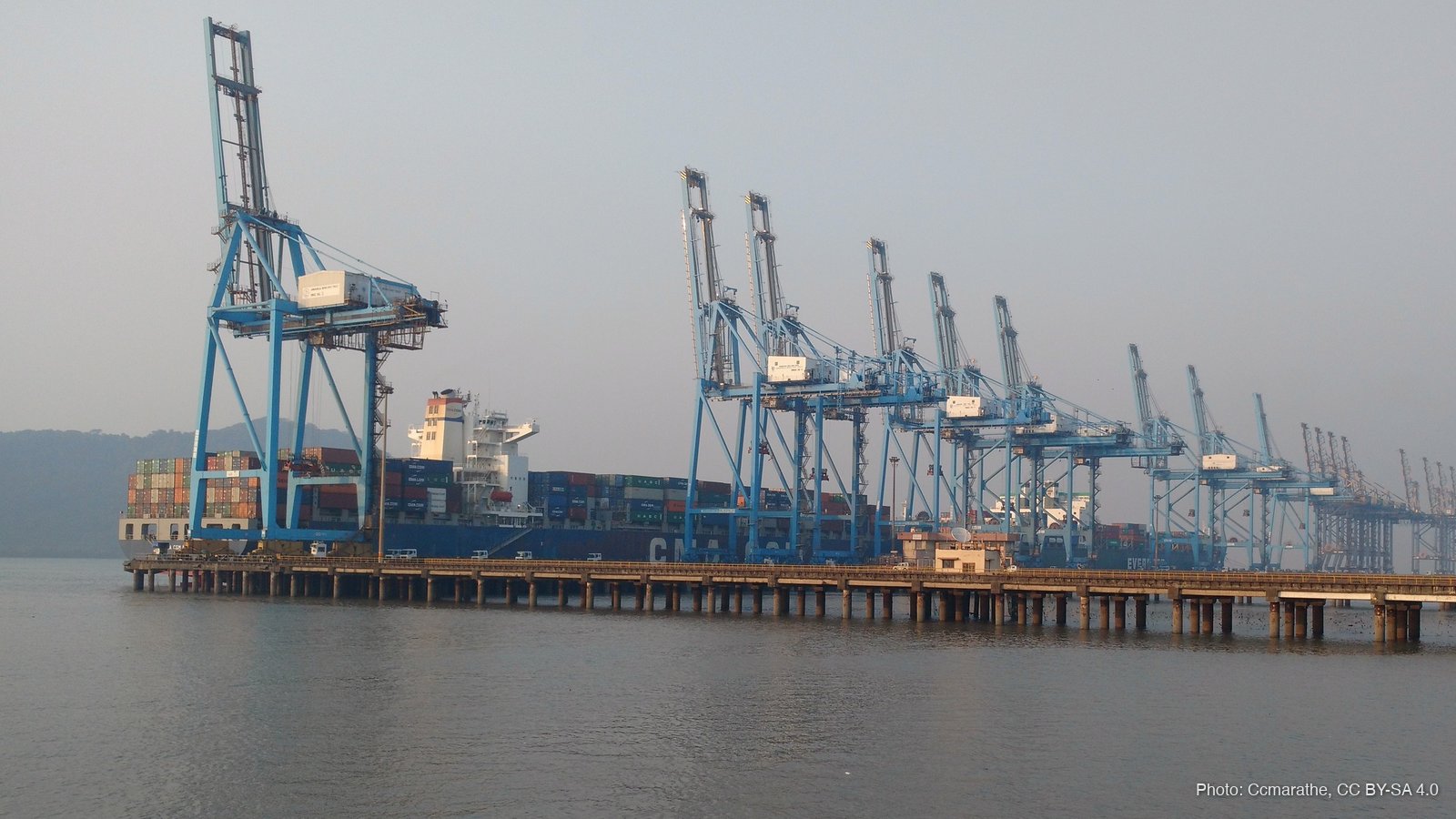
- Cover photo: Container handling on the JNPT Port, by Ccmarathe, CC BY-SA 4.0

You may republish this story under CC BY 4.0: credit Pranav Sharma and link to this page.