GST changes from 1 Nov could help small online sellers reach more states
Small sellers may use a shopping app's warehouse as their address in other states, and some GST refunds will be cleared by the system itself.


Picture a small candle maker in Jaipur. Her candles sell well on a shopping app. The app wants to keep her stock in its warehouse in Pune, so buyers in Maharashtra get their parcels faster. Until now, a tax rule made that hard. She would need her own registered place of business in Maharashtra too. That rule is about to get much easier.
On Thursday, 22 October 2026, an official said that simpler GST registration for small sellers on e-commerce platforms and faster refunds are likely to be rolled out from 1 November. The notices that make it official were likely to be issued on Friday, the official said.
First, what is GST?
GST stands for Goods and Services Tax. It is a tax added to almost everything you buy, from a phone cover to a plate of momos in a restaurant. The shop collects it from you and passes it on to the government.
A business that collects GST must be registered. Think of it like getting a school ID card. Without it, you cannot sit in the class. Without GST registration, a seller cannot do business properly in that state.
The rules for GST are made with the help of the GST Council. This is a group led by the Union Finance Minister, with ministers from the states. It met for the 57th time on 8 October 2026 in New Delhi, chaired by Finance Minister Nirmala Sitharaman. This time it did not touch tax rates. It focused on the process: registration, returns, refunds and disputes.
Why selling online across states was tricky
Big shopping apps keep warehouses in many states. A warehouse is like a giant storeroom. When your order comes from a storeroom near you, it arrives faster and costs less to ship.
But the old rule said a seller needed a place of business in every state where it supplies. In real life, that meant renting your own office or storeroom in each state. A big brand can afford that. A home business selling pickles or earrings usually cannot.
The Council itself said this rule had kept small sellers inside their home states, while larger sellers sold across the country, Business Standard reported.
What changes for small online sellers
Every GST registration needs a Principal Place of Business. That is simply the main address of your business in a state, like the address on your school admission form.
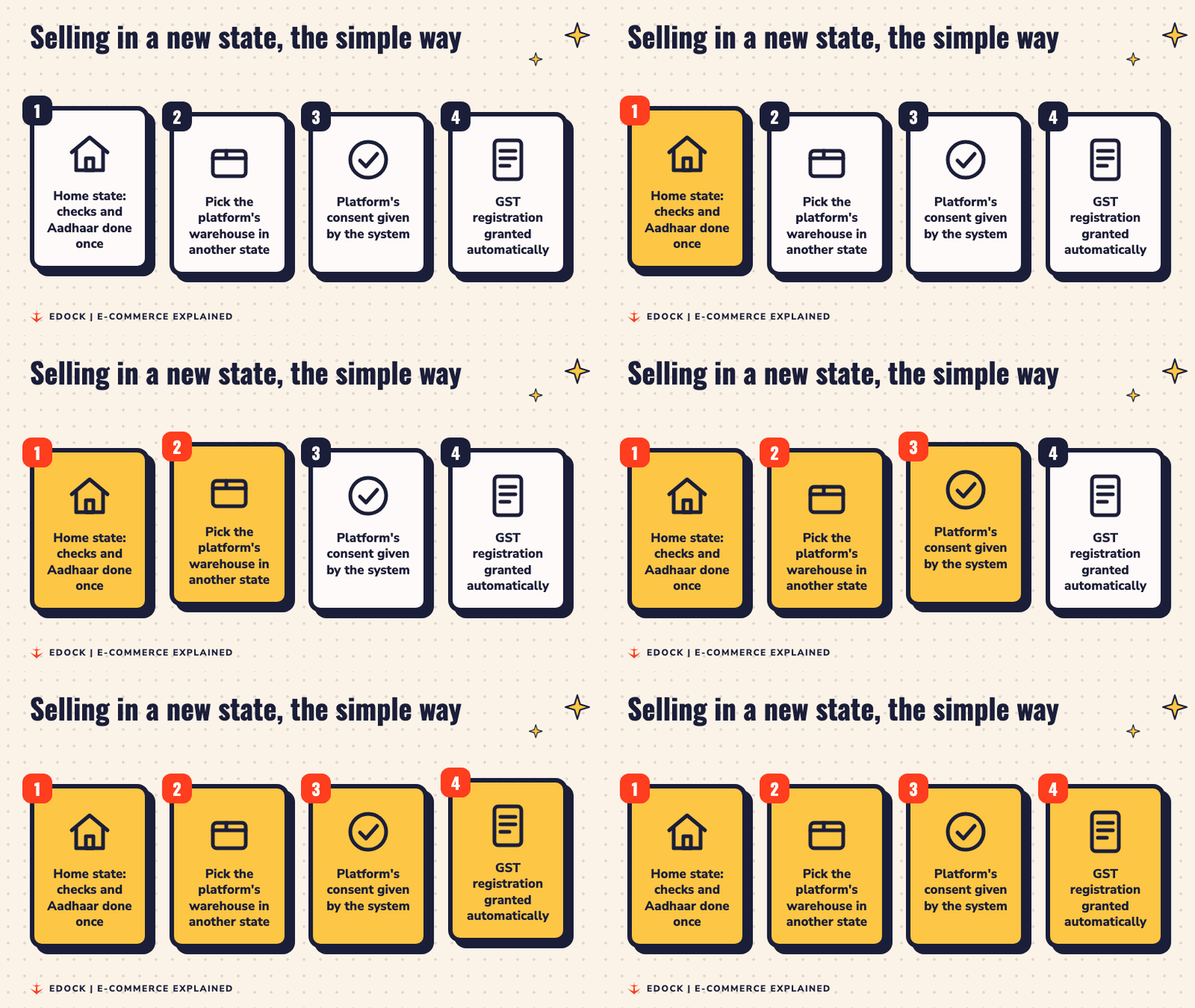
Under the new plan, a small seller can declare the warehouse of an e-commerce platform in another state as its Principal Place of Business there. The Council recommended a new rule, called rule 14B, for this. Registration in such cases will be granted automatically by the system, subject to some conditions.
Here is how it works, according to BusinessLine:
- The seller must have a real presence in one state, its home state. Physical checks and Aadhaar checks happen there.
- Registrations in other states can then come with the consent of the e-commerce platform, with no further involvement of a tax officer.
- The platform's consent will be given automatically by the system.
Who counts as "small"?
This part needs one more business word: input tax credit, or ITC. Say a juice stall pays GST when it buys oranges. When it sells juice, it can subtract the tax it already paid on the oranges. That subtraction is ITC. When the stall sells to another business, that business can claim credit for the GST on the juice. This is called passing on ITC.
The new route is for sellers who pass on ITC of not more than ₹2.5 lakh a month. So it is built for small sellers, not giant brands. A seller who crosses that limit moves to ordinary registration, Business Standard reported.
How many people could this help? Officials said the move could enable around 9.5 lakh small sellers to reach the national market without opening physical offices in every state where their goods are stored.

Filling forms gets less confusing
Many registration forms get sent back because something is missing. It is like your college form being rejected because you forgot one photocopy.
To fix this, a circular will list exactly which documents are needed. The registration form, called GST REG-01, will get drop-down boxes to pick the right documents. The GST portal will also get clearer menus and small help tips. The aim is fewer rejections and faster approvals, BusinessLine reported.
Refunds that come back faster
A refund is money the government gives back when a business has paid more tax than it owes. Think of paying ₹100 for a ₹70 snack. You want your ₹30 back quickly, not after weeks.
From November, three refund changes are expected, as listed by BusinessLine:
- Extra money lying in a business's GST cash wallet, called the electronic cash ledger, will be refunded in full by the system itself, with no officer needed.
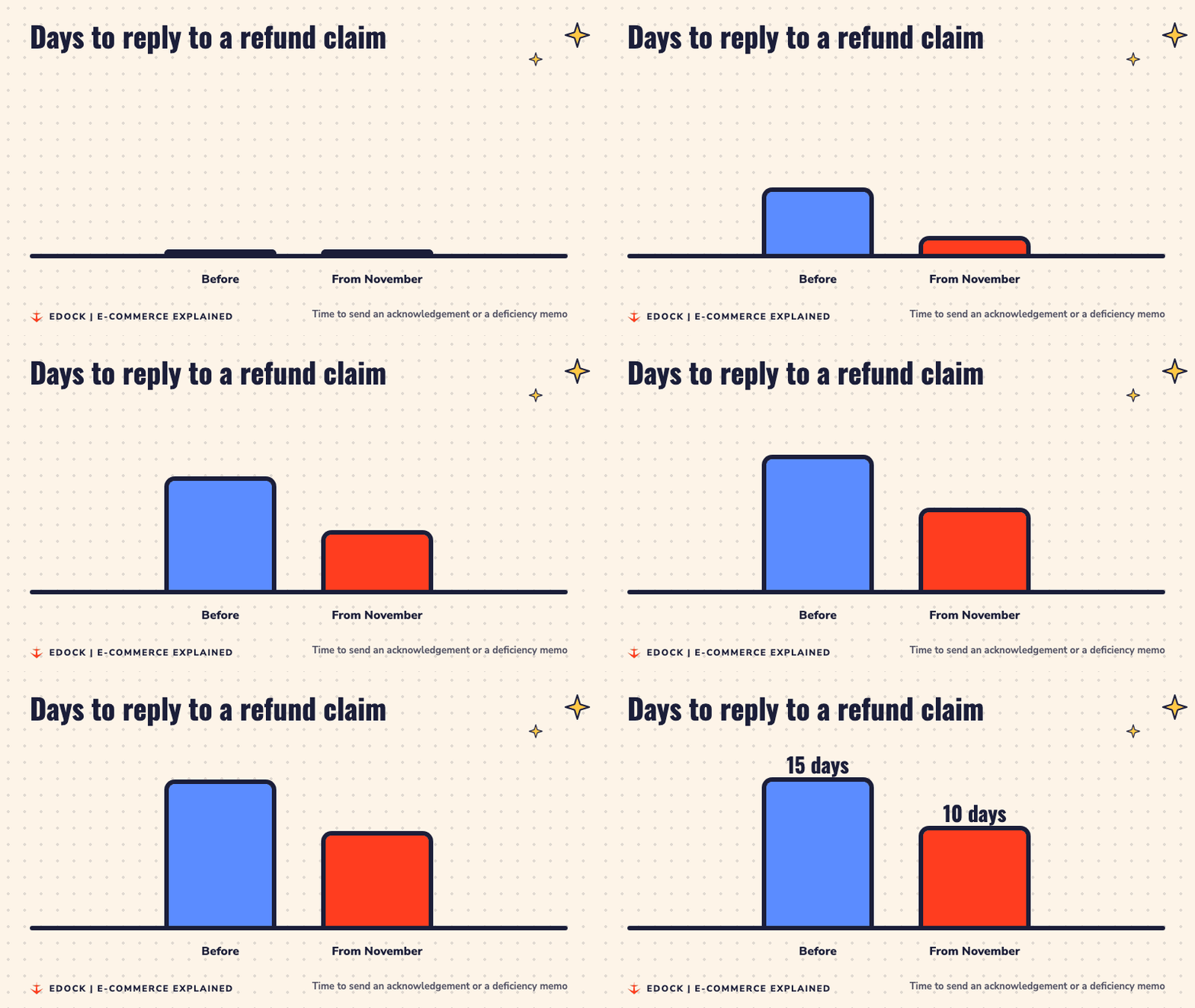
- The time to reply to a refund claim, by sending a receipt or a note about missing papers, drops from 15 days to 10 days.
- For two special cases, 90% of the claim will be cleared for now by the system, based on a risk check. One case is zero-rated supplies, mostly exports, which carry no GST. The other is the inverted duty structure, where the tax on raw materials is higher than the tax on the finished product, so credit piles up.
Sachin Agarwal, a tax partner at EY India, told Business Standard that automated refunds for extra cash ledger balances will unlock trapped funds and ease working capital. Working capital is the everyday cash a business needs to buy stock and pay bills.
Fewer small notices too
A show cause notice is a letter from the tax office asking a business to explain something, like a teacher asking why your homework is late. A minimum limit of ₹10,000 will be set for issuing such notices, to cut paperwork and court cases.
What comes later
Not everything starts on 1 November. Changes that only need new office processes will come in phases from that date. Changes that need the GST law itself to be amended would start from 1 April 2027.
Return forms are also changing. A return is the regular report a business files to show what it sold and what tax it paid. The Finance Ministry will put draft return forms on MyGov for public comments on 1 November, with a 30-day window. A senior official said almost 80% of notices today are issued because of mismatches between returns.
Why this matters to young Indians
Lots of first businesses start online today: thrift stores, handmade jewellery, home bakes, phone accessories. For them, the hardest part is often not making the product but reaching buyers far away.
The Council said this change will let small sellers expand to other states through e-commerce platforms without setting up a place of business in each state. In simple words, a seller from a small town could store goods near buyers in many states, using the platform's warehouse address, instead of renting a room in each one.
The exact fine print will be in the notifications and circulars. Sellers will need to read those conditions closely once they are out.
Sources
- GST reforms: easier registration for small e-commerce sellers, faster refunds to take effect Nov 1, BusinessLine, 22 October 2026
- Recommendations of the 57th meeting of the GST Council, Press Information Bureau, Ministry of Finance, 8 October 2026
- GST Council allows small online sellers to use warehouses in other states, Business Standard, 8 October 2026
- Draft GST return forms to be put up on Nov 1 for public comments, BusinessLine, 22 October 2026
- Cover photo: Handing a package over for delivery, by Meanwell Packaging, CC BY 2.0

You may republish this story under CC BY 4.0: credit Pranav Sharma and link to this page.