Government banks plan youth products before Diwali to win young Indians
State-run banks plan three products covering savings, investments, insurance and loans, plus a youth portal with quizzes by the end of November.

Picture this. You are 17, you just got your first pocket money in a bank account, and a big government bank is trying to win you over the way a new cafe tries to win over college students. That is roughly what India's state-run banks are now planning.
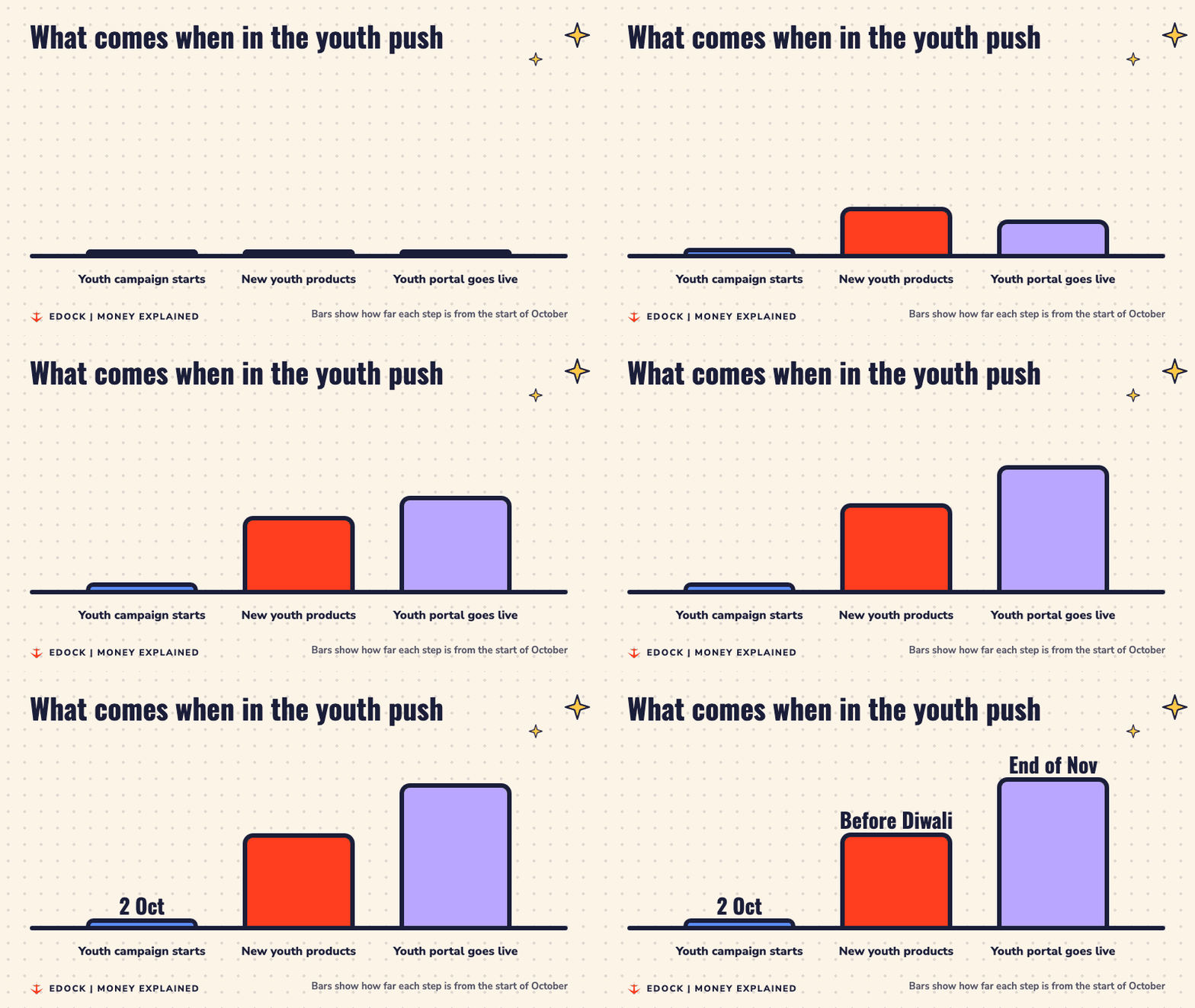
On 21 October 2026, The Economic Times reported that state-run banks plan to launch three products for young people before Diwali. These products cover savings, investments, insurance and loans. The banks are also building a shared online portal for youth. All of this comes from people familiar with the plan, so the final details may still change.
First, what is a PSU bank?
PSU stands for public sector undertaking. A PSU bank is a bank where the government is the main owner. Think of it as the school canteen run by the school itself, while private banks are like the cafes outside the gate, run by private owners.
India has 12 public sector banks, according to Mint. The ET report talks about state-run banks as a group. It does not list which of them will launch which product, so this post does not guess.
What might be inside the new products?
The ET report says banks are looking at a few ideas:
- Free demat accounts. A demat account is like a digital locker that holds shares and other investments, instead of paper certificates.
- Counselling on financial planning. That means guidance on how to plan money for the months and years ahead.
- Waived charges. Banks charge small fees for some services. Waiving them means not charging them, like a shop that skips the delivery fee.
- Incentives to open accounts. An incentive is a small reward to get someone to try something.
These are options being considered, not a final list.
A few money words, made simple
A savings account is a bank account where you keep money you do not need right now. It is like a piggy bank, but the bank keeps it safe and you can take it out when you need it.
The bank does not just sit on that money. It lends some of it to other people. In return, it pays you a small extra amount called interest. Interest is like a small thank-you payment for letting the bank use your money.
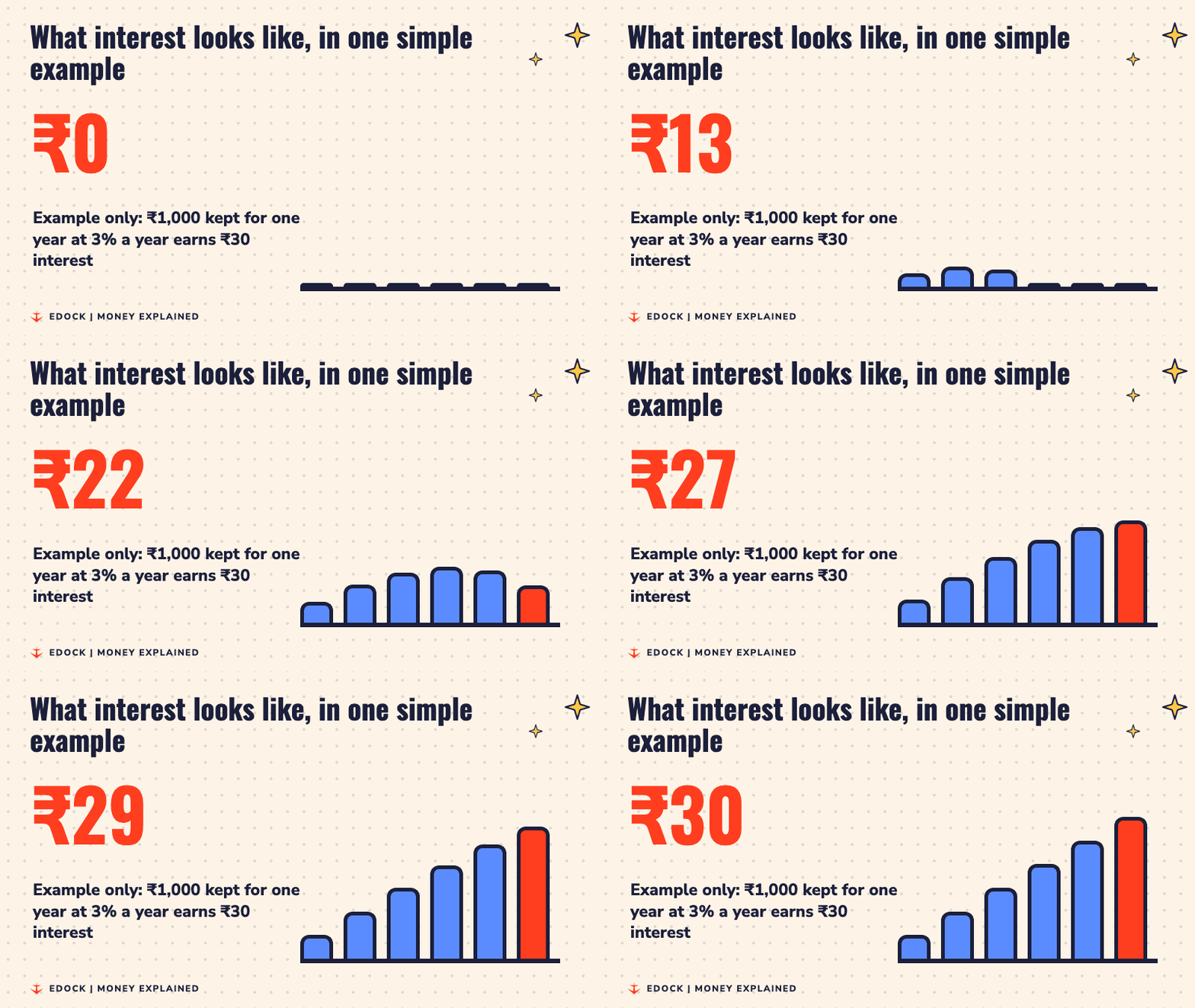
A loan is the opposite. The bank gives you money now, and you pay it back later with interest on top. A credit score is like a report card for borrowing. If you repay on time, your score goes up and banks trust you more next time.
Where did this idea come from?
It started in August 2026 at PSB Confluence, a two-day meeting of public sector banks. There, Finance Minister Nirmala Sitharaman said young people she spoke to saw private banks as the preferred choice because they were "cool". She asked public sector banks to find out what could change that.
According to Mint, she said public sector banks "still give the impression of a government bank". She also said young Indians have grown up with smartphones and expect banking to be simple and available around the clock.
She proposed a month-long Banking for Youth campaign starting on 2 October for people aged 16 and above. The Tribune, carrying an ANI report, said she suggested coordinating it through the Department of Financial Services and the Indian Banks' Association (IBA), a group that brings banks together.
The ET report of 21 October says that campaign is now running. It started on 2 October and is coordinated by the IBA.
A youth portal with quizzes
The shared portal is expected to go live by the end of November, ET reports. Banks have already shared the locations of their branches and ATMs, so the portal can include a branch finder.
The minister had suggested that the portal use quizzes, graphics and certificates to make learning fun. The Tribune reported that it could explain safe banking, KYC, money for education and skills, and starting a business. KYC means "know your customer". It is the ID check a bank does before opening your account.
Why do banks want young customers so badly?
The simple answer: a customer who joins at 16 can stay for a very long time. Sitharaman said a banking relationship that starts when someone is 16 to 18 could deepen over decades.
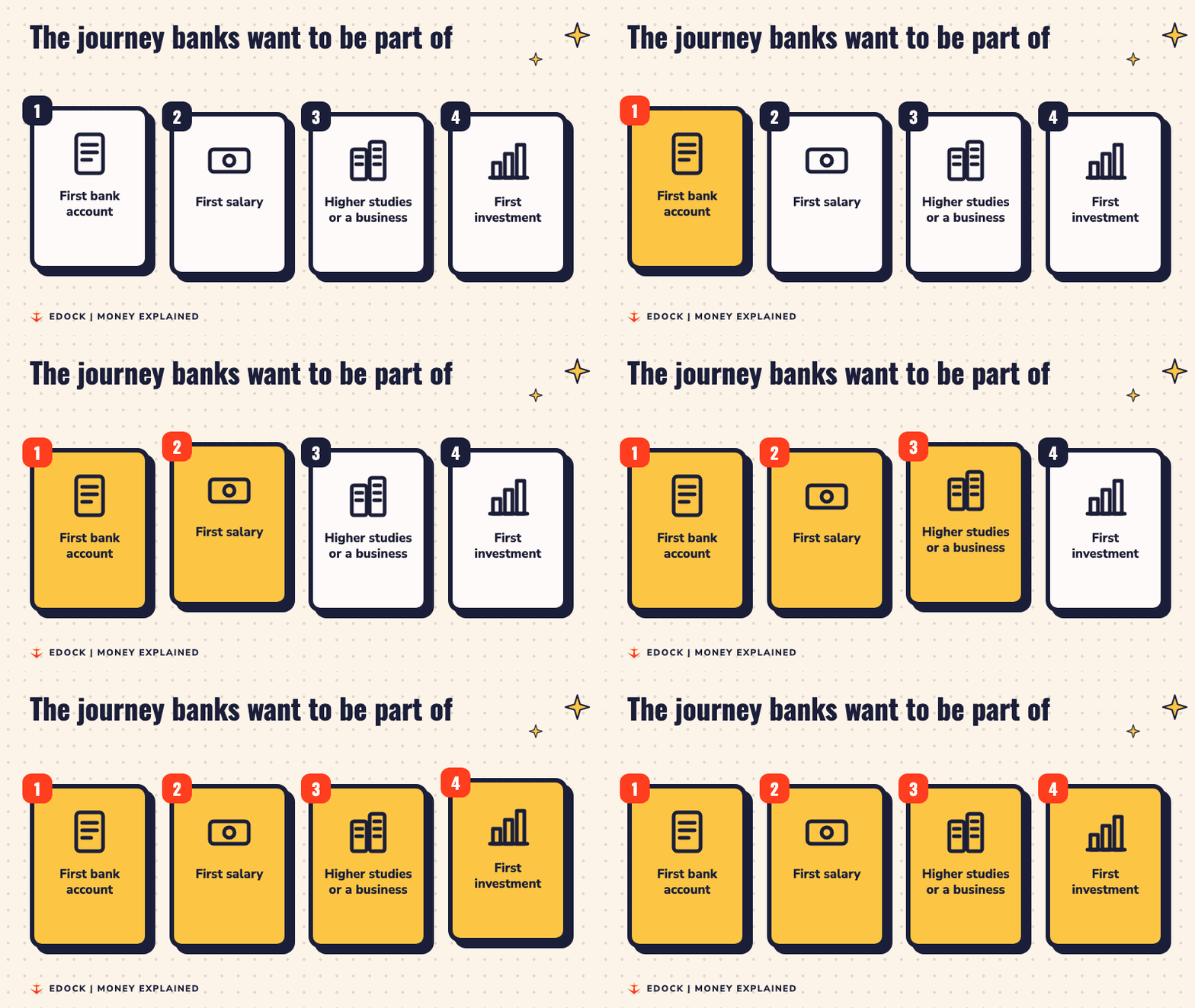
Think of a cricket academy that signs a player at the under-16 level. If the player stays, the academy is part of every stage of the career. Banks want the same thing. According to ET, the minister said banks should be part of a customer's journey from the first account and first salary to higher studies, starting a business and the first investment.
There is also a bigger reason. India has one of the youngest populations in the world. Sitharaman said young people will shape how the country spends, saves, invests and starts businesses. A bank that wins them early wins a big share of that future.
Why credit scores are part of the plan
Banks were also asked to teach young people why a good credit score matters. The ET report pointed to the Reserve Bank of India's latest Financial Stability Report. It said borrowers earning ₹5 lakh to ₹10 lakh a year drove the fastest rise in fresh bad loans in nine quarters. A bad loan is one that is not being paid back.
So the push is not only about opening accounts. It is also about building good borrowing habits early, so fewer loans go bad later.
More than a one-time account opening
The minister also said the campaign should go beyond branches, into colleges, universities and skill centres. She suggested special help desks in branches called "Yuva Kiosks" or "Yuva Banking Mitra", where staff help young customers, The Tribune reported.
Other ideas from August included free online courses with education platforms, and coupons for fitness centres, as ET reported. According to Mint, each of the 12 banks is expected to make its own plan, based on its products and the regions where it is strong.
What to watch next
Three things are worth keeping an eye on. First, which banks actually launch the youth products before Diwali, and what is in them. Second, whether the youth portal goes live by the end of November. Third, whether the extras, like waived charges and free demat accounts, make it into the final products.
For now, the big picture is clear. Government banks that were once seen as old and slow are trying hard to look fresh to a generation that grew up on phones.
Sources
- The Economic Times: PSU banks plan youth banking push before Diwali
- The Economic Times: Sitharaman asks public sector banks to get cool for Gen Z
- Mint: Sitharaman asks public sector banks to shed the government bank image
- The Tribune (ANI): FM Sitharaman suggests public sector banks focus on Gen Z
- Cover photo: Piggy-bank-968302, by stevepb, CC0

You may republish this story under CC BY 4.0: credit Arshdeep Singh and link to this page.