Gap's clothing maker Gokaldas Exports bets on Europe as the India-EU trade deal nears
Version 1 of 1 saved 26 Oct 2026, 6:02 pm IST · Chain line 246
As it was first published
Gap's clothing maker Gokaldas Exports bets on Europe as the India-EU trade deal nears
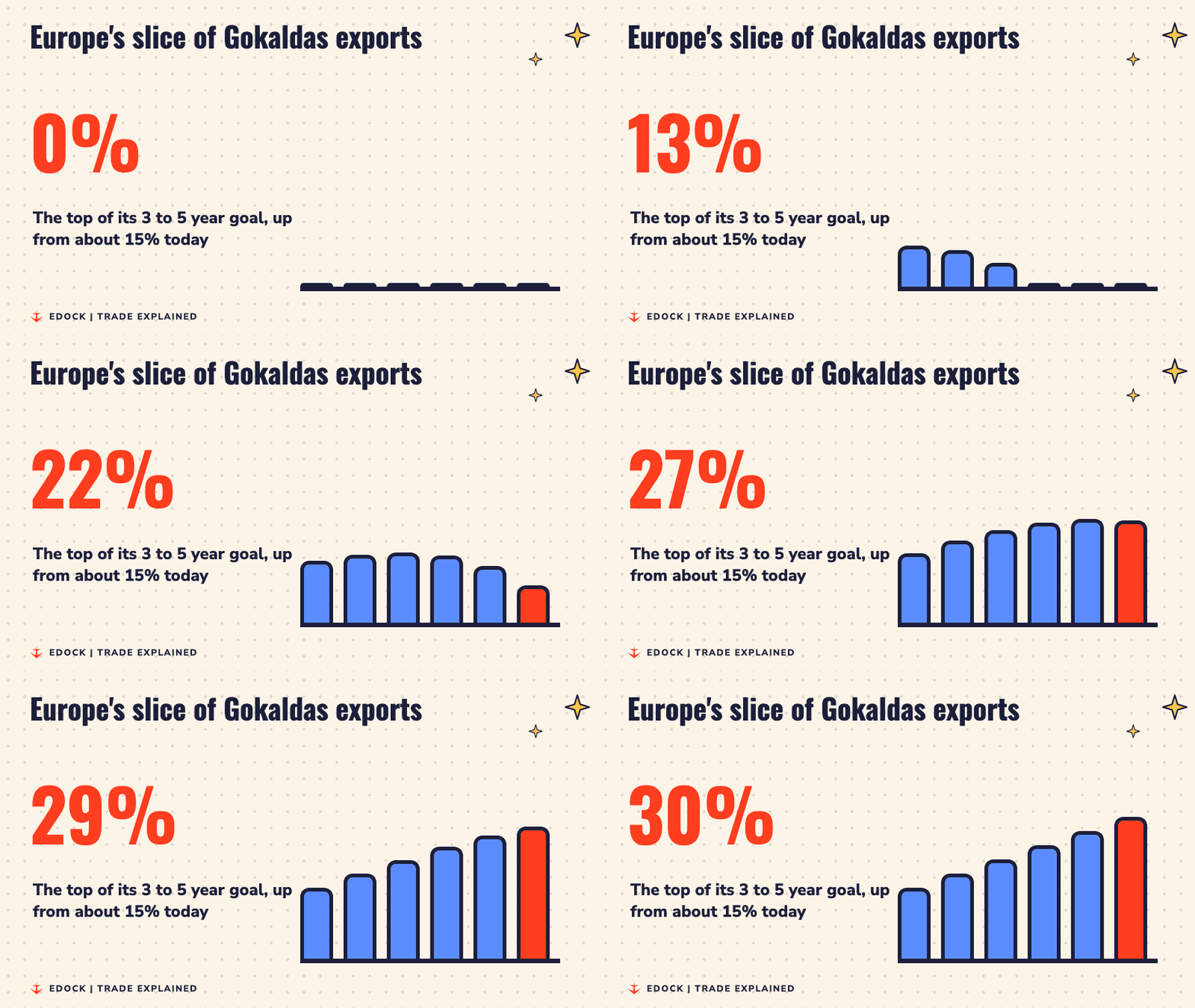
Europe could take 25% to 30% of its exports in three to five years, up from about 15%, as the deal plans to remove a 12% duty on Indian clothes.
Picture a T-shirt sewn in a factory in India. Today, most shirts like it sail to shops in America. In a few years, many more could hang on racks in Paris, Berlin and Madrid instead.
That is the plan of Gokaldas Exports, one of India's big clothing makers. On 26 October 2026, its top boss told Reuters that Europe's share of the company's exports could nearly double, from about 15% now to around 25% to 30% in the next three to five years.
Here is what that means, why it is happening now, and why a trade deal between India and Europe sits at the centre of it.
Who is Gokaldas Exports?
Most people have never heard the name, but many have worn its work. Gokaldas makes clothes for famous foreign brands. Its top customers include Gap, Carhartt and JCPenney. The brand designs the shirt and puts its label on it. Gokaldas cuts the cloth, sews it and ships it.
The company sells to more than 50 countries and runs about 30 production units. Together they can make about 92 million pieces of clothing a year. Its workforce is mostly women, and it runs special training programmes for them.
It is not only in India. Gokaldas bought Atraco, a Dubai clothing maker with factories in Kenya and Ethiopia, and Matrix Design, a knitwear maker with a strong presence in the European Union.
What did the company say?
Sivaramakrishnan Ganapathi is the vice-chairman and managing director of Gokaldas. In plain words, he runs the company day to day. He gave Reuters a few clear numbers.
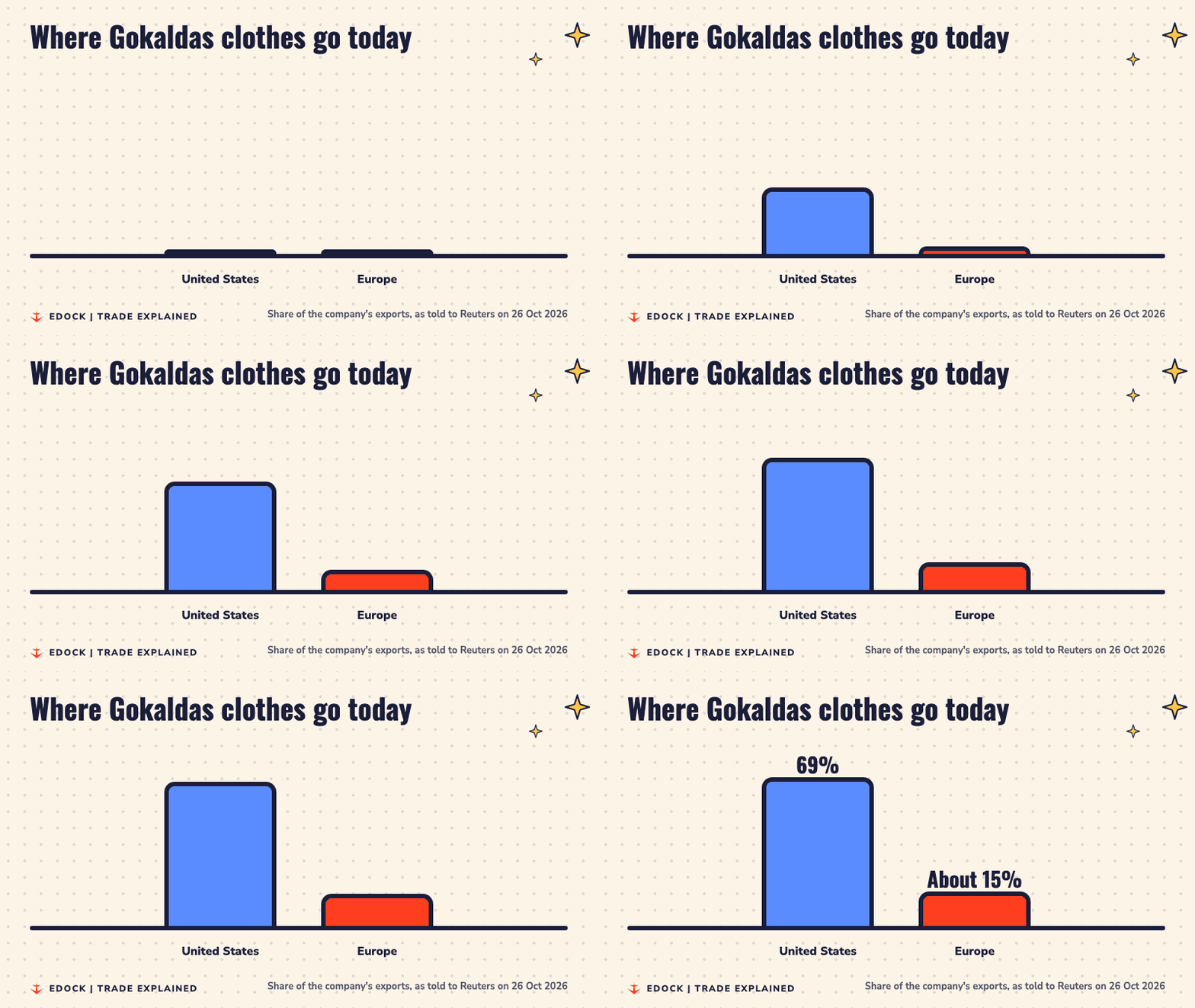
- Europe buys around 15% of what Gokaldas exports today.
- In three to five years, he expects that to rise to around 25% to 30%.
- The United States buys 69% of its exports right now, and the company expects that share to come down. It did not say by how much.
- Gokaldas is in talks with big European retailers, getting ready for duty-free trade. It did not name them.
- It will spend Rs 1.25 billion (Rs 125 crore, about $13.2 million) in the year to March 2027 to grow capacity and upgrade its factories in India.
That last point matters. Gokaldas said it is building more in India instead of moving work to other countries.
First, what is an export share?
An export is something made in one country and sold in another. An export share is the slice of all those sales that goes to one place.
Think of a samosa stall at the corner of two streets. If 69 of every 100 samosas go to people on Street A, Street A is 69% of the business. That is fine on a normal day. But if Street A is suddenly closed for repairs, the stall is in trouble. So the smart owner starts selling more to Street B, so one bad day on one street cannot sink the whole stall.
For Gokaldas, the United States is Street A. Europe is Street B.
Why the US has felt risky
A tariff is a tax a country charges on goods coming in from another country. If America adds a big tariff on Indian shirts, those shirts cost more in American shops, and buyers may turn to shirts from somewhere else.
Earlier in 2026, Indian clothing exports to the US faced a 50% import duty. By August, Ganapathi said the company had moved out of the penal tariff and now stood level with rival countries. Still, Indian garment makers are looking beyond the US because the uncertainty over tariffs has not gone away.
American demand has also cooled. US clothing imports from the whole world fell 7% to $49.08 billion from January to August, according to government data quoted in the same report.
Why Europe, and why now?
India and the European Union announced a free trade agreement on 27 January 2026. A free trade agreement, or FTA, is a deal where two sides agree to cut the taxes on each other's goods.
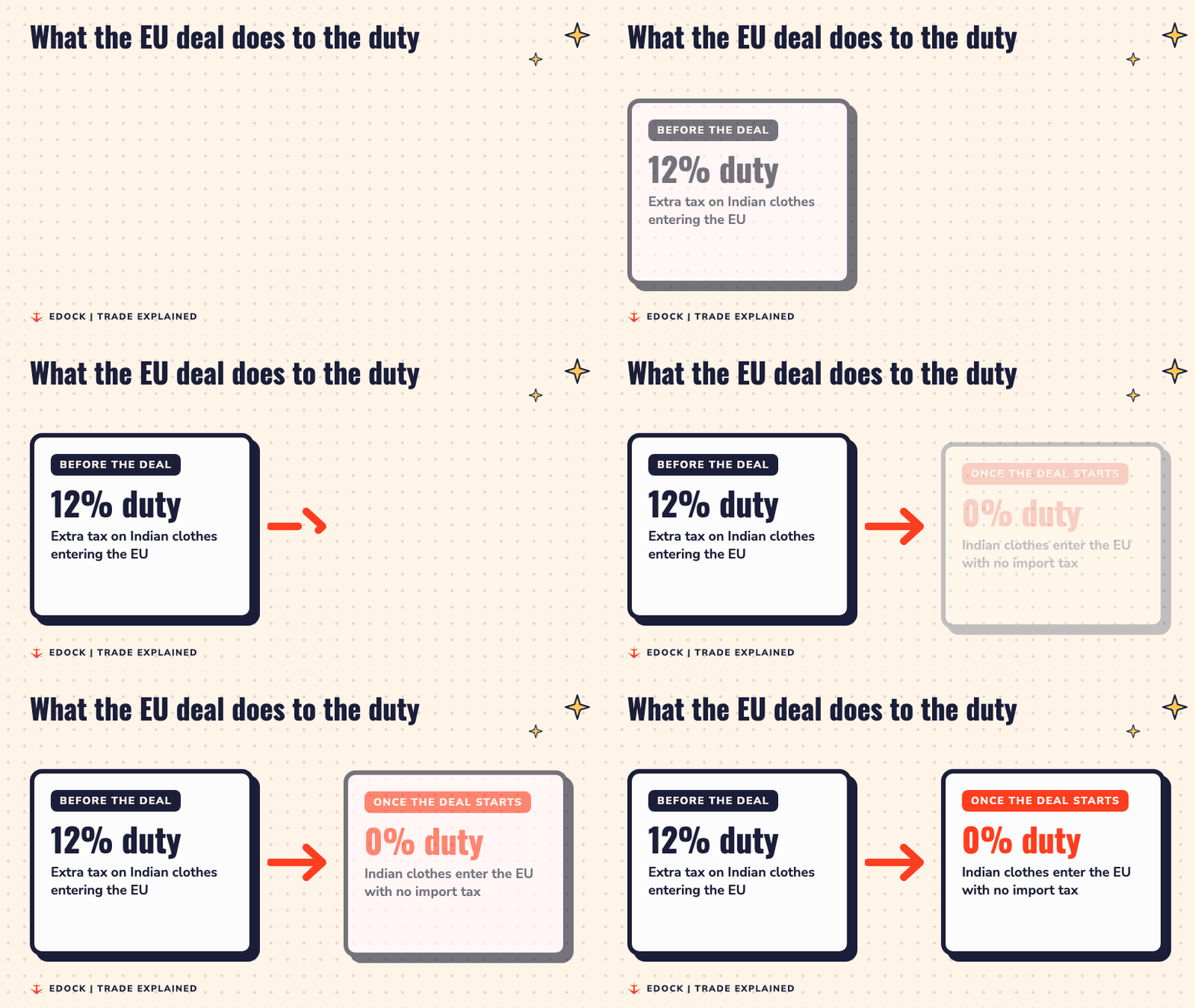
For clothes, the change is big. Under the deal, the tax on Indian textiles and clothing entering the EU goes from 12% to zero. "Duty-free" simply means no import tax at all.
Here is the pocket money version. If a shirt leaves India at Rs 1,000, a 12% duty adds Rs 120 before it even reaches a European shop. Remove that duty and the same shirt lands Rs 120 cheaper. That makes Indian clothes easier for European stores to pick.
The deal is not working yet. It still has to be signed. On 23 October 2026, Commerce Minister Piyush Goyal said in Berlin that both sides hope to sign before the end of 2026, so it could start around March or April 2027. Gokaldas is already talking to European retailers so it is ready when the duty goes away.
How is the company doing right now?
In April to June 2026, Gokaldas earned a consolidated profit of Rs 44 crore, up 7% from a year earlier. "Consolidated" means the numbers of the whole group, including its units outside India, are added together. Total income rose 21% to Rs 1,180 crore. Its Africa business grew 45%, helped by a US trade scheme for African countries called AGOA being renewed.
Orders also look steady. Ganapathi told Reuters that US orders for spring and summer 2027 were stronger than for the 2026 holiday season, when shipments from India grew 3% to 4% from a year earlier.
The fine print
A plan is not a promise. The deal could take longer to start. An analyst at Equirus Securities, Ronak Shah, told Reuters the deal could help Indian makers compete better, but that depends on how it is put in place, which products it covers and the "origin" rules, which decide what counts as truly made in India.
Gokaldas also has rivals chasing the same chance, such as Pearl Global Industries and KPR Mill.
Why this matters to you
Gokaldas is putting fresh money into its Indian factories, where most of its workers are women. If Indian shirts become cheaper for European shops, more orders could flow into factories like these. For students, it is also a live lesson in one simple business idea: do not keep all your customers on one street.
Sources
- The Economic Times (Reuters): Gap apparel supplier Gokaldas eyes doubling Europe exports share to cut US reliance
- The Economic Times: Gokaldas Exports Q1 profit jumps 7% as US tariff pressure eases
- News18: India-EU FTA to be signed by Dec 2026, may come into effect by March-April 2027
- Hindustan Times: India-EU FTA removes import duty on textile, leather
- Gokaldas Exports: Global company (Atraco and Matrix Design)
- Gokaldas Exports: An inclusive movement
- Cover photo: Textile manufacturing in Meerut, India, by Ravi Dwivedi, CC BY-SA 4.0
