Fortune oil maker's sales jump 26%, yet profit slips to Rs 239 crore
Version 1 of 1 saved 28 Oct 2026, 10:04 am IST · Chain line 294
As it was first published
Fortune oil maker's sales jump 26%, yet profit slips to Rs 239 crore
AWL Agri Business sold far more oil, atta and rice in July to September 2026, but a tax in Bangladesh and thin oil margins kept profit flat.
Picture a one litre bottle of Fortune mustard oil on a kitchen shelf. The company that fills that bottle keeps only about Rs 4 from every kilo of oil, before interest, tax and machine wear. That tiny number explains a strange result that came out on Tuesday, 27 October 2026.
AWL Agri Business, the maker of Fortune oil, atta and rice, reported that sales grew 26% to Rs 22,202 crore in the July to September 2026 quarter. But the profit after tax fell to Rs 239 crore, from Rs 245 crore a year ago. More sales, slightly less profit. Here is how that happens, and why the company now wants a bigger place in your kitchen than just the oil tin.
First, who makes Fortune?
AWL Agri Business used to be called Adani Wilmar. Wikipedia notes that the company was set up in 1999 as a 50:50 partnership between Adani Enterprises and Wilmar International, a food giant from Singapore. The Adani group sold out, and the company was renamed AWL Agri Business in 2025. Wilmar now owns about 57% of the company.
The company is India's largest processor of edible oils. Fortune began as an oil brand. Later, between 2014 and 2017, the same brand name went onto rice, soya chunks and flour.
Sales went up a lot
Think of a samosa stall. Revenue is all the money in the cash box at the end of the day. Profit is what stays after paying for potatoes, oil, the gas cylinder, the helper and the rent.
On revenue, AWL had a great quarter. The company said its sales went up 26% and its "underlying volume", meaning the actual tonnes of goods sold, grew 14%. So people really did buy more packets and bottles. The growth was not only from higher prices.

So why did profit slip?
The company gave one main reason. AWL has a unit in Bangladesh. Bangladesh has a rule called a minimum corporate tax, which is worked out on the revenue of a business and not on the profit. The company said this tax raised the total tax bill for the quarter.
Imagine your school charges a fee on the pocket money you get, not on the money you save. Even in a month when you save well, the fee can eat into the savings. That is roughly what happened here.
Before that tax, the business did better. AWL's "normalised operating EBITDA" grew 11% to Rs 623 crore. EBITDA is a way to measure what a company earns from its daily work, before interest, tax and the wearing out of machines. So the kitchen side of the business earned more. The tax line pulled the last number down.
For the full first half of the year, April to September 2026, profit after tax rose 22% to Rs 591 crore, the company reported. So the dip is in one quarter, not a long slide.
Oil is a giant business with a tiny margin
Most of AWL's money still comes from oil. In the year that ended March 2026, edible oil made up 80% of revenue, Mint reported. Food and FMCG (fast moving consumer goods, the everyday items you buy again and again) was only 9%. Industry essentials, which are oil based raw materials sold to other factories, made up 11%.
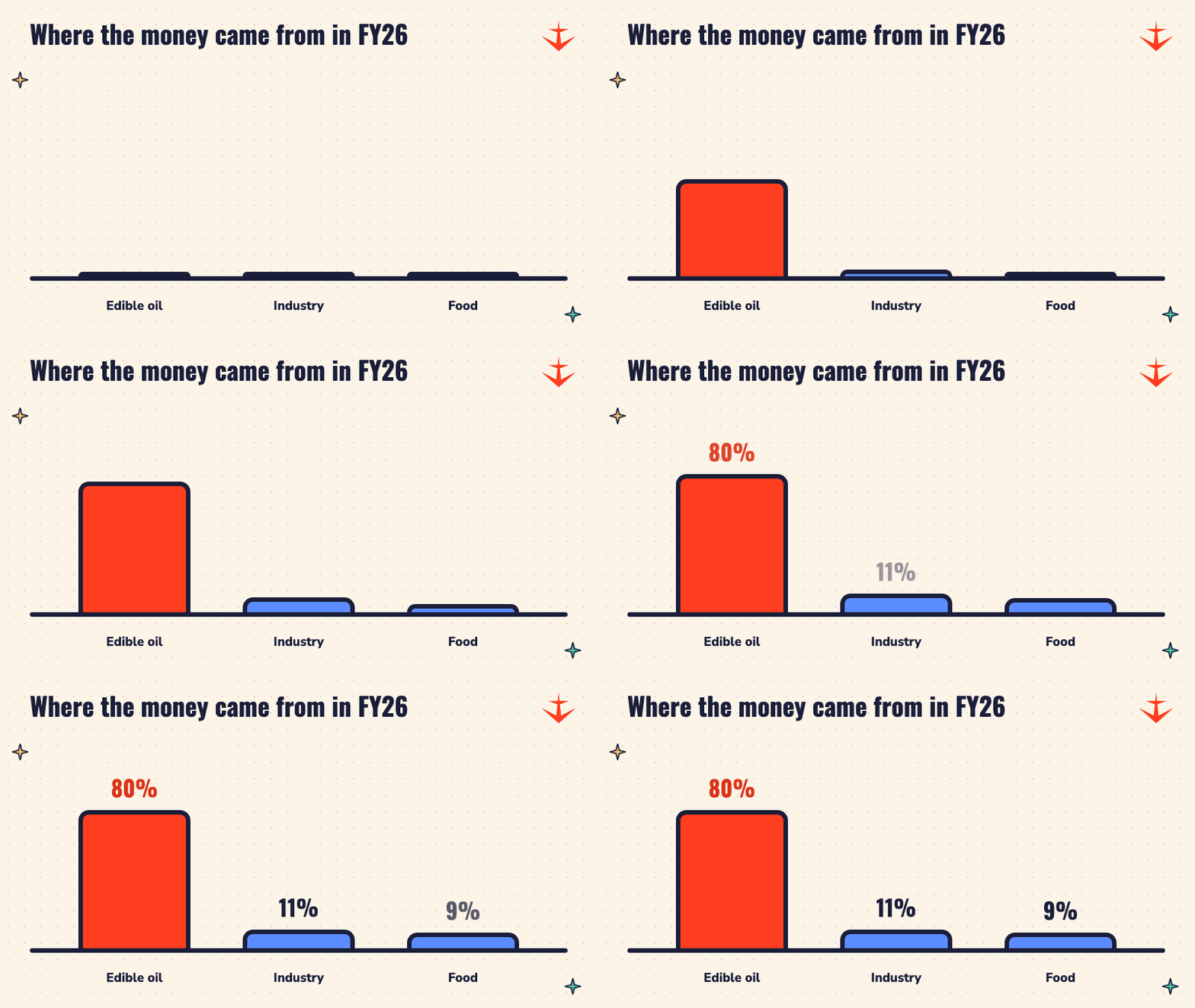
In this quarter, the company sold 5% more edible oil by volume. Its EBITDA on oil was about Rs 4,100 per tonne, which the company said was in line with its own target range. A tonne is 1,000 kilos. So that works out to about Rs 4.10 on each kilo of oil.
With so little left on each kilo, a small jump in costs can wipe out much of the margin. Mint, writing about the company's early October business update, called margins the pain point even while growth looked strong.
Why atta, rice and dal matter so much
Now the fast lane. The food and FMCG part of AWL grew 32% to Rs 2,216 crore in the quarter. Its EBITDA margin was 3.2%, inside the company's own guidance of 3% to 4% for the year.
- Rice and wheat flour: both grew sales by double digits. The basmati rice business won more market share, and the Kohinoor rice brand also grew by double digits.
- Dal: Fortune Pulses grew more than 40% and crossed Rs 100 crore in sales in a single quarter.
- Health and easy cooking items: soya nuggets, poha, sattu, brown rice, biryani kits and olive oil together crossed Rs 1,400 crore in sales over the last twelve months.
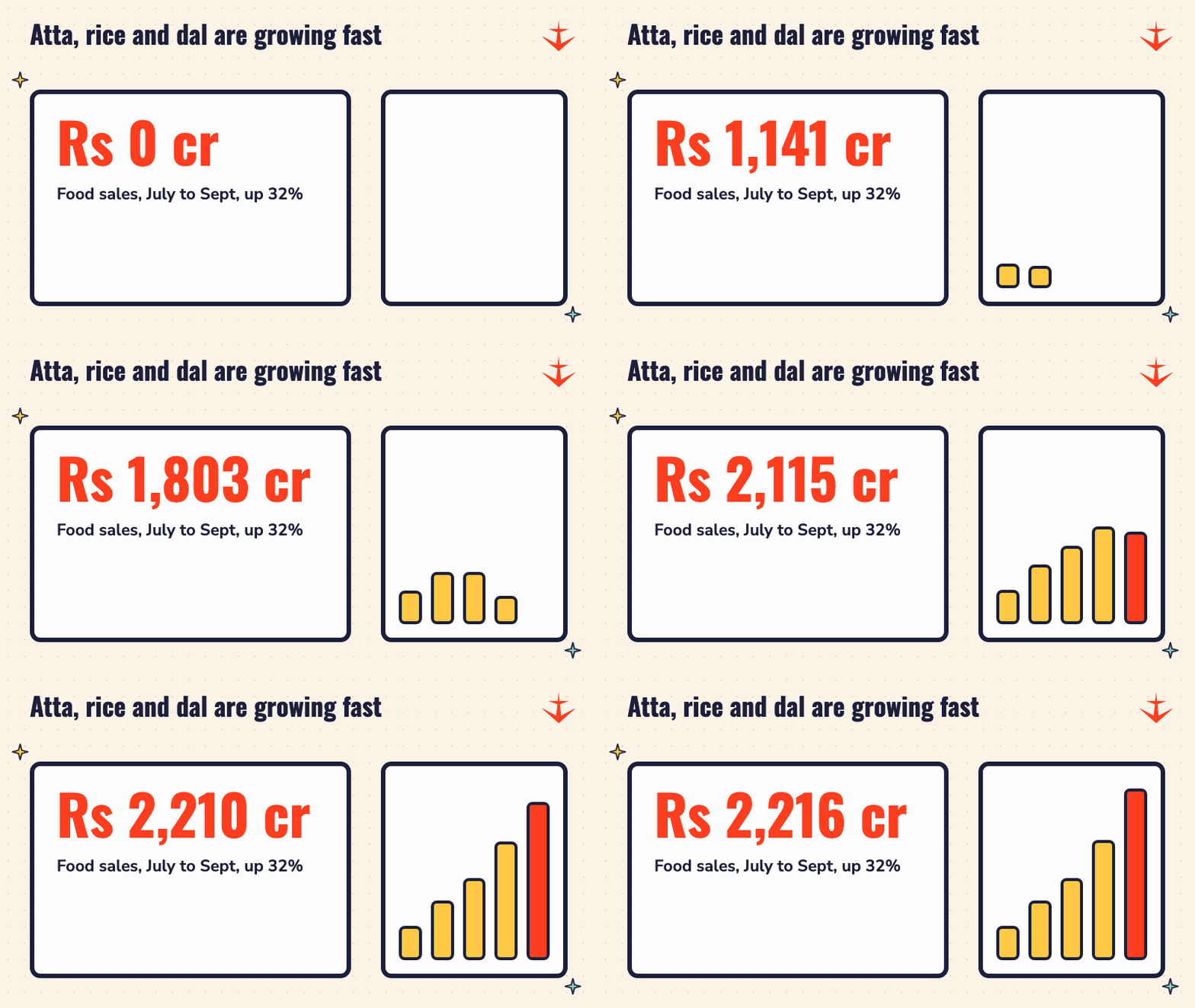
Why push these? A kilo of oil earns the company a few rupees. Packed atta, rice and dal give the brand more chances to sit on the same shelf in the same home, every week. CEO Shrikant Kanhere said in the company's statement that the shift towards branded and packaged foods is "a significant growth opportunity".
Dal is a good example. The company calls pulses a largely unorganised category, which means most dal in India is still sold loose or by small local sellers, not under big brands. AWL said it is adding regional pack choices and taking its dal to more kirana shops and quick delivery apps. For a family, that means more packed choices next to the loose dal from the local shop.
Where you will notice the change
AWL said its products now reach about 0.97 million shops directly. Sales through quick commerce apps, the 10 minute delivery kind, grew more than 40%. Sales to hotels, restaurants and caterers rose 22%. Branded exports, which means Fortune packs sold in other countries, grew 72%. The cover photo shows such bottles at an Indian food shop in Hong Kong.
Want to hear the company explain the quarter in detail? Here is the recording of AWL's earnings call for this quarter, where managers answer questions from analysts.
And this older interview shows how the company has been trying to turn from an oil seller into a food company.
The simple lesson
Selling a lot is not the same as earning a lot. AWL sold 14% more goods by volume and grew sales by 26%. But oil earns very little per kilo, and a tax rule in Bangladesh took a bite out of the final number. The company's answer is to sell more of the things that go next to the oil in every kitchen: atta, rice, dal, besan and biryani kits. The next few quarters will show whether that plan can lift profits, not just sales.
Sources
- MediaBrief: AWL Agri Business Q2 FY27 results statement
- Investywise: AWL Agri Business Q2 and H1 FY27 results
- Mint via TradingView: growth metrics improve in Q2, but margins remain a pain point
- Wikipedia: AWL Agri Business
- YouTube: AWL Agri Business earnings call for Q2 FY27
- YouTube: Fortune India in conversation with AWL Agri
- Cover photo: Fortune mustard oil bottles at an Indian food shop in Tung Chung, Hong Kong, by Harguaobimgwo TAMGIU, CC BY-SA 4.0