Flipkart says 9 in 10 online shoppers visited its Big Billion Days sale
Orders and buyers grew about 20 to 22% in the 11-day sale, with Gen Z and small-town shoppers leading the way, Flipkart said on 21 October.

Picture a giant online shop with the shutters going up at midnight. In the very first hour, 1 in 15 of all the people in India who shop online walk in. Eleven days later, almost everyone has come by. That is what Flipkart says happened at its biggest sale of the year.
On 21 October 2026, Flipkart shared the results of The Big Billion Days 2026. It said about 9 in 10 of India's online shoppers visited during the 11-day sale. Orders, units sold and buyers each grew by about 20 to 22% over last year. The sale opened on 9 October and was its 13th edition.
What is The Big Billion Days?
It is Flipkart's yearly festive sale, and it kicks off the country's festive shopping season. Think of it as the online version of a big Diwali mela, where every stall puts up a discount board at the same time. This year, early shoppers went for mobiles, electronics, large appliances, beauty and fashion.
The sale started with a rush. In its opening hour, Flipkart recorded 6.3 million concurrent users in a minute. "Concurrent" means at the same moment. Imagine 6.3 million people all standing inside one shop together. The company also said over 6 times more Indians shopped in that first hour than in a regular hour.
Who counted the shoppers?
This is an important question. The headline numbers come from Flipkart itself. The company put them out in a press note, which is a short report a company sends to news outlets. These are the company's own numbers, not a study by an outside research firm.
There is one outside view, though. Bank of America (BofA) put out a report based on Sensor Tower data. Sensor Tower is a firm that tracks how much people use apps. The report said Flipkart's daily active users hit a new high on the first day of the sale. Daily active users means how many different people open the app on a day.
What does "share of shoppers" mean?
Flipkart talks about unique visitors. A unique visitor is counted only once, however many times they come back. Think of a class register. A student who walks in and out of class five times is still marked present only once.
So "9 in 10 online shoppers" means this: out of every 10 people in India who shop online, about 9 opened Flipkart at least once during the sale. Visiting is not the same as buying, of course. Window shopping counts as a visit too. Flipkart said unique visitors rose nearly 10% compared with last year.
Buyers grew by about 20 to 22%, roughly twice as fast as visitors. So a bigger share of the people who came actually bought something.
What sold the most?
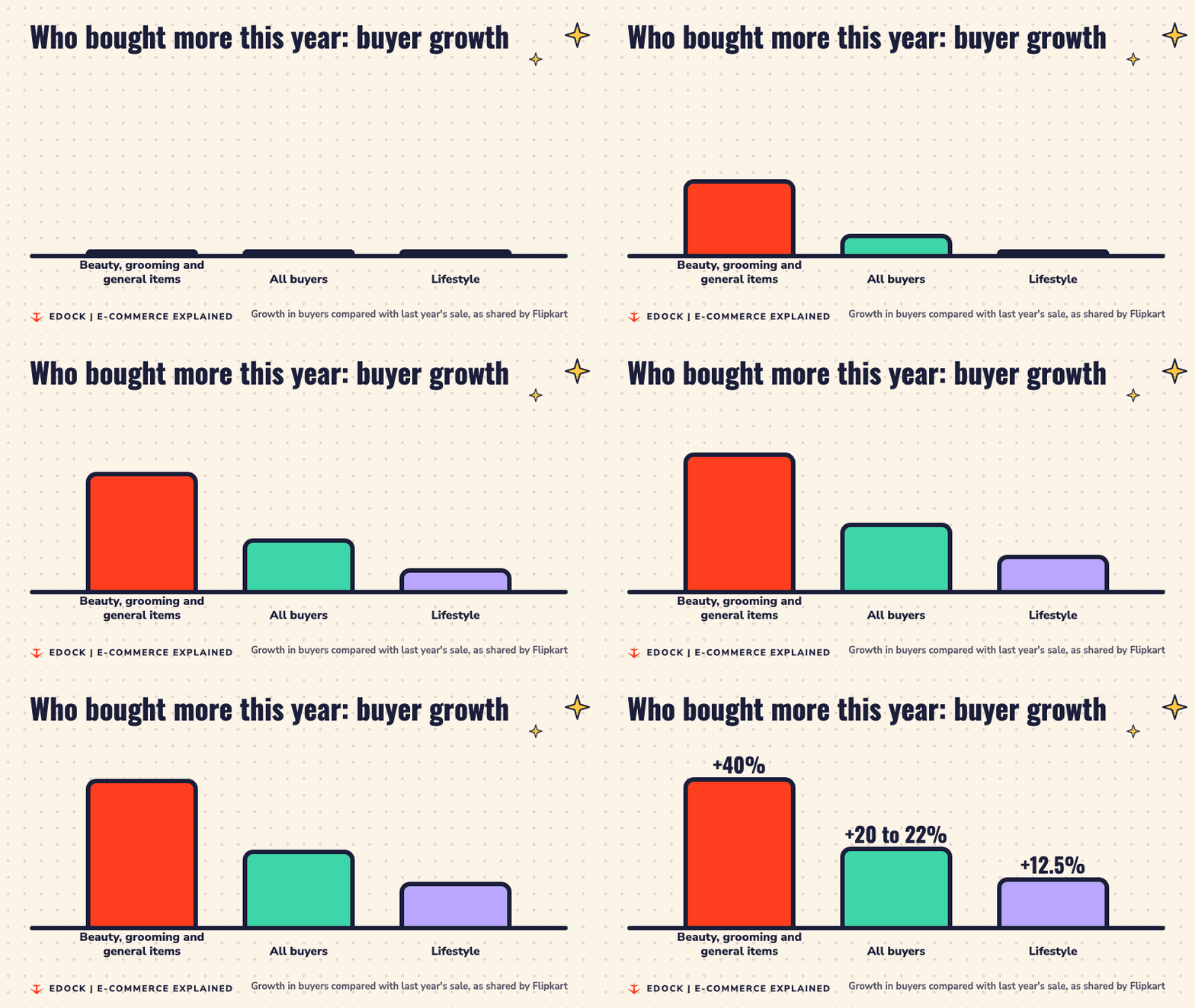
Beauty products led the growth. Buyers of beauty, grooming and general merchandise rose 40% over last year. "General merchandise" is a catch-all word shops use for everyday items that do not fit other sections. Lifestyle buyers, which covers fashion, rose 12.5%.
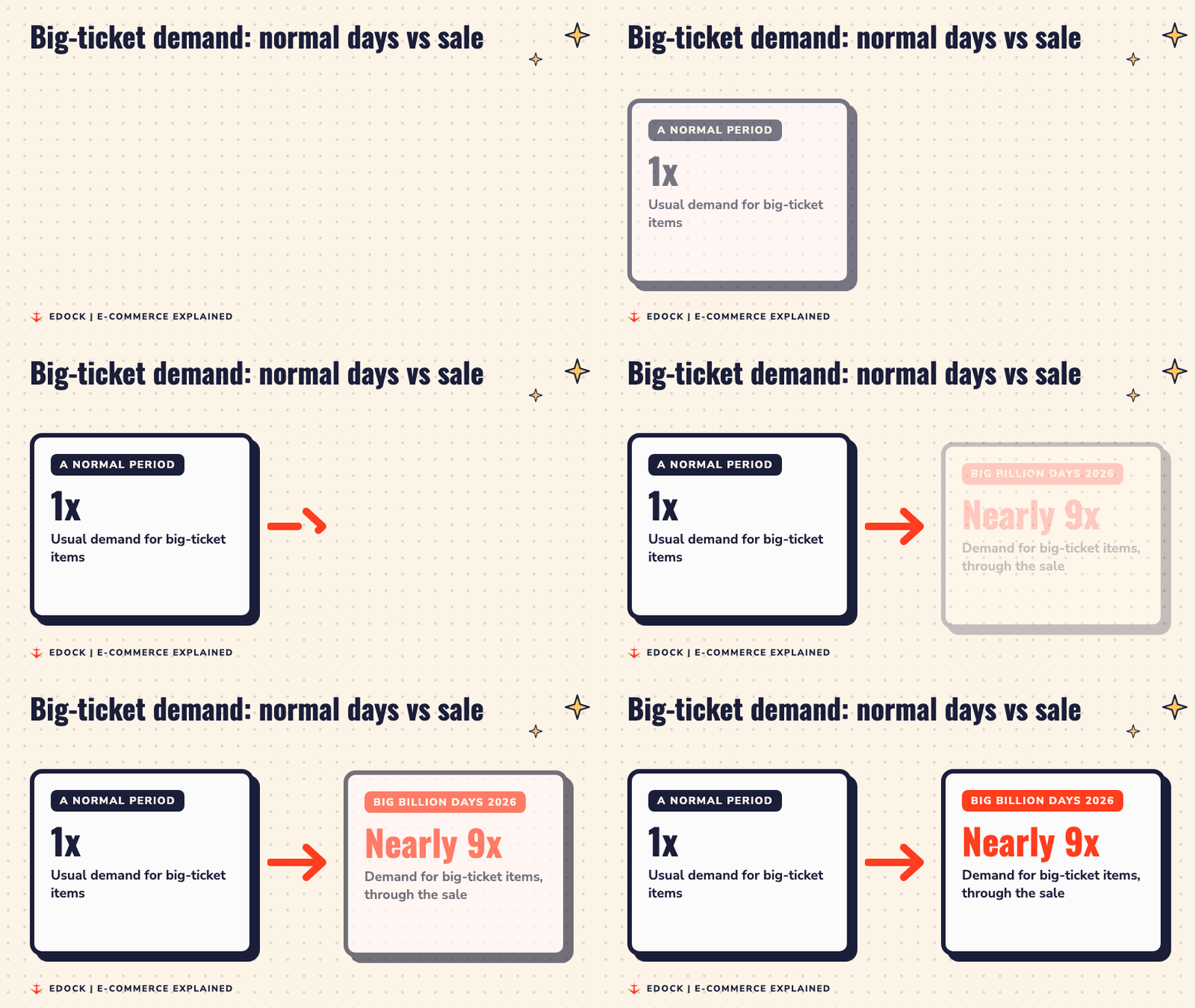
Big-ticket items had a strong sale too. These are costly things you buy once in a few years, like an AC, a fridge or a washing machine. Large appliances grew 30% in the first hour compared with last year. Over the whole sale, Flipkart said demand for big-ticket items was nearly 9 times that of a normal period.
Men's grooming stood out in the first hour. At its peak, Flipkart was selling over 1,600 units of men's perfume every minute. That is more than 26 every second.
Young buyers and small towns
Two groups stood out in Flipkart's numbers. First, nearly half of all buyers were Gen Z, today's teens and young adults. During early access, sneakers, perfumes, skincare and jeans were among the items younger shoppers searched most.
Second, about 60% of buyers came from Tier 2-plus cities. India's cities are often sorted into tiers, like levels. Tier 1 is the biggest metros, such as Mumbai or Delhi. Tier 2 and beyond means smaller cities and towns. Chhatrapati Sambhajinagar, Nagpur, Jabalpur and Meerut were among the fastest-growing ones, Flipkart said.
People there did not just buy daily needs. They also bought laptops, gaming tablets and air fryers. Flipkart Minutes grew too. That is Flipkart's quick commerce service, which delivers in minutes, a bit like a kirana shop that drops things at your door. New customers on Flipkart Minutes rose 1.7 times compared with regular days.
What about the sellers?
Flipkart is a marketplace. That means it does not make most of what it sells. It is like a big weekly bazaar: the ground belongs to one owner, but thousands of separate stall owners sell there. On Flipkart, these stall owners are called sellers.
Many of them are MSMEs, short for micro, small and medium enterprises. These are small businesses, from a family workshop to a local brand. Flipkart said around 31% of sellers who made sales during the event did twice their usual business.
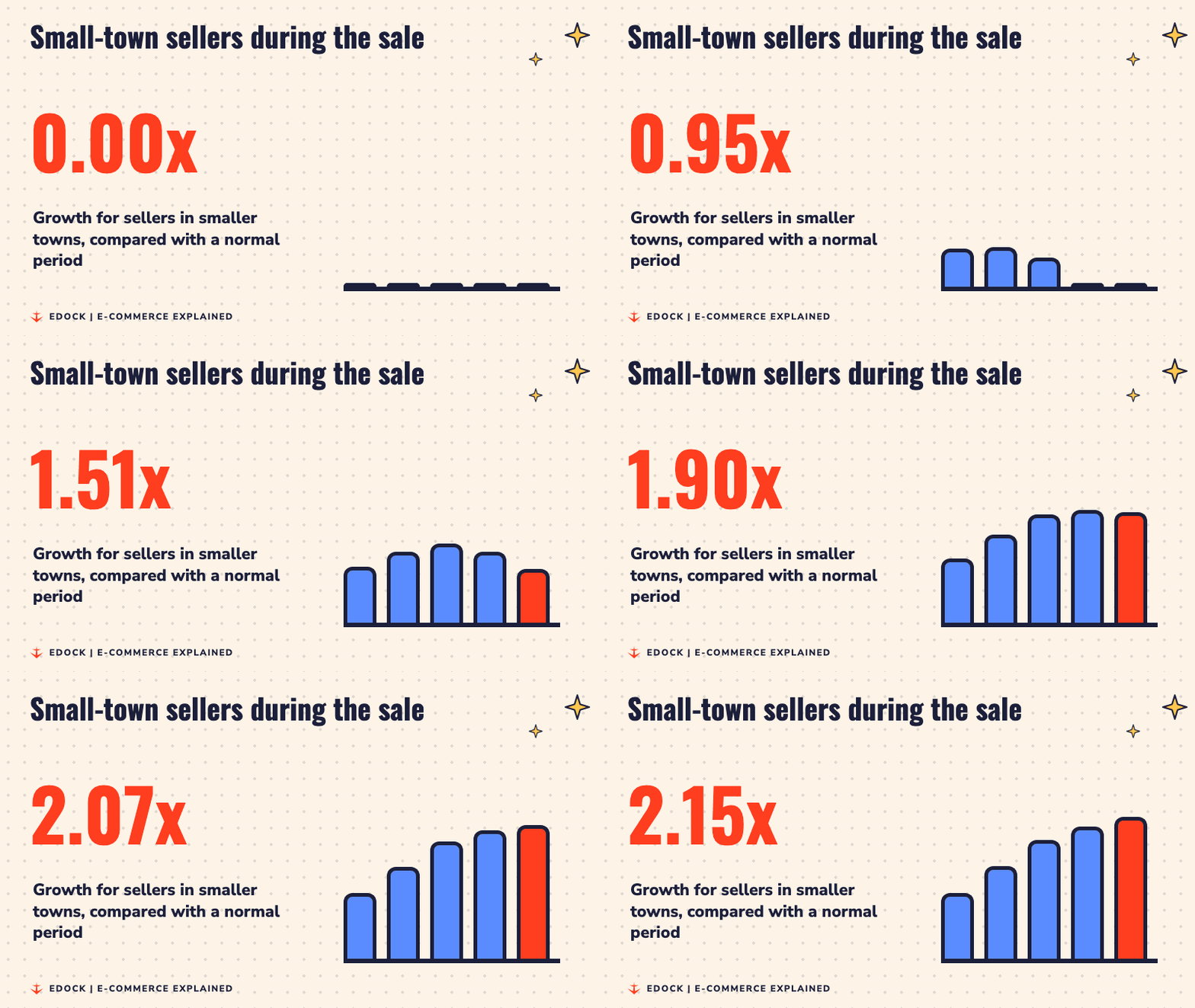
Sellers from smaller cities did even better. As a group, they grew 2.15 times over business as usual. "Business as usual" simply means a normal, non-sale period. Sellers in Bhiwadi grew 2.6 times, Panipat 2.5 times, Tirupur 2.1 times and Hisar 2 times.
Is Flipkart the only one with a big sale?
No. Amazon runs its own festive event, the Great Indian Festival. In its first week, Amazon said overall seller sales grew 3.5 times compared with business as usual. It also said over 70% of the businesses taking part came from Tier 2 and Tier 3 cities.
The BofA report said Meesho and Amazon also had strong opening days. It found that non-metro shoppers and first-time users were the main drivers of demand. It also said EMIs, where you pay for something in small monthly parts, helped festive buying across platforms.
Why this matters
The story here is less about one sale and more about who is shopping. Most buyers came from outside the big metros, and nearly half were Gen Z. Small-town sellers grew faster than usual too.
Keep one thing in mind while reading these numbers. They are Flipkart's own figures, shared to show its sale did well. They are still useful, because they show where online shopping in India is heading during the festive season.
Sources
- Flipkart's Big Billion Days brings in more users across categories, Flipkart Stories, 21 October 2026
- India logs on for The Big Billion Days, Flipkart Stories, 9 October 2026
- Flipkart's Big Billion Days draws 9 in 10 shoppers as orders rise 20-22%, Business Standard, 21 October 2026
- Flipkart's Big Billion Days Sale sees buyers and orders grow 20-22%, afaqs!, 21 October 2026
- Festive e-commerce season off to strong start, Flipkart DAUs hit new high: BofA report, CNBC TV18, 20 October 2026
- Cover photo: Signing for a parcel delivery on a phone, by Meanwell Packaging, CC BY 2.0

You may republish this story under CC BY 4.0: credit Pranav Sharma and link to this page.