Fewer Indians flew in September as jet fuel and ticket prices climbed
Version 1 of 1 saved 28 Oct 2026, 3:44 am IST · Chain line 285
As it was first published
Fewer Indians flew in September as jet fuel and ticket prices climbed
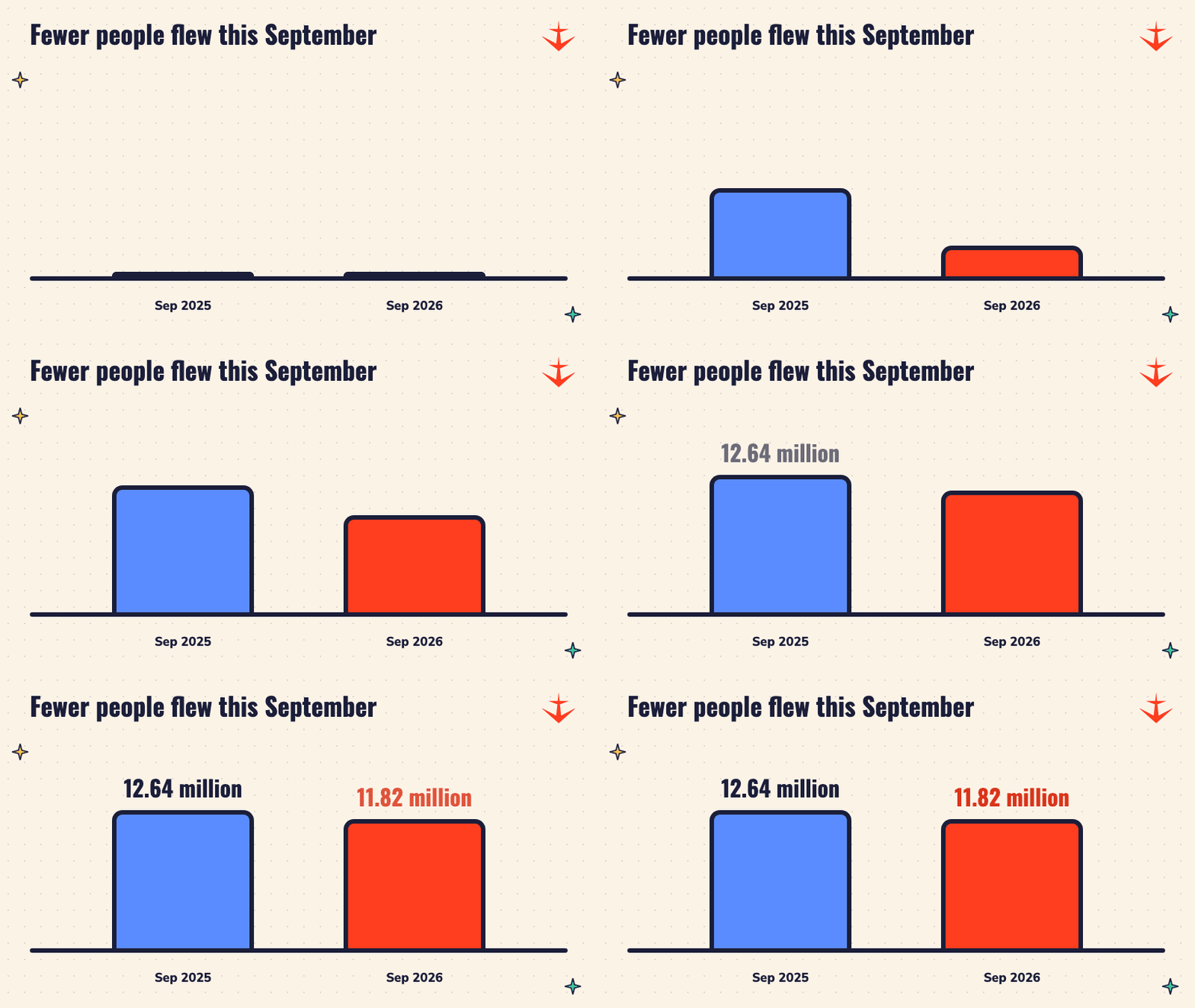
Domestic air traffic fell 6.5% to 11.82 million flyers, the steepest yearly drop since the pandemic, just before the festive rush.
Picture a busy airport in September 2026. This time, about 8 lakh fewer people walked through the gates than a year ago. Data from India's aviation regulator, released on Tuesday, 27 October 2026, shows that domestic airlines flew 11.82 million passengers in September, down from 12.64 million in September 2025.
That is a fall of 6.5%. Mint reports that this is the steepest yearly drop since the pandemic. The main reasons: costlier tickets and costlier fuel.
Who counts the flyers?
The counting is done by the Directorate General of Civil Aviation, or DGCA. The DGCA is the government body that keeps watch over flying in India, under the Ministry of Civil Aviation. Every month, the DGCA puts out a report on how many people flew, which airline flew them, and how many flights ran late.
Here is the September picture, in simple numbers:
- 11.82 million people flew inside India in September 2026.
- One year earlier, the number was 12.64 million.
- Even compared with August 2026, when 12.13 million flew, September was down by about 2.5%.
September is usually a quiet month. The monsoon is on and summer holidays are over. But this year the dip was bigger than normal. Between January and September 2026, airlines flew 122.35 million people, down 0.82% from the same months last year, the DGCA said in its monthly report.
This is not a one month story either. In August 2026, domestic traffic had already fallen 6.34% from a year earlier, to 12.126 million flyers.
Why did tickets get costlier?
Think of a plane like an auto rickshaw. If the price of fuel goes up, the driver asks for more money for the same ride. Planes run on a special fuel called aviation turbine fuel, or ATF, also known as jet fuel.
In Delhi, ATF cost about Rs 110 a litre in July. By 1 October, the price had reached Rs 137 a litre. That is a rise of nearly 25% in three months, according to Mint. Ratings agency Icra says fuel makes up 30% to 40% of an airline's running costs. So when fuel jumps, the whole cost of a flight jumps.
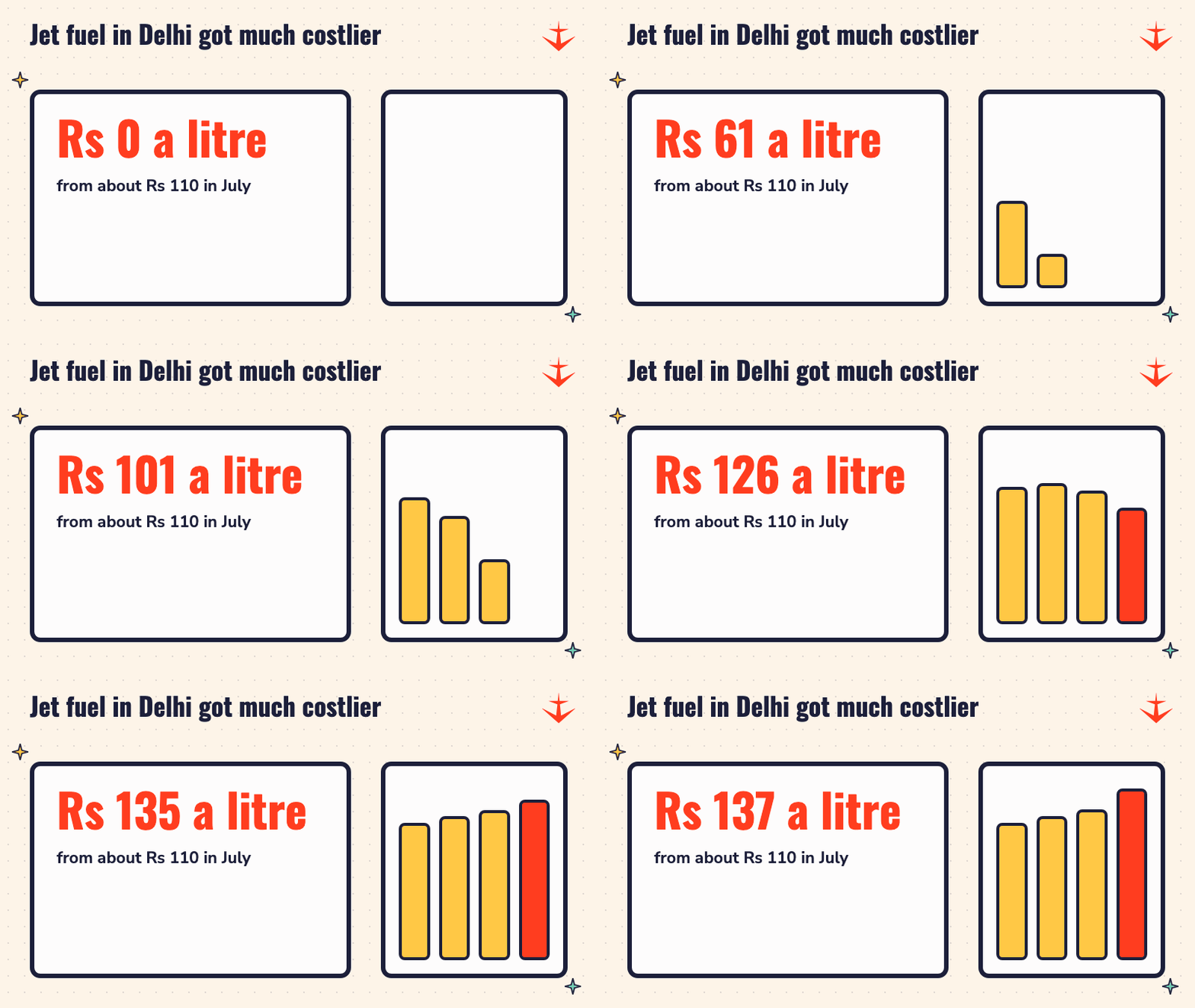
The rise came in steps. Business Today reports that ATF went up by Rs 5 a litre in August, by Rs 6.28 in September, and then by about Rs 16 on 1 October, from Rs 121 to Rs 137. Oil companies linked the rise to global prices and the rupee to dollar rate. Tensions in West Asia have kept fuel prices jumpy.
A weaker rupee hurts in one more way. Airlines pay for plane rentals, called leases, and for repairs in dollars. When the rupee falls, these bills grow too.
What is a fuel surcharge?
A fuel surcharge is an extra charge added to the ticket just to cover fuel. Think of a chai stall that adds Rs 2 to every cup when milk prices rise, and says so on a board.
IndiGo, the country's biggest airline, raised its fuel charge for new bookings from 6 October 2026. On flights inside India, the charge now runs from Rs 375 for trips up to 500 km to Rs 1,300 for trips longer than 2,000 km. The Free Press Journal reports that this was an increase of Rs 100 to Rs 350, depending on distance.
Other airlines followed within days. From 9 October, Akasa Air added a domestic fuel charge of Rs 375 to Rs 1,150, and Air India and Air India Express set theirs at Rs 400 to Rs 1,200 for flights inside India.
This video from NDTV Profit, posted on 6 October, discusses the jet fuel price jump and the IndiGo surcharge.
What do airlines do when fewer people fly?
Imagine a school bus that runs half empty. The smart move is to run fewer buses and fill each one better. Airlines did the same.
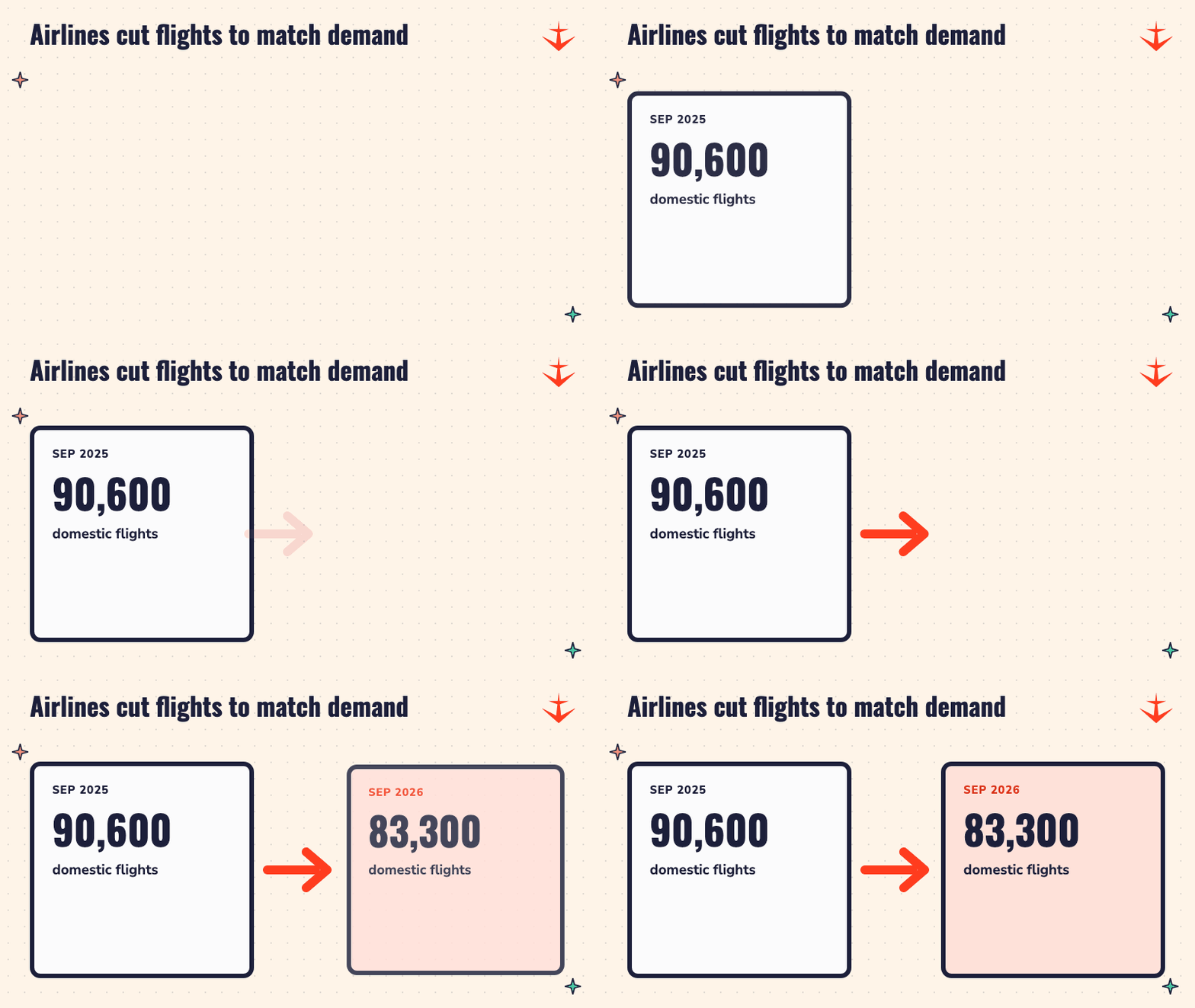
Domestic flight departures fell to 83,300 in September, from 90,600 a year earlier, according to a research note by Equirus Securities quoted by Mint. That is about 8% fewer flights.
With fewer flights, the planes that did fly were fuller. Airlines call this the load factor: the share of seats that have a person in them. If a plane carries 100 seats and 81 are filled, the load factor is 81%.
- IndiGo: 81.1% in September, up from 79.2% in August.
- Air India Group: 79.9%, up from 77%.
- Akasa Air: 88.1%.
- SpiceJet: 78.8%, down from 79.9%.
Mint warns that fuller planes here come from cutting flights, so they do not necessarily mean that demand is coming back.
Who is flying India now?
IndiGo still carries about two out of every three flyers. Its share of the market, meaning its slice of all domestic flyers, was about 65% in September. The Air India Group had about 27%. Akasa Air had 5.6%. SpiceJet's share slid to 0.6%, from 1.2% in August, the Economic Times reports. Mint and the Economic Times give slightly different decimals for the top two airlines, but both put IndiGo near 65%.
The DGCA report also tracks on-time flights at ten big airports. IndiGo was on time 91.1% of the time, Akasa Air 90.8% and the Air India Group 81.7%. SpiceJet was on time only 16.6% of the time.
Delays affected 1,08,783 flyers in September, and airlines spent over Rs 2.86 crore on care and help for them. Cancellations hit 78,207 flyers, and airlines spent Rs 42.79 lakh on them.
What does this mean for festive travel?
October and November bring Diwali and Chhath, when many people fly home. Mint notes that numbers usually pick up in October as the festive season begins. But the new fuel charges apply to bookings made from early October, right before the rush.
Airlines face a tricky balance. Charge too little, and fuel bills eat their earnings. Charge too much, and price-sensitive flyers may not fly at all. Mint calls this the challenge of protecting margins, which means the profit left on each ticket, without pricing out flyers.
For a student flying home, the sums are simple. On a long route above 2,000 km, IndiGo's fuel charge alone is now Rs 1,300 per ticket, before the fare, taxes and other fees. For a family of four, that is Rs 5,200 just for fuel, one way.
IndiGo, Akasa Air and the Air India Group have all linked these charges to fuel prices and said they can be reviewed again. So the price of jet fuel in the coming weeks will decide how much a festive trip home costs.
Sources
- Mint: India's air passenger traffic falls 6.5% in September as higher fares hit demand
- The Economic Times: Airlines flew fewer passengers in Sep, traffic falls 6.5% on annual basis
- Angel One: India's domestic air traffic drops 6.34% in August 2026
- Business Today: IndiGo increases jet fuel charges on all sectors
- Free Press Journal: IndiGo hikes fuel surcharge across routes
- Live From A Lounge: Akasa Air, Air India Group raise fuel surcharges
- Wikipedia: Directorate General of Civil Aviation (India)
- NDTV Profit on YouTube: Global jet fuel cost rise hits India
- Cover photo: IndiGo Airbus A320neo VT-IJB at Mumbai airport, by Timothy A. Gonsalves, CC BY-SA 4.0
