Festive flights home now cost up to Rs 35,000: why ticket prices jump before Diwali
Some fares have almost doubled for Durga Puja and Chhath. Here is how fare buckets, dynamic pricing and costlier jet fuel push your ticket price up.


Picture this. A one-way flight from Delhi, Mumbai or Bengaluru to Patna usually costs about Rs 4,500 to Rs 6,000. On the busiest days of the 4 to 15 November festive window, the same seat can cost Rs 25,000 to Rs 35,000. At the top end, that is close to six times the normal price, for the same short trip. BusinessLine reported these numbers on 16 October 2026.
The numbers come from travel platforms Cleartrip and Wego. They show that flying home for the festive season has become very costly. So why does a ticket cost so much more in October and November? Here is the simple version.
How big is the jump?
According to Cleartrip's trends tracker, the average one-way fare from Chennai to Kolkata during the Durga Puja travel window of 11 to 20 October was about Rs 15,500. On normal days it is about Rs 7,900. That is a rise of about 96%, so the price almost doubled.
Other routes to Kolkata went up too. Mumbai to Kolkata rose about 77%, from Rs 8,600 to Rs 15,200. Bengaluru to Kolkata climbed about 76%, from Rs 9,600 to Rs 16,900.

And the holiday rush is not over. Cleartrip data shows one-way fares to Goa, which are usually Rs 4,000 to Rs 6,500, rose to Rs 12,000 to Rs 22,000 for travel between 20 and 24 December. For 28 to 31 December, peak non-stop fares reached Rs 18,000 to Rs 35,000 or more.
Many travellers feel it. A LocalCircles survey reported by India Today got 19,993 answers from air travellers in 277 districts. 72% said they are paying more to travel home this year than in 2025. 54% said they are paying over 50% more.
Reason one: lots of people want the same seats
Think of a samosa stall outside a cricket stadium on match day. Hundreds of fans arrive at the same time, and there are only so many samosas. If the stall owner raises the price, people still buy, because they are hungry and there is nowhere else to go.
Festive flights work in a similar way. Diwali falls on 8 November this year, and Chhath on 14 and 15 November, as India Today notes. Lakhs of people who work in big cities want to fly home in the same few days. So the demand for plane seats shoots up, but the number of planes stays about the same.
Reason two: dynamic pricing and fare buckets
Airlines in India set their own prices. The government does not fix them. The Ministry of Civil Aviation has said that because of dynamic fare pricing, tickets bought in advance are much cheaper than those bought close to the travel date.
Dynamic pricing simply means the price changes again and again, based on how many people want to buy. A ride app charging more when it rains is a good example.
Airlines do this with "fare buckets". Imagine a lemonade stall with 100 cups. The first 20 cups sell at Rs 20. When those are gone, the next 20 cost Rs 30. Then Rs 40, and so on. The last cups are the most expensive, because by then the stall knows people really want them.
In March 2023, Jyotiraditya Scindia, the civil aviation minister at the time, explained it the same way in a written reply to the Lok Sabha, as The Tribune reported: "The airfare increases with increase in demand for seats as the lower fare buckets get sold out fast when bookings are offered by airlines."
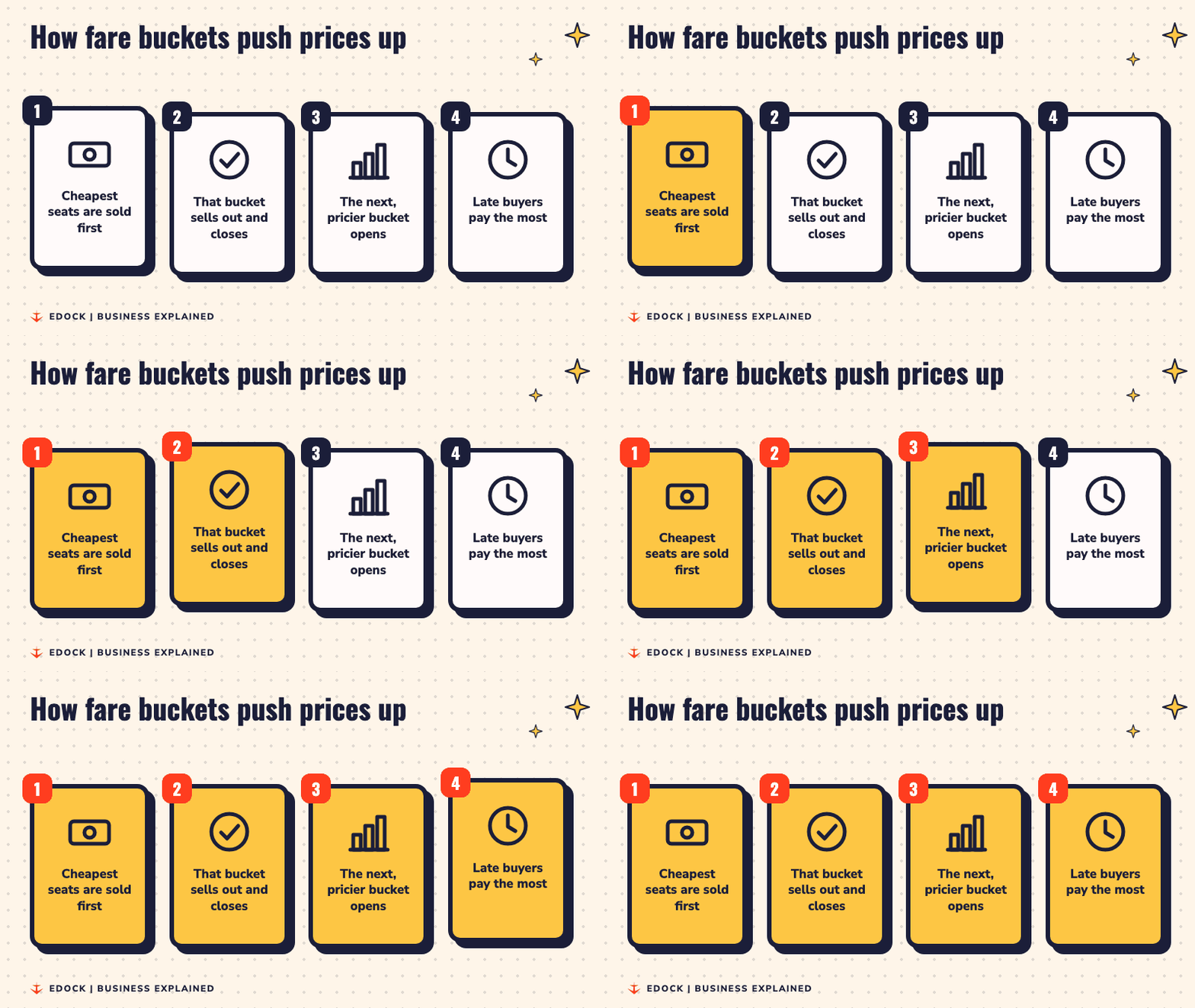
During festivals, the cheap buckets get sold out very early. Anyone who books late only sees the top buckets, which is why some fares look shocking.
Reason three: jet fuel got costlier
Planes run on a fuel called aviation turbine fuel, or ATF. Air India says fuel makes up a big share of its costs, a bit like how petrol is a big cost for an auto driver.
IndiGo said ATF prices rose more than 14% from the previous month, taking fuel costs to among the highest levels in the past ten years. To cover part of this, airlines added a "fuel surcharge". A surcharge is an extra fee added on top of the normal price.
As Moneycontrol reported, IndiGo's new fuel charge for bookings from 6 October ranges from Rs 375 for domestic flights up to 500 km, to Rs 1,300 for flights over 2,000 km. Air India and Air India Express set a domestic surcharge of Rs 400 to Rs 1,200, for bookings from 9 October. Akasa Air also revised its surcharge, as BusinessLine noted.
So even before demand pushes the price up, every ticket already carries a few hundred rupees more for fuel.
Putting it together: the Goa example
When fuel costs go up and everyone wants to travel on the same dates, the two effects add up. The year-end trip to Goa shows it clearly.
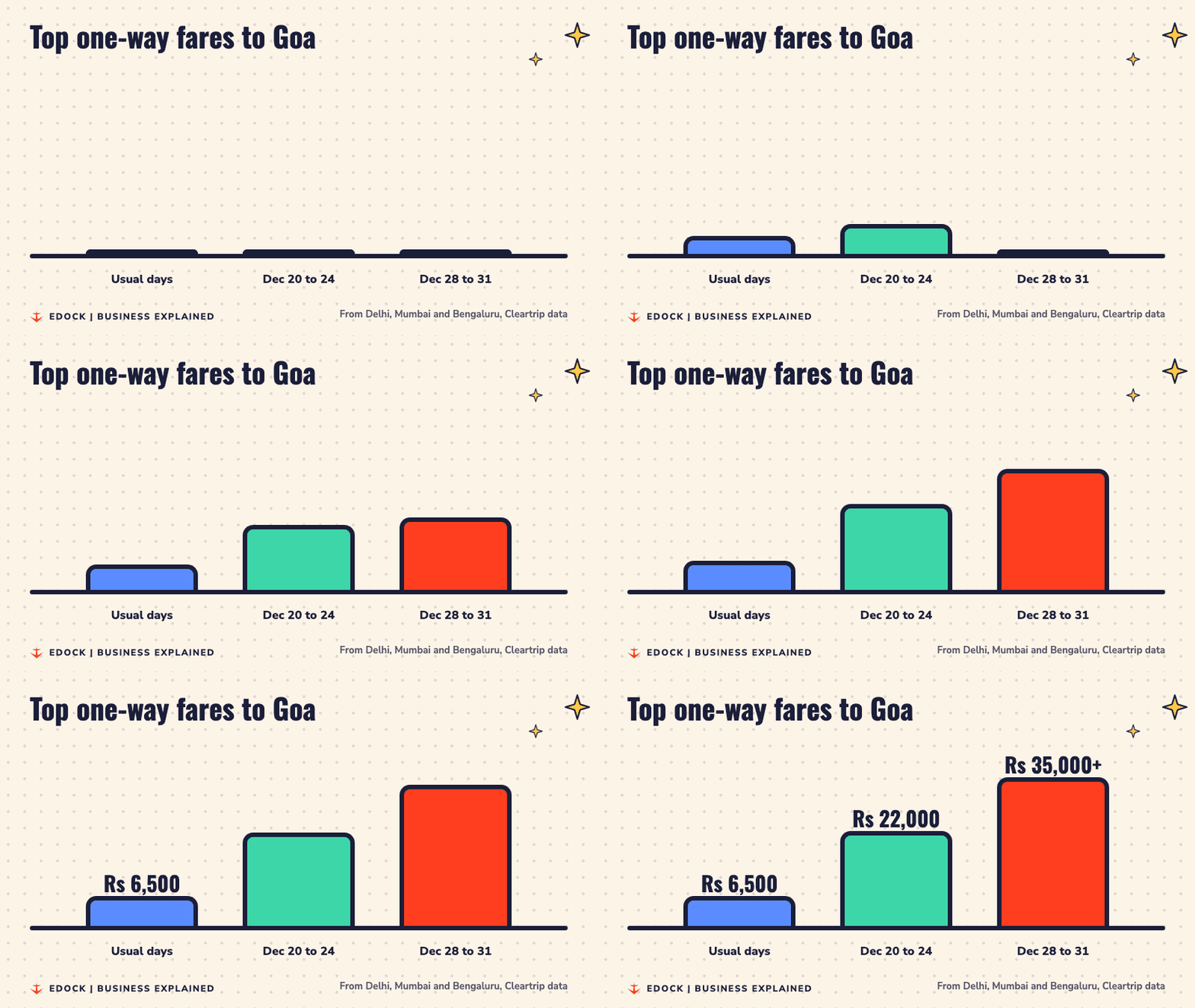
The highest usual fare of Rs 6,500 compared with Rs 35,000 or more at New Year is a jump of over five times.
Is anyone trying to control this?
Yes. A case in the Supreme Court is asking for rules to stop sudden, sharp fare jumps. On 16 October 2026, the Centre told the court that new aviation rules to regulate volatile airfares had been finalised and would likely be published within two weeks, The Hindu reported. The rules are framed under the Bharatiya Vayuyan Adhiniyam, 2024.
Earlier, the court had pointed out that on the same day and the same route, one airline charged Rs 8,000 while another charged Rs 18,000 for economy class. The next hearing is on 16 November, Mint reported. What exactly the new rules will say is not public yet.
What this means for a first-time flyer
- Book early. The cheapest fare buckets sell out first, so late buyers pay the most.
- Check nearby dates. Fares change a lot from one day to the next during the festive rush.
- Look at the full price. The fuel surcharge is added on top, so compare the final amount, not just the base fare.
The airline business is a lot like that samosa stall on match day. When everyone wants the same thing at the same time, the price goes up. The big question now is how much the new rules will change that.
Sources
- Festive airfares shoot through the roof, with some domestic tickets touching Rs 35,000, BusinessLine
- Rs 25,000 for Mumbai-Patna rivals Delhi-London airfare. What's behind the surge?, India Today
- Air India, Air India Express hike fuel surcharge from October 9, Moneycontrol
- New rules to regulate volatile airfares to be published in two weeks, Centre tells SC, The Hindu
- Airfare rules to be published in two weeks, Centre tells Supreme Court, Mint
- Govt asks airlines to exercise moderation in pricing tickets, The Tribune
- Airfares are normally market-driven, not regulated, says Indian govt, Times of Oman
- Cover photo: View of the wing and ground from the window of an airplane, by mdburnette, CC0
You may republish this story under CC BY 4.0: credit Arshdeep Singh and link to this page.