Failte and Sigenergy plan $250 million inverter and battery factories in India
An Indian and a Chinese company have teamed up to make inverters first and big battery storage systems next. Here is what both machines do and why India needs them.

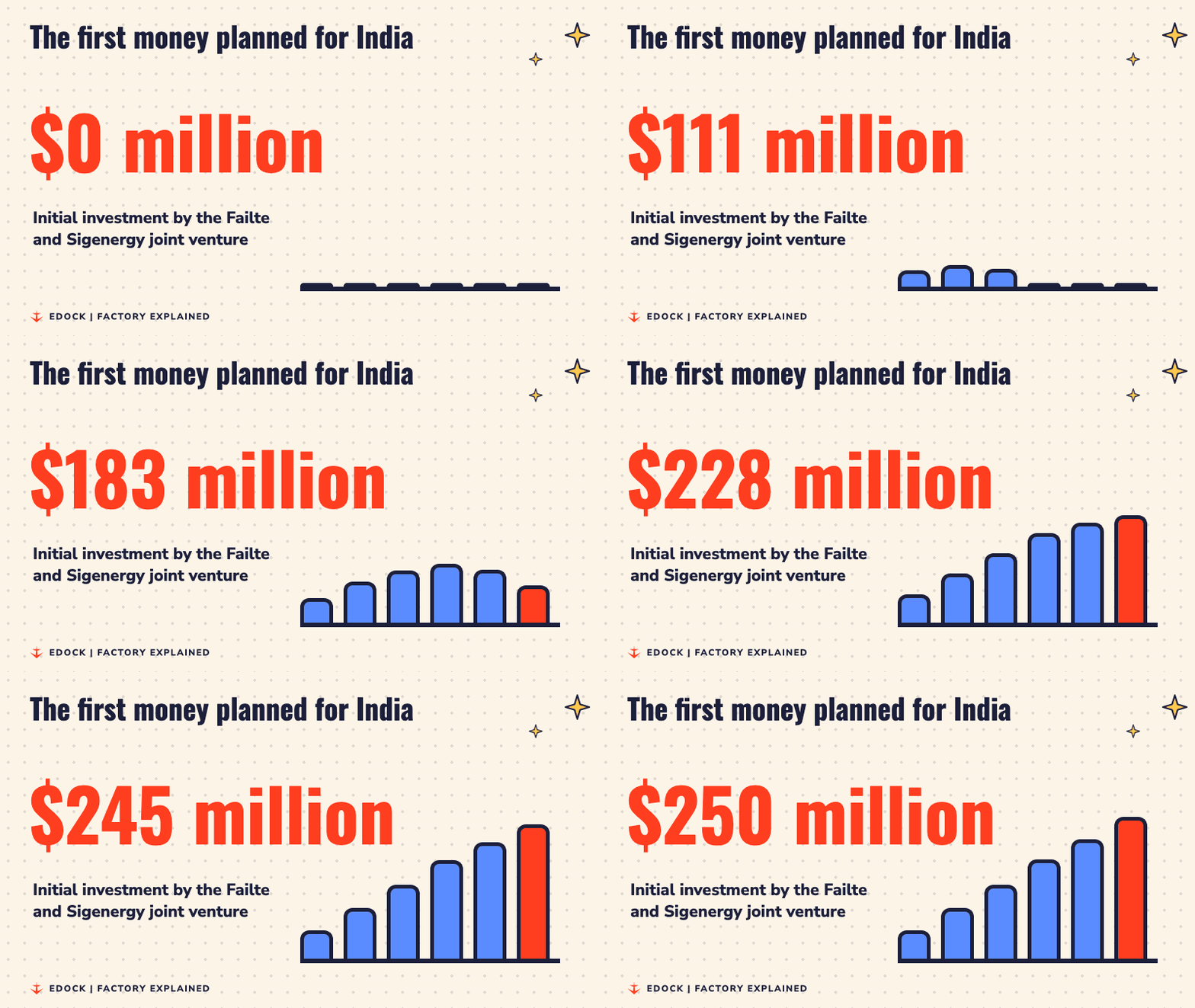
Picture a giant water tank on your roof. It fills up when the tap is running and keeps the house going when the supply stops. Now picture a factory in India that builds the electric version of that tank. On 23 October 2026, a joint venture between India's Failte Energy and China-based Sigenergy said it plans to invest an initial $250 million to make inverters and battery energy storage systems in India.
The plan was shared by Rahul Morde, Head of Sales at Sigenergy India, on the sidelines of the Renewable Energy India Expo, according to the same Business Standard report, which carries a Reuters story. Here is what the two machines do, how the plan works, and why India wants such factories at home.
First, what is a joint venture?
A joint venture, or JV, is when two companies team up to run one business together. Think of two friends who open one samosa stall. One brings the recipe, the other knows the street and the customers. Both share the work and the profit.
Here, Sigenergy brings its products and know-how. Failte Energy is the Indian side. In fact, the company that runs Sigenergy in India is called Failte Energy Solutions India Private Limited, trading as Sigenergy. Its CEO is Abhilash Borana, as that August 2026 report says.
What does an inverter do?
Solar panels and batteries make a kind of electricity called direct current, or DC. The fans, fridges and phone chargers in your home run on alternating current, or AC. An inverter is the translator in the middle. It turns DC into AC so you can actually use the power.
Many Indian homes already know the word "inverter" from power cuts. The box under the stairs that keeps the fan running when the light goes is doing this same job with its battery.
And a battery energy storage system?
A battery energy storage system, often called BESS, is the big water tank from the start of this story. When the sun is shining and solar panels make more power than people need, the extra goes into the batteries. In the evening, when the sun sets and everyone switches on lights and ACs, the batteries send that power back out.
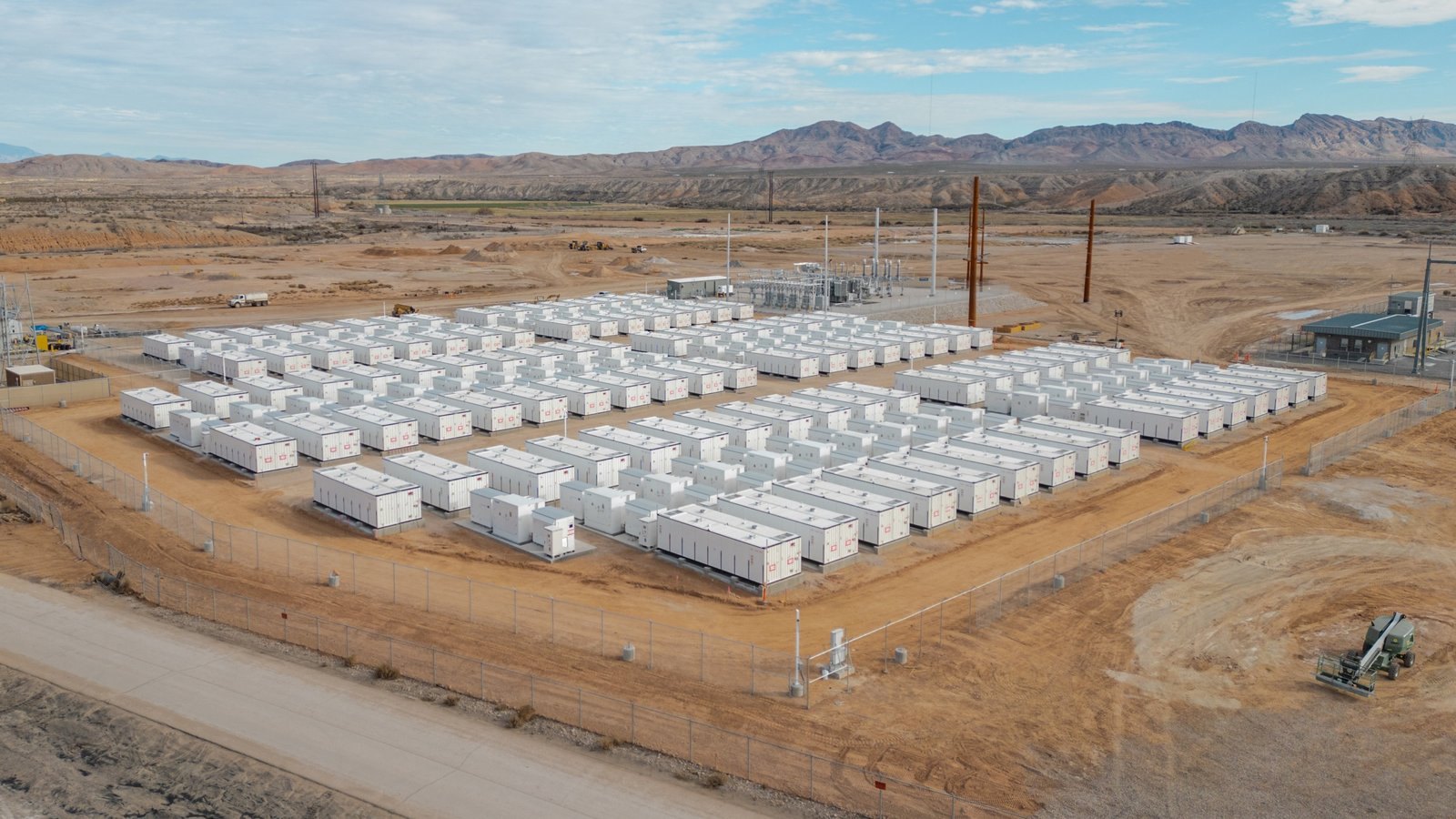
Big versions look like rows of white shipping containers sitting in a field, each one packed with batteries. Small versions fit on the wall of a house.
What exactly is the plan?
The plan comes in steps, says the Business Standard report:
- Step one: an inverter factory, expected to be running by the second quarter of 2027. A quarter is three months of the year, so the second quarter means April to June.
- Step two: a battery energy storage systems factory, expected to start six to eight months after the inverter plant.
- Step three: a research and development centre for battery storage in India. R&D is the lab work where engineers test and improve products.
The site is not fixed yet. Sigenergy is still exploring possible locations for the factory. The report also says the company has followed India's rules on storing data inside the country and is seeking investment clearances, which are the government approvals a foreign company needs before putting money in.

Who is Sigenergy?
Sigenergy is a young company. It is based in Shanghai and was founded in 2022, according to Caixin Global. It makes home energy storage systems, inverters and energy management software, the app that decides when to store power and when to use it.
In April 2026 it listed on the Hong Kong stock market. An IPO, or initial public offering, is when a company sells its shares to the public for the first time, like a stall owner letting customers buy a small piece of the stall. Sigenergy raised HK$4.4 billion, or about $562 million, through that IPO. So the $250 million India plan is less than half of what it raised in that one sale.
Caixin also reports that its founder and chairman, Xu Yingtong, spent 23 years at Huawei, where he led its smart solar business. On its first day of trading, Sigenergy's share price closed 103% above its issue price.
The company is not new to India. In August 2026 it opened an experience centre in Navi Mumbai, a showroom and training space where buyers and installers can see its solar, battery and EV charging products working together, as SolarQuarter reported.
Why does India want these factories?
India is adding a lot of solar and wind power. The problem is simple: the sun does not shine at night, and the wind does not blow on demand. Without storage, clean power made at noon is lost by dinner time. That is why India is looking to rapidly expand renewable energy and grid-scale storage, which opens doors for manufacturers.
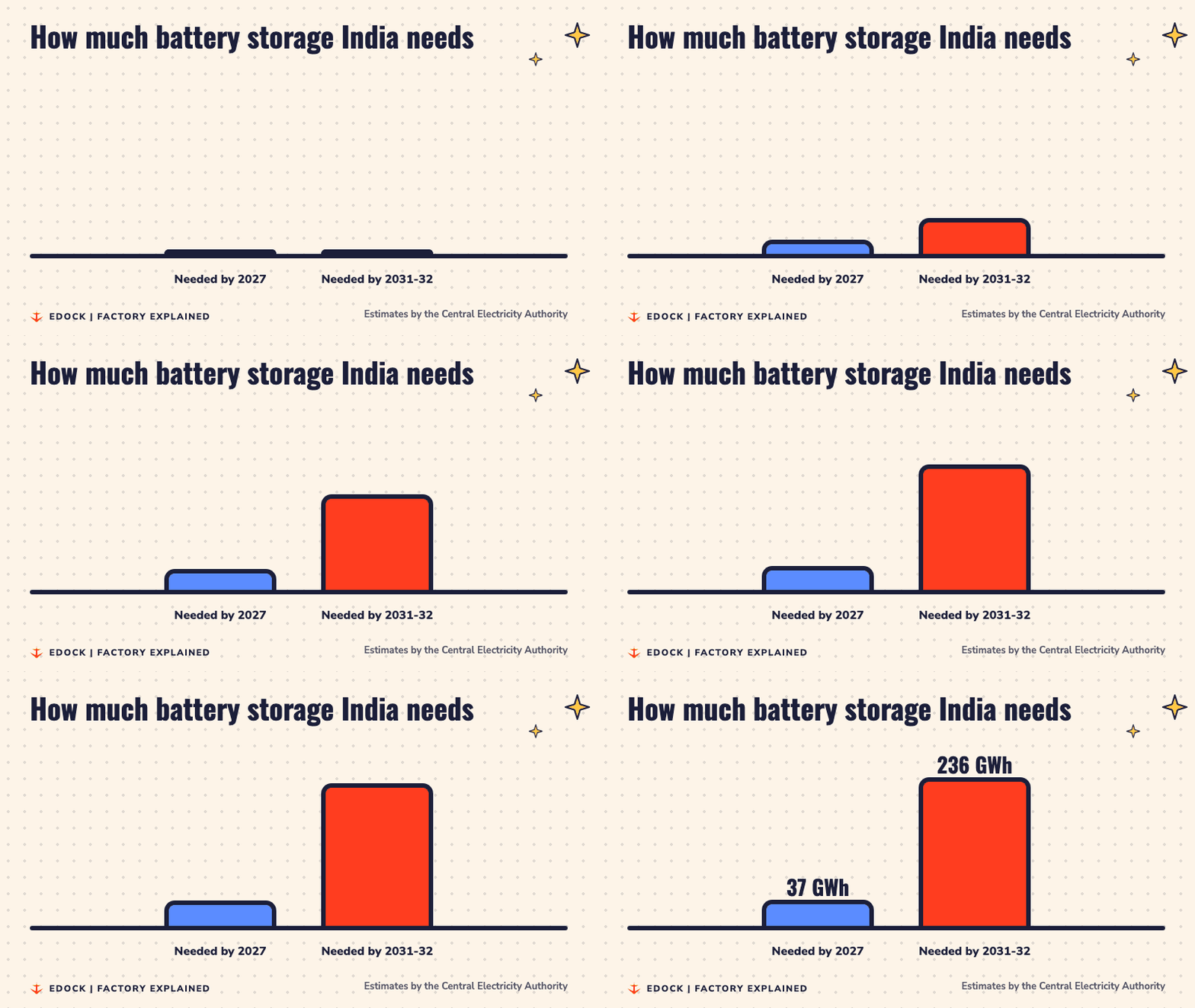
How much storage? The Central Electricity Authority, a government body that plans India's power needs, says India needs 37 GWh of battery storage by 2027 and 236 GWh by 2031-32, as pv magazine India reported in June 2025.
A GWh, or gigawatt hour, is a unit of stored energy. One GWh equals one million "units" (kWh) on your home electricity bill. So 236 GWh is more than six times the 2027 need, only a few years later.
How is the government helping?
In June 2025, the Ministry of Power announced a second round of support called Viability Gap Funding, or VGF. Think of it as the government paying part of the bill so a project that is too costly today still makes sense to build. This round has a budget of Rs 5,400 crore to help build 30 GWh of battery storage, at Rs 18 lakh for every MWh, pv magazine India reported. The sum checks out: 30 GWh is 30,000 MWh, and 30,000 times Rs 18 lakh is Rs 5,400 crore.
Rajasthan, Gujarat and Maharashtra get the biggest share, 4 GWh each. Every one of these storage projects needs batteries and inverters, the two things this JV wants to make.
What it means for young Indians
Storage is where a big part of India's power plans is heading, so these four words are worth knowing: inverter, BESS, GWh and VGF. The next time the evening power stays on even though the sun has set, there may be a field of battery boxes somewhere doing the work.
Nothing is built yet. The site has to be chosen and approvals have to come through. The first target to watch is the inverter plant, expected by April to June 2027.
Sources
- Business Standard (Reuters): Failte-Sigenergy JV to build inverter, battery storage plants in India, 23 Oct 2026
- SolarQuarter: Sigenergy opens new Experience Centre in Navi Mumbai, 25 Aug 2026
- Caixin Global: Energy storage startup Sigenergy surges 103% in Hong Kong debut, 16 Apr 2026
- pv magazine India: Power ministry announces Rs 5,400 crore VGF to support 30 GWh BESS, 10 Jun 2025
- Cover photo: Reid Gardner battery energy storage project near Moapa, Nevada, by Sig. Chiocciola, CC0

You may republish this story under CC BY 4.0: credit Arshdeep Singh and link to this page.