Europe's carbon border tax and India's steel: what Piyush Goyal warned in Berlin
The EU now charges importers for the carbon inside steel and aluminium. Here is how CBAM works and why Indian exporters feel the squeeze.

Picture a truck full of Indian steel reaching a port in Europe. Before the steel can be sold there, someone has to answer a new question: how much smoke went into making it? The more carbon dioxide released at the factory, the bigger the extra bill at Europe's border.
That bill has a name: the Carbon Border Adjustment Mechanism, or CBAM. On 22 October 2026, India's Commerce Minister Piyush Goyal spoke about it at the Berlin Global Dialogue in Germany. He warned the European Union (EU) that its carbon tax on steel imports could raise costs for its own businesses and shoppers.
Here is what CBAM is, why steel and aluminium sellers in India are watching it, and what was said in Berlin.
First, what is CBAM?
Think of a "smoke charge". Imagine your school canteen charges a small fee on every samosa fried in old, smoky oil, so cleaner cooks are not undercut. CBAM works a bit like that, but for factories and countries.
Companies inside Europe already pay for the carbon they release, through a system called the EU Emissions Trading System. The EU says CBAM makes sure a carbon price is also paid on certain imported goods, so the price on imports matches the price on goods made in Europe. Its aim is to stop "carbon leakage", which means factories moving to countries with looser climate rules.
For now, CBAM covers six groups of goods: cement, iron and steel, aluminium, fertilisers, electricity and hydrogen. These are all things that need a lot of energy to make.
When does the charge start?
It has already started. The EU says the full version of CBAM applies from 1 January 2026. Before that, from 2023 to 2025, there was a practice round where importers only had to report carbon, not pay for it.
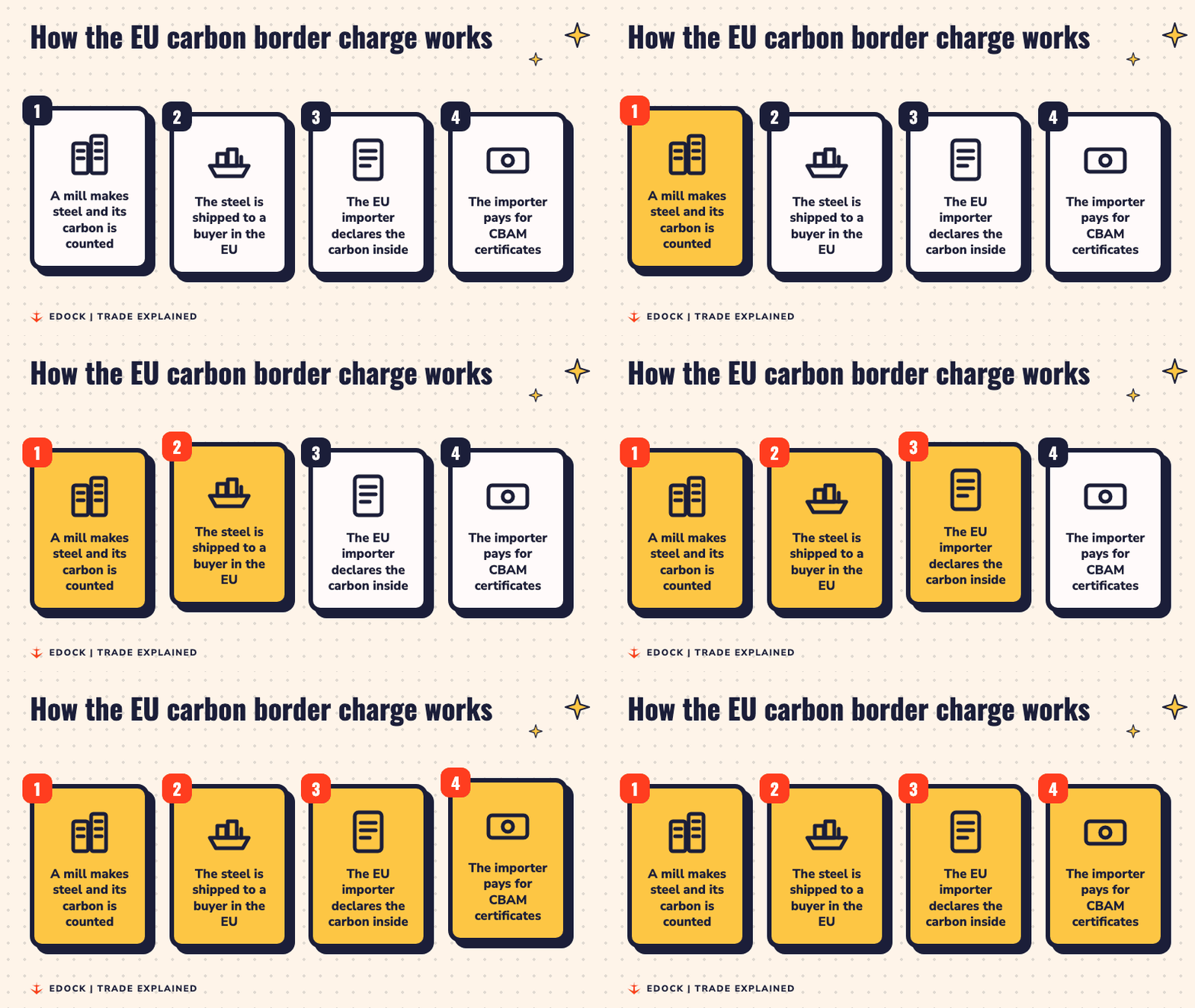
Here is the important detail. The bill is paid by the importer, the company in Europe that buys the goods. An importer is like the shopkeeper who orders stock from another city. According to the EU, importers bringing in more than 50 tonnes of CBAM goods must get approval, declare the carbon inside their imports every year, and hand in matching CBAM certificates. A certificate is like a token that says "the carbon for this much steel has been paid for".
The certificate price follows the price of carbon in the EU's own market. For 2026 it is worked out as a quarterly average, and weekly from 2027. If a seller can prove a carbon price was already paid back home, that amount can be taken off.
If Europe's buyer pays, why should India worry?
Because the cost often rolls back down to the seller. A study by the Global Trade Research Initiative (GTRI), a trade think tank, says the levy is technically paid by EU importers, but the cost will shift to Indian suppliers through tougher price talks. It says Indian exporters may have to accept price cuts of 15 to 22% to keep their European customers.
Think of a lemonade stall that sells to a cafe. If the cafe suddenly has to pay a new fee on every glass it buys, it will ask the stall for a lower price. The stall did not pay the fee, but it still feels it.
The ET also reports that under CBAM, Indian steel, aluminium and cement sent to the EU could face tariffs of 20 to 35%. A tariff is a tax on goods that cross a border.
The carbon price gap
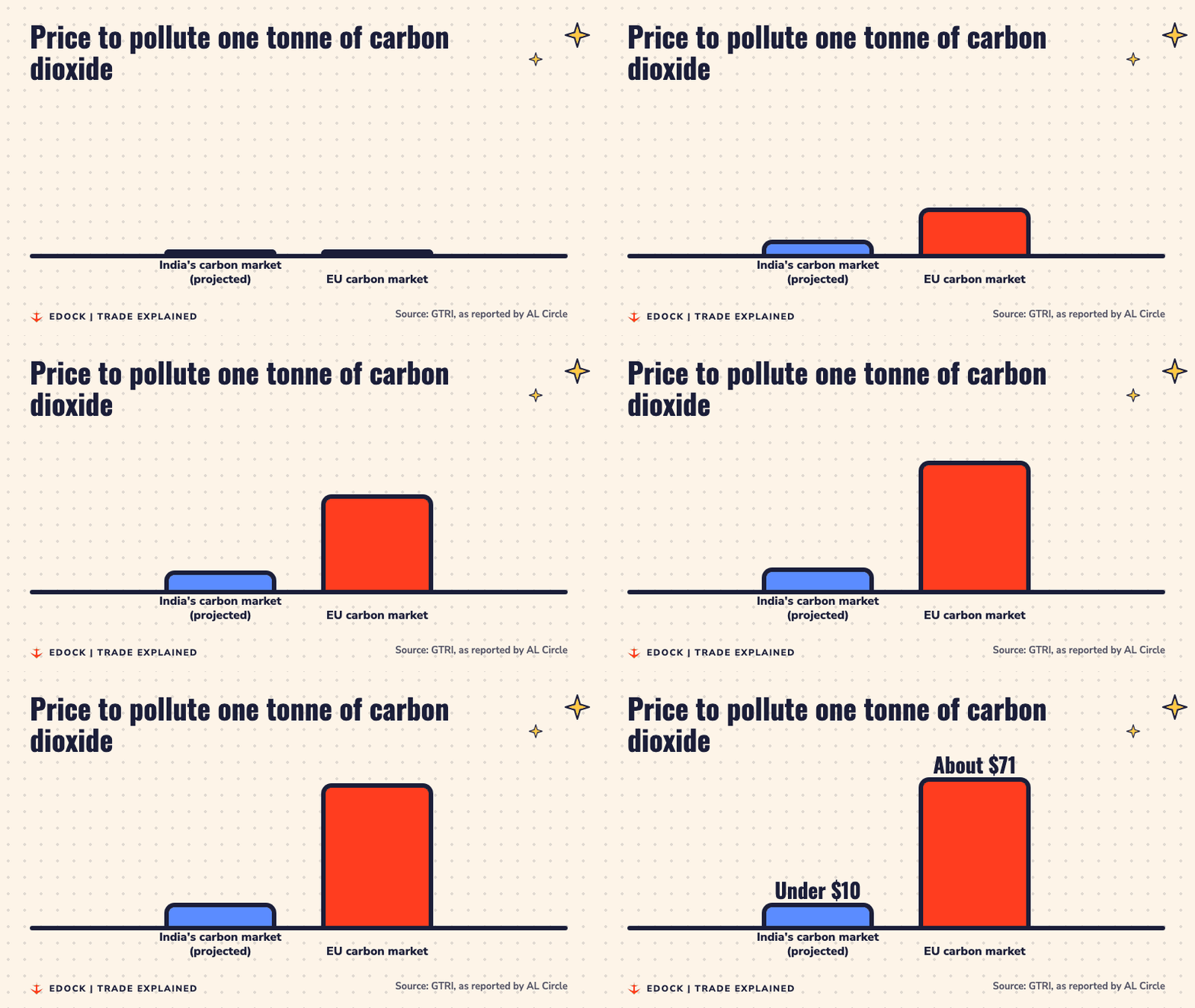
India has its own plan to price carbon, called the Carbon Credit Trading Scheme. But GTRI's founder Ajay Srivastava has said its carbon price is expected to stay below $10 per tonne of carbon dioxide, against about $71 in the EU. That leaves a gap of about $61 per tonne for Indian exporters to cover.
How much steel does India sell to Europe?
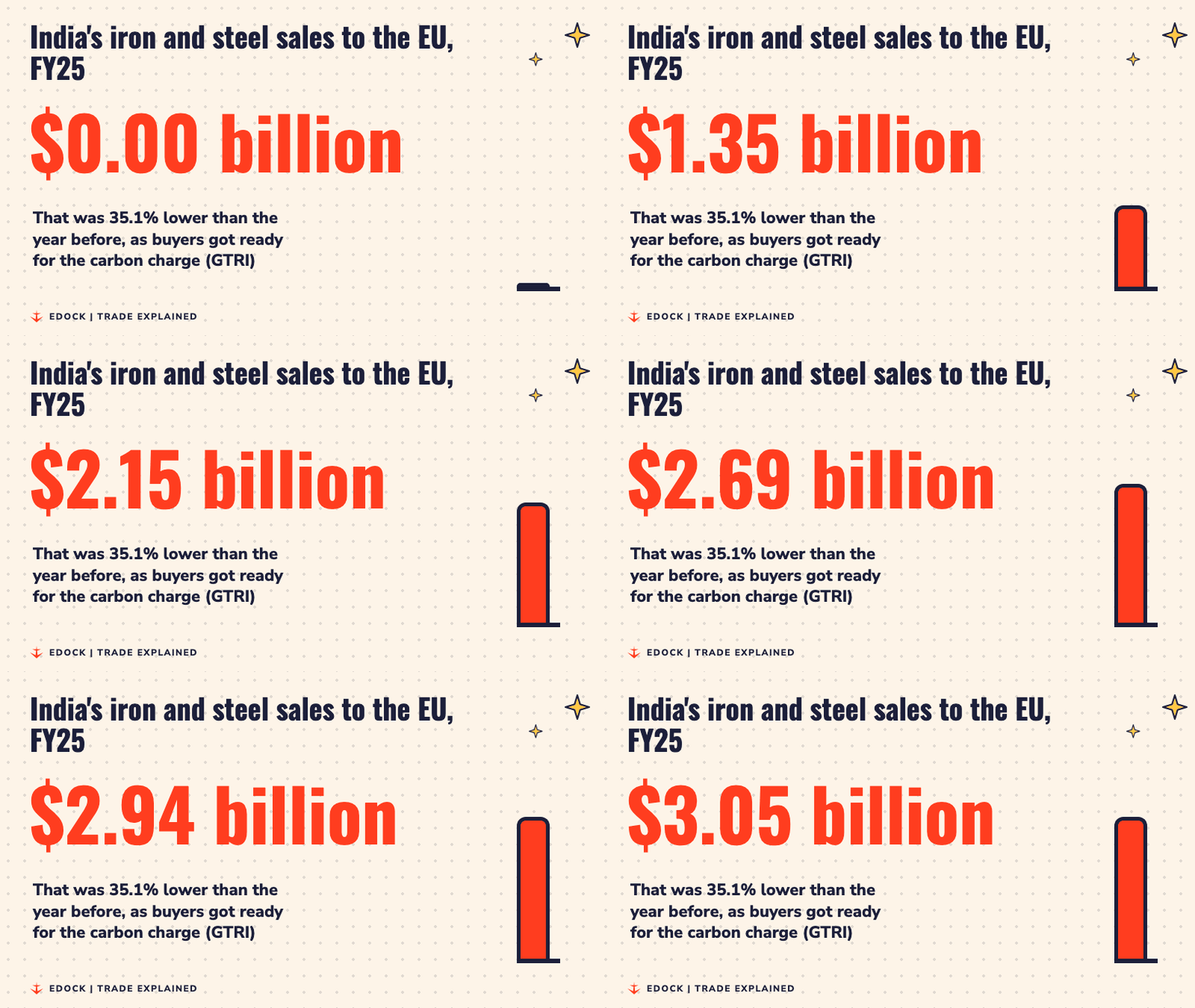
Sales have already dropped. GTRI data shows India's steel and aluminium exports to the EU fell 24.4% in FY25, even before payments began. Iron and steel exports fell 35.1% to $3.05 billion, and aluminium exports fell 9.8%. The report links this to carbon reporting rules that began on 1 October 2023.
Why small firms feel it most
CBAM needs carbon data from each factory, checked by approved auditors. Think of it like a board exam where only a verified mark sheet counts. GTRI says many small and medium firms buy steel from big producers but do not receive verified emissions data from them. Without it, EU authorities may use default values, which are set high, and that can push up the carbon cost even when real emissions are lower.
How the metal is made matters too. GTRI says coal-powered aluminium may face very sharp hits, and steel from blast furnaces will carry the highest carbon costs. Steel made from scrap in electric furnaces faces less.
What Goyal said in Berlin
In Berlin, Goyal said Europe was "inviting disaster" by putting CBAM and a 50% import duty on steel coming into Europe, and that its cost of living would go up. He said costlier steel, aluminium and cement would make roads, ports, airports and water pipelines more expensive to build.
He also said the EU had around 75 to 77 regulations, and that adding more could create barriers for others who trade with it. He pointed to Singapore as a partner with no CBAM or deforestation rules. According to the ET, he added that India produces about 3 to 3.5% of the world's carbon emissions while being home to 17% of its people.
What to watch next
For 2026 imports, the first certificates are handed in during 2027. GTRI says EU buyers will weigh carbon when choosing suppliers well before that, and contracts are likely to carry new CBAM clauses about who pays.
For a student or first-jobber, the big idea is simple. In world trade, the price of a product is no longer only about raw material, labour and shipping. The carbon that went into making it is becoming part of the price tag too.
Sources
- The Economic Times: Goyal asks Europe not to invite disaster
- The Economic Times: EU inviting disaster through carbon tax, says Goyal
- European Commission: Carbon Border Adjustment Mechanism
- European Commission: CBAM definitive regime
- Maritime Gateway: EU carbon tax set to dent India's steel, aluminium exports, says GTRI
- AL Circle: Indian steel and aluminium exports to EU fall 24.4%
- AL Circle: 2026 brings in CBAM
- Cover photo: Freshly Rolled Red Hot Steel, by Robert Kerton, CSIRO, CC BY 3.0

You may republish this story under CC BY 4.0: credit Arshdeep Singh and link to this page.