Essar Ports wins a Rs 2,276 crore cargo terminal deal at Kandla port
Deendayal Port Authority has picked Essar to build and run a four berth terminal at Tuna Tekra for 30 years. Here is how the deal works.
Picture a parking spot for ships that is 1,200 metres long. That is about as long as 60 cricket pitches laid end to end. Now picture giant ships, each able to carry up to 170,000 tonnes, tying up there one after another. This is the plan for a new cargo terminal at Kandla port in Gujarat.
On Wednesday, 21 October 2026, Deendayal Port Authority handed a Letter of Award to Essar Ports Ltd to build a multipurpose cargo terminal at Tuna Tekra, in Kandla. The total estimated project cost is Rs 2,276.06 crore, Essar Ports said in its statement the same day.
Here is what all of this means, in simple words.
First, what is a cargo terminal?
A port is like a big railway station, but for ships. A terminal is one part of that station. It has berths, which are the spots where ships stop next to land, and machines that load and unload goods.
The new terminal will have four berths, each 300 metres long. Four times 300 is 1,200 metres in total, the long parking spot from the start of this story.
Multipurpose means the terminal is not built for just one kind of goods. A tea stall that also sells samosas, biscuits and water is a multipurpose stall. In the same way, this terminal can take many kinds of cargo. Essar says it should ease pressure on the port's existing dry cargo berths. Dry cargo means loose goods that are not liquids, carried in a ship's big holds.
How much can it handle?
The terminal will be able to handle 18.33 million tonnes of cargo a year. People in shipping write this as 18.33 MTPA, short for million tonnes per annum. Per annum simply means per year.
It is being designed for Cape-size ships of up to 170,000 deadweight tonnes. Deadweight is how much a ship can carry: its goods, fuel, water and supplies. These ships are so big that the water next to the berth must be deep. The terminal will have a draft of up to 18 metres. Draft is how deep a ship sits below the water line. If the water is too shallow, a big ship simply cannot come in.
Why bring in bigger ships at all? Think of buying chai for your whole class. One big flask is cheaper per cup than many tiny cups. Essar says larger vessels support more efficient shipping and better logistics competitiveness.
Who pays for what?
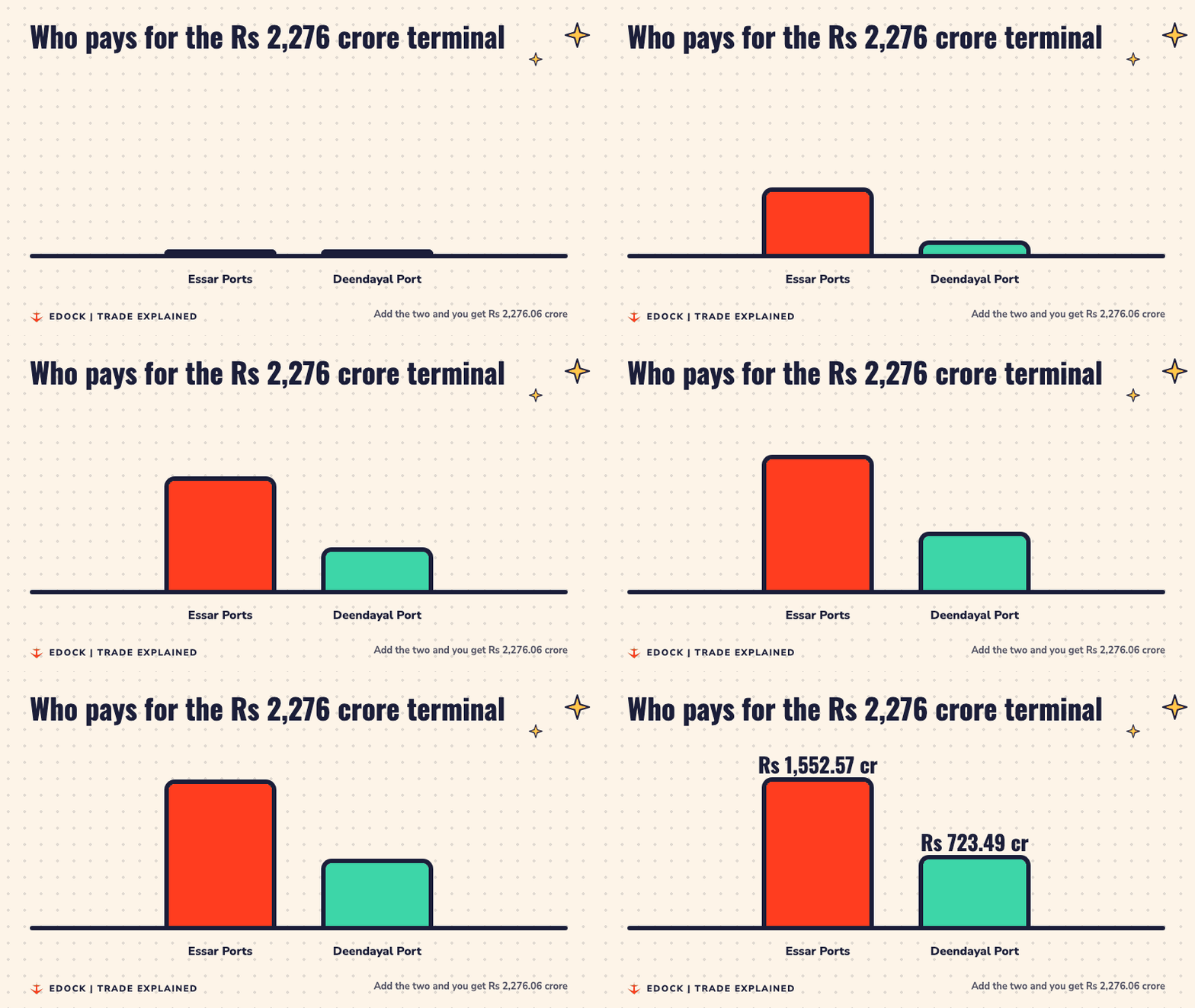
The Rs 2,276.06 crore is split between two players. Essar Ports puts in more than Rs 1,552.57 crore, and the port authority puts in Rs 723.49 crore. Add the two and you get exactly Rs 2,276.06 crore.
The port's share goes into things every user of the area needs. It will handle dredging of the access channel, berth pockets and turning circles, plus a common approach road. Dredging means digging mud and sand out from under the water, so the sea becomes deep enough for big ships. A turning circle is the space a ship needs to turn around, like a U-turn spot for a bus.
What is a Letter of Award?
A Letter of Award, or LoA, is a formal letter that tells a bidder: you won this contract. Think of a school picking a canteen owner. Many people apply. The school picks one and sends a letter saying, "The canteen is yours."
Essar won through a global competitive bidding process, where it was the highest bidder. It offered to pay the port a royalty of 61 per tonne, in rupees. A royalty here is a small fee for every tonne of cargo the terminal handles. So the more goods move through, the more the port earns.
The letter was handed over by Sushil Kumar Singh, Chairman of the port authority, to Essar Ports' CEO Ashish Rajgarhia and V. Srinivasan, an operating partner at Essar's infrastructure arm.
What does BOT under PPP mean?
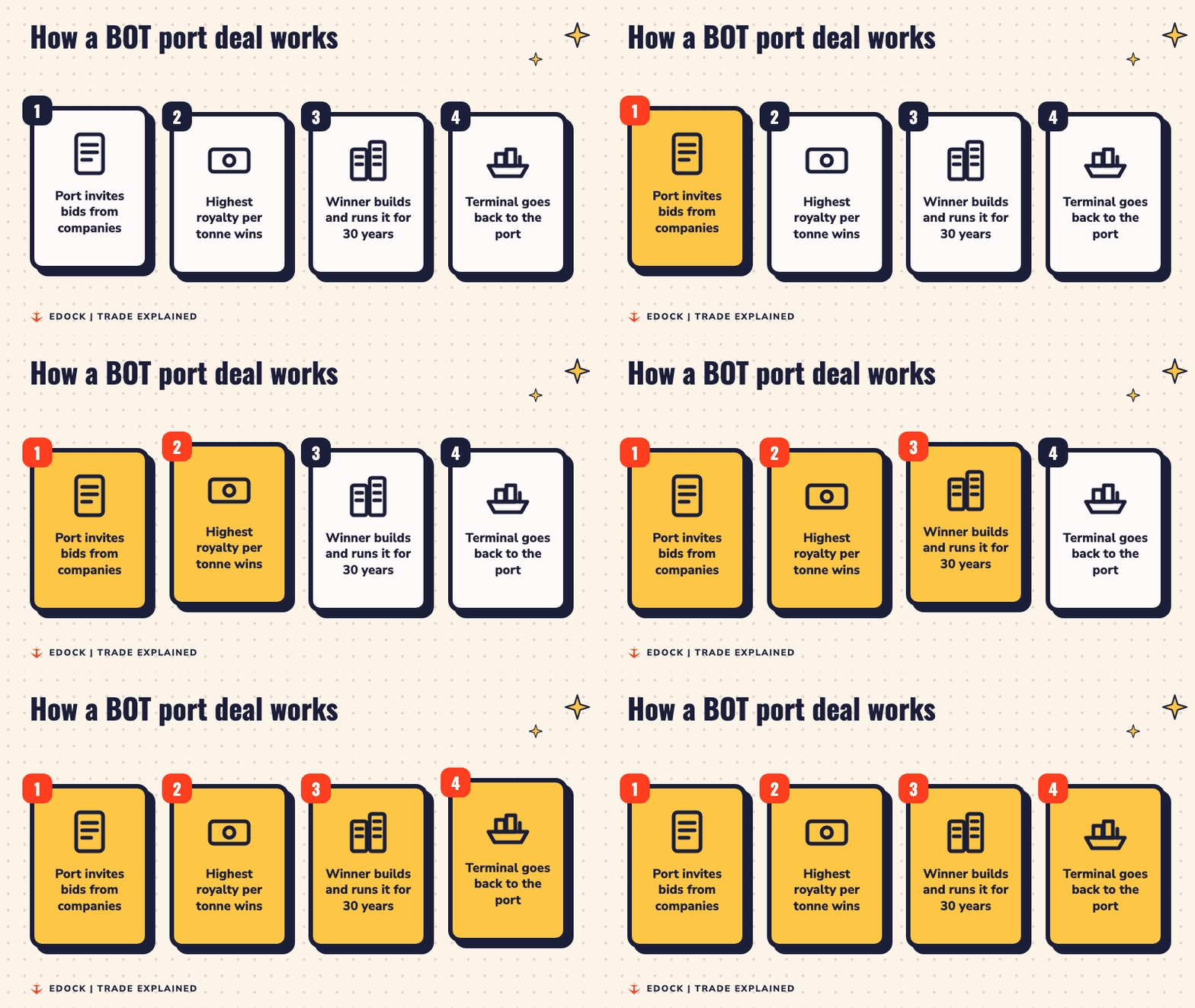
The project follows a Build, Operate and Transfer model, or BOT, under a Public Private Partnership, or PPP. A PPP is when the government and a private company team up on one project. Each brings something: here, the port brings the land, the water and common facilities, and Essar brings money and know how.
BOT tells you the order of things. Essar builds the terminal. Then it operates it and earns from it for a fixed time. At the end, it transfers it back to the port. This fixed time is called the concession period, and here it is 30 years. It is a bit like renting a shop for 30 years, doing it up with your own money, running it, and then handing the keys back.
Why does Kandla matter so much?
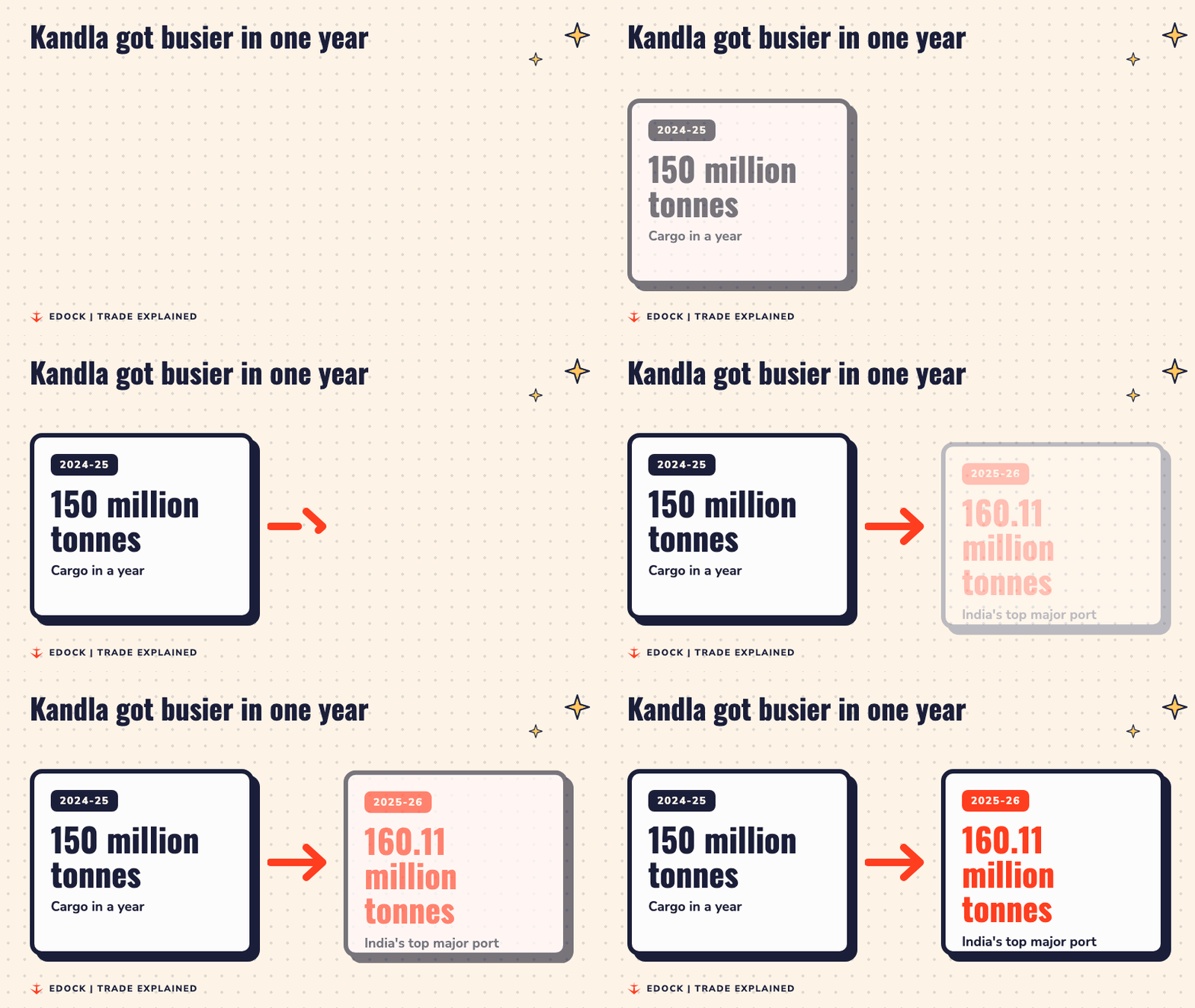
Kandla is no small port. In the year 2025-26, Deendayal Port Authority handled 160.11 million tonnes of cargo, up 7% from 150 million tonnes the year before, and called itself number one among India's major ports. Fertilisers, liquid cargo and container cargo all grew that year.
When a port gets this busy, ships can end up waiting for a free berth, like cars waiting for a parking spot at a mall on a Sunday. Adding new berths is one way to cut that wait. The port authority said the project should add to its multipurpose cargo capacity and support domestic and EXIM trade. EXIM is short for export and import.
The new terminal will sit on the eastern side of a Mega Container Terminal that DP World is building at Tuna Tekra, also under the PPP model, as the same ET report notes.
What does this mean for Essar Ports?
For Essar Ports, this is a fresh start in Indian ports. Its CEO called it a defining moment as the company sets out to rebuild and expand its ports business.
Essar today runs about 60 million tonnes a year of operating port capacity across India, Indonesia and the UK. Over the years it has developed and run 168 million tonnes of port capacity in India, and it has sold 148 million tonnes of that through deals. Selling an asset to raise cash is called monetising it.
The video below is an older company film from Essar's own channel, showing how its port terminals work.
What is still unknown?
Essar did not share when building will start or when the terminal will open. It has said the terminal will follow the Green Port Policy and the environment rules that apply.
So for now, the letter is signed and the money plan is clear. The next big thing to watch is when the first ship ties up at the new berths.
Sources
- Essar: Essar Ports secures LOA for Tuna Tekra multipurpose cargo terminal at Kandla
- The Economic Times: Deendayal Port Authority issues LoA to Essar Ports Ltd
- The Economic Times: Essar Ports gets nod to develop Rs 2,276.06 crore multipurpose cargo terminal at Kandla
- BusinessLine: Essar Ports wins Rs 2,276 crore project to build cargo terminal at Kandla
- Maritime Gateway: Deendayal Port Authority, Kandla crosses 160 MMT mark for FY 2025-26
- Cover photo: Port of West Sacramento, loading a bulk carrier, by Quintin Soloviev, CC BY 4.0

You may republish this story under CC BY 4.0: credit Manpreet Kaur and link to this page.