ESDS bets on renting AI chips to grow from ₹472 crore to $5 billion revenue
Fresh from a hit IPO, the Nashik cloud company wants GPU rentals to bring most of its money. Here is what that means and why the target is so big.

Picture a company from Nashik that made ₹472.21 crore in revenue in FY26. Now its boss says it wants to make $5 billion a year within five years. That is like a samosa stall that sells a few hundred plates a day saying it will soon feed a whole city.
The company is ESDS Software Solution. On 21 October 2026, its chairman and managing director Piyush Somani told Mint that the company is betting on one big idea: renting out the powerful chips that run artificial intelligence (AI).
Here is the story in simple words: what ESDS does, what "renting AI chips" means, and why its plan is so big.
First, what is an IPO?
An IPO, or initial public offering, is the day a private company first sells its shares to the public. A share is a tiny piece of ownership. After the IPO, anyone can buy and sell those pieces on the stock market.
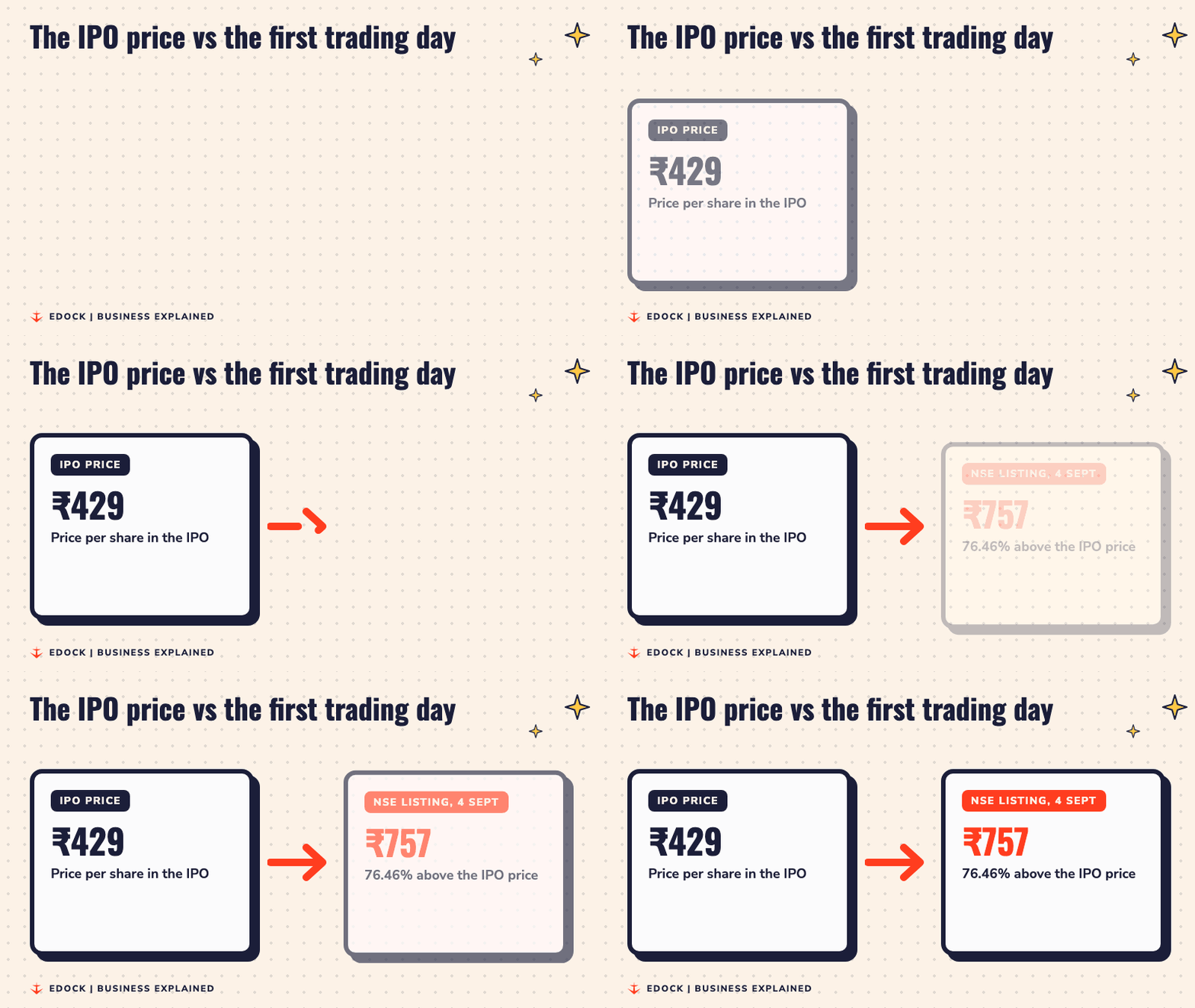
ESDS did this a few weeks ago. Its ₹720 crore IPO was open from 28 August to 1 September 2026, at a price of ₹408 to ₹429 per share. Demand was huge: people put in bids for 136 times the shares on offer. Think of a shop with 1 box of mangoes and 136 people queuing for it.
On 4 September, the shares started trading. On the NSE, the first price was ₹757, which is 76.46% above the IPO price of ₹429. Mint called it one of the steepest share price premiums in recent history, driven by interest in AI and data centres.
Where does the IPO money go? The plan is to use ₹576 crore for cloud computing equipment and other gear for its data centres. The rest is for general company needs.
What does ESDS actually do?
ESDS is not a new name. Somani registered the company in 2005, and its first data centre in India went live in 2009. A data centre is a large, cold building full of computers that store and process data for other companies, around the clock.
ESDS also runs a cloud. The cloud simply means using someone else's computers over the internet instead of keeping your own. More than 170 banks use its banking community cloud, and over 100 government bodies use its government cloud.
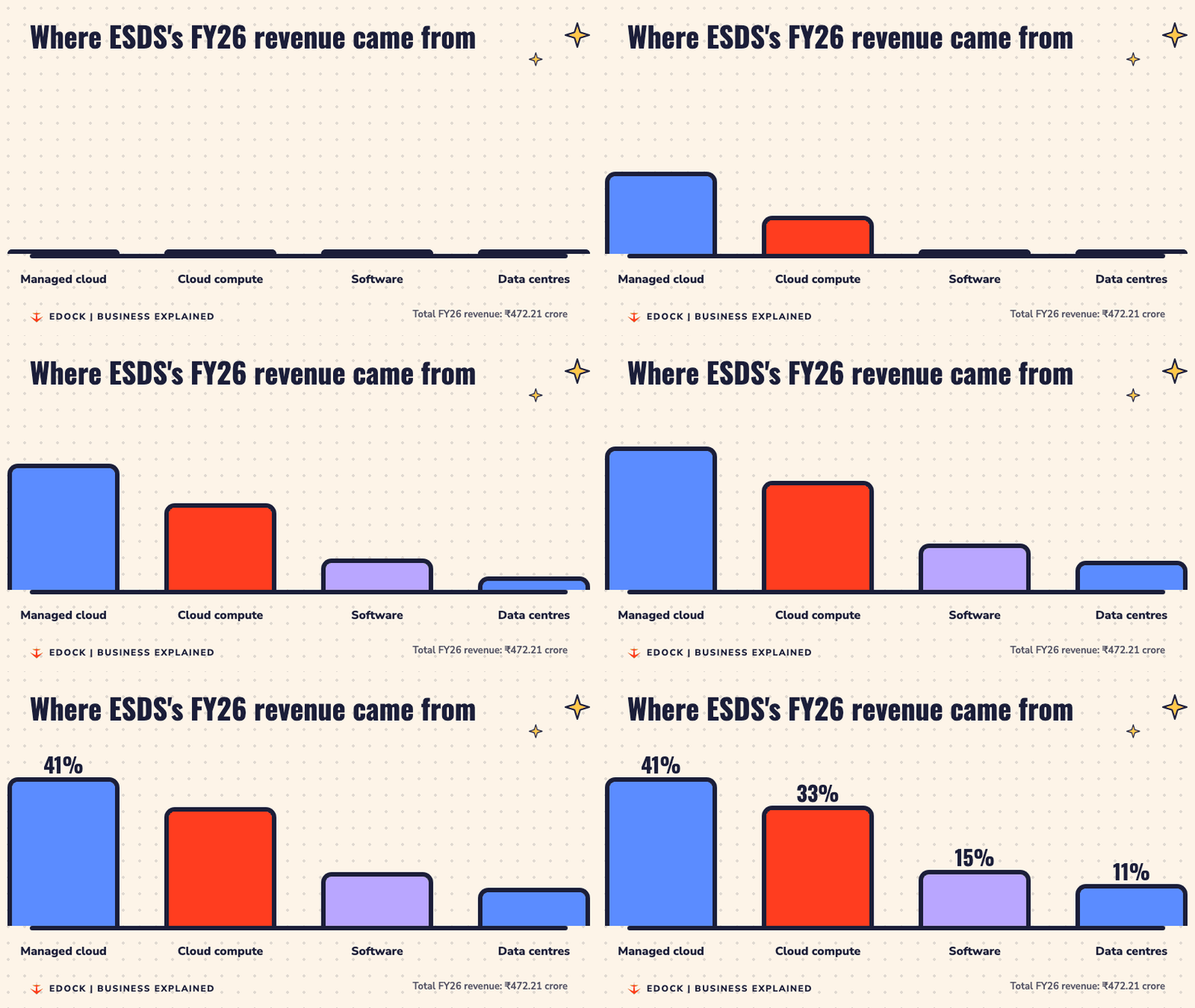
Mint gives a split of where ESDS's money came from in FY26:
- Managed cloud services: 41%, where ESDS looks after a client's cloud setup for them.
- Cloud compute: 33%, renting out computing power.
- Software sales: 15%.
- Data centres: 11%.
Those four add up to 100%. Revenue for the year grew 31%. The company runs five data centres across India, but did not share how much capacity they have.
So what does "renting AI chips" mean?
AI tools like chatbots need a special kind of chip called a GPU, or graphics processing unit. Mint describes GPUs as expensive, high-power processing chips that run modern-day AI.
Most companies do not want to buy them. It is like a car. You can buy one and pay for fuel, parking and repairs. Or you can rent a car only when you need a ride. Renting GPUs works the same way. A company that needs AI power pays ESDS to use its chips for some time. This is called GPU-as-a-service.
Somani expects this rental business to bring in nearly 75% of ESDS's revenue in the near term, with data centres and other IT services making up the rest.
How big is the $5 billion dream?
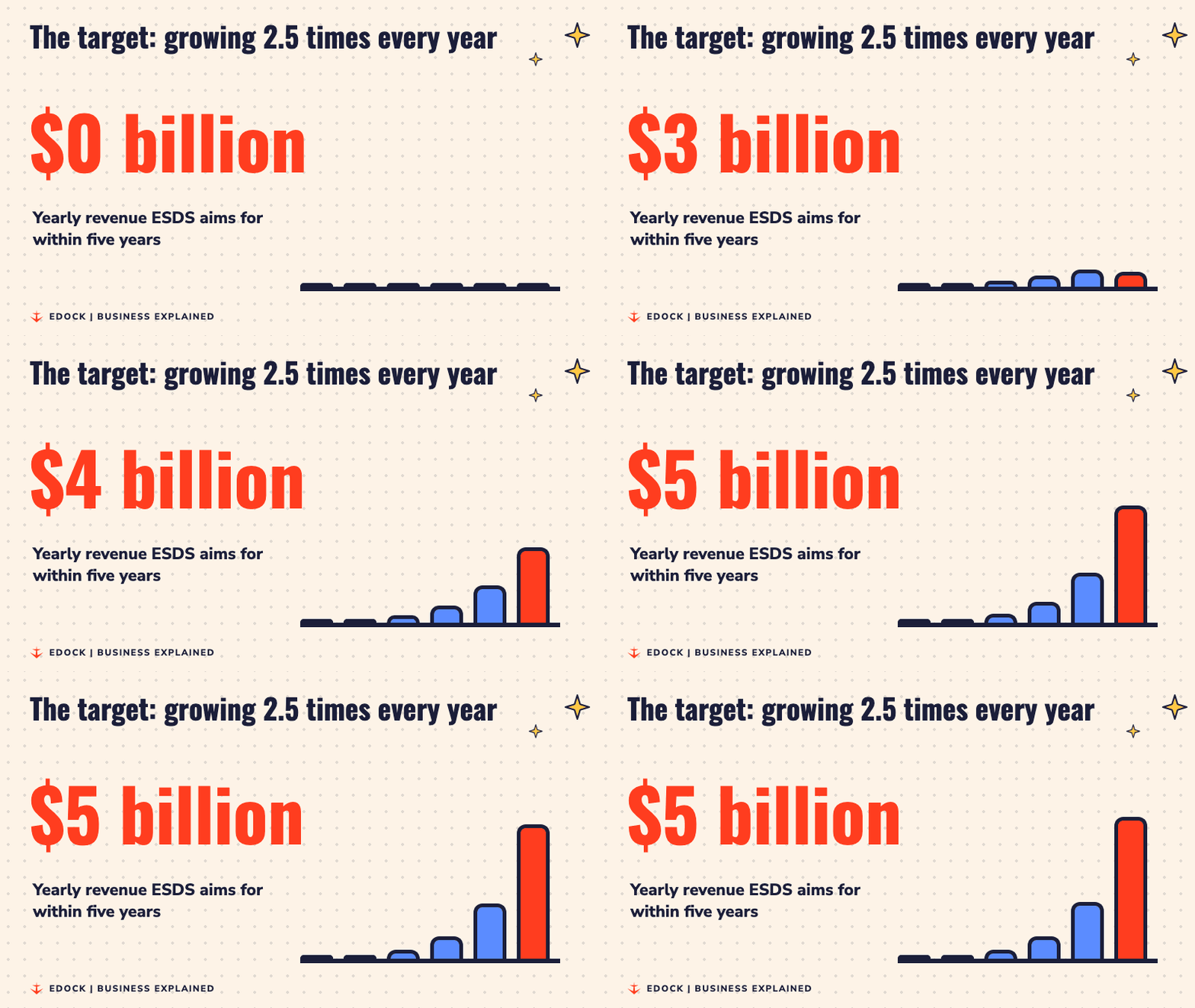
Very big. Mint worked out that ESDS would need to grow revenue about 2.5 times every year for the next five years. Picture pocket money of ₹100 that becomes ₹250, then ₹625, and keeps going like that for five years. Mint notes such fast growth is rare.
Somani's argument is that the market is huge. In his words to Mint, even if the company "captures just 1% of the market over the next five years", its revenue would cross $5 billion.
One big deal shows the kind of size ESDS is chasing. Earlier this year, Australian AI cloud company Sharon AI announced a five-year agreement with ESDS worth $1.25 billion. Under it, Sharon AI will set up 8,000 Nvidia GPUs in a data centre in Australia, and ESDS can stretch the deal by two more years. Spread over five years, $1.25 billion works out to $250 million a year on average.
What could go wrong?
Big plans come with big risks, and the sources point to a few.
Chips cost more now. Inc42 reported that servers quoted at around ₹25 lakh when ESDS first filed its papers cost about ₹1.8 crore by the time its final IPO document was ready. So the same money buys fewer machines.
Power is short. GPUs eat a lot of electricity. Somani told Mint that power has become "the biggest limiting factor", and ESDS is working to secure land and buildings with power access.
Rivals are many. In India, Yotta, E2E Networks and Neysa also rent out GPUs. Amazon, Microsoft and Google offer the same kind of service with far deeper pockets.
Customers can leave. If a client cancels a big rental deal, ESDS could be stuck with costly chips. Somani said its GPU capacity is fully booked by clients for now, and that unused capacity could be rented to others at higher rates.
A brokerage, Choice Institutional Equities, pointed to a ₹3,000 crore order book, meaning work already promised by customers. It also said turning deals into real revenue, and how fast the chips get used, are the key things to watch.
Why should a young Indian care?
Every time an AI app answers a question, a GPU somewhere does the work. ESDS is one of several Indian companies, along with Yotta, E2E Networks and Neysa, building this kind of computing power in India.
Whether ESDS reaches $5 billion or not, the race to rent out AI chips is now one of the biggest business stories in India. It needs chips, power, buildings and a lot of money. The next five years will show how far a company from Nashik can go.
Sources
- Mint: Buoyed by blockbuster IPO, ESDS bets on AI chip rentals for $5 billion revenue in 5 years
- 5paisa: ESDS Software shares list at 76% premium on NSE
- Inc42: Caught in the GPU pricing paradox, can ESDS deliver a bumper IPO?
- DatacenterDynamics: Sharon AI signs $1.25bn cloud capacity agreement with ESDS Software Solutions
- Cover photo: Datacenter Server Racks, by Carl Lender, CC BY 2.0

You may republish this story under CC BY 4.0: credit Arshdeep Singh and link to this page.