Ekart cut its yearly loss by 98% to just Rs 26 crore
Version 1 of 1 saved 17 Oct 2026, 7:08 pm IST · Chain line 74
As it was first published
Ekart cut its yearly loss by 98% to just Rs 26 crore
Flipkart's delivery arm earned a little less in FY26 but spent far less. Here is how a Rs 1,508 crore loss shrank to almost nothing.
Picture a samosa stall that lost Rs 1,508 one year. The next year, it sells a little less, yet it loses only Rs 26. That is roughly what happened to Ekart, the delivery company that carries Flipkart's parcels, only with "crore" added after each number.
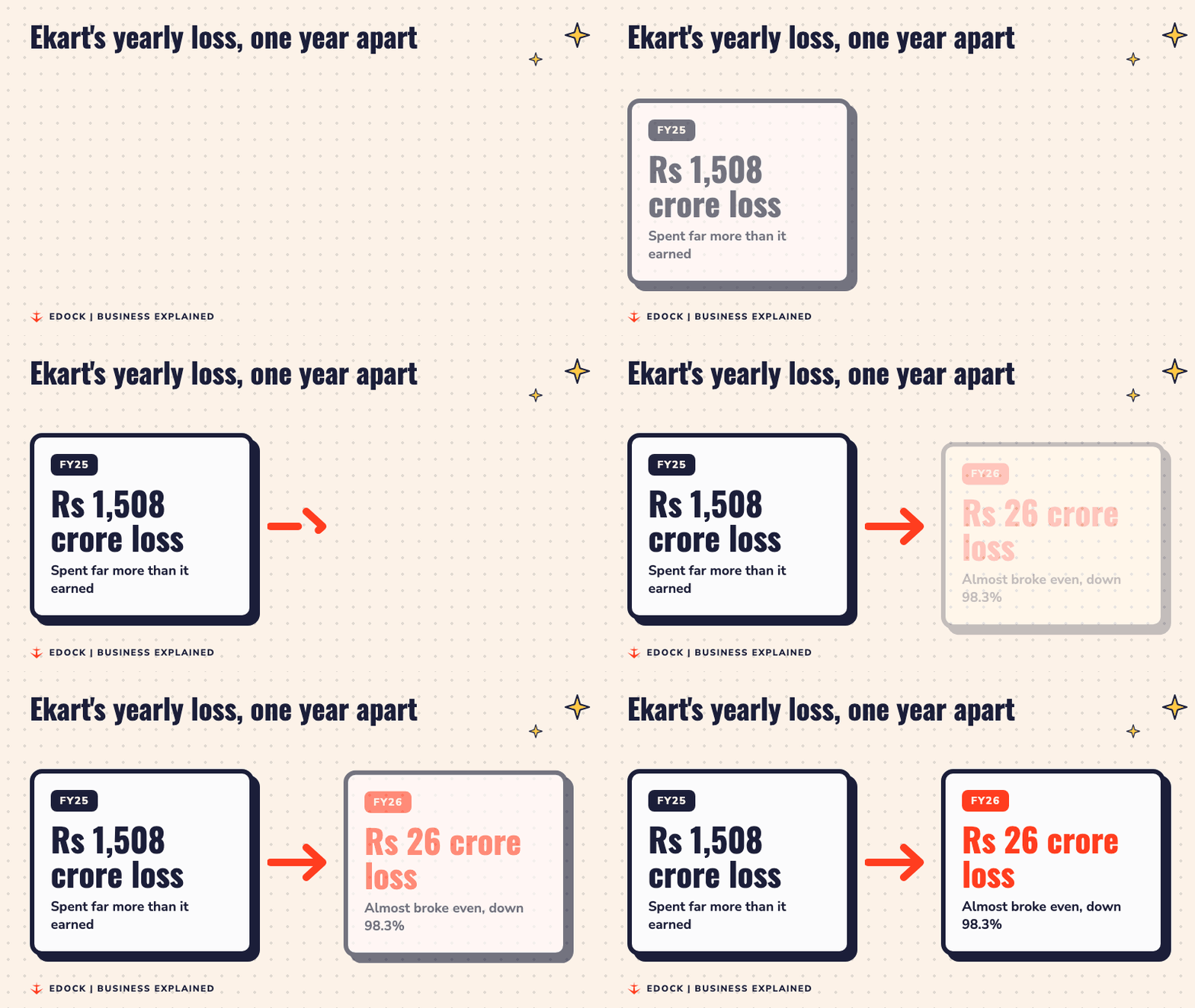
On 17 October 2026, Inc42 reported that Instakart Services, the Flipkart-owned company behind Ekart, cut its loss by 98.3% to Rs 26 crore in the year that ended in March 2026 (called FY26). A year earlier, in FY25, the loss was Rs 1,508 crore. The company nearly broke even, which means it nearly earned as much as it spent.
The strange part? Its sales went down, not up. So how do you lose almost nothing when you are earning less? Let us open the box.
First, what does Ekart even do?
When you order a phone case on Flipkart, someone has to store it, pack it, put it on a truck and bring it to your door. That whole chain is called logistics. Ekart is the team that does it.
According to Inc42, Ekart was started in 2009 by Sachin Bansal and Binny Bansal as Flipkart's in-house delivery team. In 2016 it became a separate company, so it could also deliver for Myntra, small online sellers, shops and brands that sell directly to buyers.
Today it is big. In July 2026, The Economic Times wrote that Ekart sends out more than 14,000 trucks every day and delivers to over 15,000 pin codes across India.
The money coming in went down a little
Revenue is the money a company earns from selling its service, before paying any bills. Think of it as all the cash in the samosa stall's box at the end of the day.
Ekart's revenue from customers fell 4.2% to Rs 13,194 crore in FY26, from Rs 13,779 crore the year before, Inc42 said. Flipkart itself paid Rs 9,112 crore of this, about 69%. So Ekart's biggest customer is its own parent company.
Here is how the main pieces moved:
- Moving goods (logistics, transport and shipping): Rs 6,419 crore, down 39.5%. Still the biggest piece, at roughly half of revenue.
- Collecting cash (for example, cash on delivery): Rs 510 crore, down 68%.
- Warehousing (storing other people's goods): Rs 2,212 crore, up 44%.
The moving-goods piece fell a lot, but total revenue fell only 4.2%. That means other parts of the business filled most of that gap, with warehousing among the clear winners.
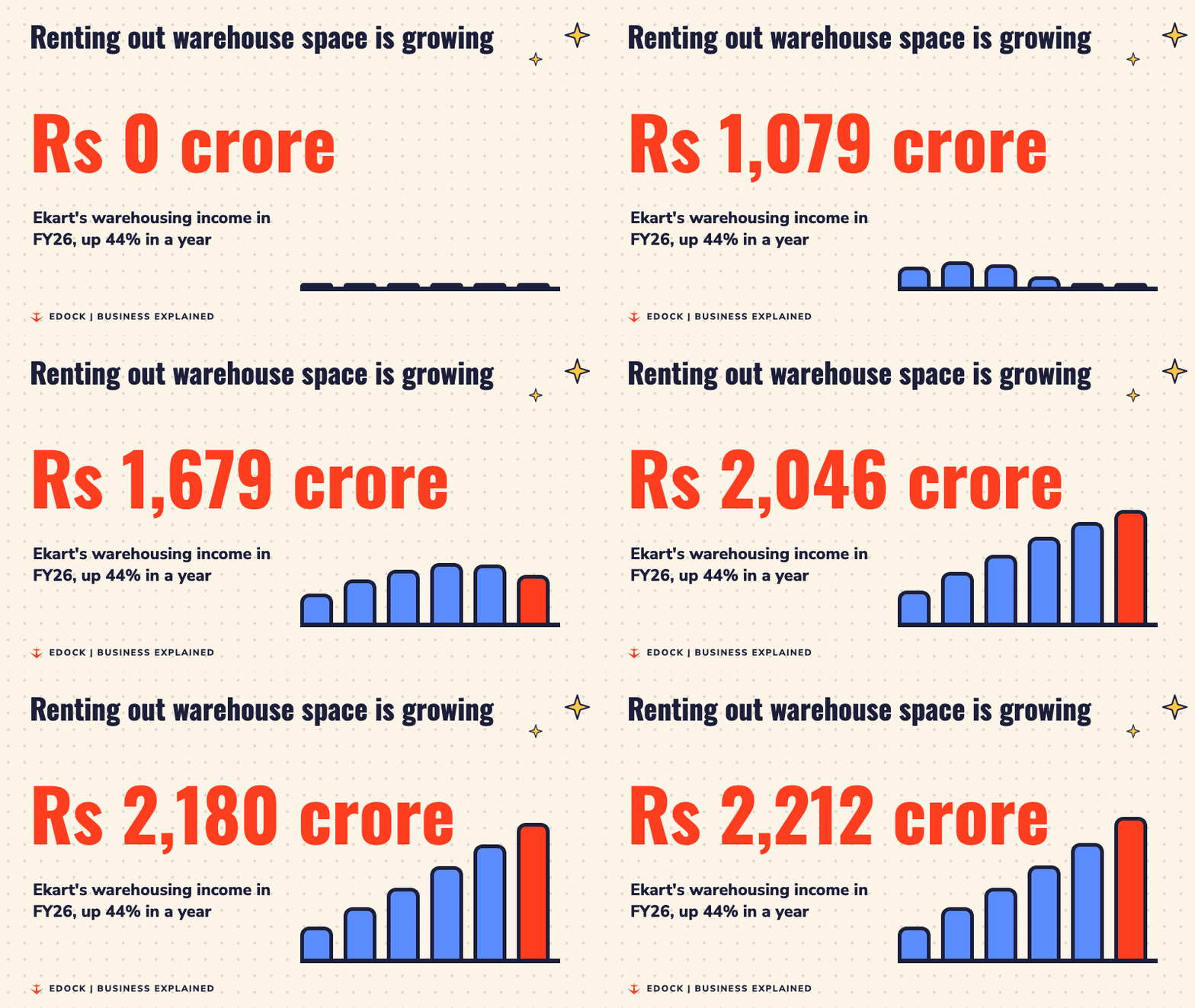
Why does warehousing matter? Renting out shelf space is like renting out a spare room. Once the building is there, each new tenant adds money without needing a new truck for every trip.
The money going out went down a lot
Expenses are all the bills a company pays: fuel, salaries, rent, repairs. Here is where Ekart's story really turns.
Its total expenses fell 13% to Rs 13,638 crore in FY26, from Rs 15,673 crore in FY25, Inc42 reported. That is about Rs 2,000 crore less in bills, while revenue dropped by only about Rs 600 crore.
The three biggest bills:
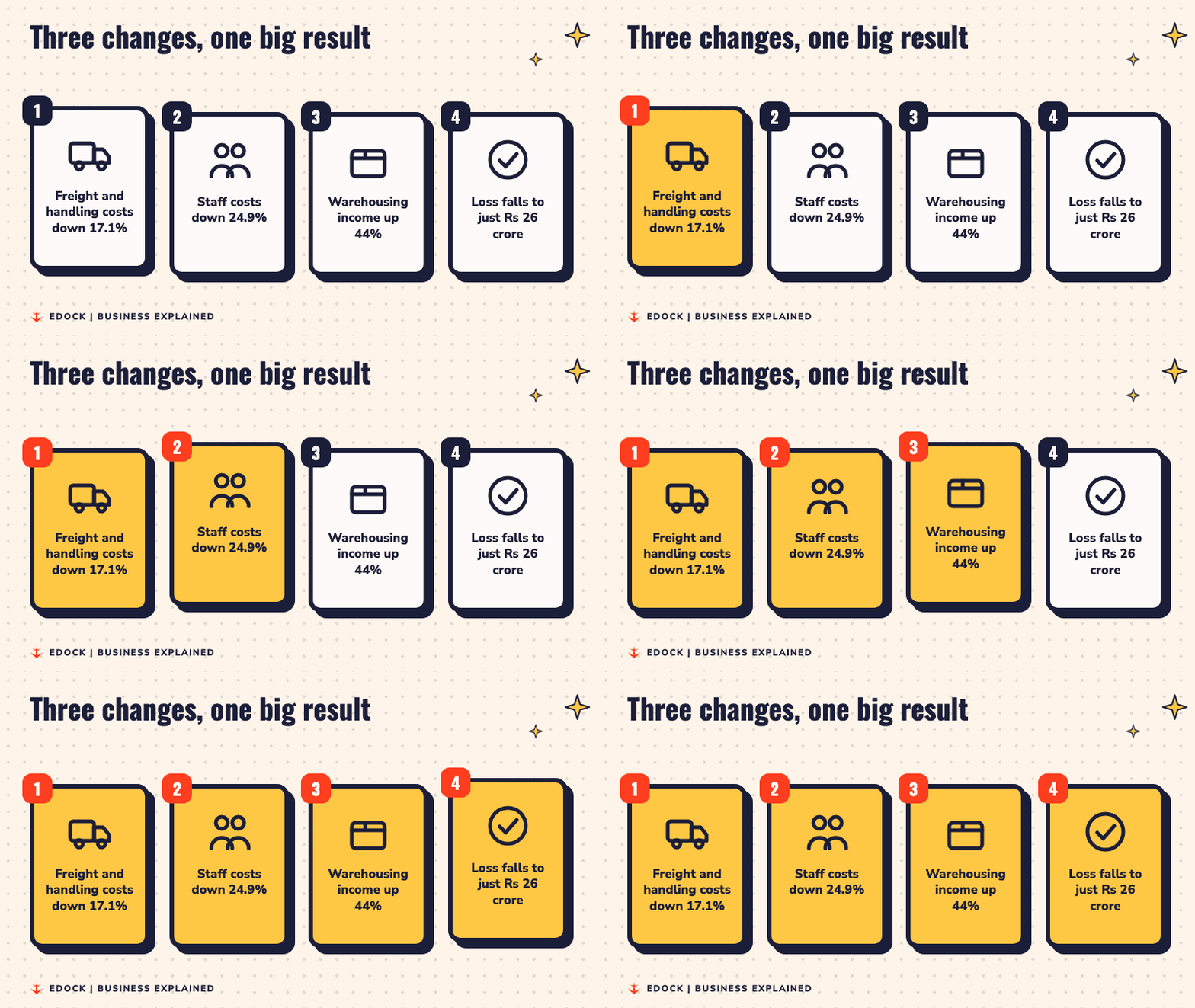
- Freight, handling and servicing (the cost of moving and handling parcels): Rs 9,191 crore, down 17.1% from Rs 11,093 crore. This one bill was 67.4% of all spending.
- Employee costs (salaries, provident fund, gratuity and more): Rs 958 crore, down 24.9% from Rs 1,275 crore.
- Depreciation and amortisation: Rs 1,456 crore, up 5% from Rs 1,387 crore.
Depreciation sounds scary, but it is simple. A new cycle loses some of its value every year as it gets older. Companies count that slow loss of value for their trucks, machines and buildings as a cost each year. That is depreciation.
Let us do the sum
Add revenue from customers to what Inc42 calls finance and other income, which was Rs 418 crore. The total income comes to Rs 13,612 crore. Now take away the expenses:
Rs 13,612 crore minus Rs 13,638 crore = minus Rs 26 crore.
That small minus is the loss. Spending was only Rs 26 crore more than earning. For a company this size, that is like a cricket team chasing 300 and falling short by a single run.
A new plan: deliver for everyone
Ekart is not waiting for Flipkart alone to fill its trucks. In July 2026, it opened its delivery network to outside businesses, including small firms, brands that sell straight to buyers and packaged goods companies, as reported by YourStory and The Economic Times.
It works through a franchise model. A franchise is when a local business owner runs an outlet under a bigger company's name and system, like a neighbourhood pizza shop that belongs to a famous chain. Ekart already has more than 300 such outlets across Surat, Mumbai, Delhi and Bengaluru, and plans to cross 1,000 outlets by the end of 2026, YourStory reported.
Outside brands can also use over 1 million square feet of Ekart's warehouse space. More space is being added in Delhi NCR, Hyderabad, Kolkata and Mumbai, so goods can sit closer to buyers and reach them faster, according to The Economic Times. Businesses also get live parcel tracking and AI tools that help read messy addresses.
What this means for you
Big numbers can hide a simple lesson. Ekart did not grow its sales in FY26. It got close to break-even mainly by spending less, while one part of the business, warehousing, grew fast.
If you ever run a stall at a college fest, the same rule works. You can sell more, or you can waste less. Ekart did the second one, and it nearly worked all the way.
The next question is whether the new franchise outlets and outside brands can make Ekart less dependent on Flipkart, which still pays for about 69% of its revenue. The FY27 numbers will tell.
Sources
- Inc42: Ekart FY26 loss narrows by 98% to Rs 26 Cr despite a fall in top line
- ET Retail: Flipkart's Ekart opens pan-India logistics network to outside businesses
- YourStory: Flipkart's supply chain arm Ekart opens logistics network to external brands
- BWTV Prime: What goes on inside a Flipkart fulfilment centre?
- Brut India: How Flipkart is integrating automation with its workforce
- Cover photo: Sealing a parcel while booking shipping on a laptop, by Meanwell Packaging, CC BY 2.0
