Drone maker Garuda Aerospace grows profit 41% to Rs 25.9 crore ahead of its IPO
The Chennai company's revenue jumped two thirds to Rs 206 crore in FY26, and drone services now earn more than drone sales.
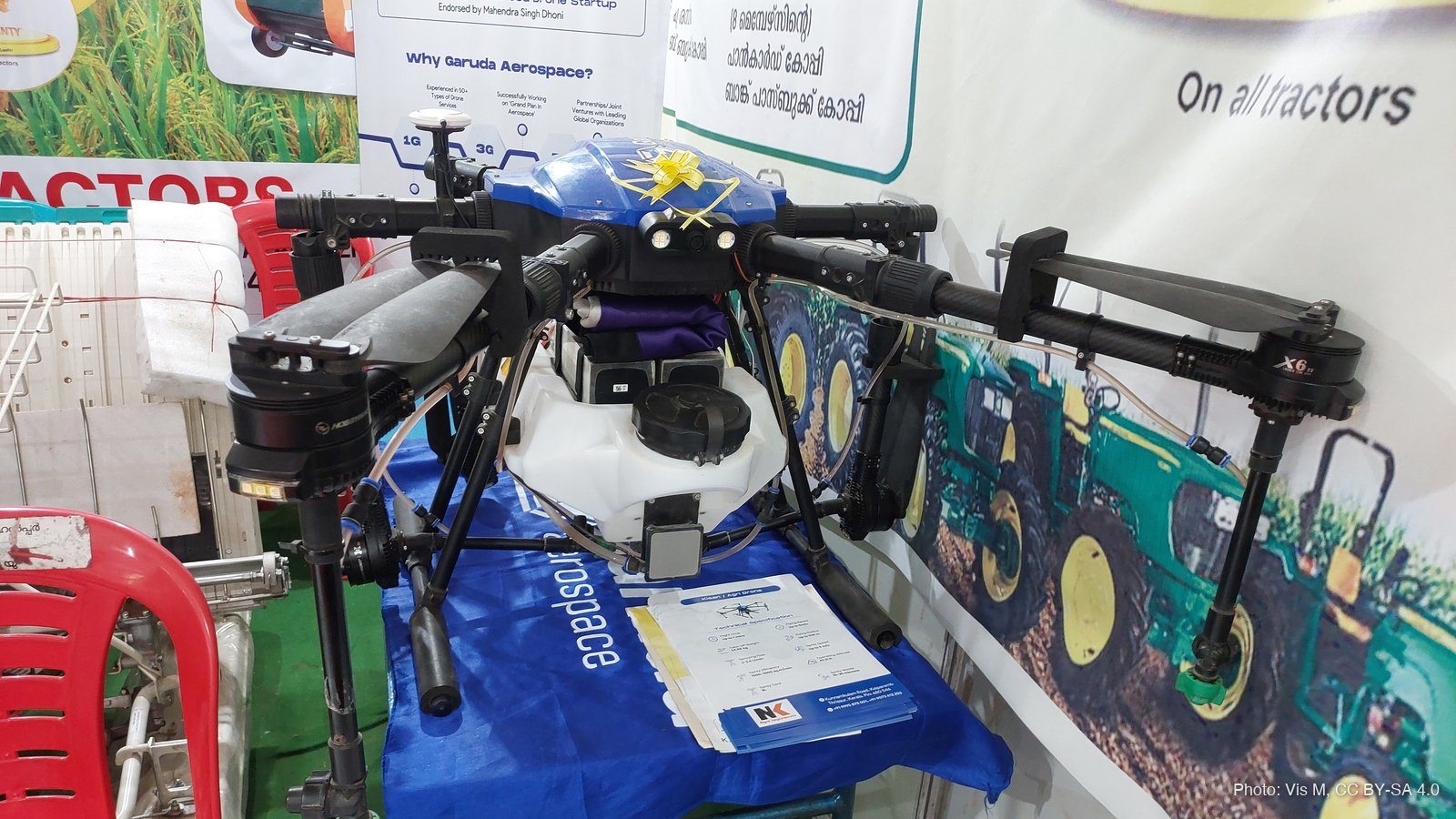
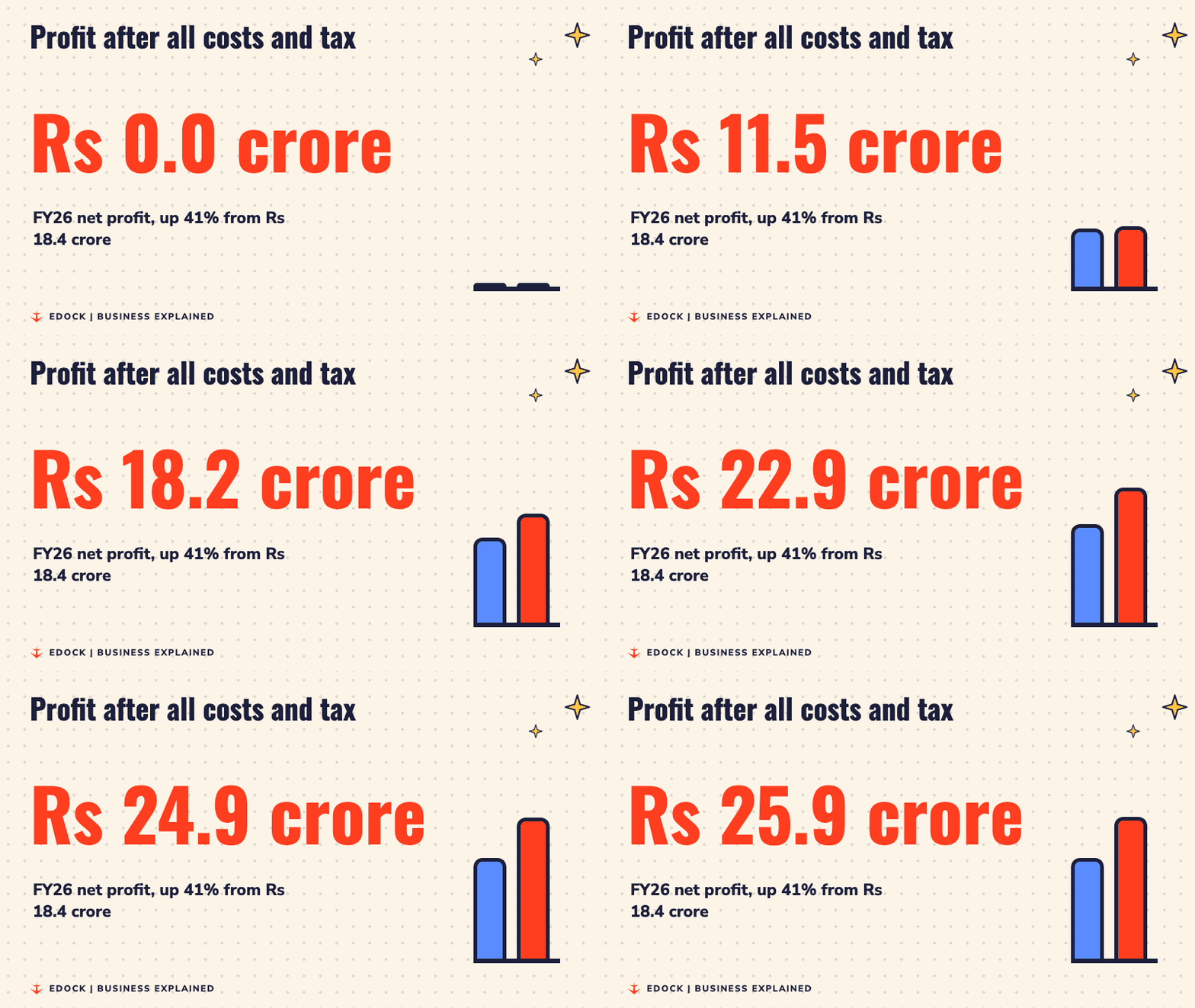
Picture a small flying machine buzzing over a paddy field, spraying the crop while the farmer watches from the edge. A Chennai company that builds and flies such drones just showed that this can be a money-making business. On 23 October 2026, Inc42 reported that Garuda Aerospace made a net profit of Rs 25.9 crore in FY26, up 41.1% from Rs 18.4 crore a year earlier.
That is not all. The same company is getting ready to sell its shares to the public for the first time. So this is a story about drones, about profit, and about what happens when a startup decides to open its doors to ordinary investors.
Who is Garuda Aerospace?
Garuda Aerospace is a drone maker based in Chennai. It designs and makes drones for farming, defence, infrastructure, mining and disaster management. It also runs a Drone-as-a-Service business and a DGCA-approved remote pilot training programme. DGCA is the government body that looks after flying in India.
Drone-as-a-Service sounds fancy, but the idea is simple. Think of a tractor on rent. A farmer who cannot afford a tractor can hire one for a day. In the same way, a farmer or a company can pay Garuda to come with its drone and its pilot, do the job, and leave. The customer pays for the work, not for the machine.
The company says it has made and sold more than 3,000 drones and has partnered with three defence public sector companies. It has raised more than USD 37 million from investors, including Venture Catalysts, We Founder Circle and former India cricketer Mahendra Singh Dhoni. Its cofounder and whole-time director is Agnishwar Jayaprakash.
The numbers, in plain words
Start with revenue. Revenue is all the money that comes in from selling things. If a samosa stall sells 200 samosas at Rs 20 each, its revenue is Rs 4,000, before paying for oil, potatoes or rent.
Garuda's revenue from operations rose 66.8% to Rs 206 crore in FY26, from Rs 123.5 crore in FY25. FY26 is the money year that ran from April 2025 to March 2026. Growth of two thirds in one year is a big jump for any company.
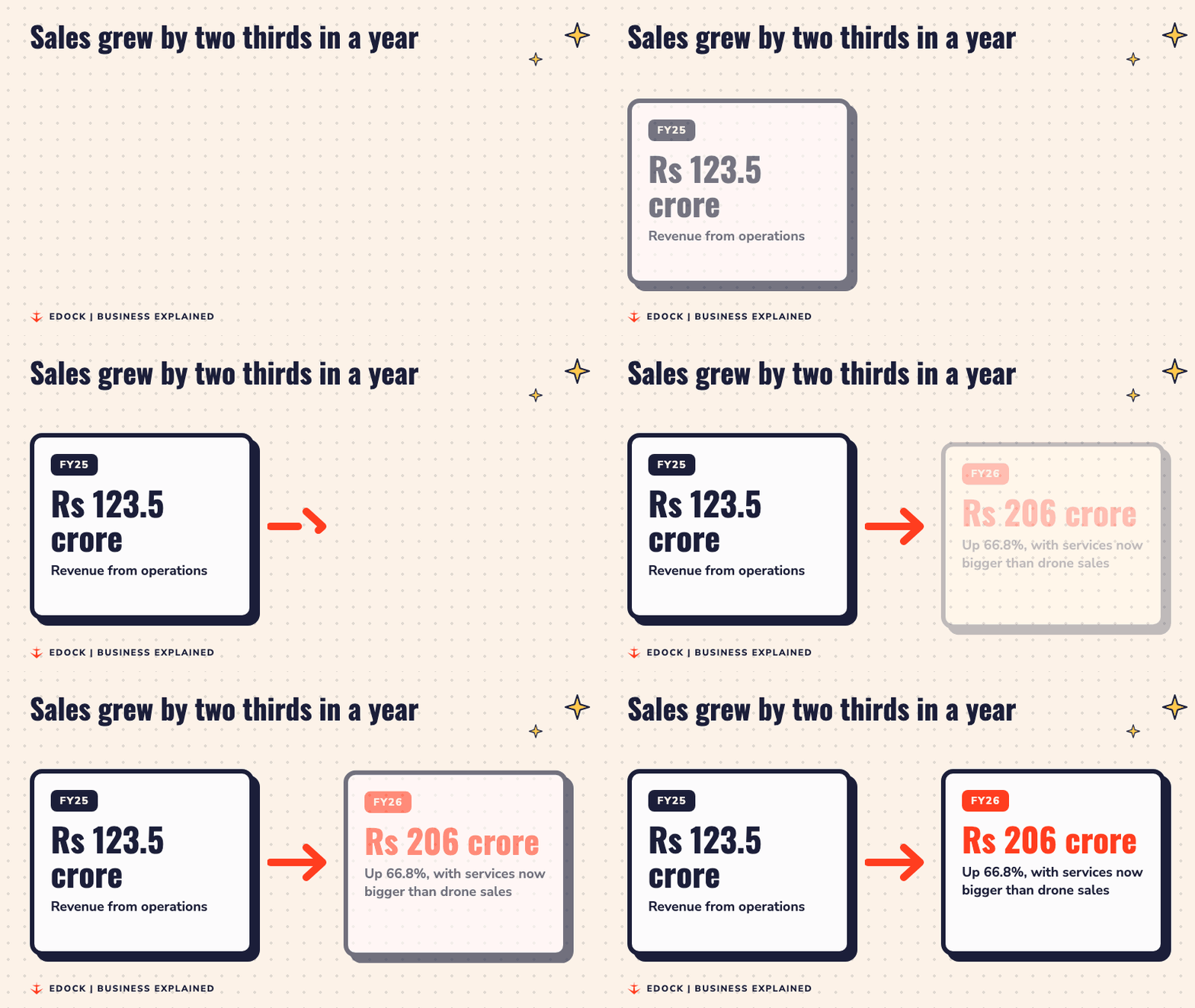
Where did that money come from? Two places:
- Selling drones and drone parts: Rs 99.4 crore.
- Selling services, such as Drone-as-a-Service work: Rs 106.5 crore.
Here is the interesting part. A year earlier, Entrackr's look at the filings shows, services brought in Rs 57.83 crore, a little less than what product sales brought in. So in FY26, services grew by 84.1% and overtook drone sales. The company now earns a little more from doing drone work than from selling drones.
So why is profit only Rs 25.9 crore?
Revenue is what comes in. Profit is what is left after paying every bill. Back to the samosa stall: if the Rs 4,000 day cost Rs 3,300 in oil, potatoes, gas and rent, the profit is Rs 700.
Garuda's total expenses rose 73.2% to Rs 172.2 crore. It also paid Rs 8.2 crore in tax. After all that, Rs 25.9 crore was left as net profit.
The biggest cost was raw materials, the parts and materials that go into each drone. That bill rose 61.5% to Rs 116.8 crore. Staff costs went down 16.7% to Rs 8 crore.
One line deserves a closer look. Garuda booked impairment losses of Rs 11.1 crore, against just Rs 6.5 lakh a year before. In simple words, an impairment is money the company now thinks it may not fully get back. Imagine lending your friend Rs 500 for a cricket bat, then realising he might only return Rs 300. You write down the Rs 200 as a likely loss, even before you are sure.
Because costs grew a bit faster than revenue, each rupee earned was slightly less profitable. Entrackr worked out that Garuda spent Rs 0.83 to earn every rupee of operating revenue in FY26, up from Rs 0.80 in FY25. Profit still grew, but costs are something to keep an eye on.
What is an IPO, and where is Garuda on that road?
Right now, Garuda is owned by its founders and a group of investors. An IPO, or initial public offering, is the first time a company sells pieces of itself to the general public. Think of friends chipping in to grow a lemonade stall. Each friend puts in some money and gets a small share of the stall, and so a small share of its future profits. An IPO does the same thing, only with thousands of people and through the stock market.
There are usually two parts to an IPO:
- Fresh issue: the company makes new shares and sells them. The money goes to the company, to grow the business.
- Offer for sale (OFS): existing investors sell some of the shares they already own. That money goes to those investors, not to the company.
Garuda took a quieter path to start. In April 2026, it filed its draft IPO papers with SEBI in private, through what is called the pre-filing route. SEBI is the market watchdog that checks a company's papers before it can sell shares to the public. SEBI approved the plan in August. Back in March, the board approved raising up to Rs 750 crore through the fresh issue. Reports say existing investors could sell shares worth up to Rs 250 crore through an offer for sale, which would take the total IPO size to about Rs 1,000 crore.
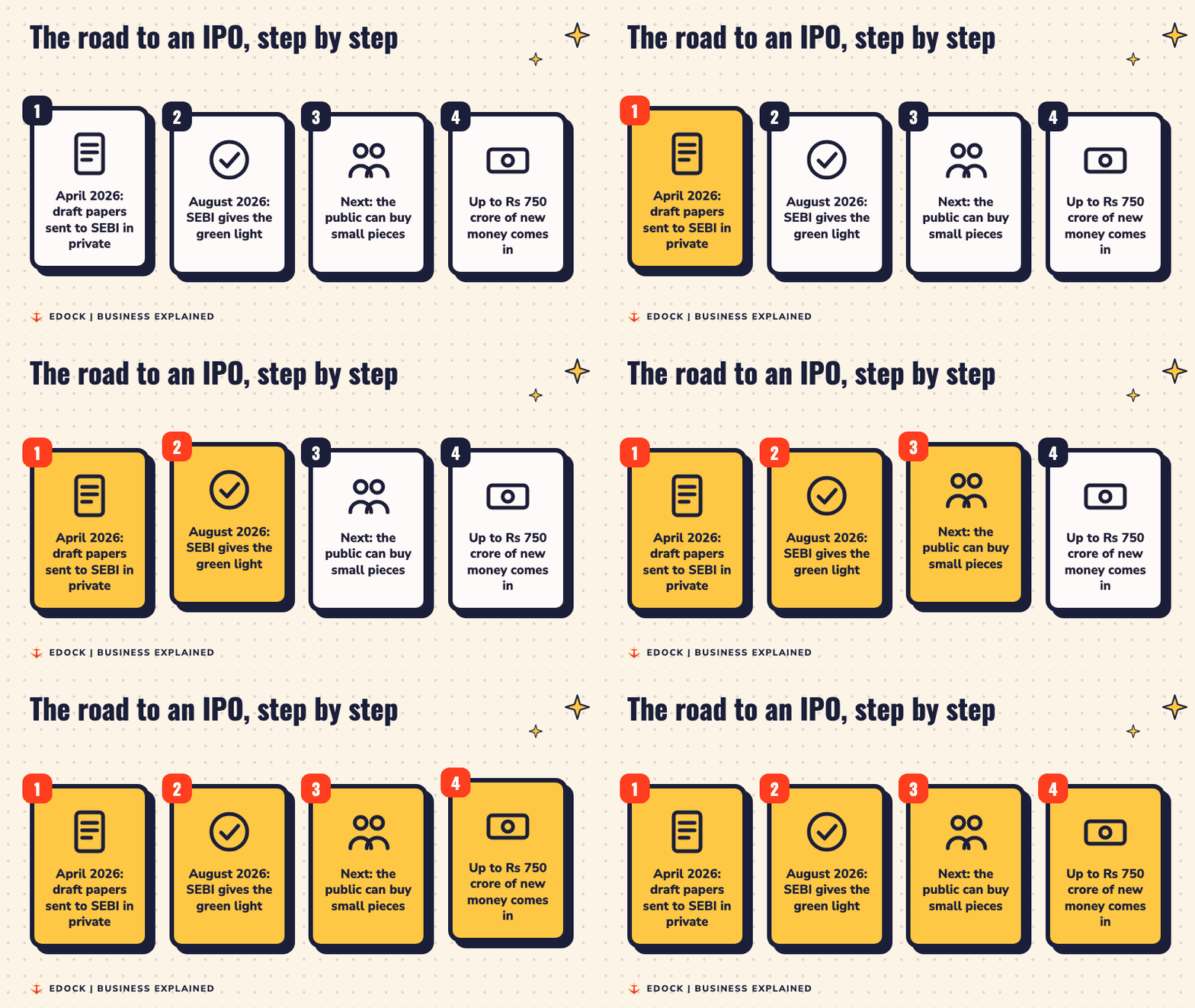
The company has not yet made its updated draft papers public. This post does not say whether anyone should buy these shares. That is a personal decision, best made after reading the official papers when they come out.
More money raised along the way
The FY26 annual report also shows that in August, Garuda's board approved a private placement of shares worth Rs 57.2 crore. A private placement means selling shares to a small, chosen group of investors instead of the public. The money is meant for growth, day to day running costs and repaying loans.
In his message to shareholders, Agnishwar Jayaprakash wrote that the company had strengthened its manufacturing, grown its Drone-as-a-Service work and invested in research made in India. He also pointed to work in artificial intelligence, autonomous flight and defence systems.
Why should a student care?
Drones are no longer just toys or wedding cameras. This one company earned more than Rs 100 crore in a year from drone services alone. It also trains drone pilots through its DGCA-approved programme, so drones are becoming a skill people can learn, not just a gadget.
The story also shows a simple lesson in money. Fast sales growth is exciting, but profit depends on how costs and unpaid bills grow alongside it. Watching revenue, costs and profit together tells the full story of any business, from a samosa stall to a drone maker on its way to the stock market.
Sources
- Inc42: IPO-bound Garuda Aerospace's FY26 profit jumps 41% to Rs 25.9 crore
- Entrackr: Garuda Aerospace's FY26 revenue jumps 67% to Rs 206 crore
- BW Disrupt: Garuda Aerospace FY26 net profit rises 41% to Rs 25.9 crore
- Garuda Aerospace on YouTube: Garuda agri drones and precision spraying
- Garuda Aerospace on YouTube: inside Garuda Aerospace
- Cover photo: Agricultural drone, Kerala 2023, by Vis M, CC BY-SA 4.0

You may republish this story under CC BY 4.0: credit Manpreet Kaur and link to this page.