DMart's sales grew almost 18%, but profit grew only 8.5%. Here is why
Version 1 of 1 saved 11 Oct 2026, 12:16 pm IST · Chain line 5
As it was first published
DMart's sales grew almost 18%, but profit grew only 8.5%. Here is why
DMart opened 15 new stores and sold ₹19,644 crore of goods in three months. So why did profit grow slowly? A simple explainer.
Picture this. On an average day from July to September, shoppers handed DMart about ₹213 crore. For rice, soap, biscuits, buckets and a lot more.
On Saturday, October 10, 2026, Avenue Supermarts, the company that runs DMart, shared its report card for those three months. The big number: it sold goods worth ₹19,644 crore. Divide that by the 92 days in July, August and September, and you get about ₹213 crore a day.
But there is a twist. Sales grew fast. Profit did not keep up. Let us see why, in simple words.
First, two words you need
Revenue (or sales) is all the money customers pay a shop. If your samosa stall sells 100 samosas at ₹10 each, your revenue is ₹1,000.
Profit is what is left after you pay for everything. Potatoes, oil, gas, the helper's pay, the rent. If all that costs ₹900, your profit is just ₹100.
Companies share these numbers every three months. Each three month block is called a quarter. July to September is the second quarter of India's money year, so people call it Q2.
The report card in one look
- Sales grew 17.8% compared with the same three months last year, up from ₹16,676 crore.
- Profit grew only 8.5%, to ₹743 crore.
- DMart opened 15 new stores, so it now has 518 stores.
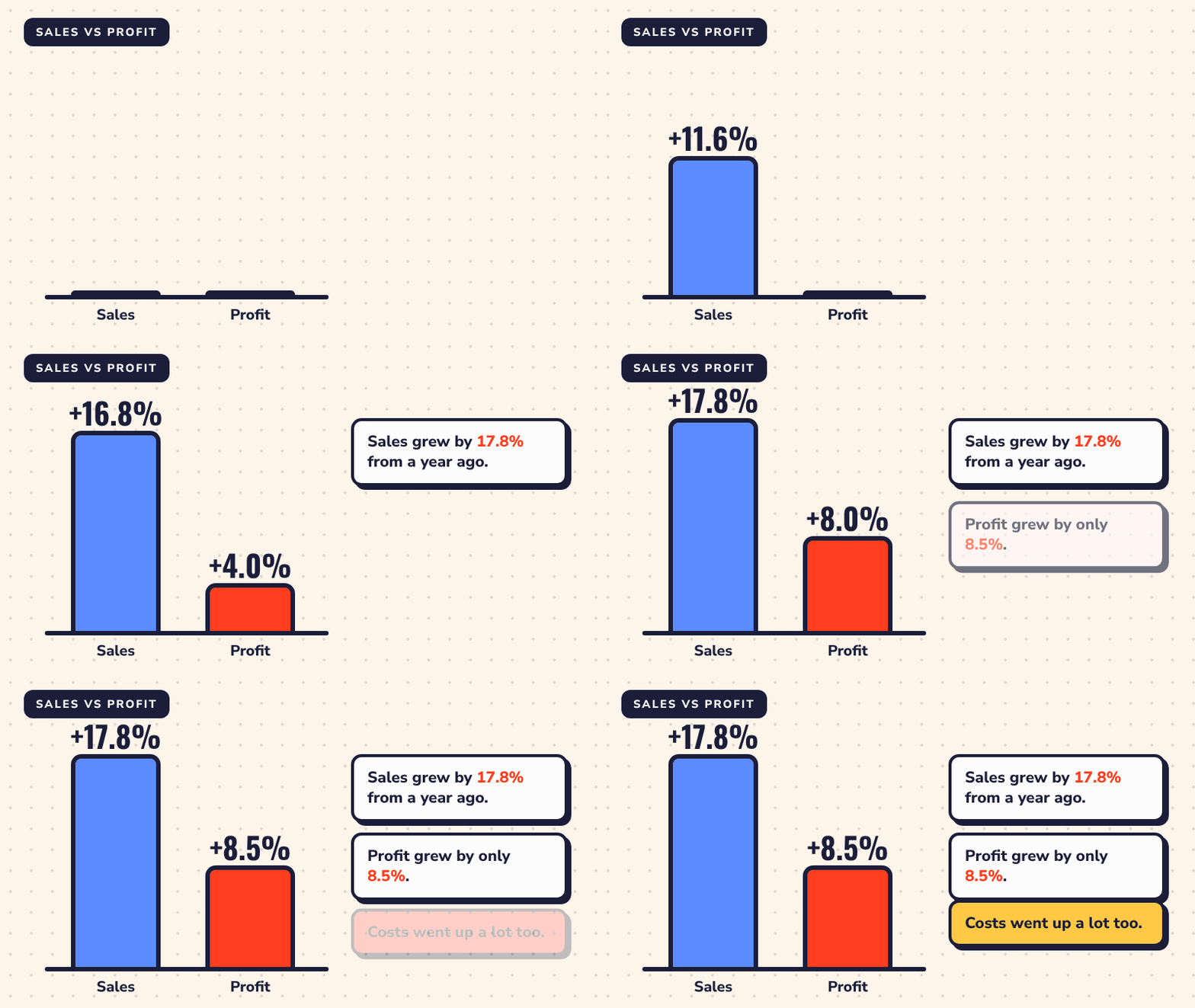
So sales grew about twice as fast as profit. That is the whole puzzle of this story.
How much does DMart keep from ₹100?
Here is a fun way to see it. There is a thing called profit margin. It tells you how much profit a company keeps from every ₹100 of sales.
DMart's profit margin this quarter was 3.8%, down from 4.1% a year ago. In plain words: when you spend ₹100 at DMart, it keeps about ₹3.80 as profit. The rest goes to the companies that made the goods, to staff, to electricity and to all the other bills.
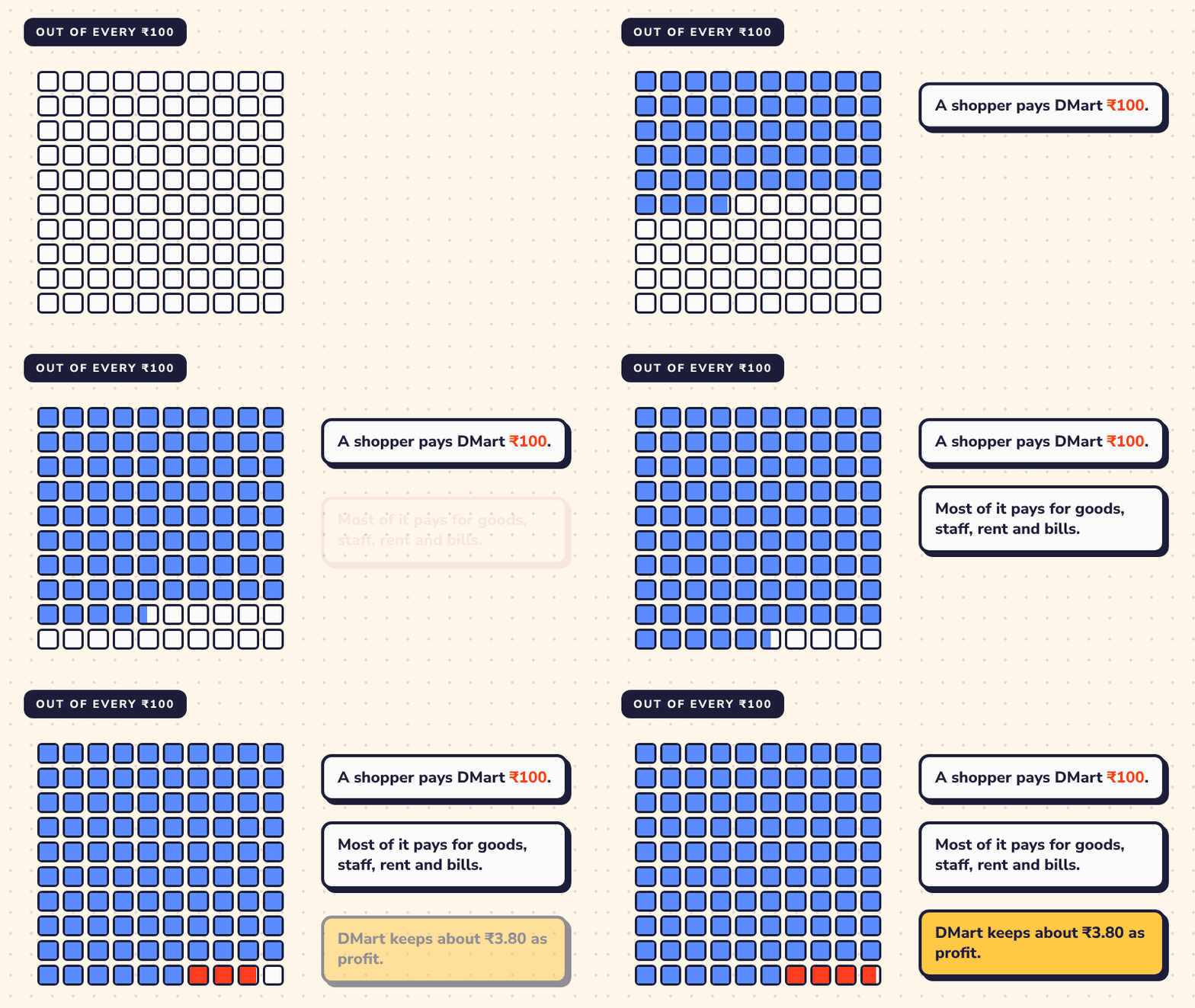
Less than ₹4 out of ₹100 sounds tiny, right? But DMart sells a huge amount. Tiny slices of a giant pizza still add up to a lot of pizza.
So why did profit grow slowly?
Because costs grew fast too. Here is what the company's numbers show, as reported by Mint:
- Staff costs went up 18.7%, to ₹447.14 crore. DMart said pay for entry level workers rose, which pushed its running costs up a little.
- Interest costs jumped 82.8%, to ₹63.90 crore. Interest is the extra money you pay when you borrow. Like paying back a friend ₹110 when you borrowed ₹100.
- Depreciation went up 25.4%, to ₹317.75 crore. Depreciation is the cost of things slowly wearing out. A cricket bat loses value every season you use it. Stores, shelves and machines do the same.
- Other costs rose 18.3%, to ₹1,091.83 crore.
New stores need new buildings, new shelves and new people. So when a shop chain grows quickly, its costs often grow quickly too.
15 new stores in three months
At the end of June, DMart had 503 stores. By the end of September, it had 518. That is 15 new stores in one quarter, or more than one new store every week.

The good news hiding in the report
Here is a word shop owners love: like-for-like growth. It means: how much more did the old stores sell? DMart counts stores that have been open for at least two years.
Why does this matter? New stores always add sales. But if your old stores are also selling more, it means shoppers are coming back more often, or filling bigger bags.
And they did. "Two years and older DMart stores grew by 9.5% during Q2 FY27 as compared to 6.8% in Q2 FY26," said Anshul Asawa, the managing director and chief executive of Avenue Supermarts. So the old stores got busier than they were a year ago.
What do people buy at DMart?
Mostly food. In the six months from April to September, food and grocery items made up 56.9% of sales. Clothes and general items like buckets, toys and bedsheets made up 23.6%. Things like soap, shampoo and detergent made up 19.5%.
DMart's big idea has a simple name: "Everyday Low Cost, Everyday Low Price". Keep your own costs low, so you can keep prices low every day, not just during a sale.
Want to see how that idea works? This explainer video breaks it down.
What about DMart's app?
DMart also has an online shop called DMart Ready. This part is still finding its feet.
From April to September 2026, DMart Ready worked in 11 cities, down from 19 a year earlier. It made a loss of ₹75.35 crore in the July to September quarter. A loss is the opposite of profit: you spent more than you earned.
It also faces tough rivals. Quick delivery apps like Blinkit and Swiggy Instamart bring groceries to your door very fast. "We are focused on driving greater operational efficiencies and strengthening overall customer experience in the cities that we currently operate in," said Vikram Dasu, who runs DMart Ready.
The big picture
So here is the story in one line. DMart is selling more than ever, and its old stores are getting busier. But running more stores costs more money, so profit grew slower than sales.
If you want a quick look at all the numbers from the results day, this short video sums them up.
Next time you stand in a long DMart billing line, remember: every packet in every trolley is part of an average ₹213 crore day.