Darjeeling's toy train joyrides earn Rs 1.41 crore from 12,000 riders in three weeks
A heritage hill railway turned festive crowds into big ticket money in October. Here is what revenue means and why tourist trains sell so well.
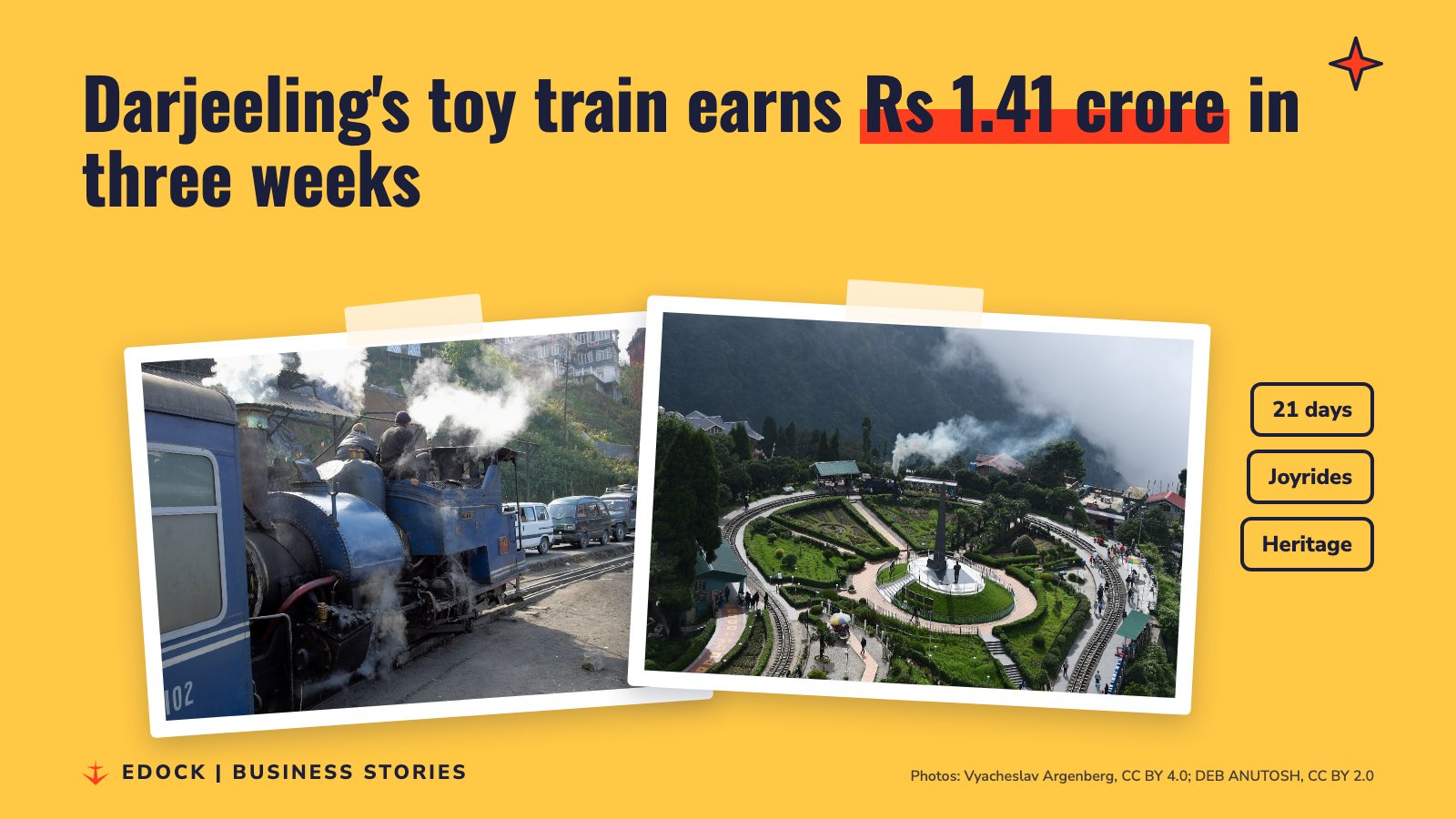
Picture a tiny blue train puffing white steam as it curls around a hill road, so close to the shops that you could almost reach out and touch them. Now picture about 12,000 people paying to ride it in just three weeks. That is what happened in Darjeeling this October.
On Thursday, 22 October 2026, an official said the Darjeeling Himalayan Railway carried around 12,000 passengers on its heritage toy train joyrides between 1 and 21 October. In the same period, it generated revenue of Rs 1.41 crore.
That is a lot of money for a train that does not even go very far. So how does a slow little train turn into a money maker? Here is the simple story.
First, what is this toy train?
The Darjeeling Himalayan Railway, or DHR, is a narrow-gauge railway in the Darjeeling hills. Narrow gauge means the two rails sit closer together than on a normal train line. Many people simply call it the toy train.
It is old. The line was built between 1879 and 1881. It runs for 88.48 kilometres, from New Jalpaiguri in the plains up to Darjeeling, which sits more than 2,200 metres high. To go up such steep hills, the track uses zigzags and loops, like a road that bends again and again on a ghat.
It is also famous around the world. The DHR is part of the Mountain Railways of India, a UNESCO World Heritage site. UNESCO calls it the first, and still the most outstanding, example of a hill passenger railway. It was put on the World Heritage List in 1999, and it is run by the DHR under the Northeast Frontier Railway.
What is a joyride?
Most trains take you from one place to another. A joyride is different. You ride for fun, for the views, and you often come back to where you started. It is like taking a ride on a Ferris wheel at a mela. Nobody needs the Ferris wheel to get home. People pay for the experience.
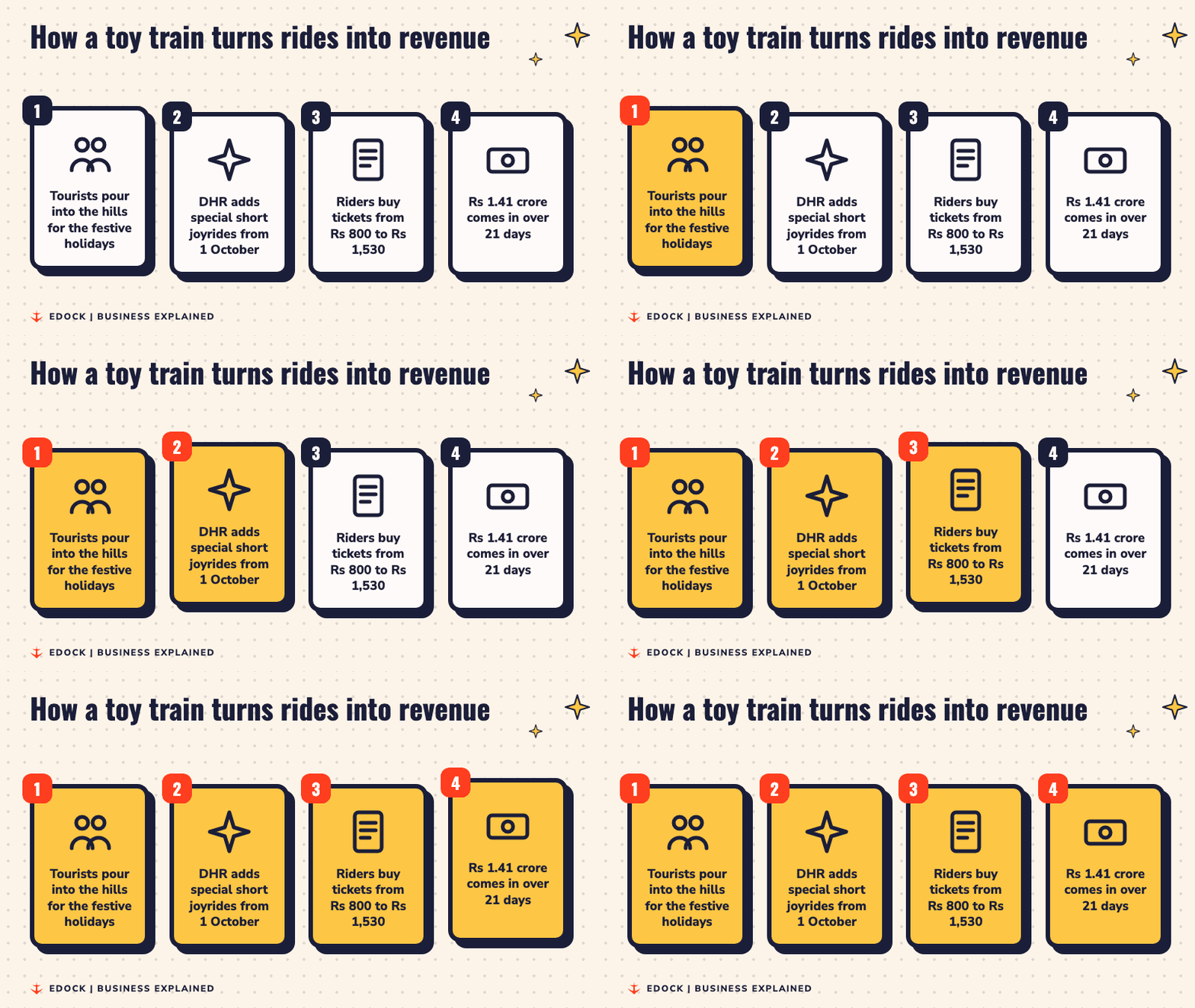
For the festive season, the DHR added special short rides. Since 1 October, it has been running special joyrides between Darjeeling and Ghum, plus two round trips between Kurseong and Mahanadi. One of those round trips is pulled by a steam engine and the other by a diesel engine.
Before the season began, reports said there would be six special services: four one-way diesel trips between Darjeeling and Ghum, and the two Kurseong to Mahanadi round trips. The steam one is called Red Panda. The diesel one is called Mukta Dhara.
What does each ride cost?
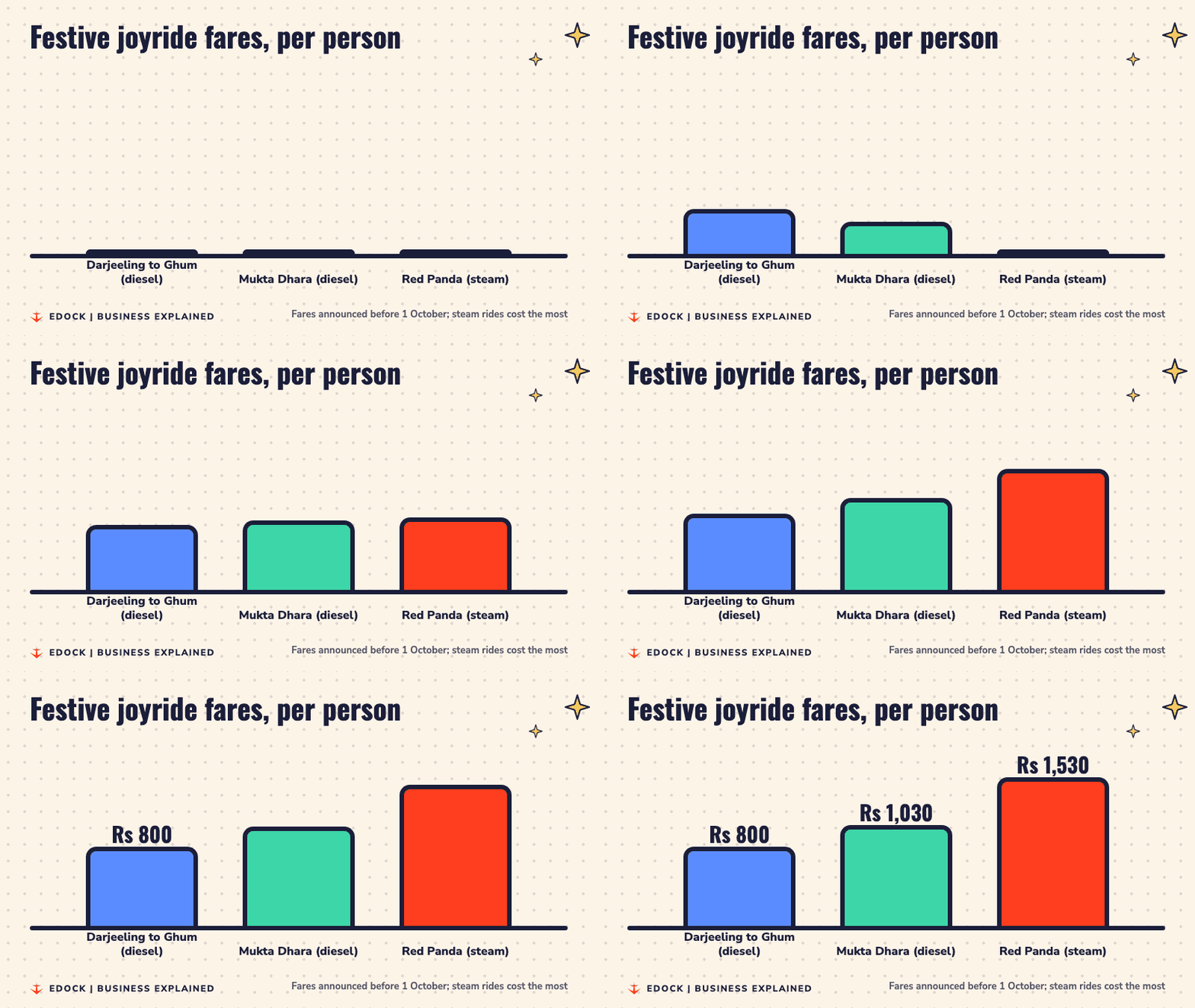
The announced fares were not cheap. The proposed fare was Rs 800 for each Darjeeling to Ghum trip. The steam Red Panda was priced at Rs 1,530, and the diesel Mukta Dhara at Rs 1,030.
Notice something? The steam ride costs the most. A steam engine, with its smoke and whistle, is a rare thing to see today. People will pay extra for something rare, the same way a special masala chai at a hill station costs more than the chai near your college.
Revenue, explained with a samosa stall
The big number here, Rs 1.41 crore, is revenue. Revenue means all the money that comes in from selling something, before paying any bills.
Think of a samosa stall. If the stall sells 200 samosas at Rs 20 each, its revenue for the day is Rs 4,000. But the owner still has to pay for potatoes, oil, flour, gas and a helper. What is left after those bills is profit.
The same goes for the toy train. Rs 1.41 crore is what came in from the rides. The reports do not say how much it cost to run the engines, pay the staff or look after the old tracks. So this is not the profit. It is the total money from tickets and rides in those three weeks.
Let us do some simple maths
Here are a few rough sums, done by us from the reported numbers. They are averages, not official figures.
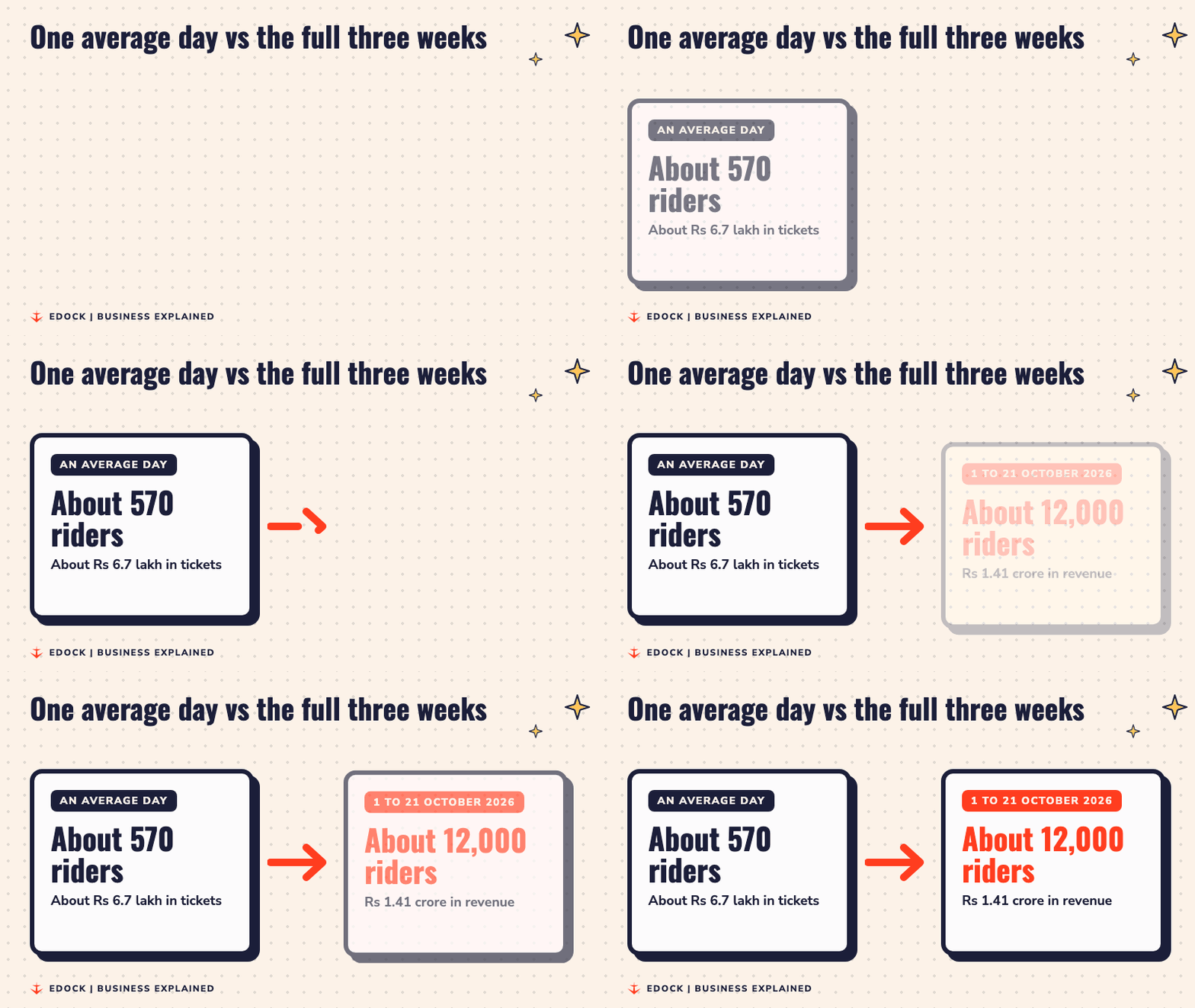
- Rs 1.41 crore is Rs 1,41,00,000. Split across 12,000 riders, that is about Rs 1,175 per rider on average.
- Over 21 days, 12,000 riders works out to about 570 riders a day.
- Rs 1.41 crore over 21 days is about Rs 6.7 lakh coming in every single day.
The average of about Rs 1,175 sits between the cheapest fare of Rs 800 and the costliest of Rs 1,530. That fits with a mix of short and long rides.
Why do tourist trains make money?
The reports also explain why the extra rides were added. The DHR brought in the special joyrides to cater to increased tourist footfall. Footfall simply means the number of people who show up. Darjeeling, often called the Queen of the Hills, draws visitors from across India and abroad.
In business, this is about demand. Demand means how many people want something at a given time. In the festive holidays, many families travel to the hills. When more people want rides, running extra trips means more tickets get sold.
Short rides also help. Outlook Traveller noted that the new services offer shorter options than the long hill journeys, which fit easily into a holiday. A tourist may not have a full day for the train, but an hour or two for a joyride is easy to plan.
And then there is the story itself. A train that is more than 140 years old and on a world heritage list is not just transport. It is an experience. Experiences are something people happily pay for, from a concert ticket to a boat ride.
Want to see the ride?
These travel videos show what a Darjeeling toy train joyride looks like. They are not about this month's numbers, but they show the ride that 12,000 people paid for.
The big takeaway
A small train on narrow tracks brought in Rs 1.41 crore in 21 days by selling something simple: a fun ride with a view. Old things, looked after well and offered at the right time, can still earn real money. The next time you see a heritage site, ask a simple question: who pays to visit it, and how much?
Sources
- The Economic Times: Darjeeling toy train joyrides, 12,000 passengers and Rs 1.41 crore
- ThePrint (PTI): DHR toy train carries 12,000 passengers, earns Rs 1.41 crore during 1 to 21 October
- Moneycontrol: Heritage railway carries 12,000 passengers in 21 days
- Outlook Traveller: Six special joyride services, fares and history
- UNESCO World Heritage Centre: Mountain Railways of India
- Cover photo: Darjeeling, India, Train of Darjeeling Himalayan Railway, by Vyacheslav Argenberg, CC BY 4.0
- Cover photo: Batasia Loop, by DEB ANUTOSH, CC BY 2.0


You may republish this story under CC BY 4.0: credit Manpreet Kaur and link to this page.