Cult.fit gets SEBI's go-ahead for its IPO with a Rs 950 crore fresh issue
Version 1 of 1 saved 17 Oct 2026, 2:27 am IST · Chain line 50
As it was first published
Cult.fit gets SEBI's go-ahead for its IPO with a Rs 950 crore fresh issue
The gym chain behind 708 fitness centres can now plan its stock market debut. Here is what an IPO is, who SEBI is, and where the money will go.
Picture this: a gym chain that started in 2016 now runs 708 fitness centres and has close to 10 lakh paying members. Now it wants ordinary people across India to be able to own a small piece of it. On 16 October 2026, news broke that Cult.fit had got the go-ahead from SEBI for its IPO. SEBI's records show it signed off on the papers on 12 October.
That sentence has two big words in it. Let us break them down, one at a time.
What is an IPO, in plain words?
Imagine a few friends start a lemonade stall together. They own the whole stall between them. One day the stall grows so big that they want money to open ten more stalls. So they cut the stall into lots of tiny slices, called shares, and offer some of those slices to anyone who wants to own a bit.
When a company does this for the very first time, it is called an IPO, short for initial public offering. "Initial" means first. "Public" means anyone can take part, not just a few rich backers. After the IPO, the shares are listed on a stock exchange, like the National Stock Exchange (NSE), where people can trade them every working day.
Until now, Cult.fit has been owned by its founders, its staff and big investors. Over the years it has raised more than $800 million from backers such as Zomato, Accel and Kalaari Capital. An IPO opens the door to everyone else.
And who is SEBI?
Think of SEBI as the umpire in a cricket match. SEBI stands for the Securities and Exchange Board of India. It watches over the share market and makes sure companies play fair with the people who put money in.
Before any company can sell shares to the public, it has to send SEBI a long rule book about itself. This is called the DRHP, or draft red herring prospectus. It lists how much money the company makes, how much it loses, who owns it, and what could go wrong. Cult.fit sent its DRHP in July 2026.
SEBI then reads it, asks questions and sends back its comments. When SEBI issues its final remarks, it is like the umpire raising a thumb: the company may now go ahead with its public issue.

Is there a deadline now?
Yes. Companies that file the normal way usually get 12 months from the date SEBI gives its final remarks to launch their IPO. So the clock has started ticking.
No date or price has been shared yet. Mint reported that there is no information on the price band or timeline so far. A price band is the range of prices, say from Rs 100 to Rs 105 a share, within which people can bid.
Cult.fit was not alone. In the same week, SEBI also cleared IPO plans of Sohan Lal Commodity Management, Eswari Global Metal Industries and Indian Gas Exchange.
How big is this IPO?
Here is where it gets interesting. The IPO has two parts, like a thali with two dishes.
Part one: fresh issue. Cult.fit will create brand new shares worth up to Rs 950 crore and sell them. This money goes into the company's own pocket.
Part two: offer for sale (OFS). Existing owners will sell up to 17.86 crore of their own shares. This money goes to those sellers, not to the company. It is like an old member of the lemonade stall selling their slice to a new friend.
Put both parts together and the full IPO could be Rs 3,500 to 4,000 crore, according to The Economic Times. The final size will only be known once the price band is set.
Who is selling?
Some early backers plan to sell part of their stake. The list includes Temasek, Accel, Tata Digital, Chiratae, Kalaari and cofounder Mukesh Bansal, who also founded the fashion app Myntra. Chiratae plans to sell up to 28.1 million shares through two funds, while Temasek will offload up to 24.7 million shares.
There is a filmi twist too. The Economic Times reported that actor Hrithik Roshan will also sell part of his stake.
What will Cult.fit do with the money?
The Rs 950 crore from the fresh issue has a shopping list. According to Inc42, it will go towards:
- Opening new gym centres.
- Paying rent and lease costs for some existing centres.
- Paying back some of its loans early.
- Opening new stores that sell only its own brands.
- Marketing, plus general company needs.
Paying back loans is a bit like clearing a big credit card bill. Less interest to pay each month means more money left for the business.
How is the business doing?
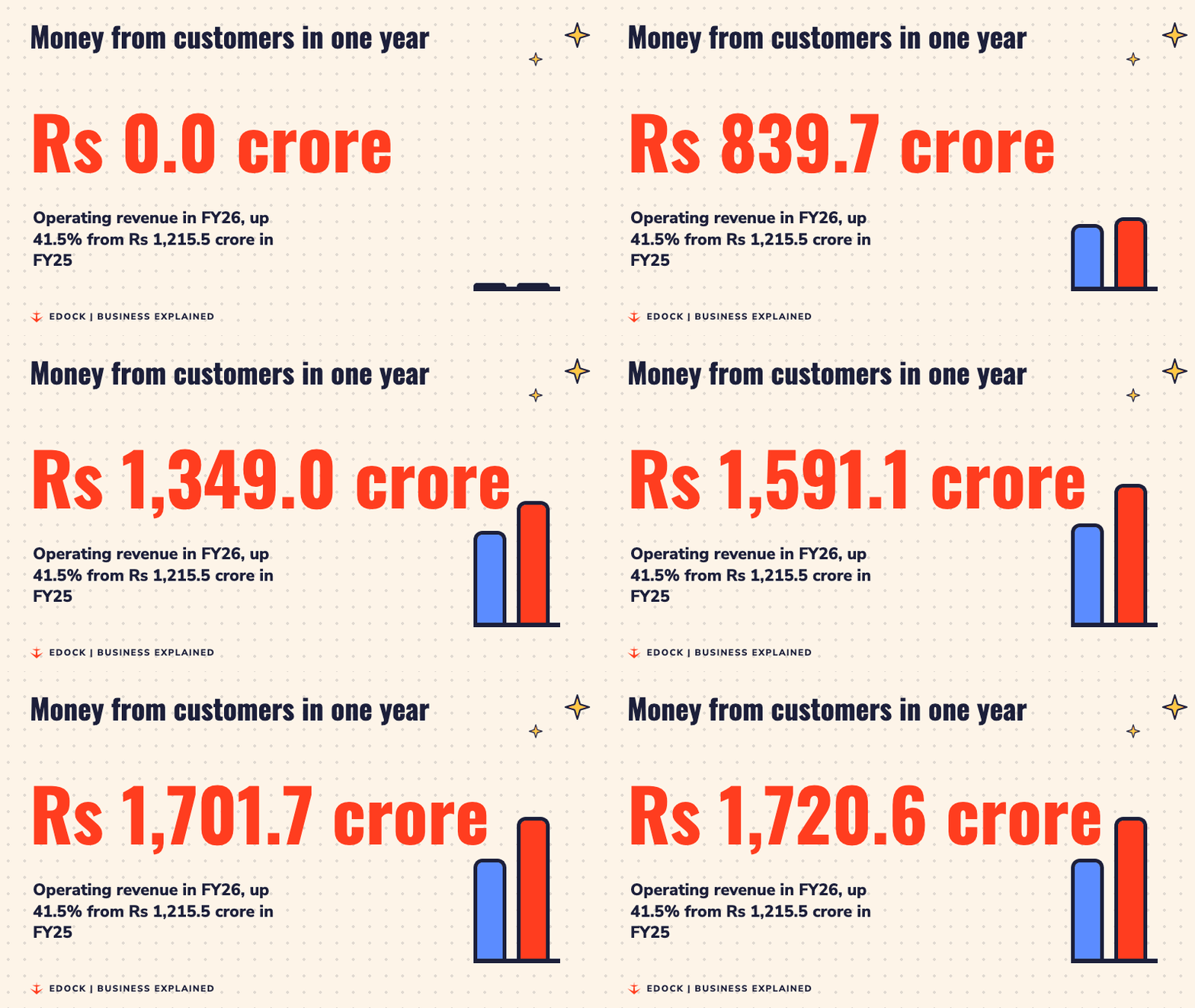
In the year that ended in March 2026 (called FY26), Cult.fit's operating revenue was Rs 1,720.6 crore, up 41.5% from Rs 1,215.5 crore the year before. Revenue is all the money that comes in from customers, before paying any bills.
But the company is still not making a profit. Its net loss, which is what is left after every single cost is paid and the bills are bigger than the income, was Rs 251.8 crore in FY26. That is smaller than the Rs 480.8 crore loss in FY25, a drop of Rs 229 crore. So the hole is shrinking, but it is still a hole.
About 70% of its revenue comes from fitness services like gym memberships and classes. The other 30% comes from selling fitness products.
Not every Cult gym is run by Cult
As of 31 March 2026, Cult.fit had 708 centres across 77 cities and more than 9.87 lakh paid members, based in its home city of Bengaluru. But only 218 of those centres are owned and run by the company itself.
The rest belong to others. 288 are run by franchise partners. A franchise is like a chai stall owner using a famous brand's name and recipe, and paying the brand a share. Another 202 are run by independent gym owners who work with Cult.fit.
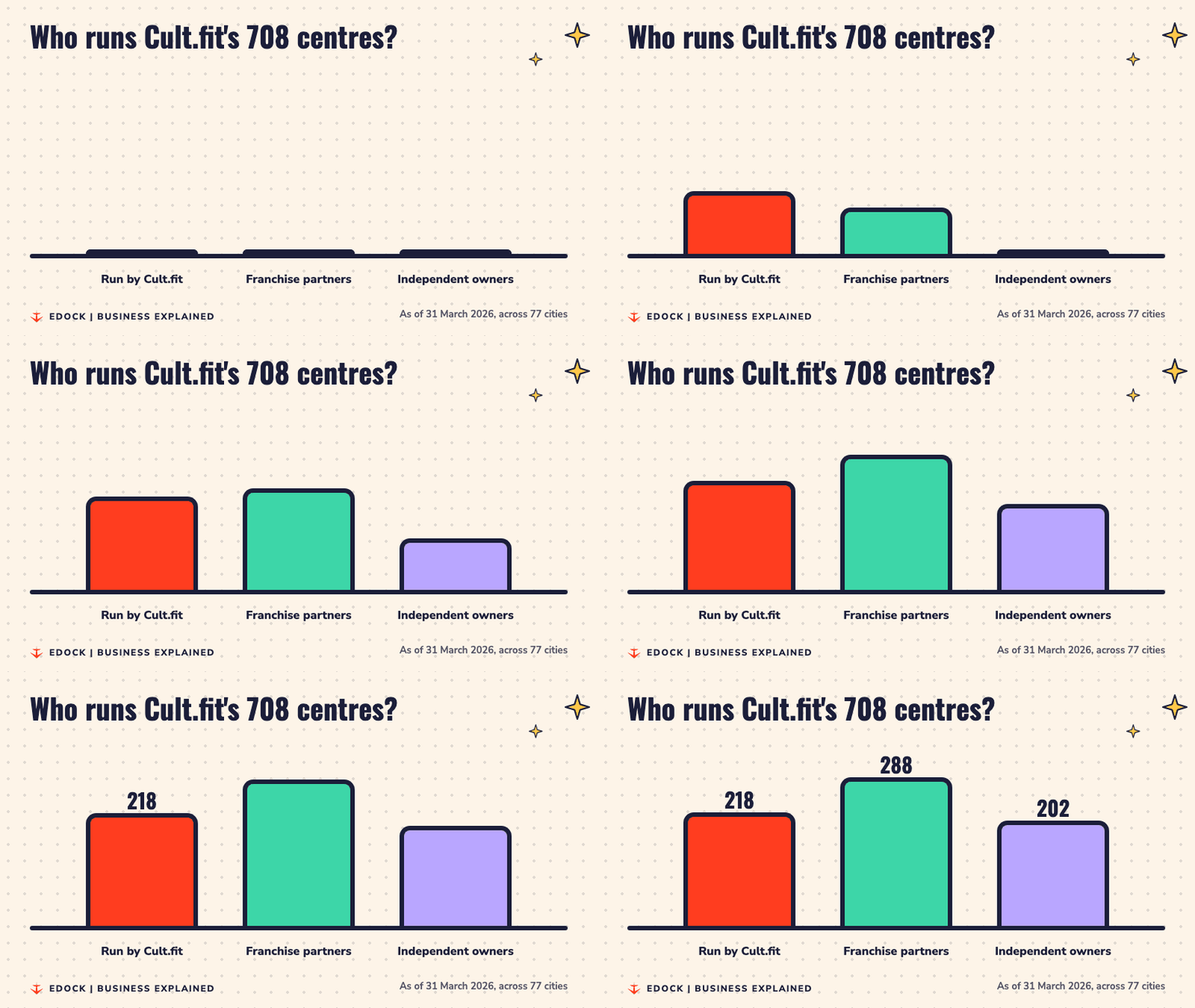
This mix lets a brand grow faster without paying for every single building and treadmill on its own.
What happens next?
Cult.fit now has to file its final papers, announce a price band and pick dates for the IPO. Five big banks, including Axis Capital, Goldman Sachs, Jefferies India, JM Financial and Morgan Stanley India, are managing the issue. Their job is a bit like event planners for a wedding: they organise the whole show.
For now, the big takeaway is simple. A gym brand many young Indians know from their phones and their neighbourhood is one step closer to the stock market. Whether that is a good idea for any one person is a choice to make carefully, with a grown-up and a trusted advisor, not a decision to rush.
Sources
- Cult.fit gets SEBI clearance for Rs 950 Cr IPO, Inc42
- Cult.fit gets Sebi nod for Rs 3,500 to 4,000 crore IPO, The Economic Times
- Cult.fit IPO alert: fitness major receives SEBI nod for proposed IPO, Mint
- SEBI clears IPO plans of Cult.fit, Sohan Lal Commodity Management and 2 others, Moneycontrol
- Cover photo: A close-up view of a set of heavy dumbbells, by Shixart1985, CC BY 2.0
