Coimbatore exporters seek relief as freight to the US almost doubles
A fridge container from Tuticorin to New York now reportedly costs nearly $10,000, up from about $5,500, as the West Asia crisis pushes ships onto longer routes.

Picture one big metal fridge box sitting on a ship at Tuticorin port in Tamil Nadu, waiting to sail to New York. Not long ago, sending it cost about $5,500. Now the same trip reportedly costs nearly $10,000. That is almost double, for the same box on the same route.
This was reported on Saturday, 24 October 2026, by The Times of India. Factory owners in the Kongu region, the industrial belt around Coimbatore, say the continuing crisis in West Asia is hurting their export trade. Their local industry body has now asked for help from the government.
Who is asking for help
The group speaking up is the Indian Chamber of Commerce and Industry (ICCI), Coimbatore chapter. A chamber of commerce is like a club of local businesses that speaks for all of them together, the way a class monitor speaks for the whole class.
The ICCI has asked FICCI, a much bigger national business group, to take its worries to the Centre (the Union government in New Delhi) and seek urgent relief. In simple words: a local club has asked a national club to knock on the government's door.
ICCI Coimbatore chapter president C Dorairaj said the disruption had hit the supply and price of raw materials made from petroleum. That raised input costs, meaning the cost of the things a factory needs before it can make anything, and reduced how much some units could produce.
First, what is freight?
Freight is the fee for moving goods from one place to another. Think of it as the bus ticket for a box. When a Coimbatore factory sells pumps or other goods to a buyer in America, someone has to pay for that box to cross the ocean.
The box in the story is a 40-foot reefer container. A reefer is a refrigerated container, basically a giant fridge on a ship. It keeps perishable cargo, things like food that can spoil, cold during a long trip.

How big are the price jumps?
Exporters shared two routes as examples, according to the same report:
- Tuticorin to New York: a 40-foot reefer container went from around $5,500 to nearly $10,000. That is about $4,500 more per box.
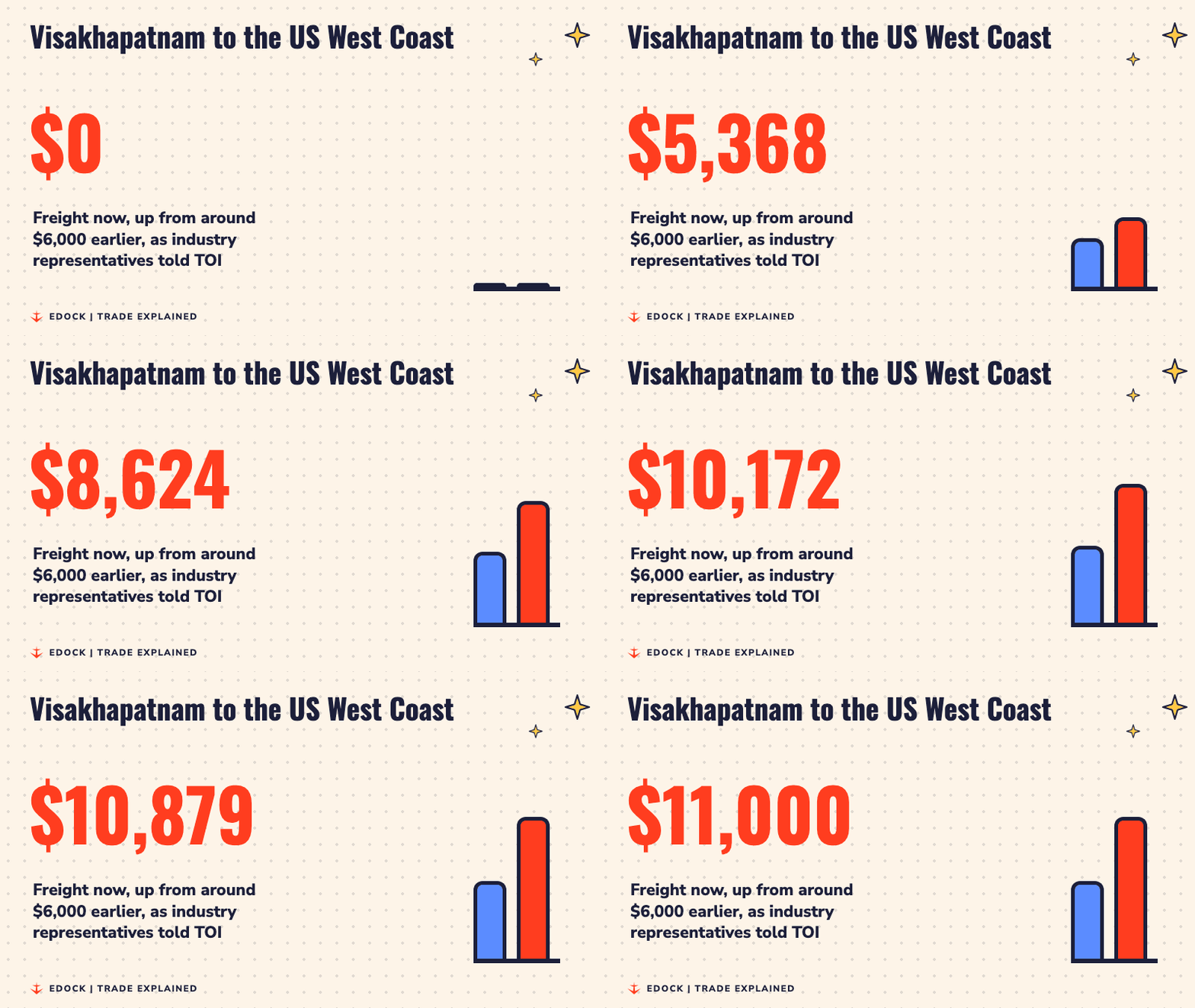
- Visakhapatnam to the US West Coast, including Los Angeles: freight went from around $6,000 to $11,000. That is $5,000 more per box, or roughly 83% higher.
K V Karthik of the Indian Pump Manufacturers Association said container shortages, freight rates that are three times higher, and transit times nobody can predict were making it hard for exporters to deliver on time.
Why are ships charging more?
The report says the crisis has led to vessel diversions, longer sailing routes and crowding at other ports. When a ship has to take a longer road, it takes more days, and fewer boxes can make the trip each month. It is like an auto driver who has to take a long detour because the main road is blocked. The fare goes up.
The government has also acknowledged longer sailing routes, crowding at the ports where cargo changes ships, and extra charges linked to the conflict, industry representatives said. Marine insurance, which is the cover a shipper pays for in case the goods are lost or damaged at sea, has also become costlier.
This is not only a Coimbatore problem. A report by the brokerage firm Jefferies says global container freight rates have risen 130% since February 2026, from around $2,000 to $2,500 in February to roughly $4,000 to $4,500 in October.
Jefferies called the possible return of shipping lines to the Suez Canal a key thing to watch. The Suez Canal is a shortcut between Asia and Europe. If ships start using it again, the extra space eaten up by longer routes could be released, which could ease rates, Maritime Gateway wrote.
Why this squeezes a small exporter
Imagine a samosa seller who has promised a school canteen 500 samosas a day at a fixed price for the whole month. Suddenly, cooking oil doubles in price. The seller cannot change the deal, so the extra cost comes straight out of the profit. That profit, the gap between the selling price and all the costs, is called the margin.
Exporters face something similar. Higher ocean freight cuts margins for exporters who cannot pass the extra cost on to their buyers, as Maritime Gateway points out. Exporters also need more working capital, which is the everyday cash a business needs to keep running, like the money a shopkeeper keeps aside to restock shelves before customers pay.
Industry representatives warned that a long disruption could lead to order cancellations, loss of customer confidence, weaker competitiveness against other countries and buyers putting off new orders.
The surprise charges
Exporters also complained about unexpected charges added on top of agreed freight rates by shipping agents, consolidation agents and NVOCC operators. An NVOCC is a company that books space on ships and resells it without owning any ships, a bit like a travel agent who sells bus seats.
If there is a fight over these charges, the delivery papers can be held back and the cargo can get stuck at the destination port. Then more bills pile up: demurrage (a late fee for keeping a container too long, like a library fine for an overdue book), storage rent at the port and fees to keep reefer boxes plugged in so they stay cold.
This Business Standard explainer from March 2026 shows how the West Asia conflict first started to hurt Indian exporters, and an earlier government relief plan.
What the industry wants
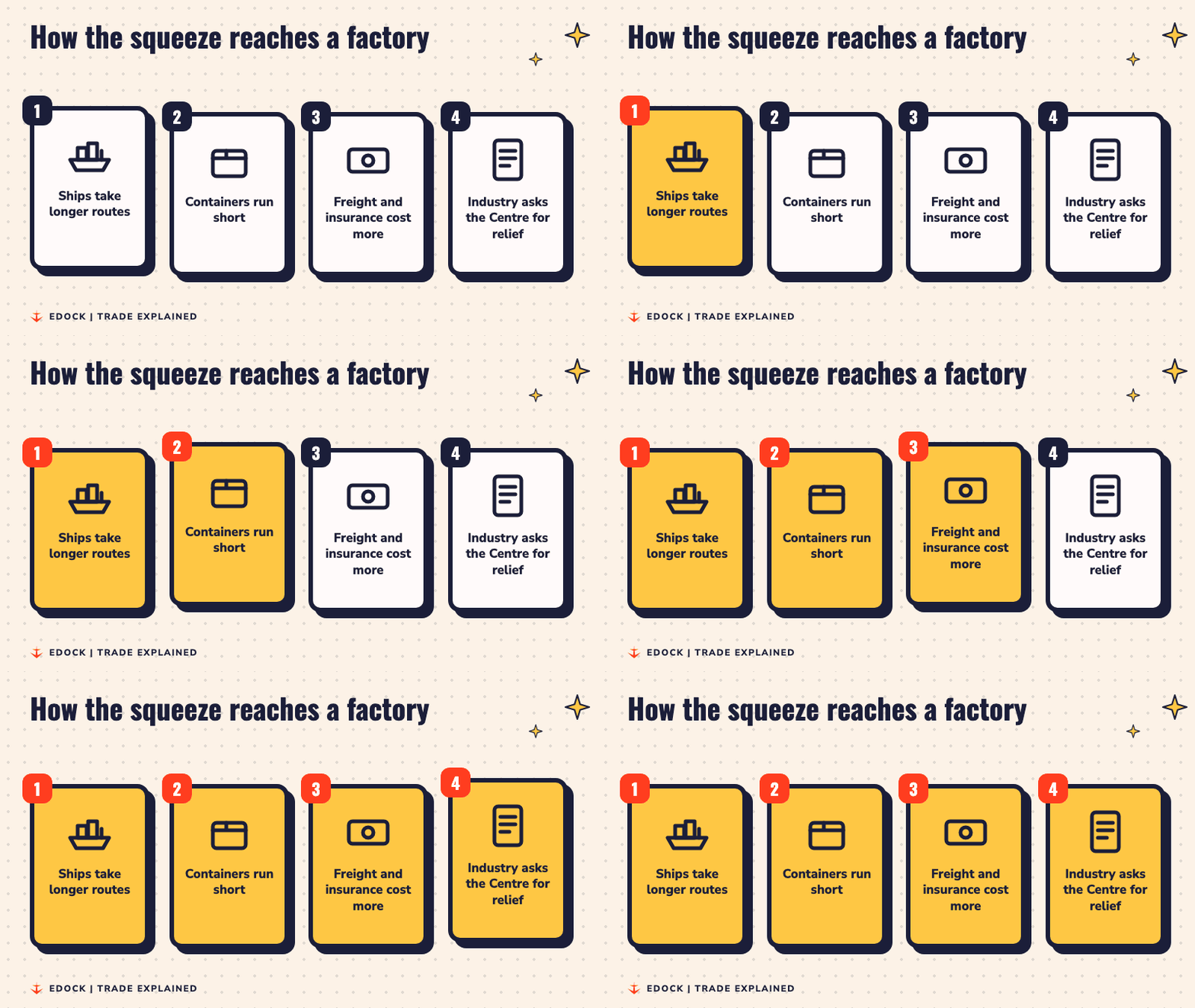
The ICCI's wish list, as reported, includes:
- More containers available for exporters.
- Fairer freight rates and rules on extra charges.
- Closer watch on logistics middlemen.
- A pan-India system where exporters can file complaints and get them sorted.
- Priority handling for reefer and perishable cargo.
- Relief from charges caused by the disruption.
- More time to repay export loans, and stronger export support.
What happens next
The ball is now with FICCI and the Union government. What happens next depends on how the Centre responds, and on whether shipping routes return to normal. For now, a fridge box from Tuticorin still costs close to double what it did not long ago, and Coimbatore's exporters are counting every dollar.
Sources
- The Times of India: West Asia crisis hits Kongu region's export trade; Coimbatore industry seeks relief
- Urban Acres: Coimbatore exporters face cost surge as West Asia crisis disrupts shipping
- Firstpost: Global container freight rates surge 130% amid West Asia tensions
- Maritime Gateway: Global container freight rates up 130% since February, Jefferies
- Wikipedia: Suez Canal
- Cover photo: Container cranes at the Vallarpadam terminal in Kochi, by Bharat S Raj, CC BY-SA 3.0

You may republish this story under CC BY 4.0: credit Arshdeep Singh and link to this page.