Coders, not cargo: India earned $53.39 billion extra from services in three months
Version 1 of 1 saved 31 Oct 2026, 10:15 am IST · Chain line 330
As it was first published
Coders, not cargo: India earned $53.39 billion extra from services in three months
RBI data from 30 October shows India sold far more IT, business and other services abroad than it bought between July and September 2026.
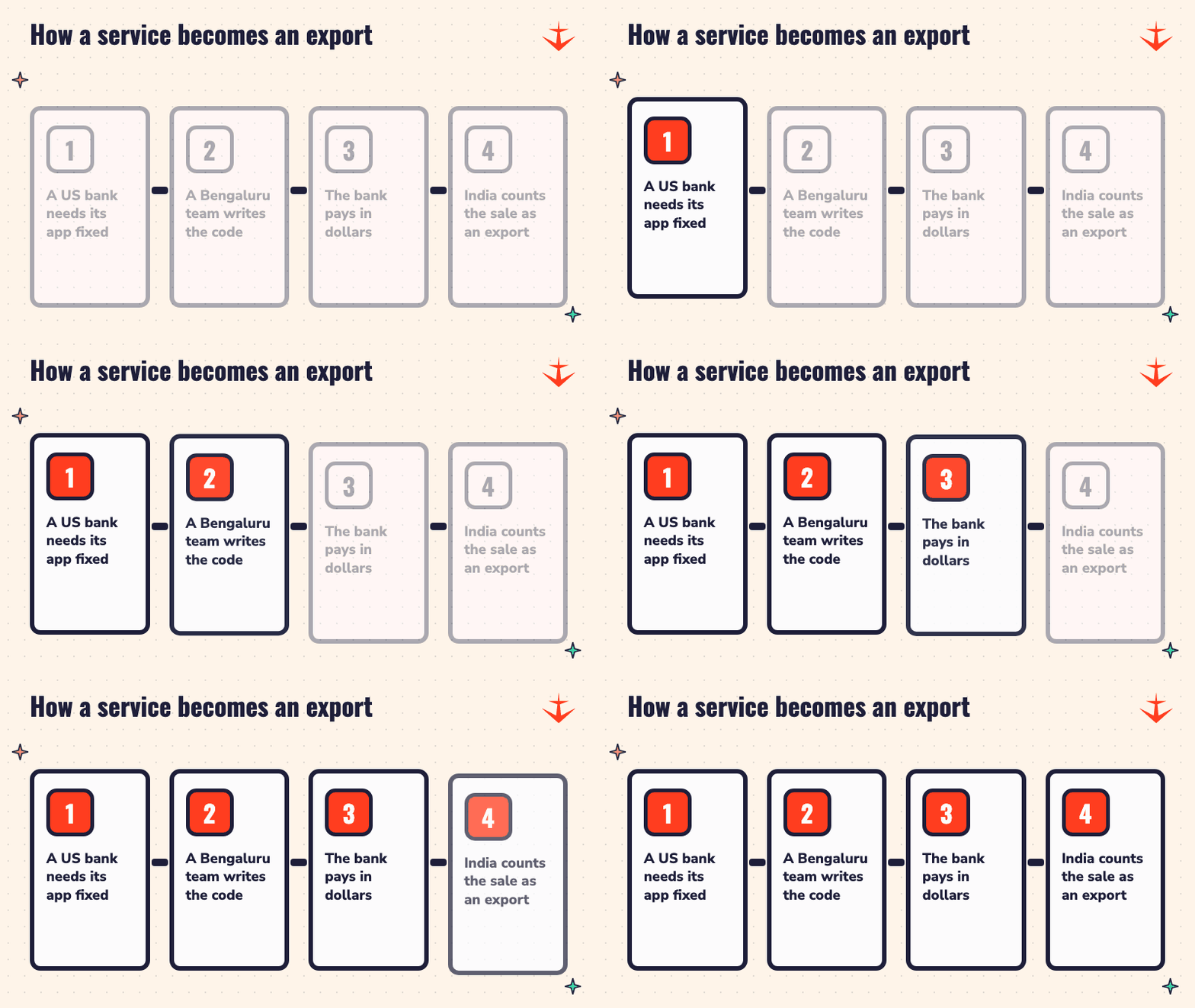
Picture a software engineer in Bengaluru fixing a bug in an American bank's app. No truck leaves a factory. No ship sails. Yet India has just made a sale to another country. In the three months from July to September 2026, sales like this brought India $113.03 billion, while India paid other countries $59.64 billion for services. The gap, called a surplus, was $53.39 billion. The numbers come from Reserve Bank of India (RBI) data released on Friday, 30 October 2026.
That is a lot of money earned without moving a single box. Here is what this means, and why it matters to anyone thinking about a career in tech, finance or business support.
How can you export something you cannot touch?
Most people think of exports as boxes: rice, cars, phones loaded onto ships. But a country can also sell work. When an Indian team writes code for a company in the US, answers its customer calls, checks its accounts or designs its next product, the money paid for that work counts as an export. This kind of work is called a service.
It also works the other way. When an Indian company pays a US company for cloud storage, or an Indian family pays a foreign hotel on holiday, money leaves the country. That is a services import.
The surplus is what is left when you take imports away from exports. Think of it like pocket money. If you earn Rs 100 from tutoring and spend Rs 40 on snacks, your surplus is Rs 60. The country's services surplus works the same way, only in billions of dollars.
The three months, one by one
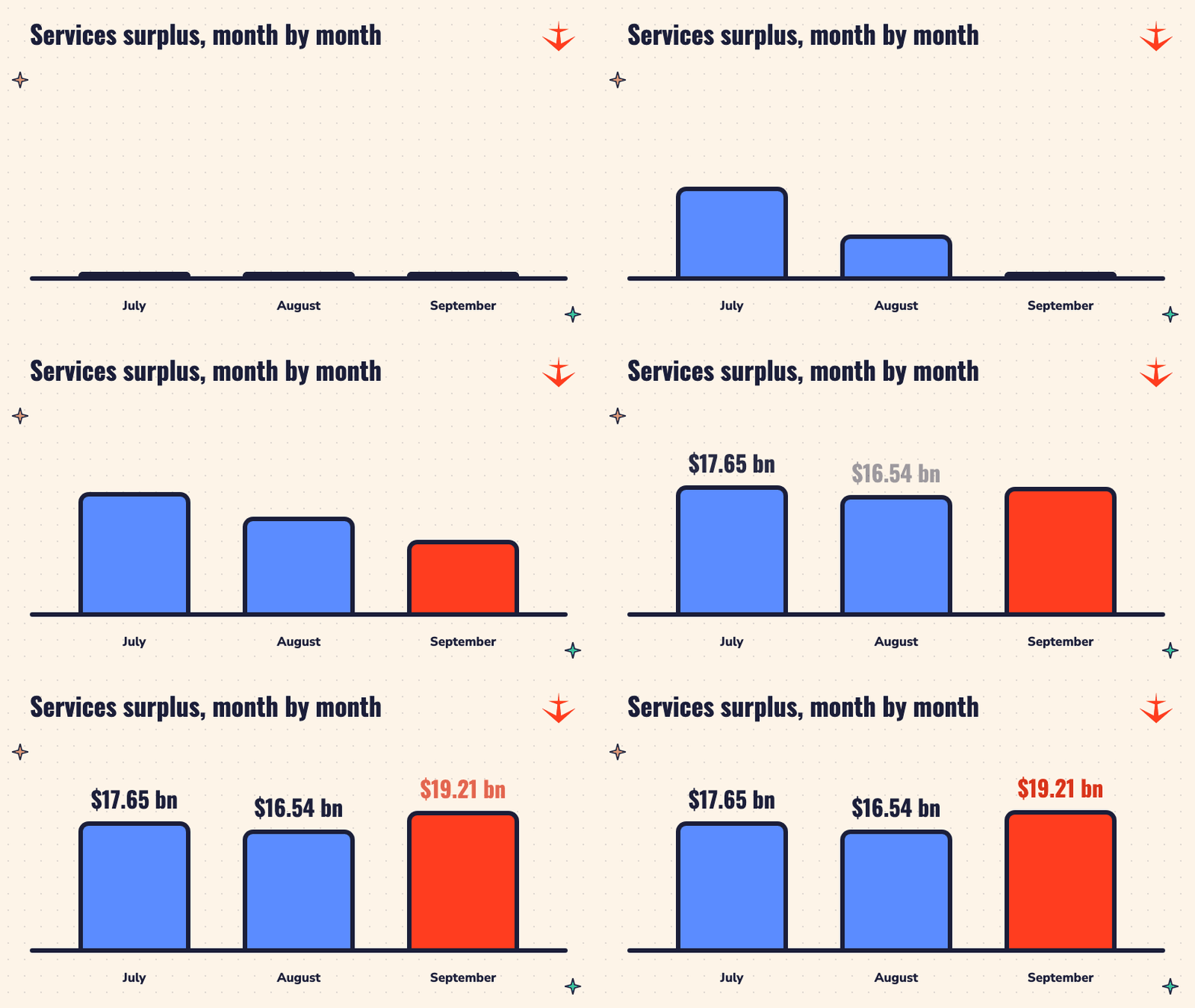
The monthly figures show the surplus in each month. It was $17.65 billion in July and $16.54 billion in August. September was the best month of the three, at $19.21 billion.
In September alone, India earned $39.31 billion by selling services, 7.2% more than in September 2025. It paid $20.10 billion for services bought from abroad, 12.6% more than a year earlier. So in September, spending on foreign services grew faster than earnings.
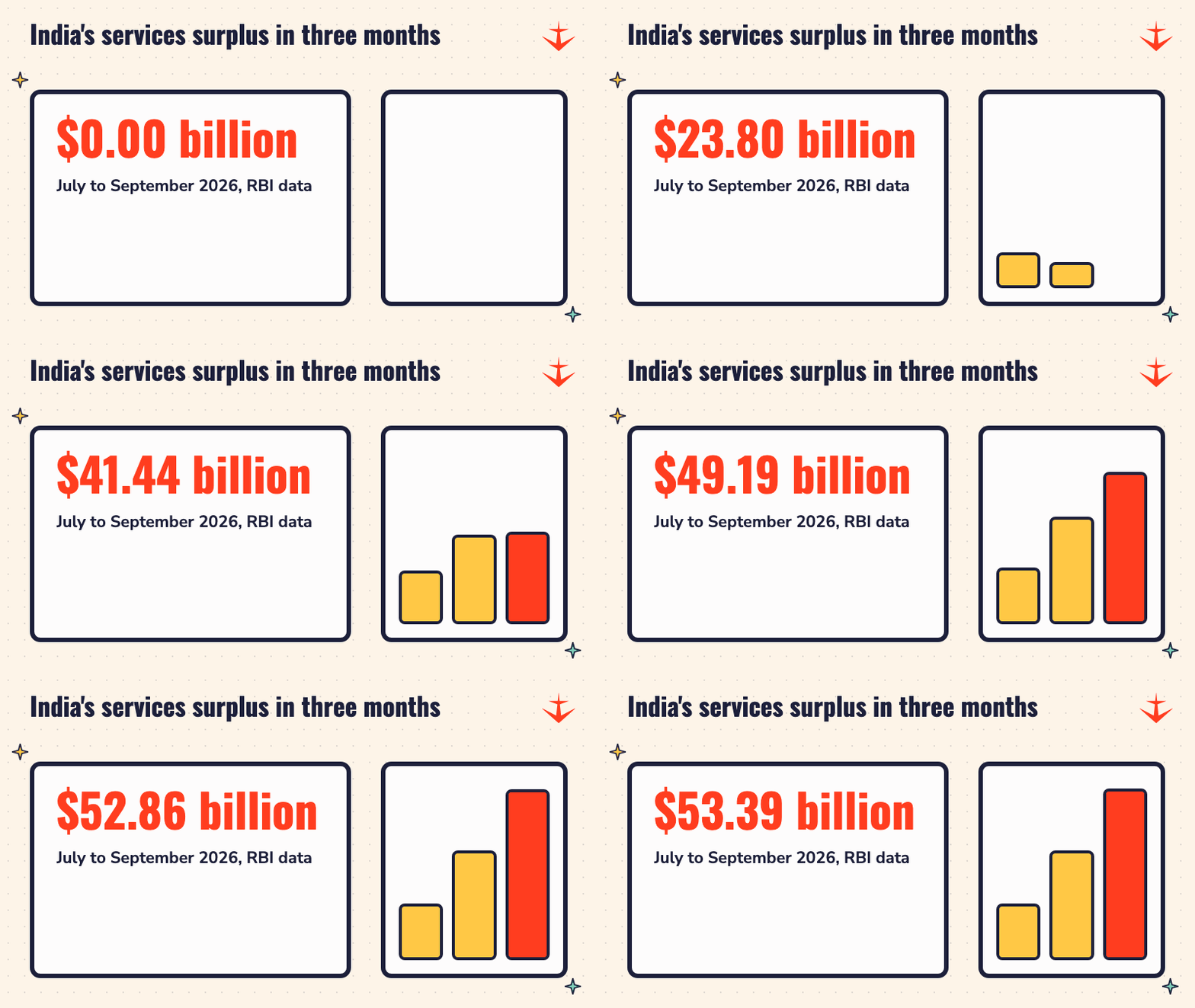
Add the three months together and the surplus comes to $53.39 billion. That is higher than the $51.6 billion of April to June, so the surplus grew from one quarter to the next.
A first guess and a final count
On 15 October, the Commerce Ministry's early estimate put the value of services sold abroad in September at $36.35 billion. The RBI's figure, out about two weeks later, is $39.31 billion.
Early numbers are like guessing a team's final score after the first few overs. The RBI counts more carefully later. Even its July to September numbers are still marked "provisional", which means they can be changed again when fuller data comes in.
Why does this money matter so much?
India buys far more goods from the world than it sells. Crude oil and many other goods arrive by ship and plane. In April to June 2026, the gap between goods bought and goods sold abroad, called the merchandise trade deficit, was $86.1 billion, up from $68.9 billion a year earlier. ThePrint's report says the gap rose sharply amid the West Asia conflict.
Services fill a big part of this hole. In those same three months, the services surplus was $51.6 billion. That covered about 60% of the goods gap. Money sent home by Indians working abroad helped too, at $42.9 billion for the quarter.
In the end, India's current account deficit was only $4.2 billion, or 0.5% of GDP. The current account is like a family's monthly account book with the rest of the world: all money earned from abroad on one side, all money paid out on the other. GDP is the total value of everything the country produces. A deficit of 0.5% of GDP is small, a bit like a family earning Rs 1,000 and overspending by just Rs 5.
Without the services surplus of $51.6 billion, the hole would have been about $55.8 billion instead of $4.2 billion.
Who actually does this work?
A large share comes from tech. The RBI said in its April to June report that services sales abroad rose in computer services, other business services and transport compared with a year earlier.
India's tech industry is huge. According to industry estimates listed on Wikipedia, it earned about $246 billion from exports in the year to March 2026 and employed about 5.95 million people directly.
Then there are global capability centres, or GCCs. These are offices that big foreign companies set up in India to do their own work, from IT support to finance and research. Think of a US retailer running its own tech team in Hyderabad instead of hiring an outside firm. India had about 1,700 GCCs employing 1.9 million people in 2025, and their number is projected to reach up to 2,200 by 2030.
The same page notes another push. With higher US fees on H-1B work visas from 2025, building up GCCs became one way for Indian IT firms to keep serving big foreign clients. In simple words, more of the work gets done from India.
This Mint video shows how GCCs in India are moving from back-office tasks to bigger roles:
What should young Indians take from this?
GCCs sit in cities like Bengaluru, Pune, Hyderabad, Noida, Gurgaon, Chennai and Navi Mumbai, as per the same Wikipedia page. Coders, accountants, designers, analysts and support staff all feed into the services number.
There is one thing to watch. In September, Indian spending on foreign services grew by 12.6%, while earnings grew by 7.2%. If spending keeps rising faster than earnings for long, the surplus could shrink. For now, July to September is the best quarter of this financial year so far.
This older Moneycontrol video decodes trade data and explains why services have become such a big part of India's trade story:
So the next time someone says India only buys from the world, remember the coder in Bengaluru. Every bug fixed for a foreign client is a small sale, and three months of such sales just left India $53.39 billion ahead.
Sources
- Reserve Bank of India: Monthly data on India's international trade in services for September 2026 (30 October 2026)
- The Economic Times: Services trade surplus rises to $53.39 billion in Q2
- ThePrint (PTI): India's current account deficit widens to USD 4.2 billion in Q1, RBI data
- Telangana Today: India's total exports rise 10.99% to $80.75 billion in September
- Wikipedia: Information technology in India
- Wikipedia: Global capability centre
- Cover photo: Library building at the Infosys campus in Mysore, by L'Astorina, CC BY 4.0
