Cleartrip's sales grew 21% in FY26, but its loss grew 28% to Rs 805 crore
Flipkart's travel app spent Rs 897.5 crore on discounts against Rs 198.3 crore of revenue. Here is why more sales can still mean a bigger loss.

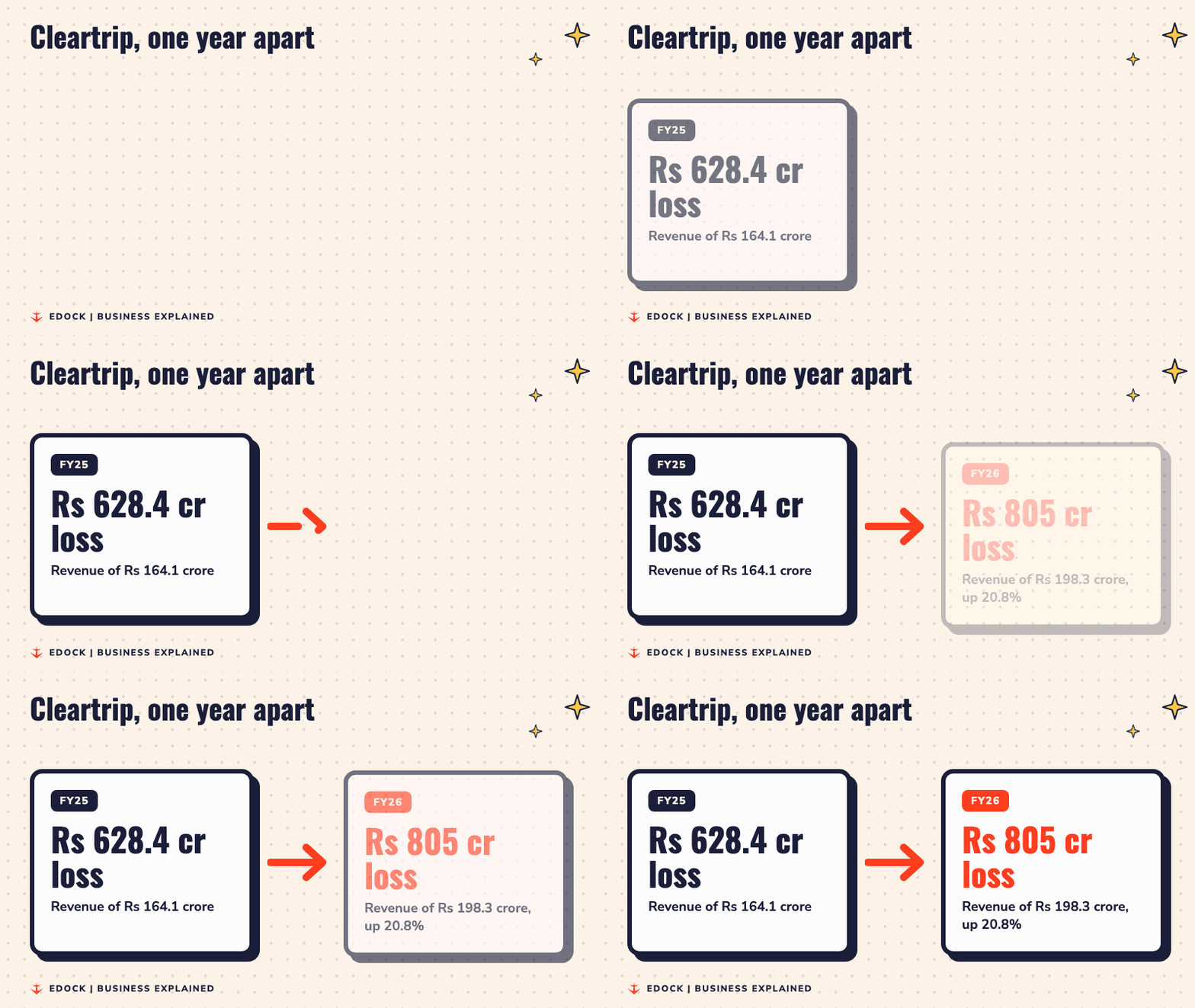
Picture a samosa stall that sells more samosas every month, yet the owner goes home with less money each night. That is roughly what happened at Cleartrip, the travel booking app owned by Flipkart. On 17 October 2026, Inc42 reported that Cleartrip's loss for the year ending March 2026 (called FY26) grew 28.1% to Rs 805 crore, even though its revenue grew 20.8%.
So sales went up, and the loss went up even faster. How does that even happen? Let us break it down.
First, what is Cleartrip?
Cleartrip is an app and site where people book flights, hotels, trains, buses and local activities. It started in 2006, and the Flipkart group fully bought it in April 2021. According to The Economic Times, Flipkart paid $40 million for it, at a time when the pandemic had badly hit travel.
An app like this is called an online travel agency, or OTA. Think of it as a middleman. It does not fly the plane or run the hotel. It helps you book, and it earns a small fee or commission on each booking.
The numbers, in plain words
Here is what the FY26 filings, as reported by Inc42, show:
- Revenue (money earned from its main business) rose to Rs 198.3 crore, from Rs 164.1 crore a year before.
- Net loss (what is left after all costs, when costs are bigger than income) rose to Rs 805 crore, from Rs 628.4 crore.
- Total expenses rose 21.9% to Rs 1,045.9 crore.
Inc42 worked out that Cleartrip spent about Rs 5.27 for every Re 1 it earned from operations. Imagine spending Rs 527 of pocket money to earn back Rs 100. That is the size of the gap.
Spread over 365 days, a Rs 805 crore loss works out to about Rs 2.2 crore lost every single day.
Where did all the money go?
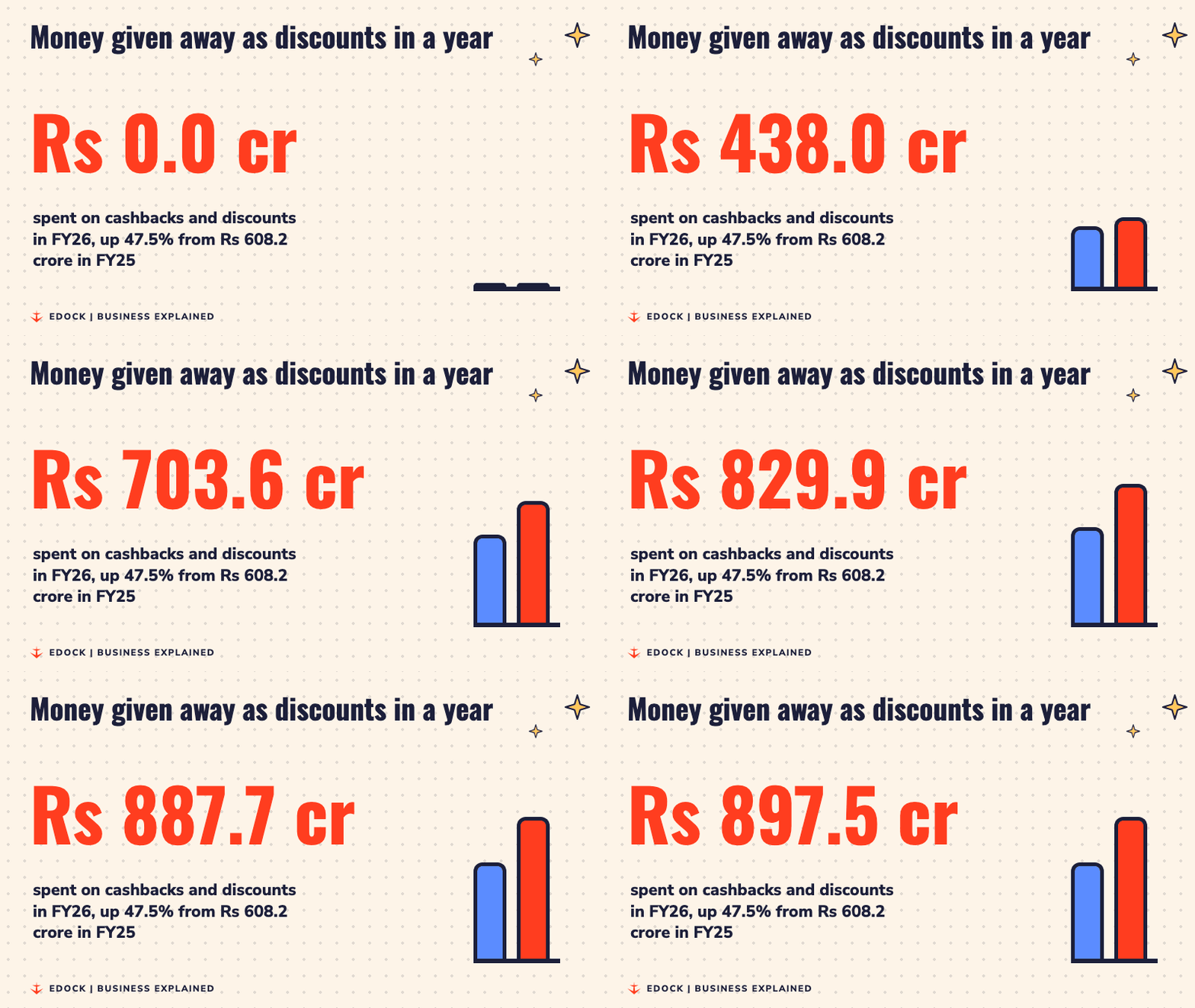
The biggest reason is discounts. Cleartrip spent Rs 897.5 crore on cashbacks and discounts in FY26, up 47.5% from Rs 608.2 crore the year before.
Here is the twist. Before those discounts, Cleartrip collected about Rs 1,095.7 crore from service charges, commissions and incentives, as per Inc42. But a big part of that went straight back to customers as cashback. That is why the official revenue number looks so small.
Think of a lemonade stall that charges Rs 20 a glass, then hands Rs 16 back as a "special offer" to keep you coming. Lots of glasses get sold. Very little money stays in the box.
Other costs also climbed, per the same report:
- Advertising and promotion: Rs 133.8 crore, up 30.9%.
- Staff costs: Rs 258.1 crore, up 7.8%.
- Payment gateway charges (the fee paid every time someone pays by card or UPI through a payment company): Rs 110.1 crore, up 40%.
- Commission and brokerage paid to partners: Rs 171.5 crore, up 33.2%.
Who is paying the bills?
When a company keeps losing money, someone has to fill the hole. For Cleartrip, that is its parent. During FY26, Cleartrip borrowed Rs 3,964 crore from Flipkart Internet and paid back Rs 3,653 crore, paying Rs 130.4 crore as interest on these loans.
All the losses over the years now add up to Rs 3,828 crore. Its net worth (what it owns minus what it owes) is negative, at minus Rs 3,066 crore. In its own filings, the company said it can keep running as a "going concern" because Flipkart Internet has given a letter promising financial support. A going concern simply means a business that is expected to stay open.
It is a bit like a college student whose monthly spending is always more than their part-time pay, with a parent topping up the account every month.
Why lose money on purpose?
Many Indian apps have used discounts to win customers. The idea is simple: pay people to try you now, hope they stay later. The problem is that the travel market is crowded. The Economic Times notes that MakeMyTrip reported FY26 revenue of $1 billion and an adjusted operating profit of $189 million, while Ixigo posted a profit of Rs 71 crore in FY26.
Cleartrip's losses have moved around for years. ET lists losses of Rs 357 crore in FY22, Rs 677 crore in FY23 and Rs 810 crore in FY24, before they came down in FY25. Now they are rising again.
The plan to stop the bleeding
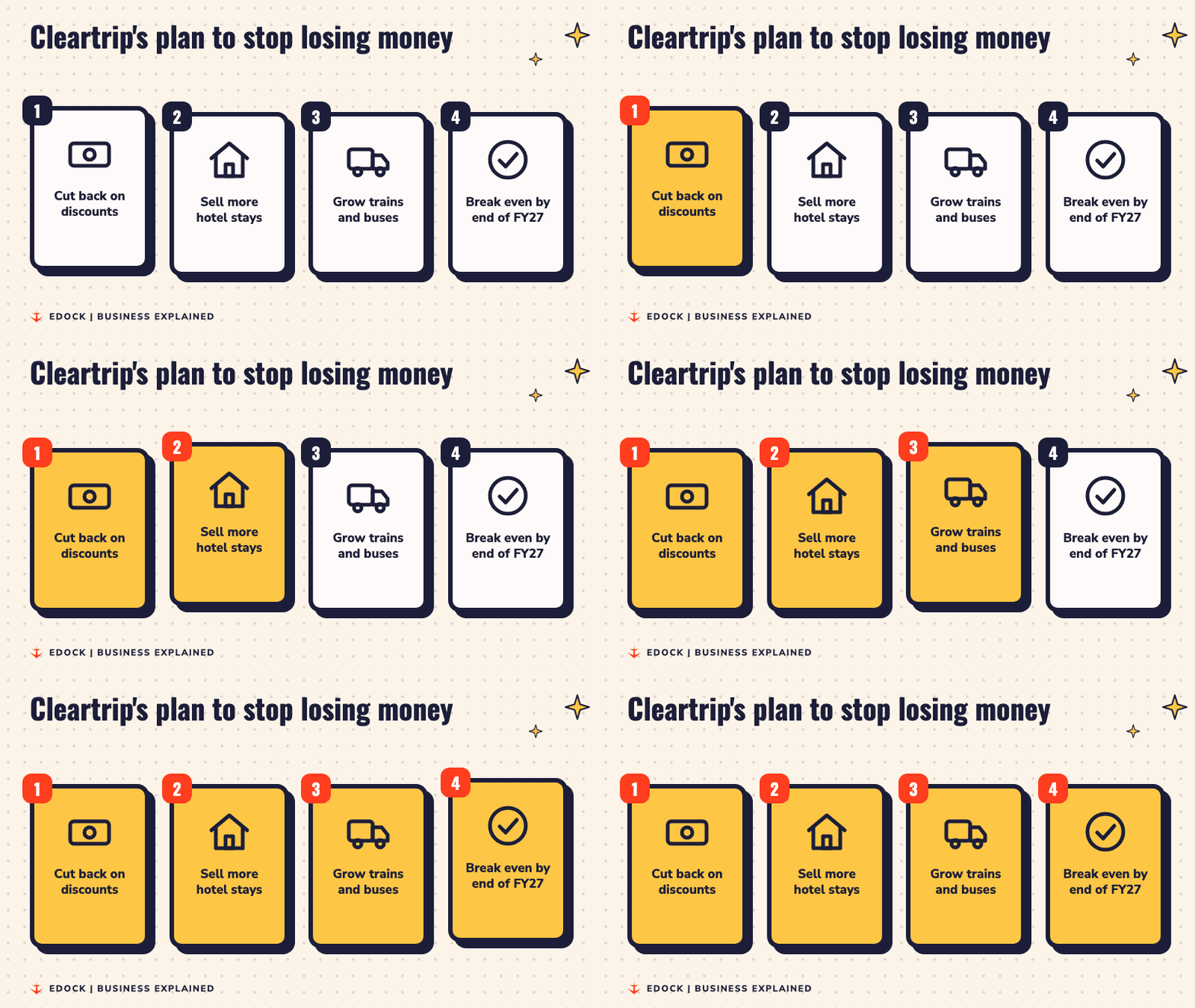
Cleartrip says it wants to change course. In July 2026, Manjari Singhal, who runs its business and growth side, told Mint the company aims to be operationally break-even by the end of FY27, which means March 2027. Break-even means income finally matches costs, so the company stops losing money on its day-to-day work.
The plan has three big parts:
- Fewer discounts. Singhal told Mint that the dependence on discounting has come down and will keep coming down.
- More than flights. Flights make up about 80% of revenue, per ET. Cleartrip wants hotels, trains and buses to bring in a much larger share. Flights earn thin margins, while hotels and buses earn much higher margins, Singhal told Business Standard. Margin is the part of each sale you actually keep.
- Small paid extras. Things like seat upgrades, travel insurance and a loyalty plan called Elite, which lets members change a travel date for Rs 9, as per Business Standard.
Trains and buses already make up 60% to 65% of daily bookings by volume, Singhal told Mint. Those tickets are cheap, though, so they add many bookings but less money per booking.
What this teaches about any business
Growing sales is not the same as making money. If every new customer costs more to win than they pay you, growth just makes the hole deeper. Cleartrip now has about five months left to show its plan works before FY27 ends in March 2027.
Next time an app offers a huge cashback on a flight, remember: someone is paying for it. Often it is a company losing crores to keep you tapping.
Sources
- Inc42: Cleartrip's FY26 loss widens 28% YoY to Rs 805 Cr, revenue up 21%
- Mint: Cleartrip aims for profitability by FY27 end as it cuts back on discounts
- The Economic Times: Cleartrip bets on non-air expansion for scale, targets early-2027 breakeven
- Business Standard: Cleartrip bets on hotels and homestays and AI to turn profitable
- Cover photos: Wing of an airplane flying above the clouds, by Anand Upadhyay, CC0; Bed in hotel room 4, by Kurt Kaiser, CC0; Indian Railways Train in 2025, by Ash7876, CC BY 4.0
You may republish this story under CC BY 4.0: credit Pranav Sharma and link to this page.