Cipla's profit falls 35% as America buys less, while India buys a record amount
Version 1 of 1 saved 28 Oct 2026, 11:39 am IST · Chain line 299
As it was first published
Cipla's profit falls 35% as America buys less, while India buys a record amount
India's third largest drug maker sold more medicines at home than ever, but falling prices for copied medicines in America pulled its profit down.
Picture two shops run by the same family. The shop in India had its best three months ever. The shop in America sold a lot less. Add both together, and the family took home about a third less money than last year. That is roughly the story of Cipla, one of India's biggest medicine makers, in the results it shared on Tuesday, 27 October 2026.
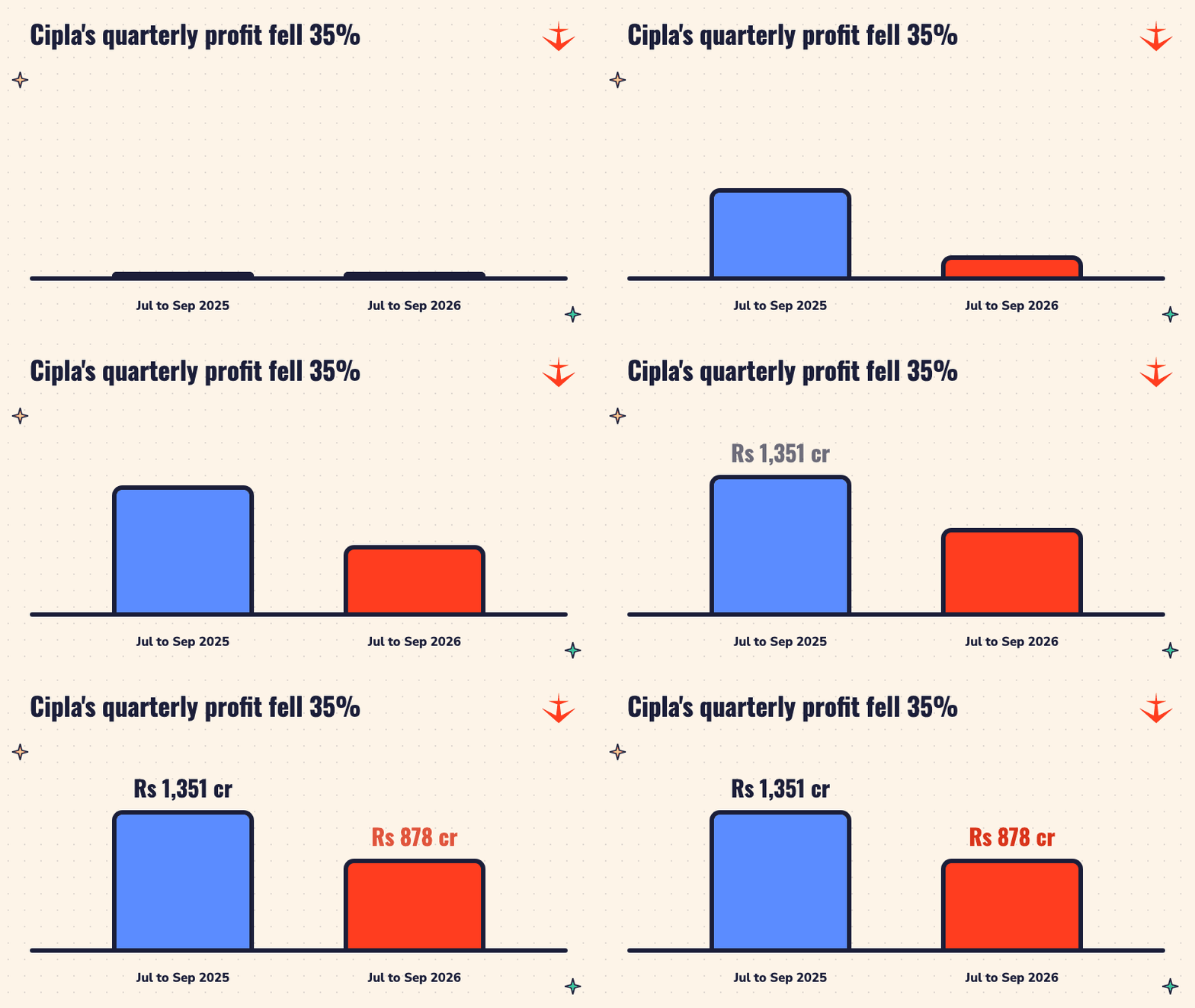
For the three months from July to September 2026, Cipla's profit fell 35% to Rs 878 crore, down from Rs 1,351 crore a year ago. Yet Indians bought more Cipla medicines than in any quarter before. So what went wrong, and what went right?
First, who is Cipla?
Cipla is a Mumbai company started in 1935 by Khwaja Abdul Hamied. Today it is the third largest drug maker in India. Its own report says it runs 46 factories around the world, makes more than 1,500 products and sells in over 80 markets. Many people know its inhalers for asthma and its medicines for the heart, diabetes and the lungs.
The company is famous for one big thing. In the early 2000s, a three-drug HIV medicine cost about $12,000 a year. Cipla made its own version and sold it for about $304 a year to charities and governments in Africa. This is the power of a "generic" medicine.
What is a generic medicine?
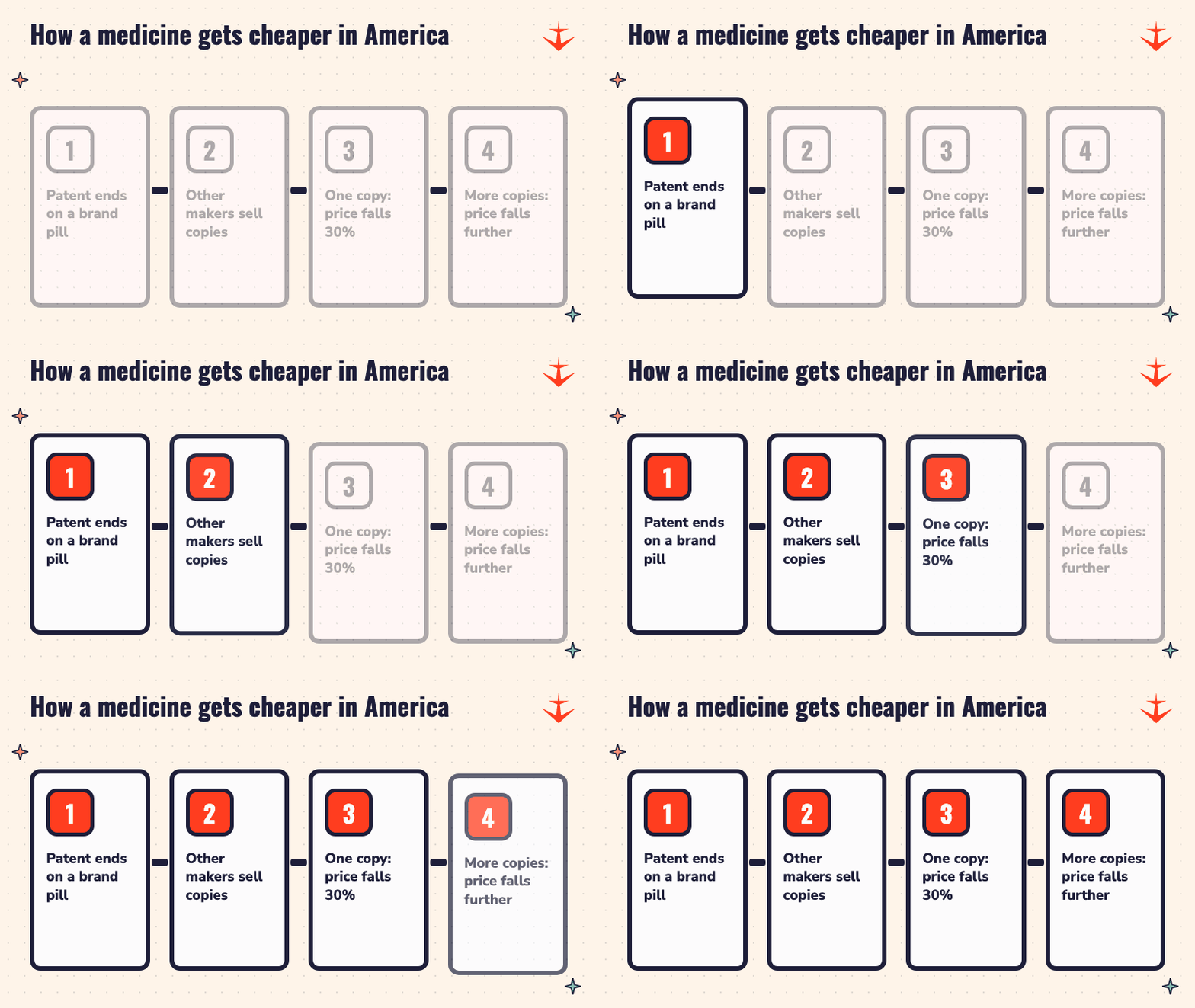
When a company invents a new medicine, it gets a patent. A patent is like a "reserved" sign on a seat in the canteen. For many years, nobody else can sit there, so nobody else can make that medicine. The inventor sets a high price.
When the patent ends, the seat is open. Other companies can now make the same medicine. These copies are called generics. In America, the drug regulator says a generic must have the same active ingredient, strength and quality as the original brand. Generic makers do not have to repeat the costly tests, so they can sell much cheaper.
Here comes the twist. The same regulator says one generic rival can push the price down by about 30%. With five generic makers selling the same pill, prices can fall by nearly eighty five per cent. Think of a samosa stall. If one new stall opens next door, you cut your price a little. If five open, everyone fights over the same customers, and the price of a samosa drops a lot.
Why America paid Cipla less
Selling copies in a crowded market is where Cipla felt the pain this time. Its North America sales fell 19% to Rs 1,643 crore, from Rs 2,039 crore a year ago. In dollars, sales were $172 million, down from $233 million.
A big reason, Reuters reported, is a blood cancer medicine called Revlimid. Cipla sells a generic copy of this drug, and its sales keep slowing after the original went off patent. America is Cipla's biggest market outside India, and the two together bring in about two thirds of its revenue, the same report said.
There is a small bright spot. America's $172 million was $10 million more than the quarter before. During the quarter, the US regulator also approved Cipla's generic of Advair Diskus, a lung inhaler. CEO Achin Gupta said on the investor call that Cipla still aims for $1 billion a year of North America sales by the end of this financial year, and wants to file 45 to 50 new products there over the next three years.
Meanwhile, India had a record quarter
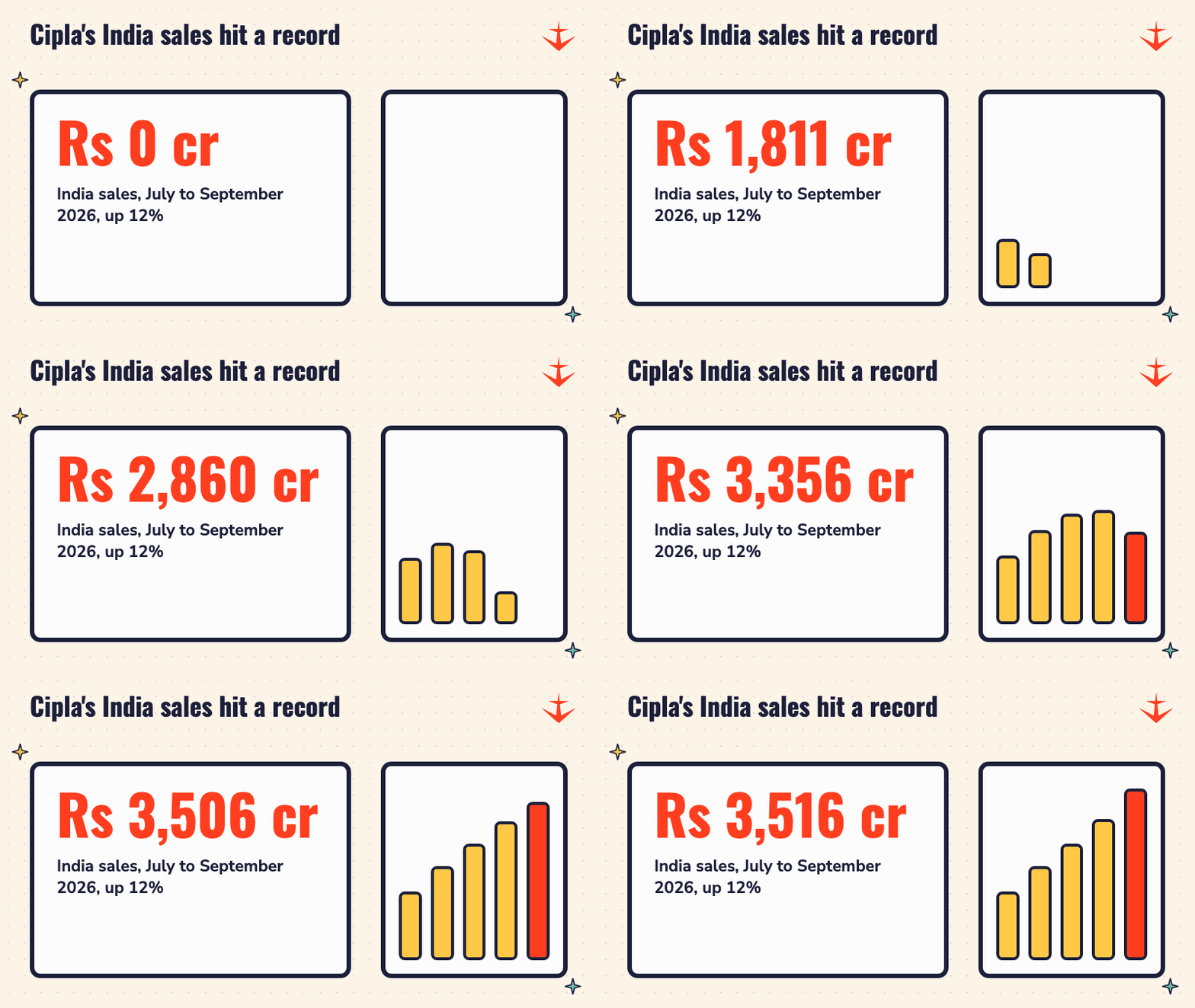
Back home, the story is the opposite. Cipla's India sales rose 12% to Rs 3,516 crore, from Rs 3,146 crore. That is the highest ever in a single quarter for the India business.
Medicines that doctors write on a prescription grew 15%. Long-term medicines led the way: those for breathing, the heart, diabetes and the urinary system. Cipla says skin medicines also grew at double-digit rates. These are pills many people take every day for years, so the sales come back again and again, like a monthly milk bill. Cipla also brought out more than 15 new products for chemist shops in its trade generics arm during the quarter.
Another helper is an obesity medicine called Yurpeak, which Cipla sells in India under a deal with Eli Lilly. Reuters said Cipla relies on this drug to support growth.
So why did the profit fall so much?
Profit is what is left after paying for everything. Business Standard says the fall came from weaker US and raw medicine businesses. The unit that sells active pharmaceutical ingredients (the raw powder that gives a pill its effect, sold to other drug makers) fell 59% to Rs 107 crore, from Rs 259 crore.
Total revenue fell 2.4% to Rs 7,404 crore, from Rs 7,589 crore. Part of this drop is only an accounting change. From April 2026, some marketing costs are taken off revenue instead of being shown as an expense, and the company said this did not change profit.
Cipla's operating margin tells the bigger story. This margin shows how many rupees of earnings, before tax, interest and wear on machines, Cipla keeps from every Rs 100 of sales. It fell to Rs 18.7 from Rs 25 a year ago.
Analysts, the people who study companies for big investors, had expected a profit of about Rs 942 crore. Cipla came in below that.
What this means for you
For people who buy medicines: generics are the reason many Indian pills are cheap. The same price fight that hurts Cipla in America is what keeps many medicines affordable for patients.
For people who want to work in pharma: Cipla had 27,764 employees in March 2024. The company spent Rs 423 crore on research this quarter, 5.7% of its sales, mostly on new product filings. It also has net cash of Rs 9,823 crore, which means it has more cash than loans. So it has room to keep building new medicines even in a weak quarter.
For anyone running a business: the lesson is simple. When a product becomes easy to copy, many sellers arrive and prices fall. Cipla's answer is to make harder products, like inhalers and biosimilars (close copies of complex medicines made from living cells), where fewer rivals can follow. During the quarter it signed a deal with China's Qilu Pharmaceutical to sell a biosimilar of the cancer drug Keytruda.
Watch: Cipla's CEO on where the company is going
This interview by The Economic Times shows Cipla's CEO talking about innovation, obesity drugs and AI.
The big picture
Cipla's quarter shows a shift many Indian drug makers face. Selling old generics in America is getting harder as more rivals pile in. Selling to the growing number of Indians who take daily medicines is getting bigger. For now, India's record sales were not enough to fill the hole America left. Cipla is betting that new, harder-to-copy medicines will close that gap.
Sources
- Cipla: Q2 FY27 results press release (consolidated), 27 October 2026
- Business Standard: Cipla Q2 net profit falls 35% to Rs 878 crore as US business weighs on sales
- The Week: Cipla Q2 profit falls 35 per cent as revenue declines 2 per cent
- Reuters via KSL: Indian drugmaker Cipla misses profit view on US weakness
- US FDA: Generic Drug Facts
- Wikipedia: Cipla
- The Economic Times on YouTube: Corner Office Conversation with Cipla's CEO
- Cover photo: Generic finasteride tablets by Cipla, by Kristoferb, CC BY-SA 3.0
