China puts export controls on tunnel boring machines. India wants to build its own
Version 1 of 1 saved 20 Oct 2026, 10:02 pm IST · Chain line 93
As it was first published
China puts export controls on tunnel boring machines. India wants to build its own
From 18 November, Chinese exporters need a licence to sell these giant tunnel diggers. What an export control is and how Indian makers plan to respond.
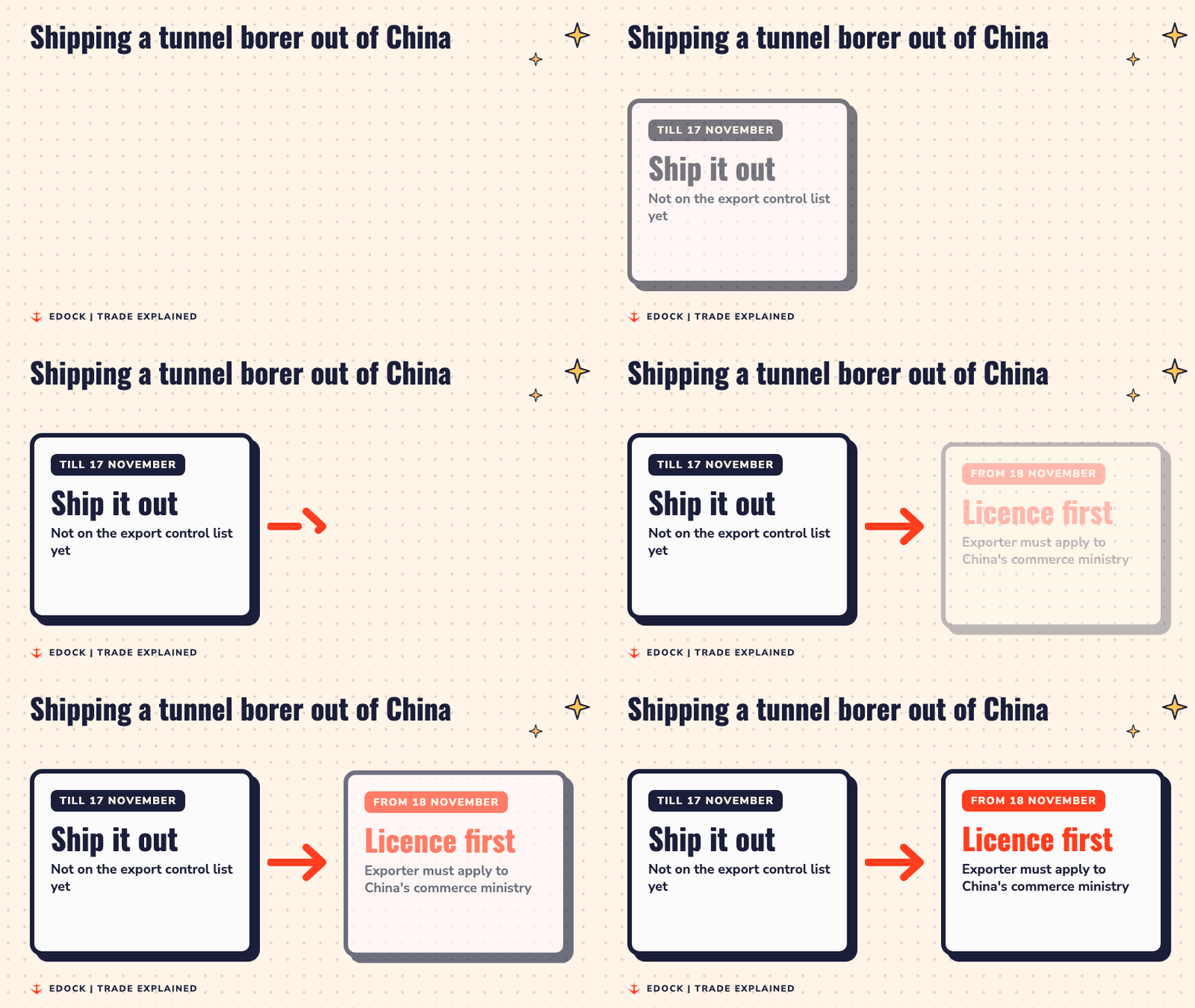
Picture a machine as long as a train, with a giant spinning wheel of steel teeth at the front. It chews through rock under a city, and a metro tunnel slowly appears behind it. India needs many of these machines. And China makes roughly 70% of them. On Monday, 19 October 2026, China said it will put export controls on them.
The new rules start on 18 November 2026. In India, the news has put fresh attention on a plan to build more of this equipment at home. Here is the whole story in simple words.
First, what is an export control?
An export is something a country sells to another country. An export control is a rule that makes that sale harder. Think of a school canteen that suddenly says, "You can still buy samosas, but first get a signed slip from the principal." The samosas are still there. But now someone else decides who gets them, and when.
That is how China's new rule works. Exporters of these machines must now obtain licences under China's export control laws. A licence is simply written permission. Before this announcement, tunnel boring machines were not under export controls at all.
Which machines are on the list?
The main one is the tunnel boring machine, or TBM. It digs tunnels for metros, railways and roads. The rule covers full TBMs and key parts, such as the cutterhead (the spinning front wheel) and the main drive that turns it.
The list also has a few other heavy machines, as per Global Times:
- Walking excavators. These diggers move using their arm, legs and wheels together, so they can work on rough ground. The rule covers ones that can climb over things taller than 1.2 metres or cross water deeper than 1.5 metres.
- Plateau-type wet shotcrete machines. These spray wet concrete onto tunnel walls, high up in the mountains. The rule covers machines built for places above 3,000 metres, with engines stronger than 75 kilowatts.
- Some dredger parts. Dredgers dig mud and sand from the bottom of rivers, harbours and seas. China also changed its rules for dredger-related items, such as mud pumps and cutterheads.
On the same day, China also announced controls on some drones and drone parts, such as drones that can fly for three hours or more.
Why does China say it is doing this?
China's commerce ministry said these items have a clear "dual-use" nature. Dual-use means a thing can be used for both military and civilian purposes. A drone, for example, can carry a parcel for a shop or work for an army. China said the rules are meant to safeguard national security and interests.
Global Times reported that the licence is needed for shipments to countries and regions with which China has disputes. It also said that these machines, if sold to any other country, cannot be passed on to such places without a licence. A ministry spokesperson said applications that meet the requirements will be approved.
How the paperwork works at the border
Every shipment that leaves a country goes through customs. Customs is the checkpost for goods, a bit like a security check at an airport, but for cargo.
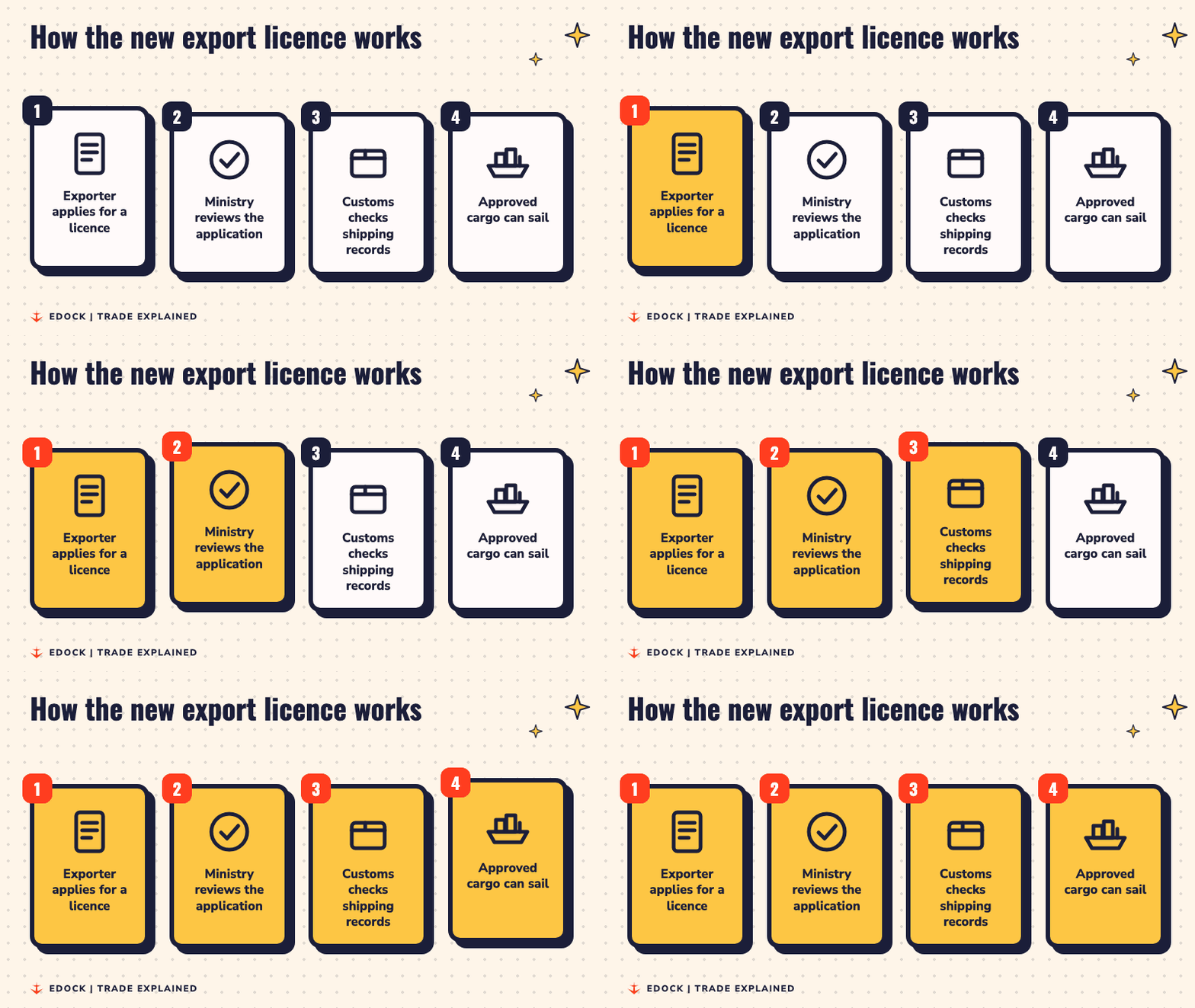
In a separate notice on the same Monday, the ministry said it will tighten checks on outgoing shipments to spot dual-use items. Exporters may have to show receipts and shipping records that prove how the goods moved. This even covers parcels sent by courier and items in travellers' bags.
Why India should care
India is building a lot underground. TBMs are used for city metro lines, railway corridors and tunnels, including in border areas. India depends on imports for these machines.
The trouble did not start this week. In 2024, customs clearance for TBMs going from China to India had already become a bottleneck. Some were made by German company Herrenknecht at its factories in China, for projects including the Mumbai to Ahmedabad bullet train. India received those machines in March this year. So the country where a machine is made can matter as much as the company that owns it. Herrenknecht has since decided to set up production in India.
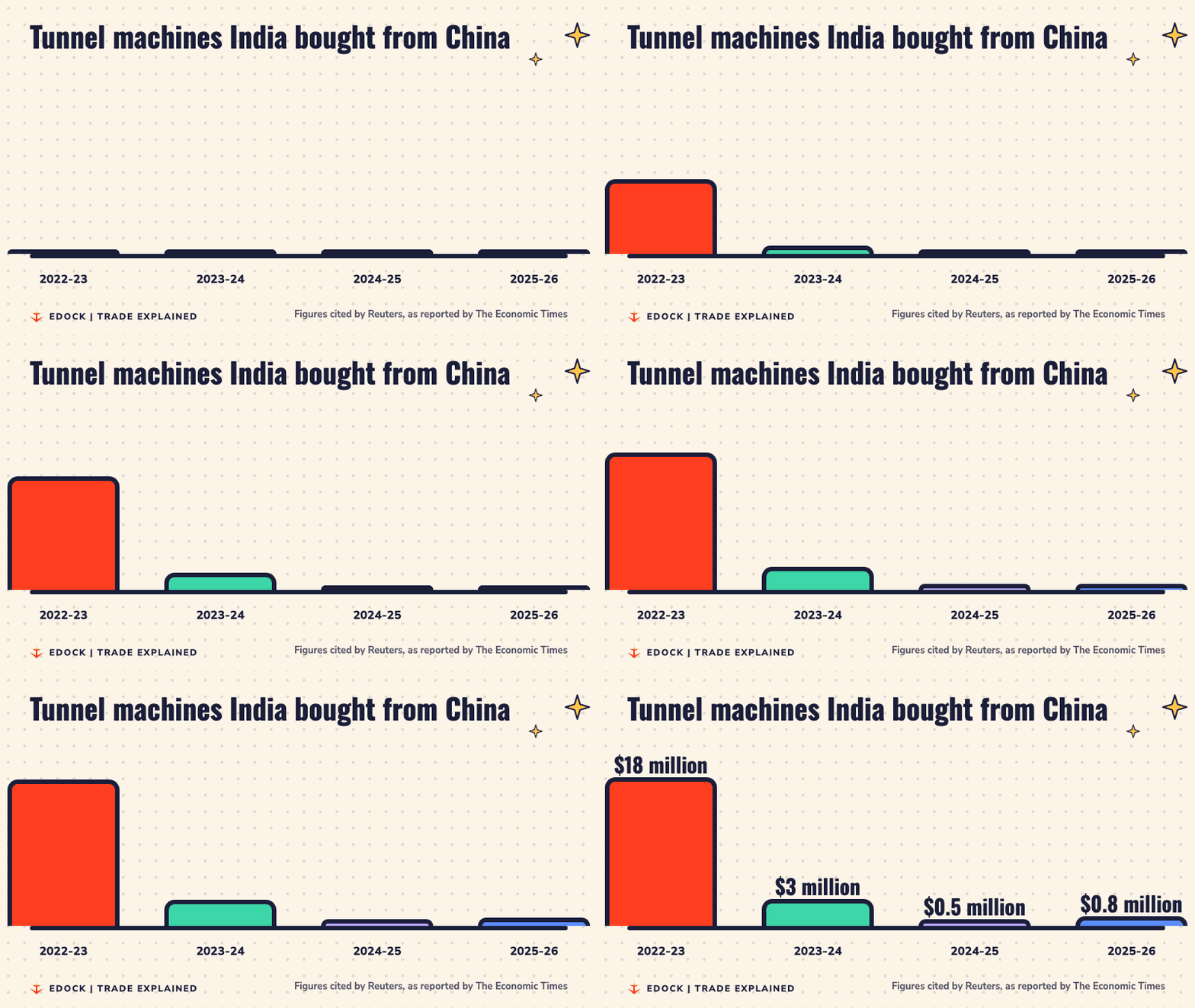
You can see the change in trade numbers. India's imports of tunnelling machinery from China fell from $18 million in 2022-23 to $3 million in 2023-24, then to $500,000 in 2024-25, before rising a little to $800,000 in 2025-26, as per figures cited by Reuters.
Will roads and metros stop?
Not on a large scale, it seems. The new rules are not expected to derail highway construction in a big way. Industry executives say India is largely self-sufficient in ordinary construction machines, and other countries can supply some special machines.
The weak spots are a few big items: heavy-duty engines, very large cranes and tunnelling equipment. How much the bullet train corridor is hit will depend on how wide the rules are and whether other suppliers can step in.
India's plan: make the machines at home
This is where the story turns from a problem into a business chance. The government is close to approving a $1.2 billion incentive scheme for construction and infrastructure equipment. An incentive is a reward for doing something, like extra pocket money for finishing homework early. Here, the reward goes to companies that build machines in India. The scheme hopes to pull in $1.8 billion of fresh investment over seven years.
It is expected to cover machines from TBMs to firefighting systems and lifts for tall buildings. Companies that could gain include state-owned BEML, which plans to make TBMs in India, along with Larsen and Toubro and Johnson Lifts.
How big is the prize?
India's market for mining and construction machines was worth about $17 billion in 2025, as per a BCG and CII report. It is growing 10 to 12% a year. Spending in sectors that use these machines could rise from about Rs 5.5 lakh crore in 2025 to Rs 9 to 10 lakh crore by 2030.
But overall localisation, the share made inside India, is only around 50% for construction equipment, as per the same report. Costly parts like hydraulics, electronic controls and undercarriages still depend heavily on imports. So a machine stamped "made in India" can still get stuck if one key part is held up abroad. Building the full chain of parts, not just putting pieces together, is the real test.
The big takeaway
An export control does not always mean a total ban. It means a new gate, and someone else holds the key. For India, the new gate on Chinese tunnel machines is a reminder that big projects need steady supplies. The answer India is now trying is simple to say and hard to do: make more of these giant machines, and their parts, at home.
Sources
- Drill, baby, drill: China turns the screws, India looks for own tools, The Economic Times
- China to impose export controls on tunnel boring machines from Nov 18, Global Times
- China imposes export controls on tunnel boring machines, CGTN
- China imposes export controls on tunnel-boring machines sought by India, The Hindu
- What China's new TBM rules mean for India, The Indian Express
- China announces export controls on tunnel boring machines, Business Today
- China is tightening export controls on drones and tunnel boring machines, Quartz
- China announces dual-use export restrictions on tunnel boring machines, Swarajya
- Cover photo: Sydney Metro, Barangaroo, TBM Kathleen cutterhead, by John Cowper, CC BY 2.0; TBM cutter, LA Metro Eastside Extension, by Dorothy Peyton Gray Transportation Library, public domain

