CG Semi's second chip plant in Gujarat aims to start by late 2028 or 2029
CG Semi already packs and tests chips in Sanand. On 23 October its parent's CEO shared when the much bigger next plant should start.

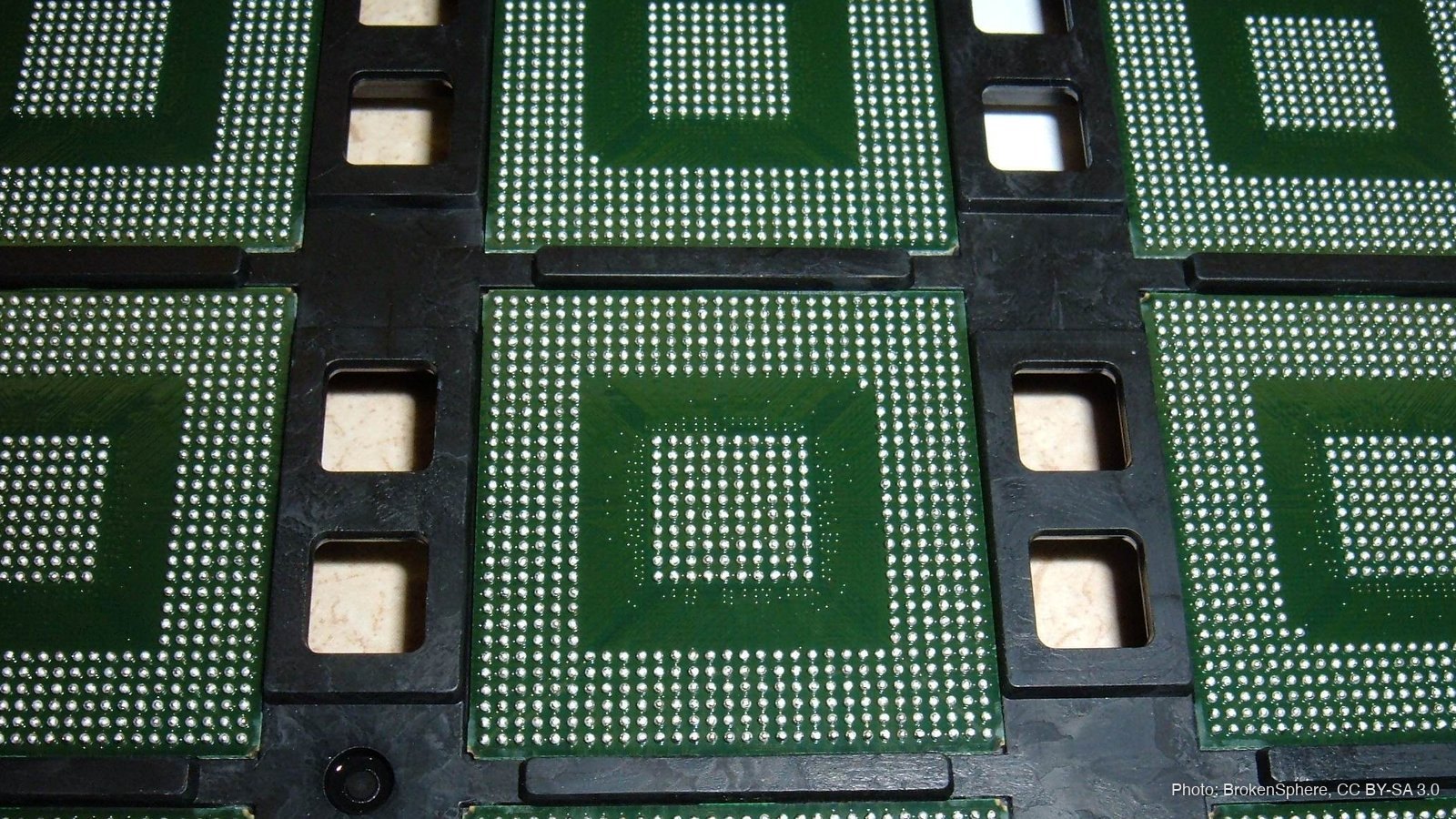
Picture a chip smaller than your fingernail. Before it can sit inside a phone, a car or a power meter, someone has to cut it out, seal it in a tiny case and test it. In Sanand, Gujarat, one Indian plant now does exactly that for about 20 crore chips a year.
The plant belongs to CG Semi. On Friday, 23 October 2026, Amar Kaul, the managing director and CEO of its parent company CG Power, gave an update on the next step. He said the company's second chip plant, called G2, should start commercial production towards the end of 2028 or in 2029. Here is what that means, in simple words.
First, who is CG Semi?
CG Semi is a joint venture. That is when two or more companies put money into one new business together, like three friends pooling pocket money to run one samosa stall. The biggest partner is CG Power, a Mumbai-headquartered engineering company that also makes power equipment like transformers.
The other partners are chip companies. Japan's Renesas Electronics holds a 6.8% stake, and it is also a customer. Thailand's Stars Microelectronics brings older packaging know-how and training. So the partner who buys the chips also helps teach the plant how to make them well.
What does an OSAT plant actually do?
OSAT stands for Outsourced Semiconductor Assembly and Test. A semiconductor is the material chips are made of, so most people just say "chip".
Chips are born in a different kind of factory, called a fab. There, tiny circuits are printed on a thin, round plate of silicon called a wafer. One wafer holds many chips. The OSAT plant takes over from there. It cuts the chips apart, seals each one in a small protective case, connects it to tiny metal legs or pads, and then tests it.
Think of a sweet shop before Diwali. The kitchen makes the sweets. Then the packing counter boxes them, checks each box, and sends only the good ones to the shops. An OSAT plant is that packing and checking counter, but for chips.
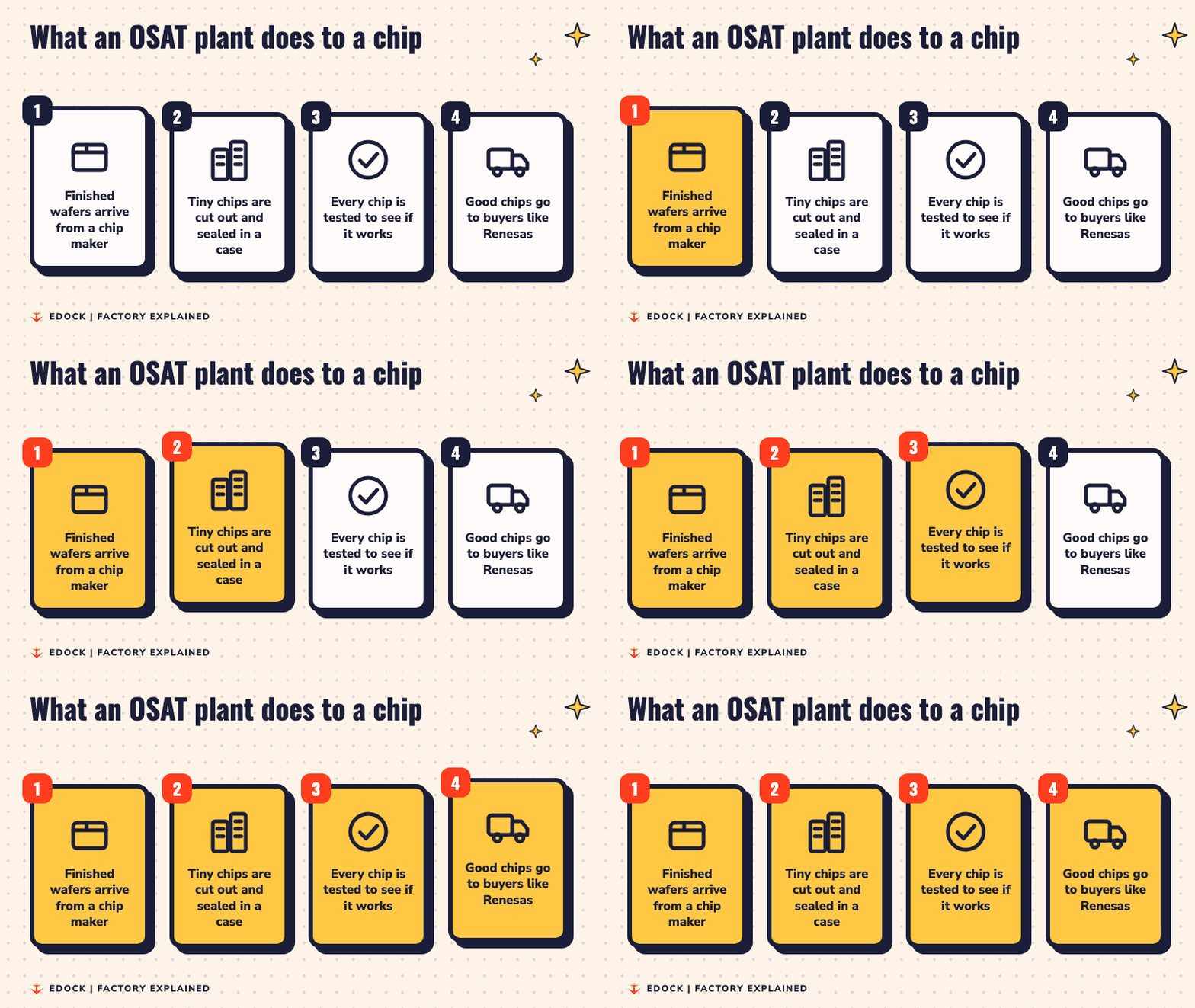
The Sanand plant makes both older and newer kinds of chip cases. Their names are QFN and QFP for the older types and FC-BGA and FC-CSP for the advanced ones. These chips go into cars, electronics, factory machines, 5G equipment and power systems.
The plant that opened in July
Prime Minister Narendra Modi inaugurated the CG Semi plant on 4 July 2026. The project was built with an investment of over Rs 7,500 crore, and it was described as India's third major semiconductor unit. The plant is set up to produce 20 crore chips a year, and the company has a future goal of 500 crore chips a year.
How big is 20 crore chips a year? Divide by 365 days and it comes to roughly 5.5 lakh chips every single day.
The plant was already working before the ribbon was cut. CG Semi said it had begun commercial chip supplies to Renesas in June.
What the boss said on 23 October
The update came on CG Power's earnings call for July to September. An earnings call is a phone or video meeting where a company's leaders explain their latest results and answer questions from investors.
Kaul said construction of the G2 plant was going well. The company wants to start "qualification" by the middle of 2027, and he said this usually takes two to three quarters. A quarter is three months.
Qualification is like a trial in cricket. Before a team picks a new bowler for a big series, the selectors watch him bowl in the nets many times. In the same way, a chip buyer tests samples from a new plant again and again before it places big orders. Only after that comes commercial production, which means making chips to sell in large numbers. Kaul said this should come towards the end of 2028 or in 2029.

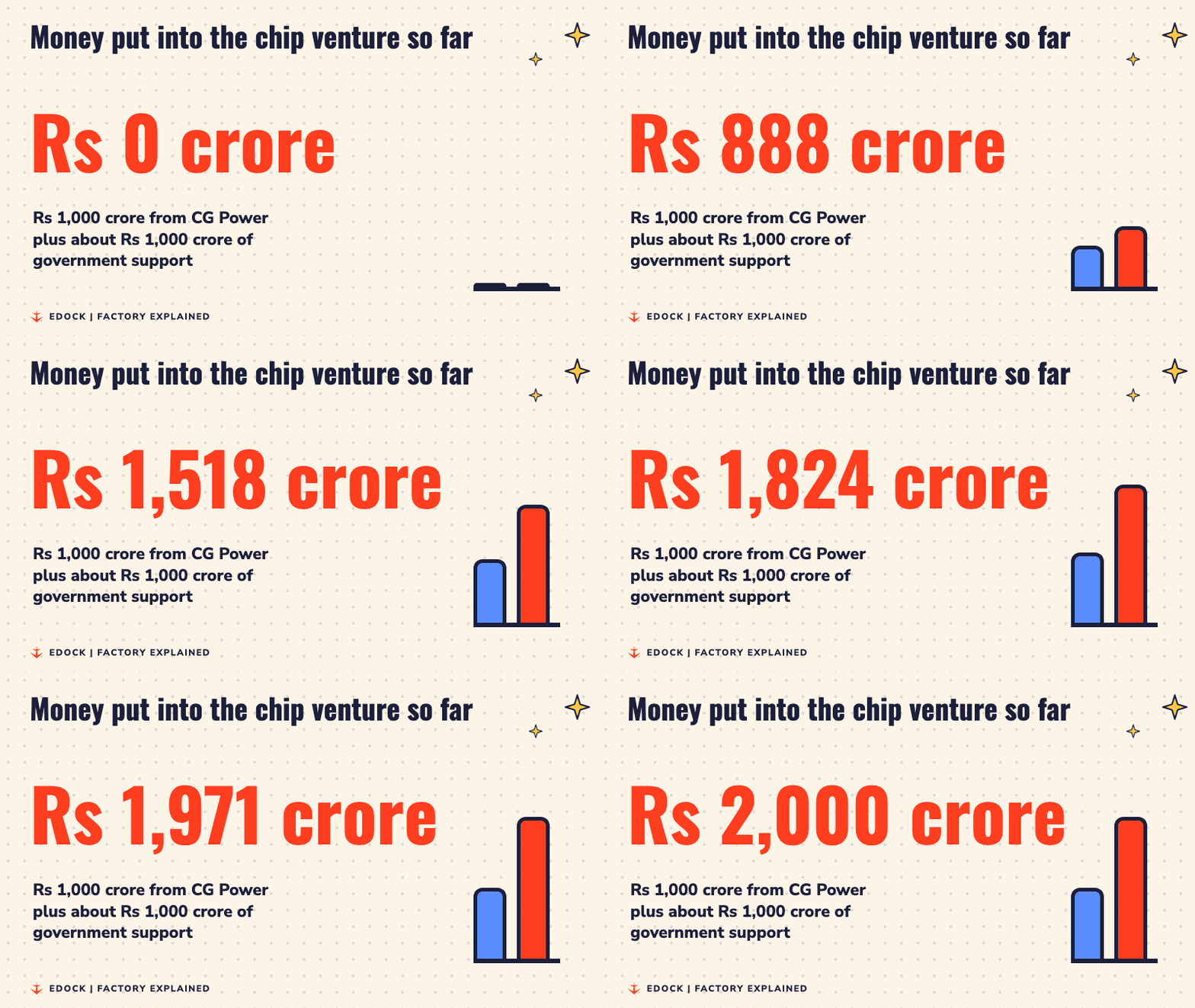
Asked about new customers for G2, he said the business team keeps talking to possible buyers. The company also shared how much money has gone in. CG Power has put about Rs 1,000 crore into the chip venture so far, and about Rs 1,000 crore more has come as capital support from the central government. Together, that is around Rs 2,000 crore.
When both plants are running, they are designed for a combined 15 million chips a day. That is 1.5 crore chips a day.
Is the chip push hurting CG Power's profit?
Not much, so far. CG Power's consolidated net profit, which means the profit of the whole group after all costs and taxes, rose 44% to Rs 409 crore in July to September. Its power equipment business was the main growth driver.
The company did say its spending on the chip units, CG Semi and Axiro, cut about Rs 35 crore from its margin in the quarter. Margin is the share of sales a company keeps as profit, like the money a lemonade stall keeps after paying for lemons and sugar. Spending on a new plant before it earns much is normal, like buying a cricket kit before the season starts.
CG Power is also learning chip design. Axiro bought a chip design company called Tosil Systems for Rs 16.4 crore on 20 August 2026.
Why are Indian chip plants selling abroad?
You might expect Indian chip plants to sell mostly to Indian buyers. It is not that easy. Big chip users in power, cars and aviation buy under long-term contracts with global suppliers, and they do not switch just because a new plant opens somewhere. Government orders, which were meant to help, are still small.
So Indian chip firms are finding buyers in Japan, Europe and the US. India's government has also said it will not force anyone to use only Indian chips. MeitY secretary S. Krishnan told Mint, "We are not a closed economy." Since 2021, the government has announced incentives worth Rs 2.04 trillion, which is Rs 2.04 lakh crore, for one chip fab, two special chip factories and nine assembly and testing plants.
Another challenge is suppliers. A typical chip packing plant gets 55 to 60 percent of its suppliers from China. CG Semi estimates that building a layer of local suppliers in India will take at least three years.
Why this matters to you
Almost everything you use has chips inside: your phone, your scooter, the ATM, even the washing machine at home. Today most of them are packed and tested outside India. Plants like the one in Sanand change that, one batch at a time.
They also open new kinds of careers. A chip plant needs engineers, machine operators, testers, quality checkers and chip designers. The Sanand plant has engineers and professionals from many states working under one roof. If you are a student wondering what electronics or electrical engineering can lead to, this is one real answer, and it is happening in India.
The next date to watch is the middle of 2027, when the G2 plant plans to start its trials with buyers.
Sources
- Moneycontrol: CG Semi targets commercial production at G2 facility by late 2028 or 2029
- Moneycontrol: CG Power Q2 net profit rises 44% to Rs 409 crore
- News On AIR: PM calls CG Semi plant next step in India's electronics push
- Mint: Indian chip firms find clients in Japan, EU
- Communications Today: Export orders sustain India's young chip assembly plants
- Cover photo: Panasonic microchips in a holding tray, by BrokenSphere, CC BY-SA 3.0

You may republish this story under CC BY 4.0: credit Pranav Sharma and link to this page.