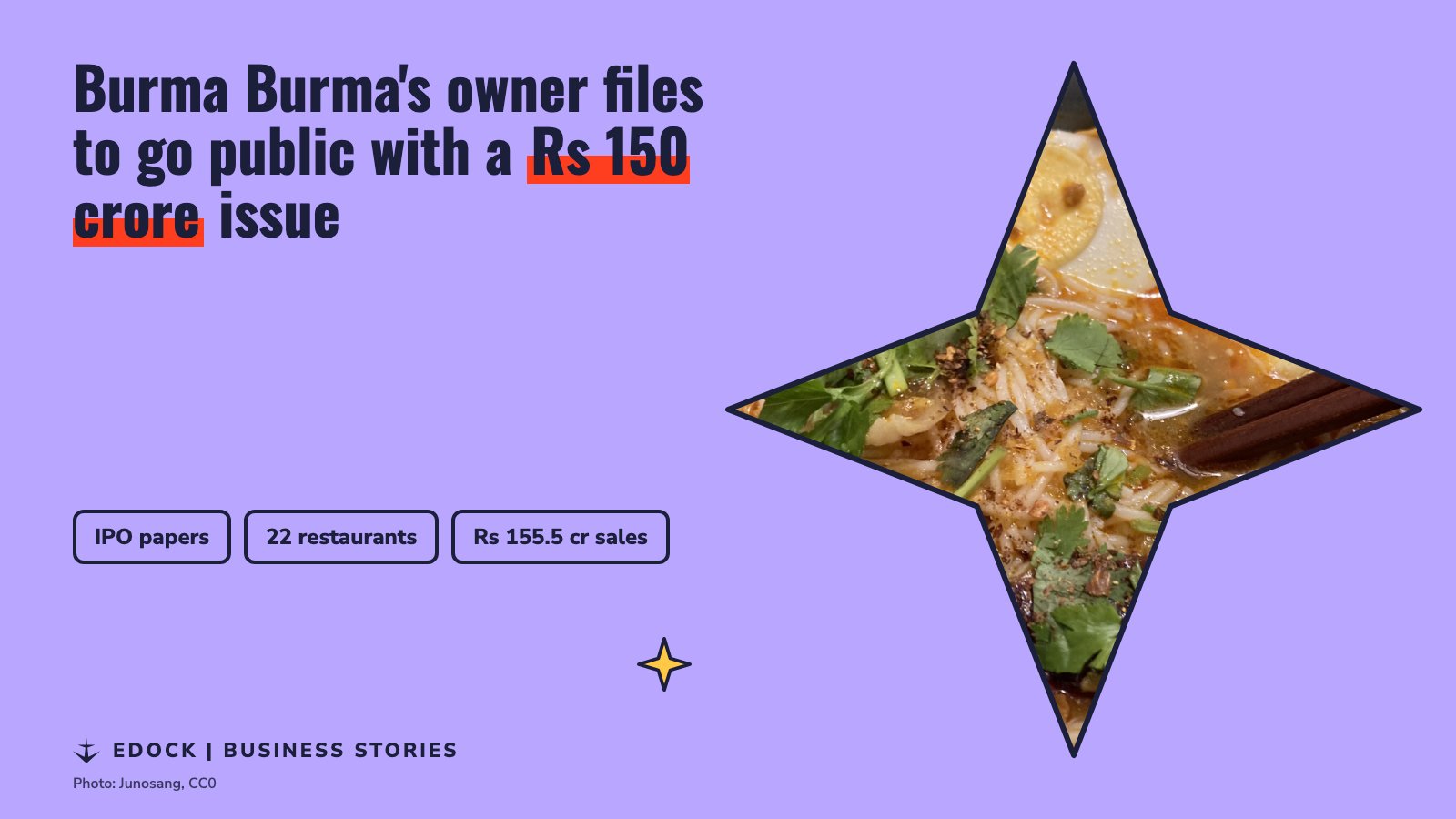
Burma Burma's owner files IPO papers: what a DRHP is and how the chain earns
Hunger Pangs wants Rs 150 crore in fresh money to open 27 new restaurants. Here is what its draft papers show, in plain words.

Picture a dinner out with friends where the bill comes to about Rs 2,400, the average bill at one restaurant chain last year. Now picture the company behind that meal asking the whole country to become its part owner. That is what Burma Burma's parent company has started to do.
On Friday, 16 October 2026, Hunger Pangs Ltd, which runs the Burma Burma Restaurant and Tea Room chain, filed its draft papers with SEBI, India's stock market regulator. It wants to raise up to Rs 150 crore in fresh money through an IPO.
First, what is an IPO?
IPO stands for initial public offering. It is the first time a private company sells its shares to the public.
Think of a lemonade stall started by two friends. For years, only they and a few backers own it. One day they say: "Anyone can buy a small piece of our stall." Once those pieces are on the stock market, people can buy and sell them every day. That first big sale is the IPO.
So what is a DRHP?
DRHP means draft red herring prospectus. That sounds scary, but it is just a very long information book.
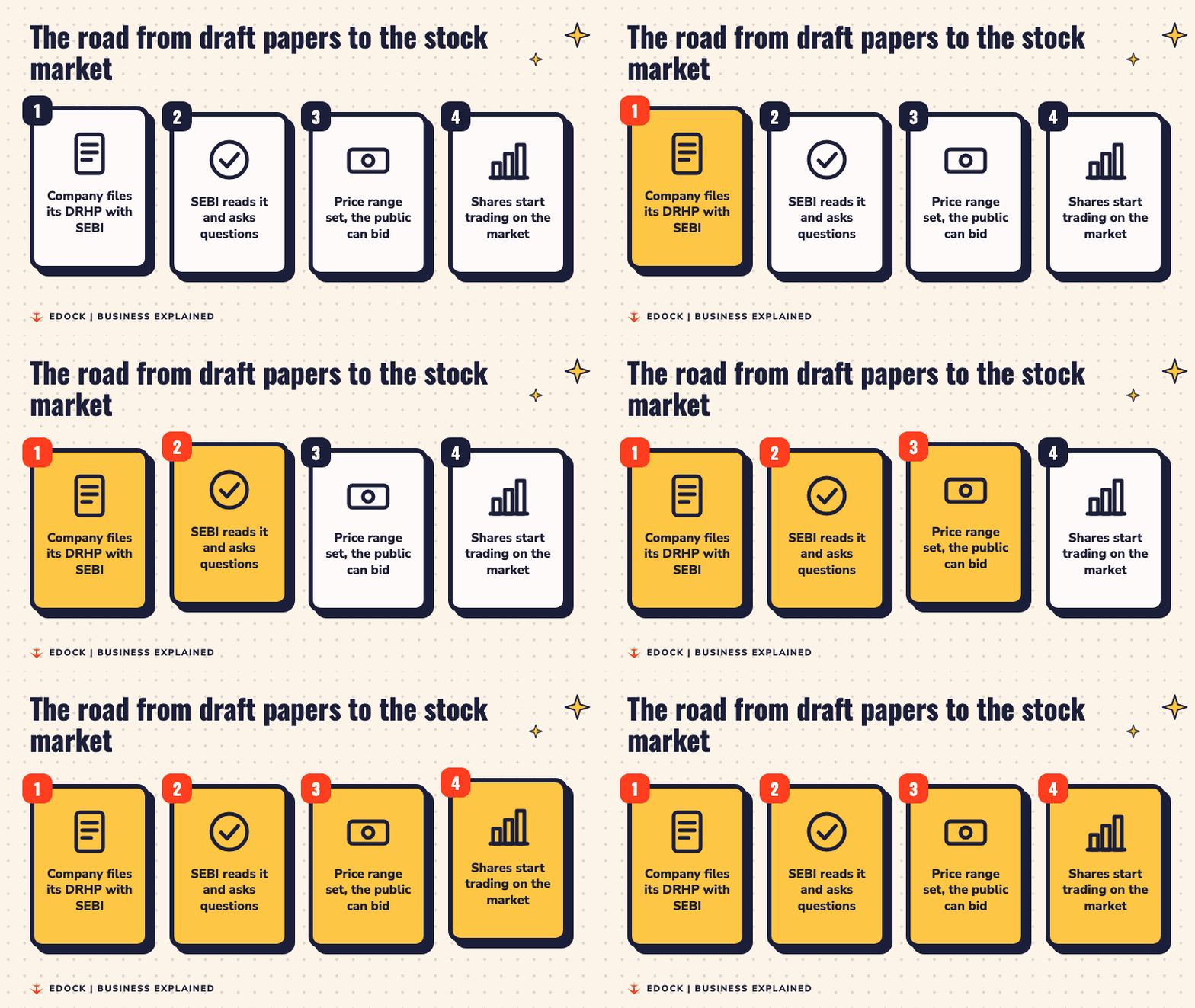
Before a company can ask the public for money, it must tell the public everything important: how it makes money, how much it loses, who owns it, and what could go wrong. It sends this book to SEBI first. SEBI reads it and can ask questions or ask for changes. The word "draft" means it is not final yet. The final price range comes later.
A simple way to see it: the DRHP is like the rough copy of a school project that the teacher checks before the final submission.
Two kinds of money in one IPO
This IPO has two parts, and they are very different.
The first part is the fresh issue. The company prints new shares and sells them. The money goes into the company itself. Here, that is up to Rs 150 crore.
The second part is the offer for sale, or OFS. Here, old owners sell some of the shares they already hold. That money goes to them, not to the company. In this case, existing shareholders will sell up to 27,929,760 shares, which is about 2.79 crore shares.
The two founders, Ankit Gupta and Chirag Chhajer, plan to sell up to 60 lakh shares each. Early backers like Negen Tech Opportunities Angel Fund, Venture Catalysts Angel Growth Fund and L V Angel Fund are also selling some shares.
Where will the Rs 150 crore go?
Mostly into new restaurants. According to Inc42's reading of the papers, the company plans to spend Rs 117.29 crore to open 27 company-owned restaurants: 12 in FY28 and 15 in FY29.
That money will pay for building work, interiors and kitchen equipment. The plan is to spend Rs 10 crore in FY27 as advance payments, Rs 54.63 crore in FY28 and Rs 52.66 crore in FY29. Add them up and you get Rs 117.29 crore.
It has already picked sites for five of these outlets, in Bengaluru, Surat, Jaipur, Kolkata and Delhi. The rest are not decided yet. The leftover money will go to general corporate purposes, which simply means everyday business needs.
How does Burma Burma make money?
The idea is simple. It is a sit-down restaurant chain that serves Burmese food, the food of Myanmar, India's neighbour. Inc42 says the menu is vegetarian, and the first outlet opened in Mumbai in 2014.
The business calls itself "premium casual dining". That means it is not a quick food court counter, and not a very fancy five-star place either. It sits in between: nice interiors, table service, and a bill bigger than a street snack.
As of 31 July 2026, it ran 22 restaurants, one delivery kitchen and three warehouses across nine cities. Its outlets sit in premium malls, busy high streets and office parks.
Money comes in from three main places:
- Dine-in: people eating at the restaurant. This is the biggest part.
- Delivery: food ordered home. This brought in 10.76% of revenue in FY26.
- The Burma Burma Shop: an online shop. The company wants to add more ready-to-eat and packaged food here.
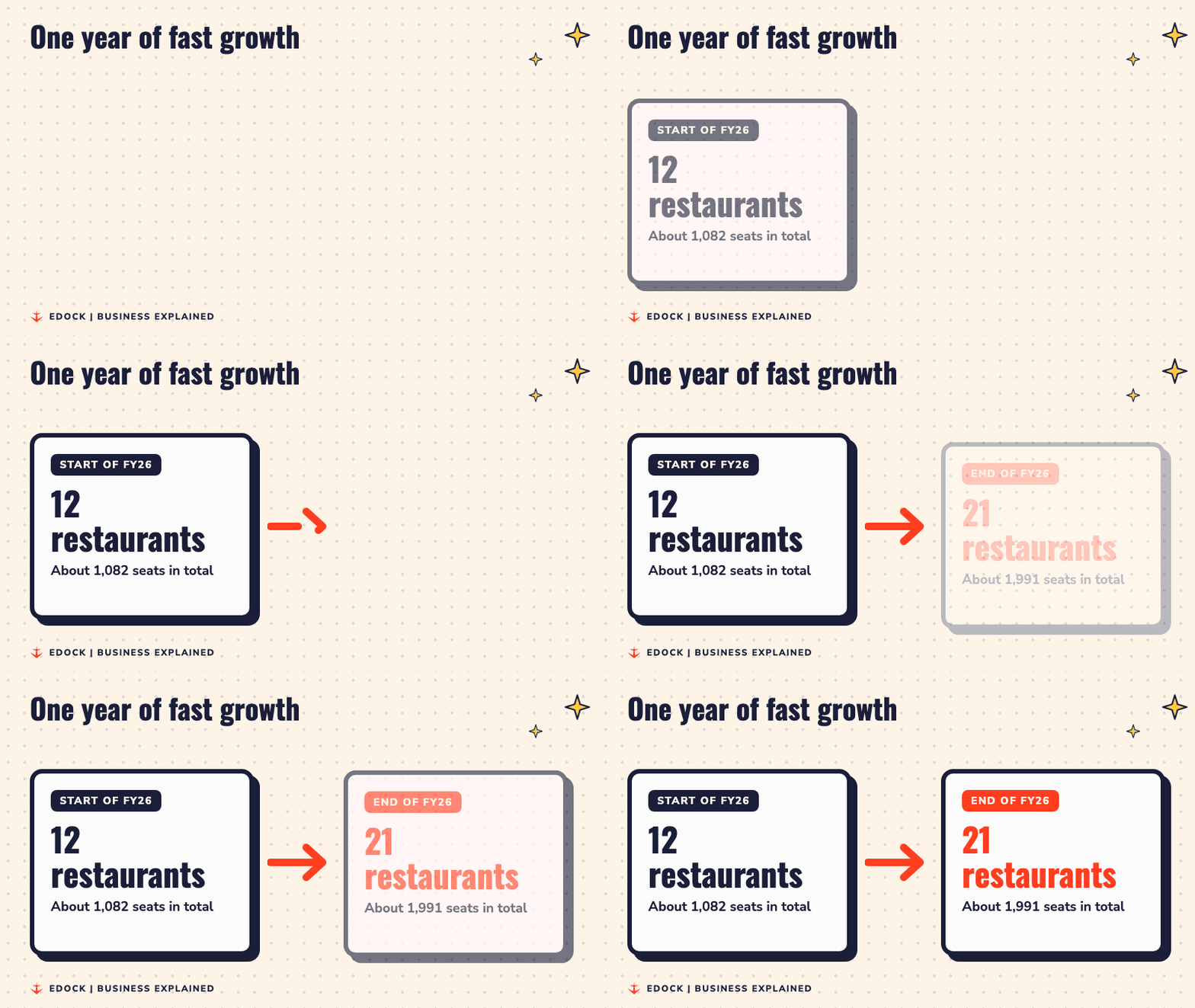
In FY26 alone, the chain grew from 12 to 21 outlets, and its seats rose from 1,082 to 1,991. More tables means more meals served every night.
The numbers: sales up, but so is the loss
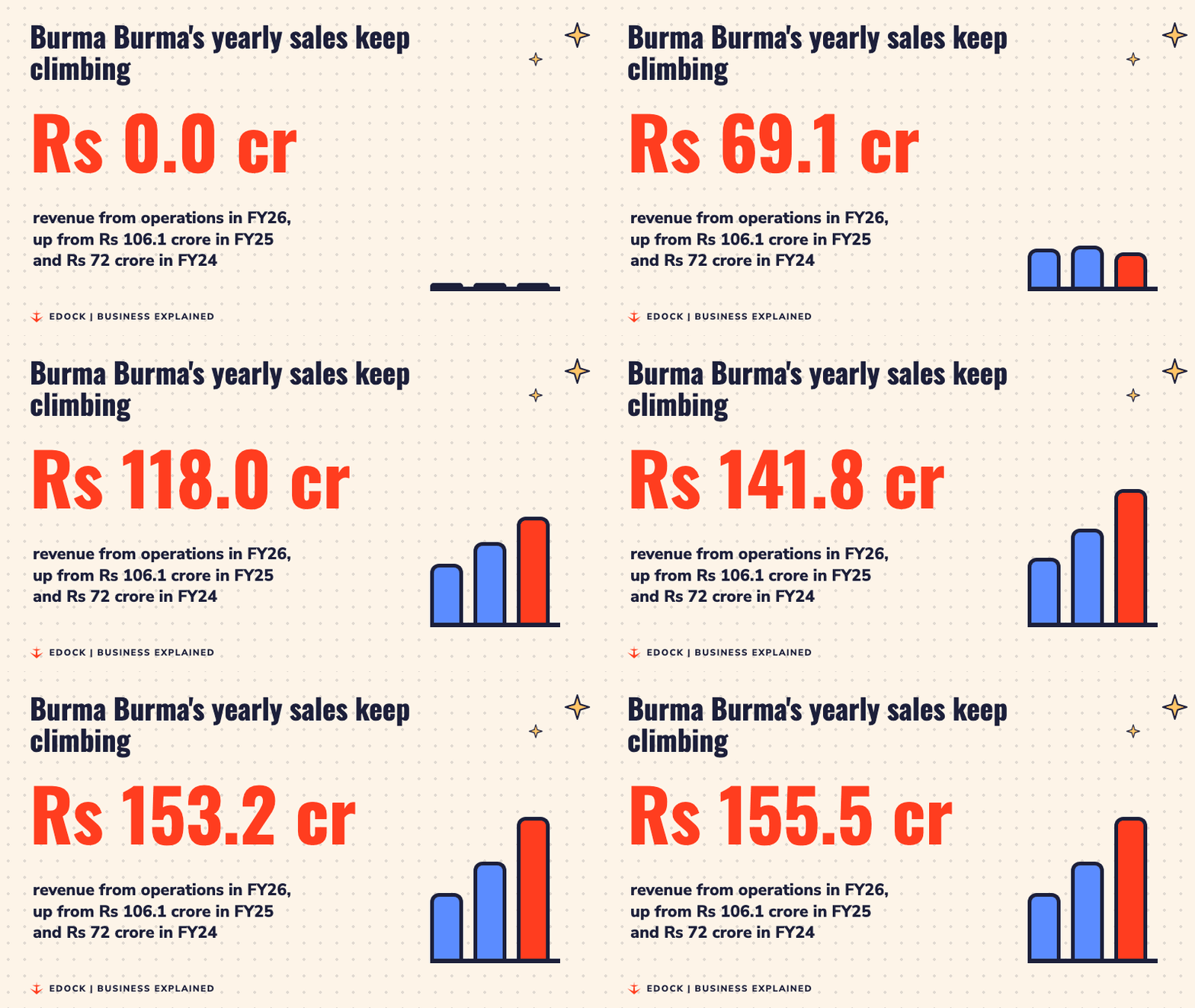
Revenue is the money that comes in from selling food. Hunger Pangs' revenue rose 46.56% to Rs 155.50 crore in FY26, from Rs 106.10 crore in FY25. A year before that, in FY24, it was about Rs 72 crore.
EBITDA is the money left after paying for food, staff and rent, but before loan interest, tax and the wear and tear of equipment. It rose to Rs 25.68 crore from Rs 21.35 crore.
But here is the twist. After every cost, the company made a net loss of Rs 15.4 crore in FY26, up from just Rs 50.5 lakh a year earlier. Total expenses grew 61.8%, faster than revenue.
Why? Opening nine new outlets in a year is like opening many new tea stalls at once. Each one costs a lot before it fills up with regular customers. The average bill also slipped from Rs 2,560 to Rs 2,400.
For April to June 2026, the first quarter of FY27, the company posted a small net profit of Rs 1.1 crore on revenue of Rs 53.7 crore. Inc42 notes this was helped by a Rs 2 crore deferred tax credit, a kind of tax adjustment. Before tax, it was a loss of Rs 89 lakh.
How big is the bet?
In March 2026, Burma Burma raised Rs 38 crore at a Rs 500 crore valuation. Valuation is what investors think the whole company is worth. In total, it has raised about $11 million so far.
The market it plays in is large. A report by research firm F&S, quoted by Business Today, puts India's full-service dining market at about Rs 1.52 lakh crore in FY26, and expects it to reach Rs 2.18 lakh crore by FY30.
It also faces tough rivals in Asian food, such as Mainland China, Mamagoto and Yum Yum Cha.
In an earlier interview with CNBC-TV18, a Burma Burma co-founder spoke about the chain's growth plans:
What happens next?
SEBI will now study the draft. It may ask for changes. If it says yes, the company files a final version with a price range, and the public can then bid for shares for a few days. Panthomath Capital Advisors is the sole book running lead manager, the banker that runs the whole sale.
No date or share price has been set yet. This post only explains the news; it is not advice to buy or skip any share.
For a longer conversation with co-founder Ankit Gupta, from Recipeat India:
Sources
- Inc42: Burma Burma parent files DRHP for IPO with Rs 150 Cr fresh issue
- Entrackr: Burma Burma parent Hunger Pangs files DRHP for Rs 150 Cr fresh issue
- Moneycontrol: Burma Burma operator Hunger Pangs files IPO draft papers with SEBI
- ET HospitalityWorld: Hunger Pangs Limited files DRHP with SEBI
- Business Today: Burma Burma operator Hunger Pangs files draft IPO papers
- Entrackr: Burma Burma raises Rs 38 Cr at Rs 500 Cr valuation
- CNBC-TV18 on YouTube: Burma Burma co-founder interview
- Recipeat India on YouTube: A conversation with Ankit Gupta
- Cover photo: Mohinga bowl, by Junosang, CC0

You may republish this story under CC BY 4.0: credit Pranav Sharma and link to this page.