Bershka makes a profit in its first full year in India while Zara slows down
Version 1 of 1 saved 21 Oct 2026, 9:18 pm IST · Chain line 122
As it was first published
Bershka makes a profit in its first full year in India while Zara slows down
Inditex's youth brand earned Rs 2.92 crore in FY26, while Zara's India profit fell 31.9%. Here is what a joint venture is and why the two differ.
Picture two shops owned by the same family. The older one is famous and has been around for years, but this year it sold a little less. The new one is small and just a year old, yet it already has money left over at the end of the year. That is what is happening inside Inditex, the Spanish company that owns Zara and Bershka, in India.
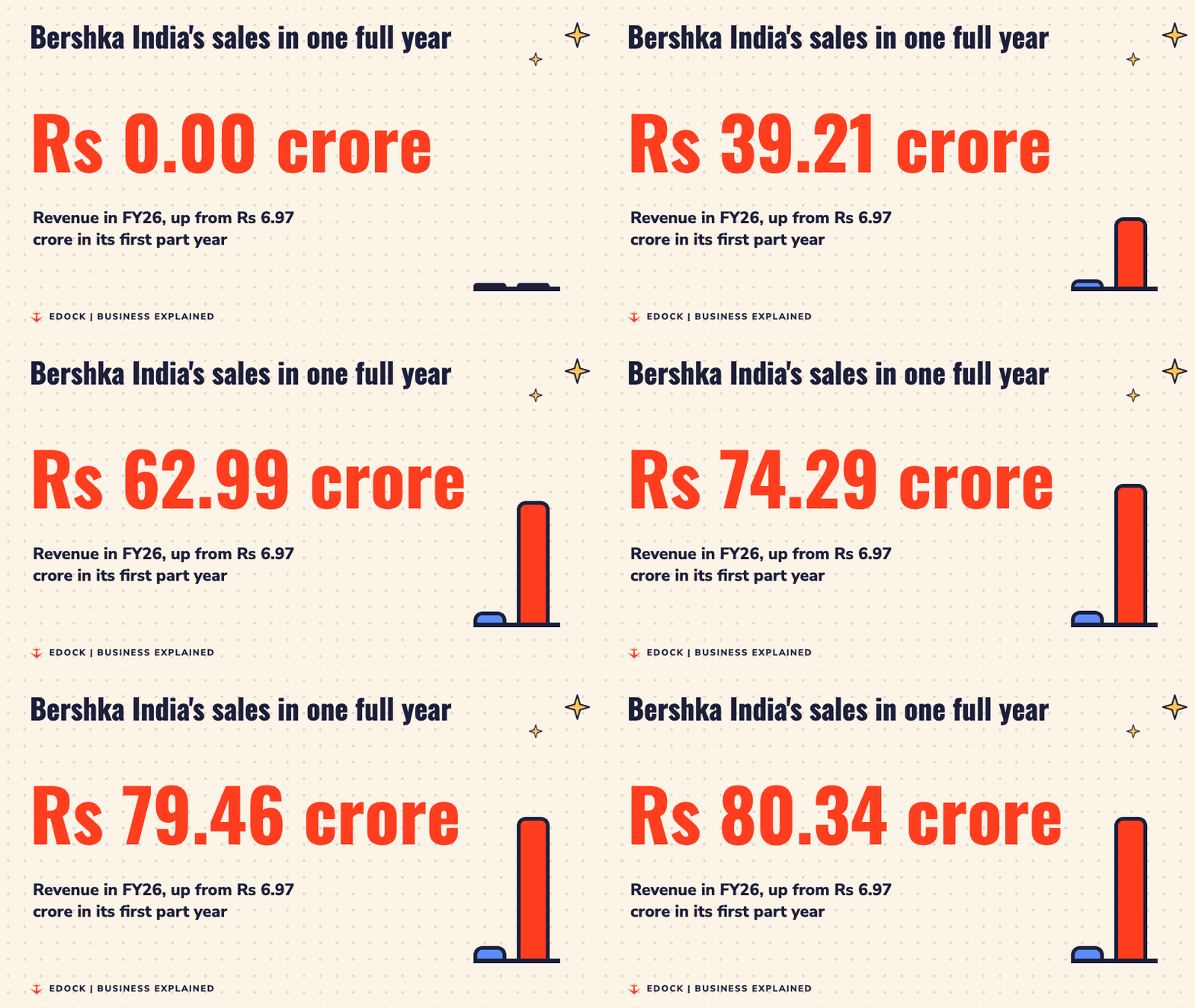
On 21 October 2026, The Economic Times reported that Bershka Retail India made a net profit of Rs 2.92 crore on revenue of about Rs 80.34 crore in the year that ended in March 2026, according to its annual report. A year earlier, it had a loss of Rs 0.39 crore. At the same time, Zara's India business sold a little less and its profit fell by about a third.
First, what is Bershka?
Bershka is a fashion brand aimed at young shoppers. It belongs to Inditex, one of the biggest clothing groups in the world. Inditex runs eight brands, which it calls commercial formats, and its total sales grew 3.2% to €39.9 billion in its 2025 money year.
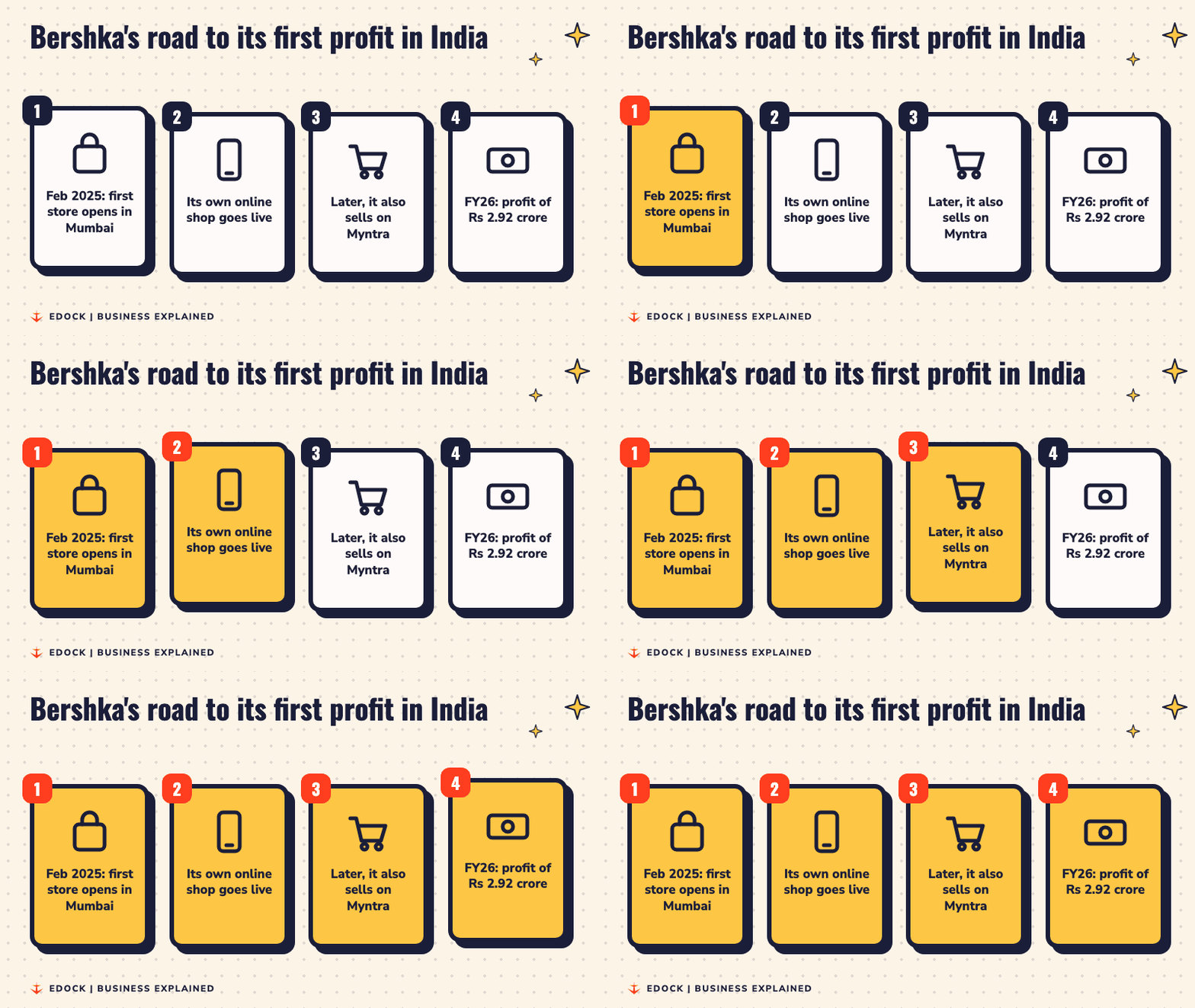
Bershka came to India only recently. Its first Indian store opened at Phoenix Palladium in Mumbai in February 2025, along with its own online shop. That store has 472 square metres of space for shoppers. Later, as The Economic Times report says, Bershka also started selling on Myntra, the fashion shopping app.
Revenue and profit are not the same thing
Think of a samosa stall. You sell 1,000 samosas at Rs 20 each, so Rs 20,000 comes in. That is your revenue: all the money from sales. But you also paid for potatoes, oil, gas, the cart and a helper. What is left after paying all of that is your profit. If the bills are bigger than the sales, you have a loss.
Bershka India's revenue was Rs 80.34 crore. Its profit was Rs 2.92 crore. So for every Rs 100 of clothes it sold, about Rs 3.60 was left as profit. That is a thin slice, but it is on the right side of zero.
The jump in sales looks huge, and there is a simple reason. In the year before, Bershka India had revenue of just Rs 6.97 crore, because it operated for only part of that year. FY26, the money year from April 2025 to March 2026, was its first full year.
Two ways to run a shop in a new country
Here is the twist. Zara and Bershka have the same parent, but they are run in India in two different ways.
Zara works through a joint venture. A joint venture is like two friends putting money into one lemonade stall and sharing it. Zara's Indian company is called Inditex Trent Retail India. It is shared between Inditex and Trent, the fashion retail arm of the Tata Group. Trent now holds a 20% share after it sold some of its shares back to the company during the year. Inditex owns the rest. Inditex also keeps control over what clothes are sold and how the brand is used.
Bershka is fully run by Inditex. There is no Indian partner. Its Indian company belongs to the Spanish group directly, which gives Inditex full control over how the brand works in India, as The Economic Times notes. Think of it as one person running the whole stall alone.
Massimo Dutti, another Inditex brand, is the other joint venture with Trent. Trent holds a 20% share in it too.
So what happened to Zara?
Zara is still far bigger than Bershka in India. But its numbers went the wrong way. According to Trent's annual report, Zara's Indian company had revenue of Rs 2,749.28 crore in FY26, down from Rs 2,782.06 crore the year before. Its profit fell 31.9%, from Rs 299.84 crore to Rs 204.14 crore.
Those are small changes in sales, but a big change in profit. Sales slipped by about Rs 33 crore, roughly 1.2%. Profit fell by about Rs 96 crore. Zara runs 22 stores in India.

This is not a one year blip. Apparel Resources says Zara India's revenue grew less than 1% in FY25 and 8% in FY24. The Economic Times adds that Zara had at first doubled its sales roughly every two years after coming to India more than ten years ago, and FY26 was its weakest showing in India since the pandemic years.
Why is it harder for Zara now?
The simple answer from the reports: more choice for shoppers. Zara competes with other foreign brands such as H&M and UNIQLO. On top of that, online first brands and Indian chains are also fighting for the same buyers.
The Economic Times describes India's clothing market as split between premium labels and value clothing. Think of it like chai. Some people happily pay Rs 300 for a fancy cafe cup. Many others want a great Rs 20 cup from the corner stall. A brand stuck in the middle has to fight both sides.
Not every Inditex brand in India is struggling, though. Massimo Dutti India's revenue rose 28% to Rs 128 crore in FY26, from Rs 100 crore a year earlier.
How big is Bershka next to Zara?
Still tiny. Zara India's revenue of Rs 2,749 crore is about 34 times Bershka India's Rs 80.34 crore. And Zara's profit of Rs 204.14 crore is about 70 times Bershka's Rs 2.92 crore. So one good year does not make Bershka a giant.
But the direction matters. One brand has just started earning more than it spends. The other, much older brand, is selling a little less and keeping less. That is why people who follow the fashion business are watching how the two ways of running a brand in India compare.
Here is a short Reuters video on Inditex, the company behind both brands:
And a short video from a Bershka store in Delhi:
What this means for young shoppers
For anyone who shops for clothes, more brands fighting for the same buyers usually means more choice on the rack and on the app. Brands have to work harder to win shoppers, whether that is with new styles, better prices or easier online shopping.
For anyone curious about business, this story is a neat lesson. A famous name does not guarantee growth forever. And how a company is set up, alone or with a partner, is part of the story behind its numbers.
Sources
- ET Retail: Inditex's Bershka turns profitable in first full year in India as Zara growth stalls
- Outlook Business: Zara's India FY26 profit falls 32% to Rs 204 crore, revenue slips
- Apparel Resources: Zara's India business stalls as competition intensifies
- Indian Retailer: Zara India profit falls 31.9% in FY26 as revenue slips
- Retail4Growth: Bershka marks India debut with Phoenix Palladium store
- Inditex: FY2025 results
- Cover photos: Clothes rack, by UNIFORM Studio, CC BY 2.0; Clothes hangers on railing, by Christian Fregnan, CC0; Jeans 2009, by Mark Hillary, CC BY 2.0


