Barclays to cut about 5,000 roles as AI takes on more office work
The UK bank's July to September profit rose 12%, yet it plans 5% fewer staff, and a large share of the cuts may touch its India back offices.

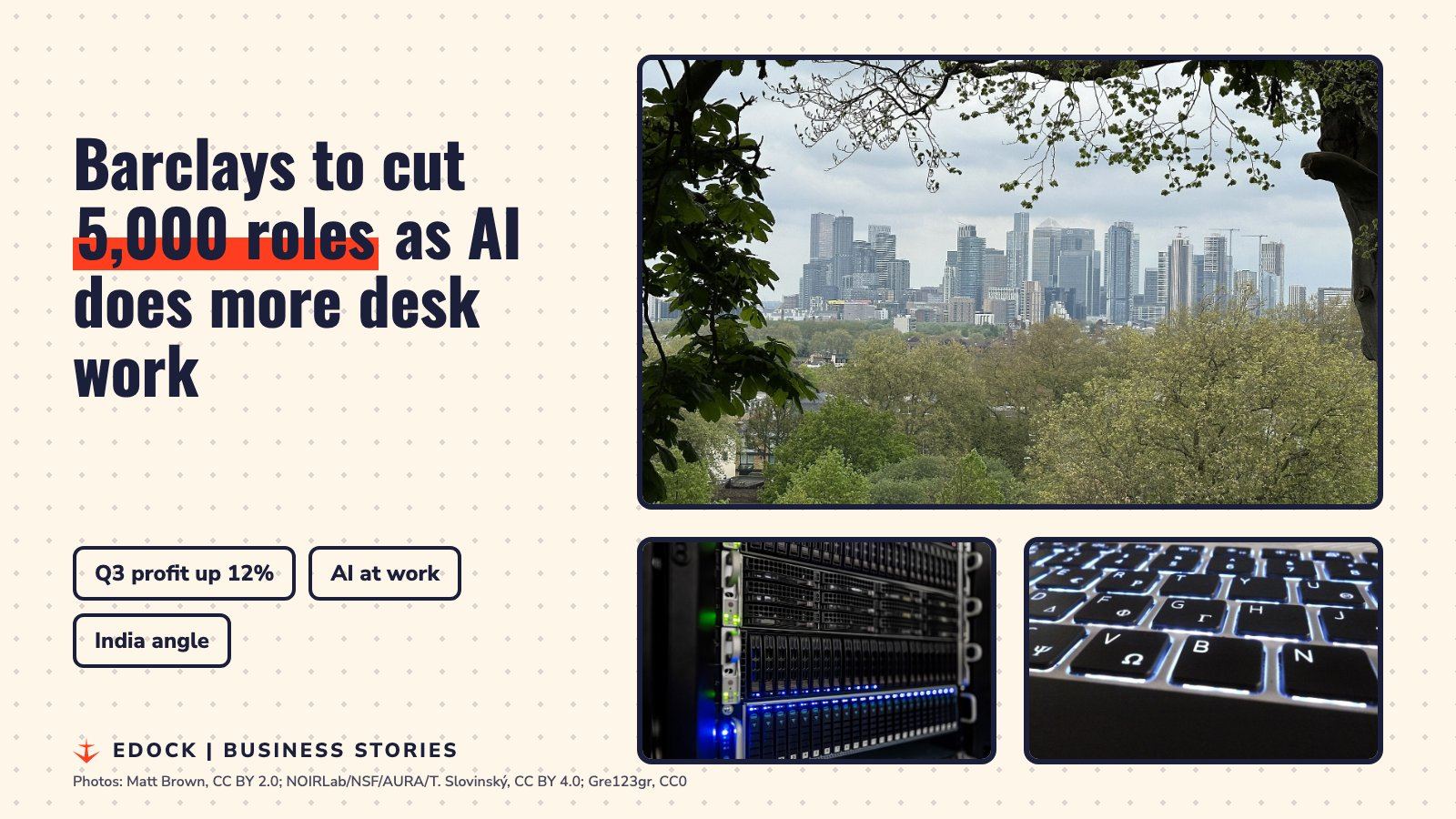
Picture a big office where 20 people sit in a row. Now picture one empty chair in that row. That is roughly what Barclays, a big British bank, is planning. On Thursday, 22 October 2026, the bank said it expects to cut about 5,000 full-time roles, around 5% of its staff. Five out of every hundred is the same as one out of every twenty.
The surprising part? The same day, the bank said its profit had gone up. So this is not a bank in trouble cutting costs to survive. It is a bank making more money that still wants fewer people, partly because software can now do some of the work.
First, what does Barclays do?
Barclays is a bank based in London. It keeps savings for ordinary families, gives home loans, helps companies with their money, and trades shares and bonds for big clients. Its results report lists five main parts: Barclays UK, UK Corporate Bank, Private Bank and Wealth Management, the Investment Bank, and a US Consumer Bank that runs credit cards in America.
Its money is counted in pounds, written as £. The pound is the money of the United Kingdom, the way the rupee is ours.
How did the bank do from July to September?
Companies share their results every three months. Each three-month block is called a quarter. July to September is the third one, so people call it Q3.
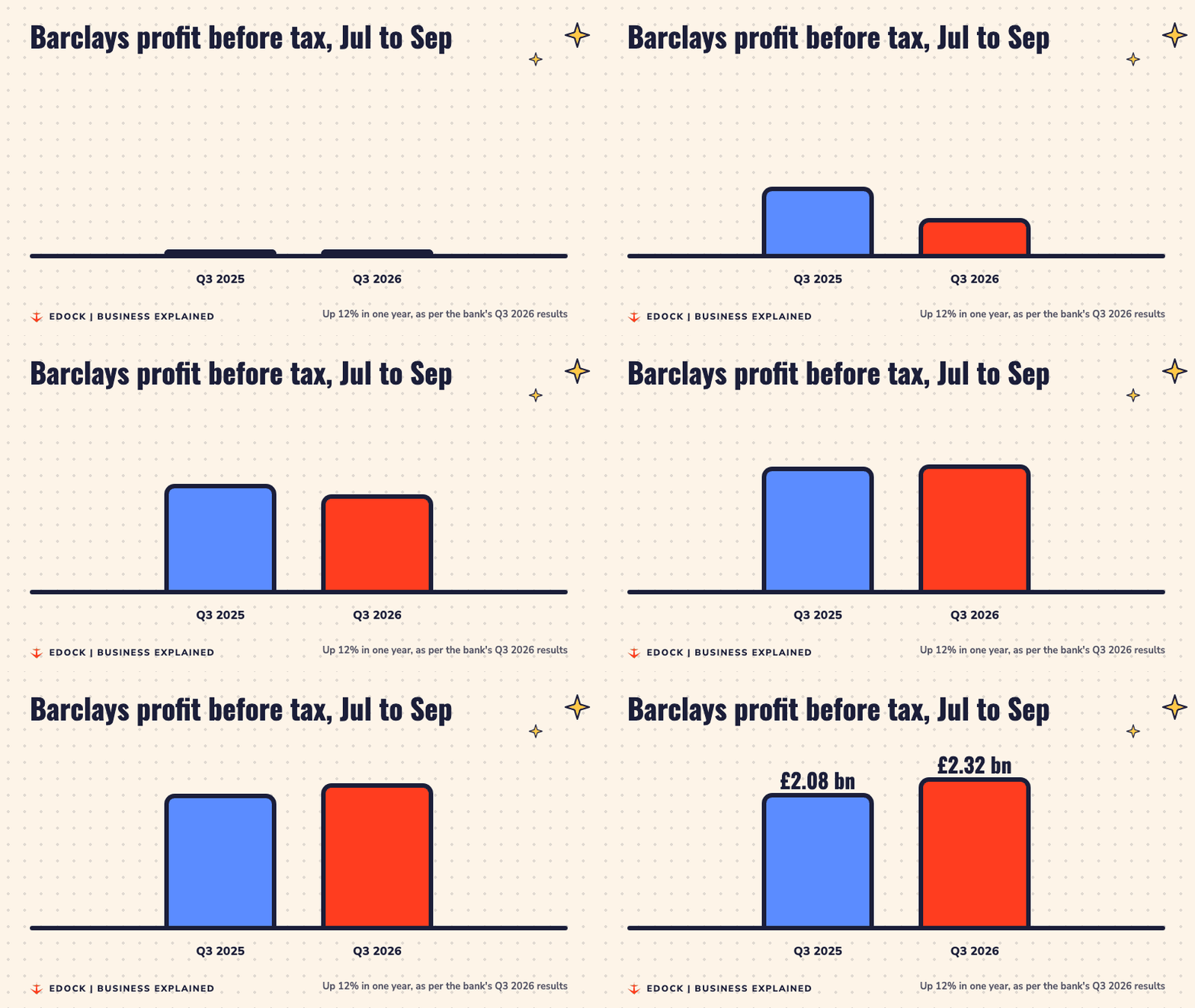
For Q3 2026, Barclays made a profit before tax of £2.32 billion, up 12% from £2.08 billion a year earlier. Profit before tax is what is left after paying all the bills, but before the government takes its share. Think of a samosa stall: sales minus potatoes, oil, rent and helpers' pay, before the tax bill.
The bank's total income, the money that came in before costs, was £7.4 billion, up 3% from the same quarter last year. Even so, the profit was slightly below what experts had forecast.
So why cut roles if profit is rising?
Because the bank wants its costs to keep falling while its income keeps growing. Barclays calls part of this structural cost actions. That is a fancy way of saying "spend money now to change how the bank works, so it costs less to run later". In Q3 alone, it spent £201 million on such actions, with about £300 million more planned for October to December.
The results report says these are "technology-enabled" reductions in full-time staff. In simple words: new tools let fewer people do the same amount of work.
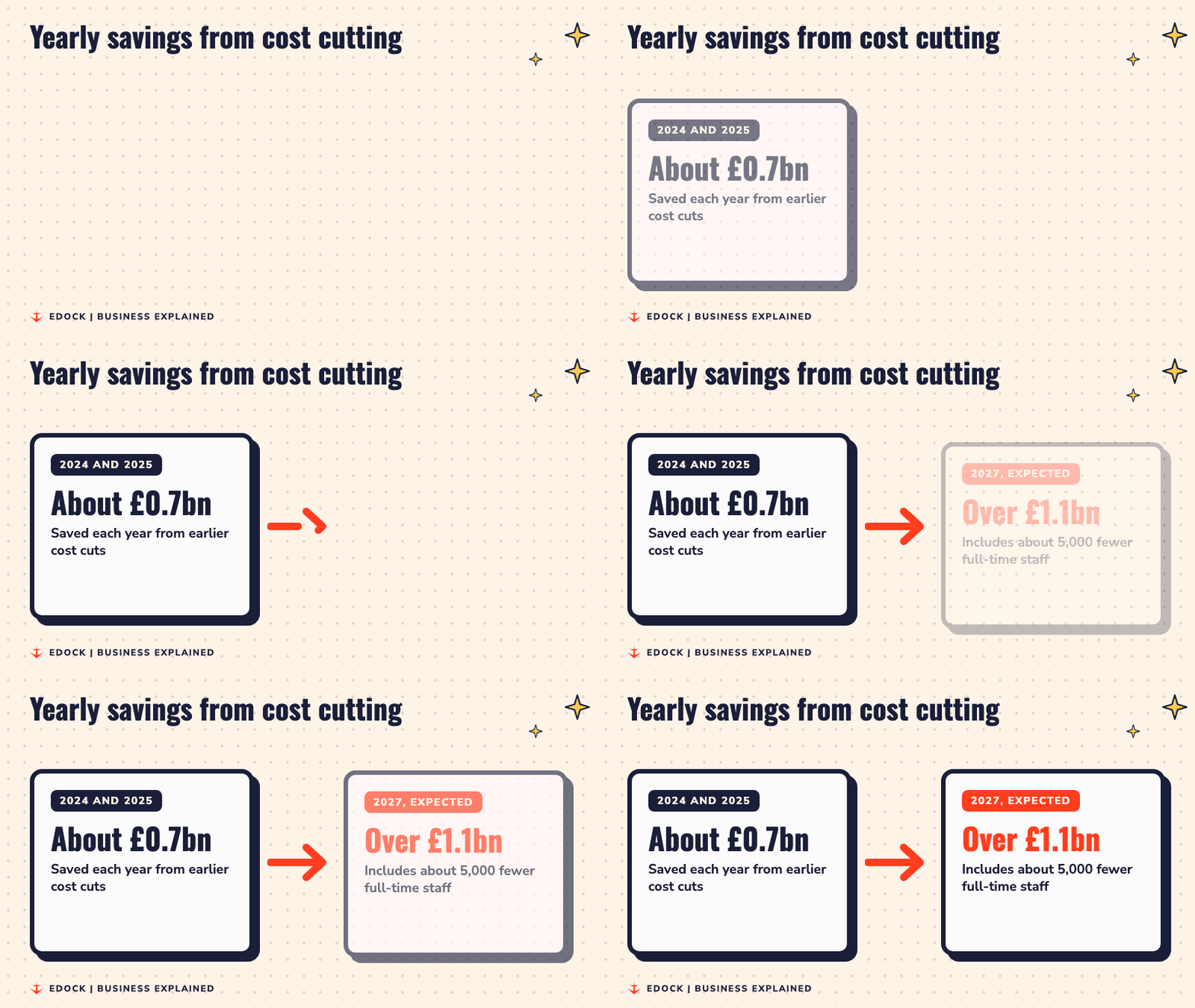
Here is what the bank expects to save. Over the past two years, cost cutting saved it about £0.7 billion a year. For 2027, it now expects to save more than £1.1 billion. That is about £0.4 billion more than before.
What does an "AI-led cost drive" really mean?
Think of a supermarket that adds self-checkout machines. Shoppers scan their own items. The shop still needs some people, but fewer at the tills. AI tools in an office work in a similar way. They can help write computer code and handle simple customer questions, so fewer people are needed for the same work.
Barclays said around 60% of the cuts are in support functions, including fewer developers, "as AI makes our people more productive". Support functions are teams that keep the bank running from behind the scenes, like the kitchen of a restaurant. Customers never see them, but nothing works without them. Developers are people who write the code for the bank's apps and systems.
The bank also gave two everyday examples. Better apps and online help cut the number of calls to its UK call centres by 10% in the past year. And changes in how branches are staffed reduced the number of employees per branch by around 10%.
How many have already gone?
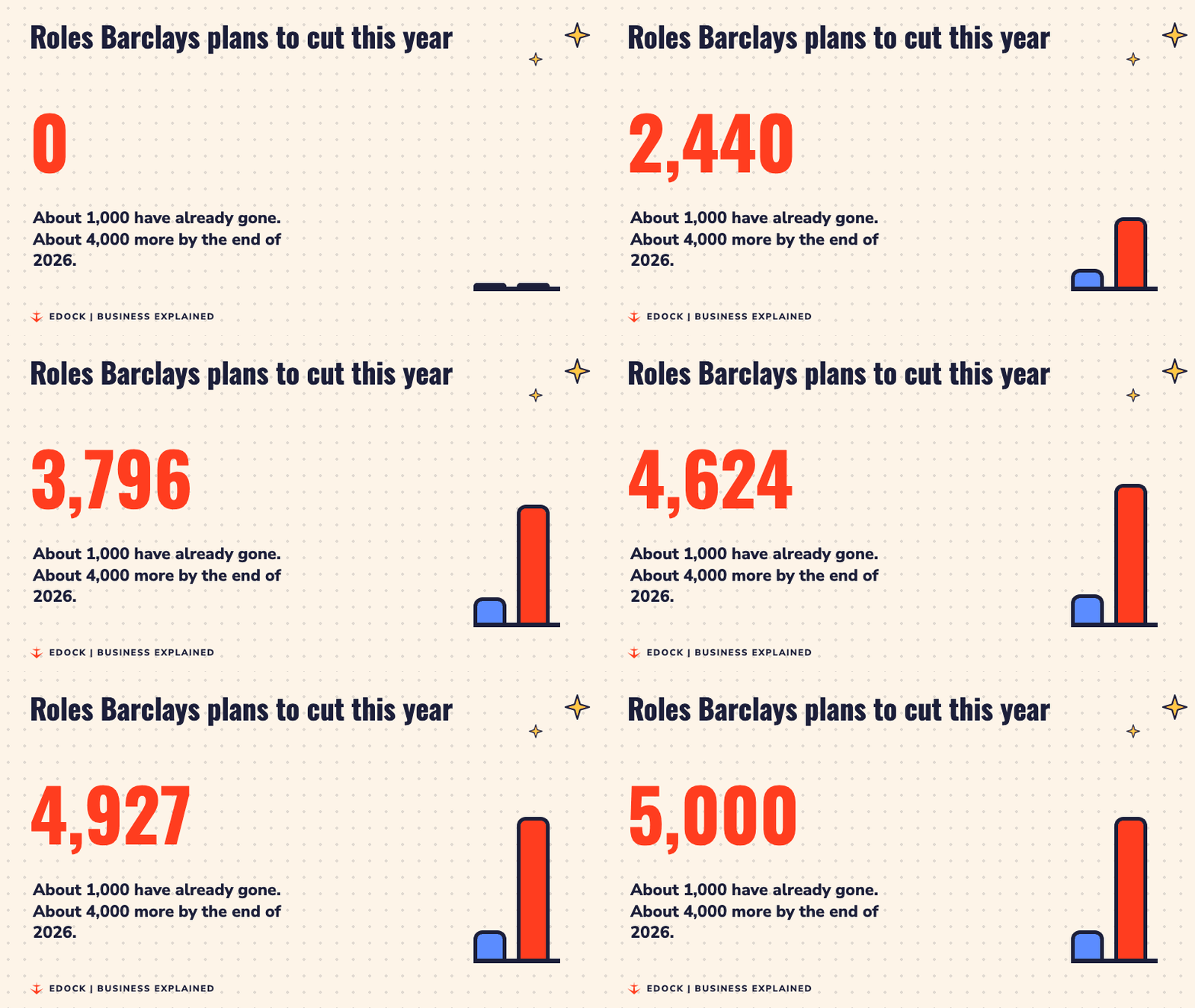
The cuts are not all in the future. About 1,000 roles have already gone, and about 4,000 more are expected to go by the end of this year. Together, that makes the 5,000.
Not every cut is because of AI. Barclays describes the plan as "organisational simplification and technology change", with AI as one part of it. The bank's slides also say the cuts are subject to talks with staff, called consultation, where needed.
Is there an India link?
Yes. Many big foreign banks run part of their back office from India. A back office is the team that handles the quiet, behind-the-desk work, like checking records, running systems and writing code. HR news site HRKatha reports that the cuts are focused on Barclays' UK retail bank, but that many of those back office functions are based in India, so a large share of the reductions is expected to affect Indian operations.
The report does not give an exact number for India. Barclays' own results papers do not split the 5,000 by country either.
Is Barclays the only bank doing this?
No. Standard Chartered and Danske Bank have also announced AI-related cuts this year, according to the same report. It also notes that unions have criticised Barclays for using AI as a reason to cut staff instead of training them for new tasks.
Where is the extra money going?
Part of it goes back to the people who own the bank's shares. Barclays announced a new share buyback of £500 million. In a buyback, a company uses its spare cash to buy its own shares from the market. Fewer shares are left, so each one stands for a slightly bigger slice of the company, like a pizza shared by fewer friends.
Counting this, the money the bank has handed back to shareholders this year reached £2.8 billion, up 46% from the same period last year.
What this means for first-jobbers
The Barclays plan shows a clear pattern. Big companies are using AI to do routine office tasks, and support teams are among the first places they look. The bank's own words point the same way: it expects fewer developers because AI makes each person more productive.
For students and people in their first roles, the useful lesson is simple. Tasks that repeat every day are the easiest for software to take over. Skills like solving new problems, understanding customers and learning to work alongside AI tools are harder to replace.
Sources
- Barclays: Q3 2026 Results Announcement
- Barclays: Q3 2026 results call speech and slides
- RTTNews: Barclays Q3 results rise, new £500 million buyback
- HRKatha: Will Barclays' cuts hit India amid AI push
- Cover photos: Canary Wharf skyline from Greenwich Park, by Matt Brown, CC BY 2.0; NOIRLab HQ Server Racks, by NOIRLab/NSF/AURA/T. Slovinský, CC BY 4.0; Backlit Laptop Keyboard, by Gre123gr, CC0


You may republish this story under CC BY 4.0: credit Pranav Sharma and link to this page.