Bank of Baroda earns a record Rs 6,532 crore as NRI dollar deposits jump nearly six times
A one-time NSE share sale lifted the profit, while an RBI plan pulled NRI dollars into Indian banks.
Picture a bank earning about Rs 71 crore every single day for three months. That is roughly what Bank of Baroda did between July and September 2026. On Friday, 30 October 2026, the state-owned lender reported a net profit of Rs 6,532 crore for the quarter, the highest in the bank's history. Net profit means the money left after paying for everything.
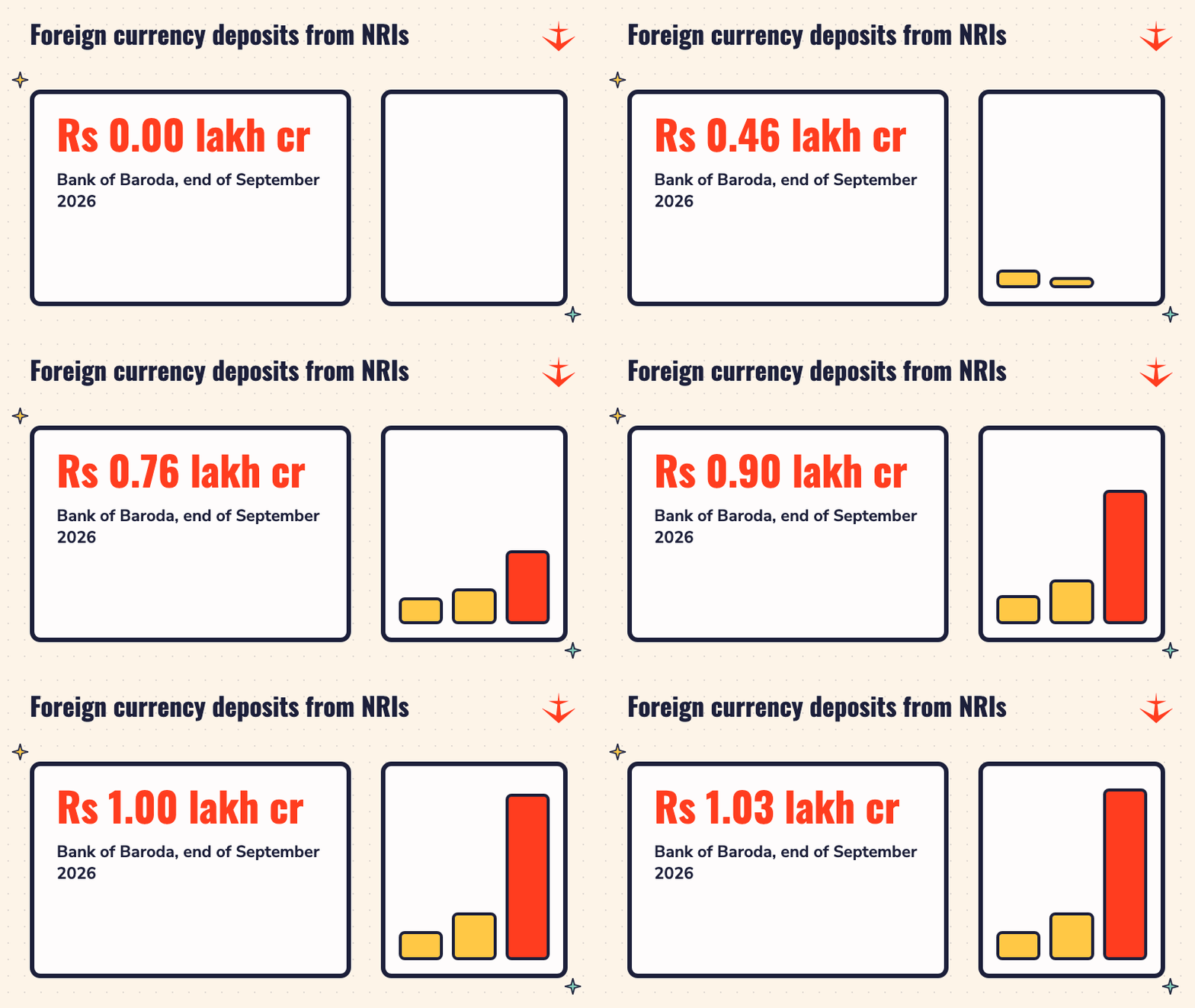
There was a second surprise in the numbers. Deposits kept in dollars and other foreign money by Indians living abroad rose nearly six times in one year, to Rs 1.03 lakh crore. Here is what both numbers mean, in plain words.
First, who is Bank of Baroda?
Bank of Baroda is a big Indian bank that is more than 100 years old. The Maharaja of Baroda, Sayajirao Gaekwad III, founded the bank on 20 July 1908 in Gujarat. Today the government of India owns most of it, and it is the second largest public sector bank after State Bank of India. Public sector simply means the government is the main owner.
Its profit a year earlier, in the July to September quarter of 2025, was Rs 4,809.39 crore. So the new profit is 35.8% higher. These are standalone numbers, which count only the bank itself. If its other group companies are added, the consolidated profit was Rs 6,737.28 crore, up 31%.
How does a bank make money anyway?
Think of a chai stall owner who borrows milk from a neighbour and promises to pay back a little extra. Then the owner sells chai for much more than the milk cost. The difference is the earning.
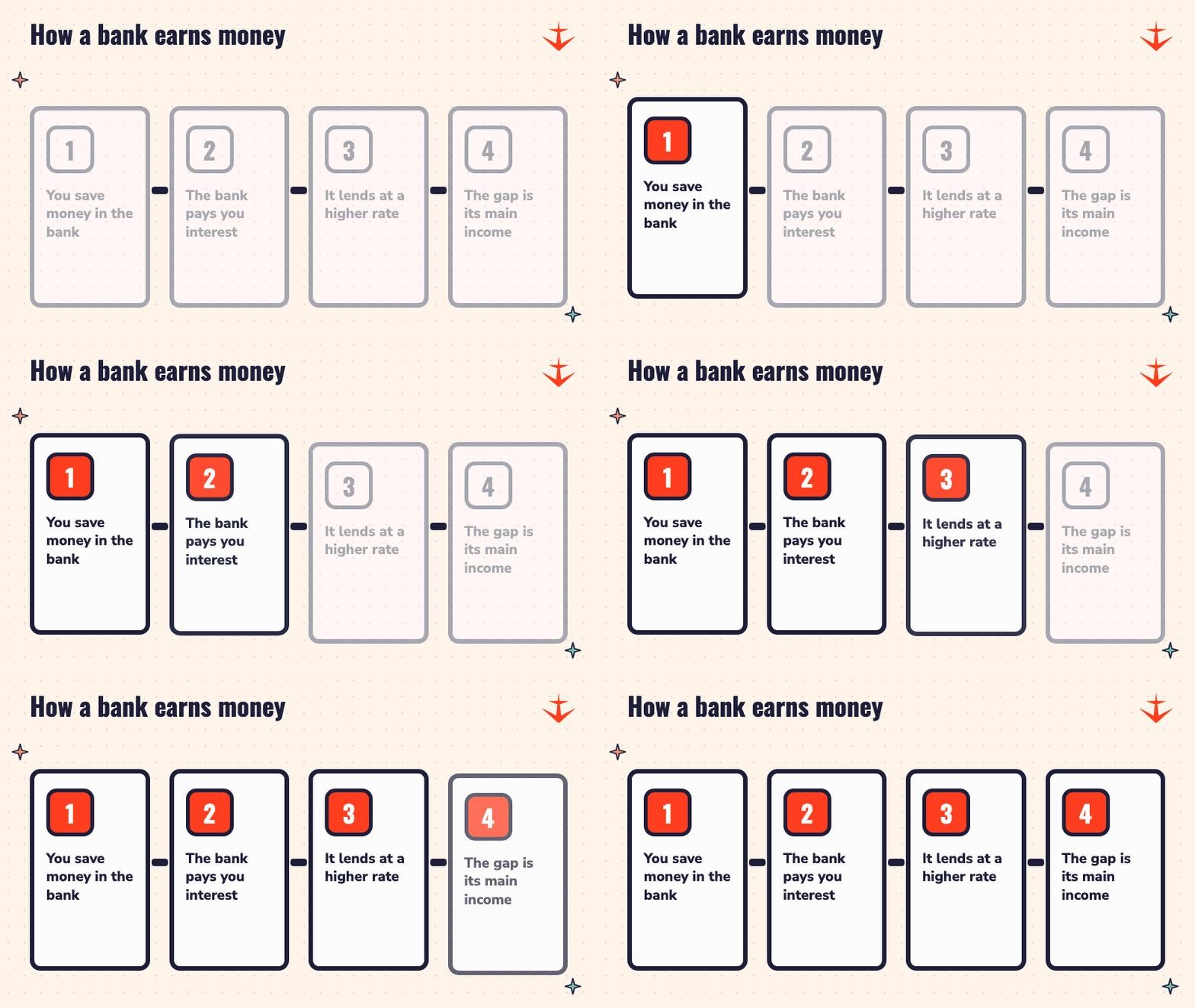
A bank works the same way, only with money. It takes your savings and pays you interest. Then it lends that money to people buying cars or homes, and to farmers and shops, at a higher interest rate. The gap between the interest the bank earns and the interest the bank pays is called net interest income.
For Bank of Baroda, this core earning grew 9% to Rs 13,026 crore in the quarter. Bankers also track the net interest margin. A margin of 2.74%, which is where the bank stood, means that for every Rs 100 working for the bank, about Rs 2.74 a year is left after paying savers. The bank's head, MD and CEO Debadatta Chand, said the bank expects margins to improve in the next two quarters.
So why such a big jump this time?
Here is the twist. A big part of the record did not come from loans. It came from a one-time sale.
Bank of Baroda owned shares in the National Stock Exchange (NSE), the place where shares of Indian companies are bought and sold. When the NSE sold shares to the public for the first time, in what is called an IPO, Bank of Baroda sold a part of its own holding. That sale pushed up its treasury income, which is money a bank makes by buying and selling investments.
Treasury income was Rs 4,093 crore this quarter, against Rs 1,086 crore a year earlier. That is almost four times as much. Think of a cricketer who scores a big hundred partly because of one lucky dropped catch. The runs count, but the catch will not come every match.

The bank also kept extra money aside for loans that may go bad. These set-asides, called provisions, rose 93% to Rs 2,382 crore. Mr Chand said part of this is to get ready for a new, stricter way of counting likely loan losses, called the expected credit loss (ECL) framework.
What is this foreign currency deposit everyone is talking about?
Now to the second surprise. FCNR(B) is short for Foreign Currency Non-Resident (Bank) deposit, a fixed deposit for Non-Resident Indians (NRIs), people from India who live and work abroad. The money stays in dollars or another foreign currency, and the interest is paid in that same currency. So if the rupee falls, the depositor does not lose.
Bank of Baroda's FCNR(B) deposits stood at Rs 17,870 crore in September 2025. By June 2026 they were Rs 29,090 crore. By the end of September 2026 they had shot up to Rs 1.03 lakh crore. Of this, Rs 77,270 crore came through a product the bank calls BOB Legend.
Why did NRIs suddenly send so many dollars?
The Reserve Bank of India (RBI) made it worth their while. In June 2026, with oil prices high and the rupee weak, the RBI opened a special swap window. A swap here is a deal where a bank sells dollars to the RBI today and promises to buy the same amount back later at the same rate.
Normally, a bank holding dollar deposits pays a fee to stay safe in case the rupee moves. This protection is called hedging. Under the new window, the RBI carried that cost. So banks could offer NRIs higher interest. One small finance bank raised its top dollar deposit rate from 5.15% to 7.10%.
NRIs rushed in. Across all banks, the money that came in through the window reached $133 billion, against early guesses of $75 billion to $100 billion. The RBI closed the window a month early, on 31 August. Bank of Baroda alone raised about $8.08 billion of these deposits under the window.
Is there a catch for banks?
Yes, a small one. The RBI deal covers only the main amount of these deposits, not the interest. Banks must protect the interest part themselves. New RBI rules from October ask banks to keep aside cash equal to 20% of such protection deals, and that cash earns nothing. So hedging the interest has become more costly for banks.
What does this mean for savers and borrowers?
For savers, the health of a bank matters. Bad loans, meaning loans people have stopped repaying, fell. The gross bad loan ratio improved to 1.78% from 2.16% a year earlier. Total deposits grew 16.4% to Rs 17.45 lakh crore.
For borrowers, the bank is lending more. Vehicle loans grew 27.8%, home loans 14.6% and education loans 9.9% over the year. Total loans grew 18.3% to Rs 15.12 lakh crore. The bank also raised its full year loan growth target to 13% to 15%, up from 12% to 14%.
About 38% of the bank's loans are linked to an outside benchmark rate. That means the interest on those loans moves up or down when the RBI changes its own rate. If you ever take a home or car loan, ask whether the rate is linked like this, because your monthly payment can change with it.
Hear from the bank's boss
This earlier ET Now interview shows Debadatta Chand talking about the bank's loans and deposits after an earlier quarter. It gives a feel for how a big bank's chief looks at growth.
The big picture
Bank of Baroda's record quarter has two stories inside it. One is a strong but steady core business: more loans, fewer bad loans. The other is a one-time boost from selling NSE shares. Then there is the dollar rush, where an RBI plan pulled billions of dollars from NRIs into Indian banks. The bank's lending keeps growing. The next few quarters will show how much of the record came from steady earning and how much was a lucky catch.
Sources
- Business Standard: Bank of Baroda reports highest-ever quarterly profit in Q2 FY27
- The Economic Times: Bank of Baroda's FCNR(B) deposits grow nearly six times
- Free Press Journal: Bank of Baroda reports record Q2 profit
- The Hans India: Bank of Baroda profit hits record, loan growth outlook improves
- Business Standard: New RBI forex rules make FCNR(B) hedging costlier for banks
- Business Today: FCNR deposit rates rise after RBI swap window
- Wikipedia: Bank of Baroda
- Cover photo: Bank of Baroda International Banking Branch at MG Road, Bengaluru, by Raghavan2010, CC BY-SA 4.0

You may republish this story under CC BY 4.0: credit Manpreet Kaur and link to this page.