Bajaj now sells more bikes abroad than in India, and cannot make enough e-scooters
Bajaj Auto's July to September results show record exports, electric sales up from 82,000 to about 2 lakh, and a factory that cannot keep up.

Picture this. For every 10 motorcycles and scooters Bajaj Auto sold in India between July and September 2026, the company sold about 11 in other countries. That is the big surprise in the results Bajaj shared on Tuesday, 27 October 2026.
There is a second surprise too. People want Bajaj's electric scooters and electric autos so much that the company cannot make them fast enough. Its finance chief said Bajaj could deliver only 75% of the electric vehicles it had planned.
First, who is Bajaj Auto?
Bajaj Auto is a vehicle maker based in Pune, Maharashtra. It began on 29 November 1945. Today it makes Pulsar motorcycles, Chetak scooters and the auto rickshaws you see on Indian roads. It is the world's largest maker of three-wheelers.
Its most famous name may be the Chetak. The old petrol Chetak was sold from 1972 to 2006, and was named after the horse of the warrior king Maharana Pratap. Since 2019, the Chetak has come back as an electric scooter.
What happened on 27 October?
Companies share their report card every quarter. A quarter is three months, a bit like one school term. This report covered July, August and September 2026.
Bajaj sold 15.49 lakh vehicles in the quarter, up 20% from a year earlier. Its revenue crossed Rs 20,000 crore for the first time. Revenue is all the money that comes in from sales, before any costs are paid.
Its profit, the money left after paying for steel, parts, salaries and everything else, rose 35% to Rs 3,354 crore. Think of a samosa stall: revenue is what goes into the cash box, profit is what is left after buying potatoes, oil and flour.
Two kinds of profit, explained
Some news reports said Bajaj's profit jumped 62%. Others said 35%. Both are right, because they measure different things.
- Standalone profit counts only Bajaj Auto, the company that makes the vehicles. This was Rs 3,354 crore, up 35% from Rs 2,480 crore.
- Consolidated profit counts the whole family of companies, including the lending arm Bajaj Auto Credit and its European bike unit. This was Rs 3,436 crore, up about 62% from Rs 2,122 crore.
The 62% number needs care. The company that owns KTM, the sports bike brand, was added to Bajaj's family accounts only from November 2025. So this year's family total includes a piece that last year's did not. That is why this post uses the standalone number as the main one.
Why is the world buying Bajaj bikes?
Exporting means making something at home and selling it in another country. Bajaj sent 6.77 lakh two-wheelers abroad in the quarter, up 43%. In India, it sold 6.07 lakh, up only 2%.
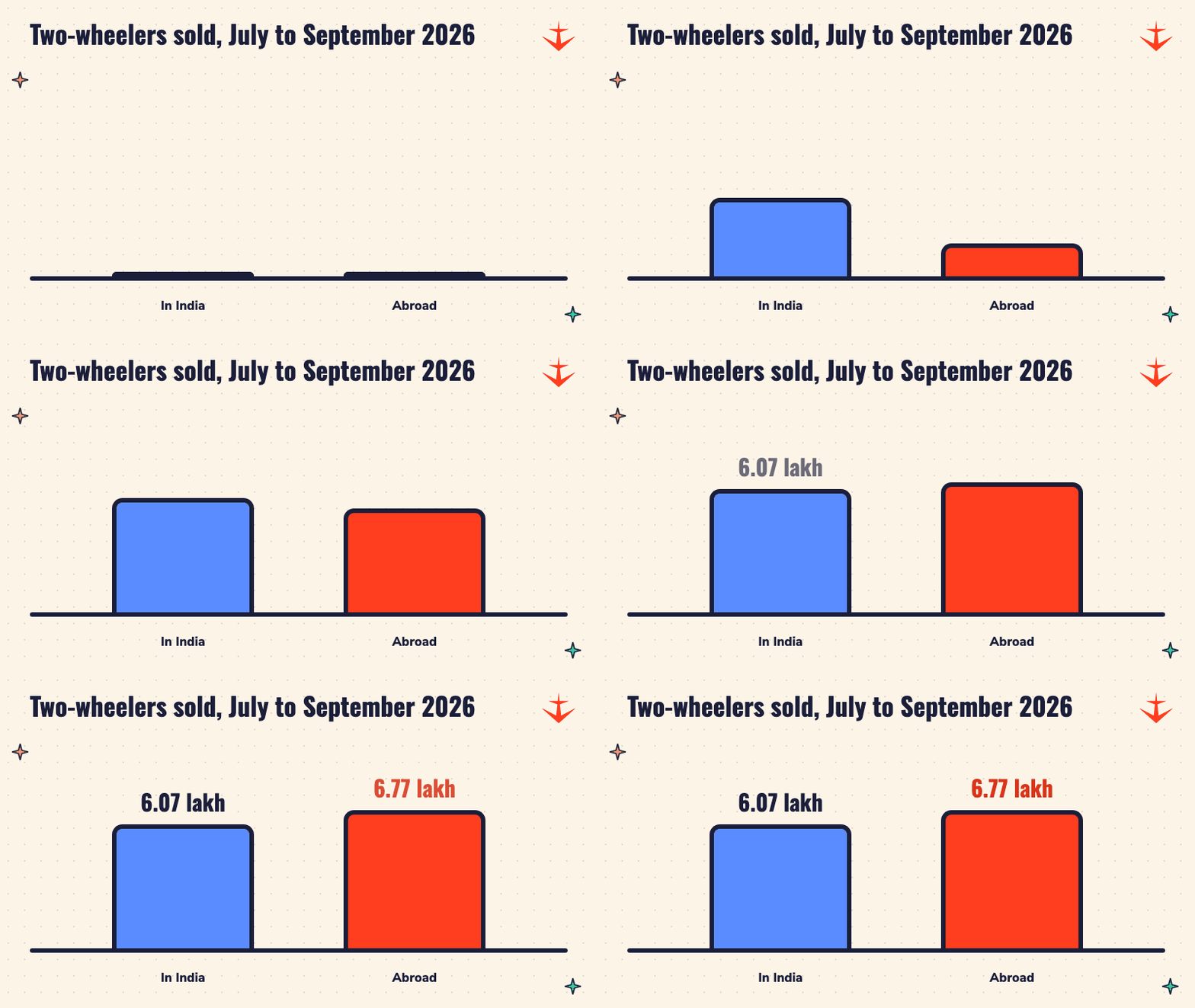
Add in three-wheelers and other commercial vehicles, and the picture is the same. Total exports were about 7.79 lakh vehicles, slightly more than the 7.70 lakh sold at home.
Where did they go? Sales in Africa nearly doubled from a year earlier. Latin America had its best quarter ever for the second time in a row.
The money from abroad comes in US dollars. When the dollar gets stronger against the rupee, each dollar turns into more rupees. Mint reported that this helped Bajaj handle rising costs.
Electric vehicles: more buyers than scooters
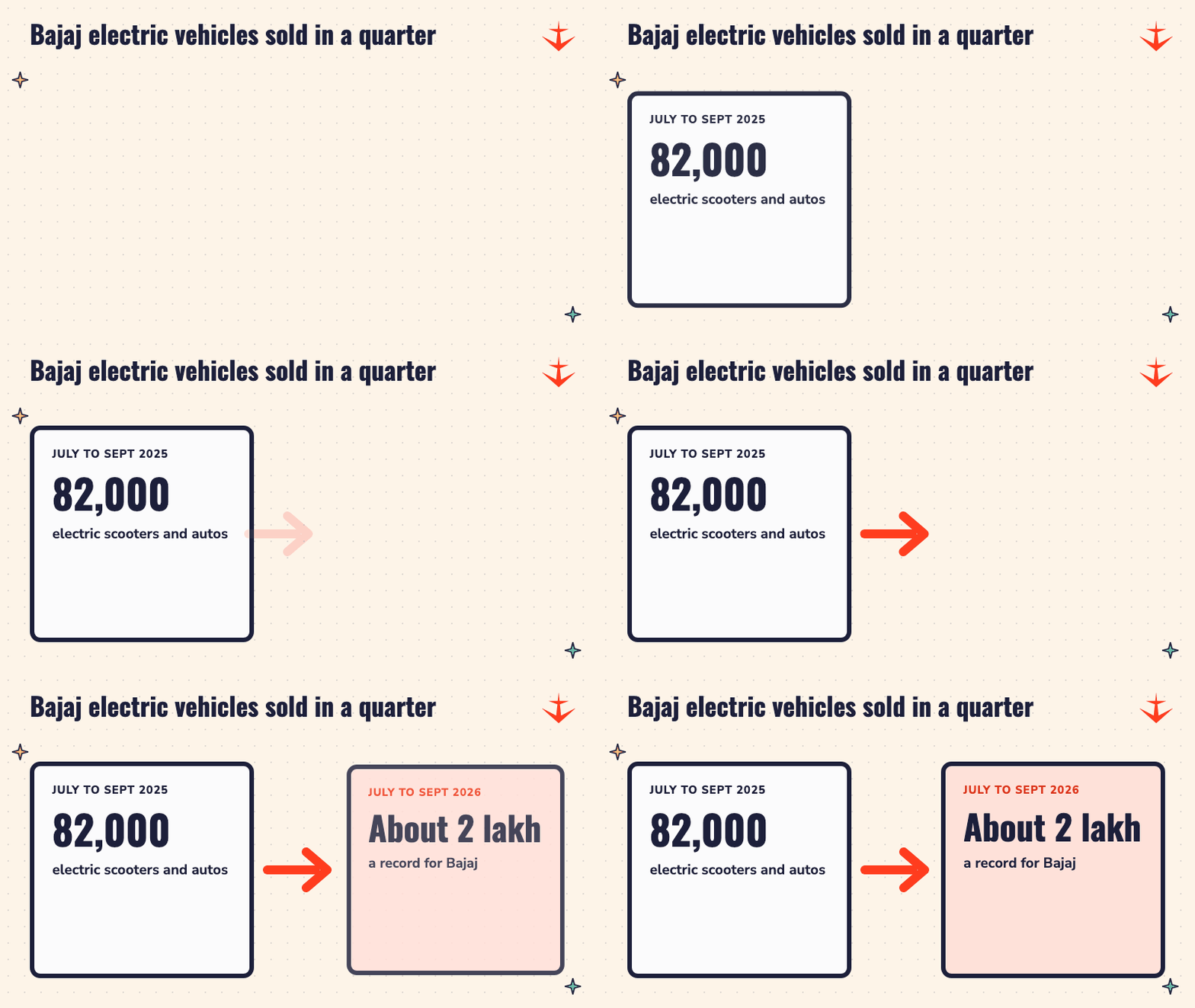
Bajaj sold about 2 lakh electric vehicles in the quarter. A year earlier, the number was 82,000. These are mainly Chetak scooters and electric autos. Electric vehicles now bring in about one third of Bajaj's revenue in India.
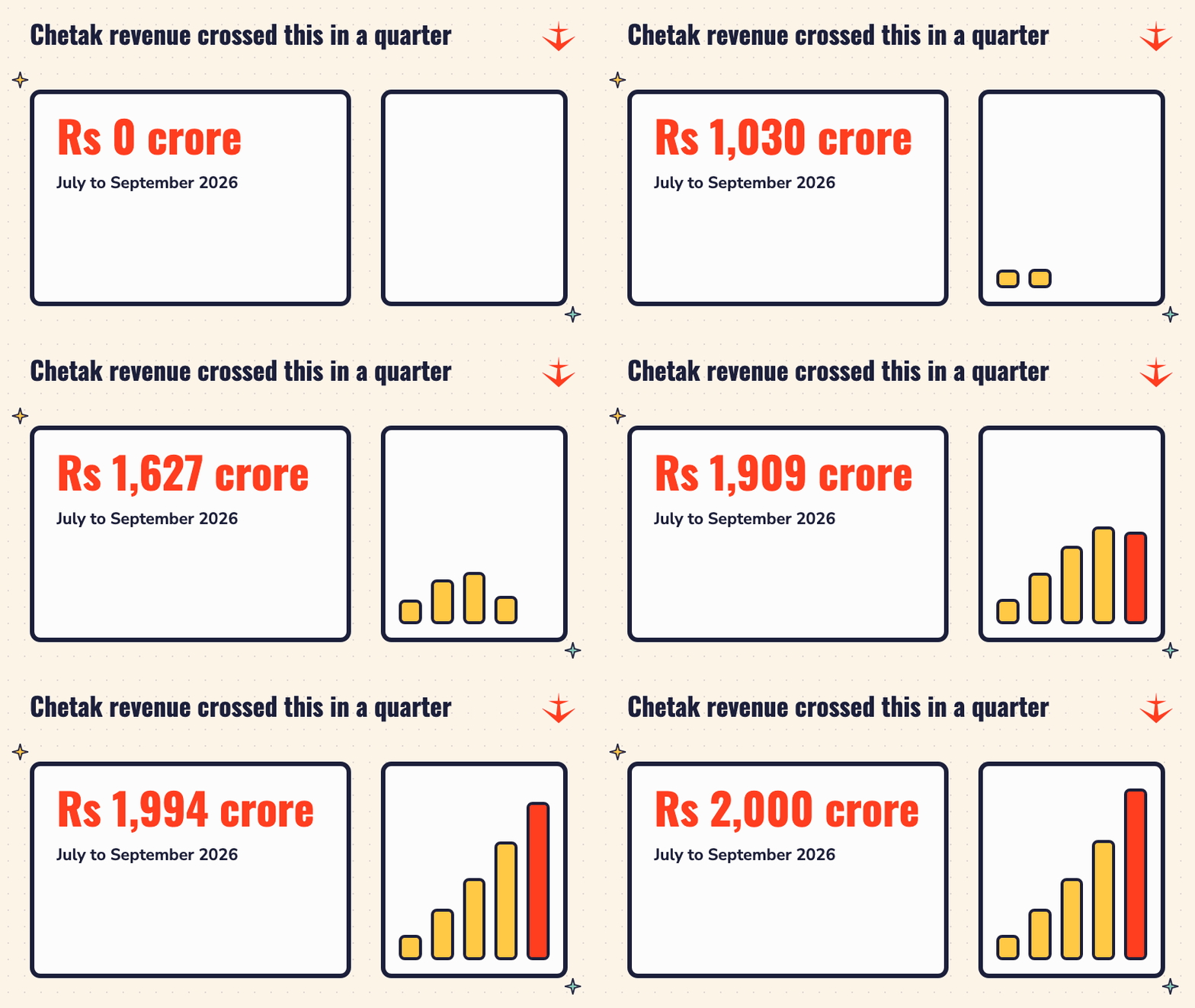
Chetak had its biggest quarter yet. Revenue from the scooter crossed Rs 2,000 crore. Sales of electric three-wheelers, the kind used as autos, also more than doubled.
There is also good news on money. Until recently, the electric business pulled Bajaj's overall profit rate down. Now Mint reports that this business lifts the overall profit rate instead.
Why can't Bajaj just make more?
Capacity means how many vehicles a factory can make in a given time. Think of a chai stall with one stove: even if 50 people line up, only so many cups can be made in an hour.
Bajaj's chief financial officer, Dinesh Thapar, said on a call with investors that the company is short of capacity for electric two-wheelers and three-wheelers. The Economic Times, citing Reuters, said Bajaj could deliver only 75% of its planned volumes. The company said demand ran ahead of a very thin supply of scooters.
This is not new. Bajaj said the same in July. The company says it is adding more production for electric three-wheelers and raising output of Chetak for buyers in India and abroad.
For a buyer, short supply usually means fewer scooters on the showroom floor. For people looking for work, new production lines can mean more work at plants and at parts makers.
Electric scooters are catching on across India too. They made up 11.6% of all two-wheeler sales in September 2026, according to the dealers' body FADA.
Prices are going up, and small towns feel the heat
Bajaj said its costs rose by 7 percentage points between the April to June quarter and the July to September quarter. Raw materials got costlier first, then electronic parts and plastics, as the West Asia war hit supply lines.
To cope, Bajaj raised prices where rivals allowed. On its cheapest 100cc motorcycles, it raised prices before others did, and accepted selling fewer of them.
Joint managing director Rakesh Sharma also warned that weak monsoon rains could hurt villages in South India, Maharashtra and the Northeast. He described a split in India's buyers. Families with houses or savings feel confident and spend. Others feel the squeeze. In his words, as reported by Mint: "People who are completely dependent on short-term cash flows income and expense matches, they are facing the inflationary heat."
So the costlier bikes are selling well, while demand for basic bikes is weak.
What does this mean for a young Indian?
- If you want a Chetak: demand is ahead of supply, so the scooter you like may not always be in stock.
- If you want a basic bike: prices on cheaper motorcycles have gone up as costs rose.
- If you are looking for work: a Pune company selling to Africa and Latin America shows how much of India's factory work now depends on buyers far away.
The video below is an earlier television interview in which Rakesh Sharma of Bajaj Auto talks about the company's export business.
Sources
- Forbes India: Bajaj Auto Q2 profit jumps 35 percent as exports surge
- Autocar Professional: Bajaj Auto Q2 net profit rises 35%
- Mint: Exports, EVs help Bajaj Auto's profit surge
- The Economic Times: Bajaj Auto CFO flags production crunch for electric vehicles
- Indian Television: Bajaj Auto Q2 profit rises 35 per cent
- Wikipedia: Bajaj Auto
- Wikipedia: Bajaj Chetak
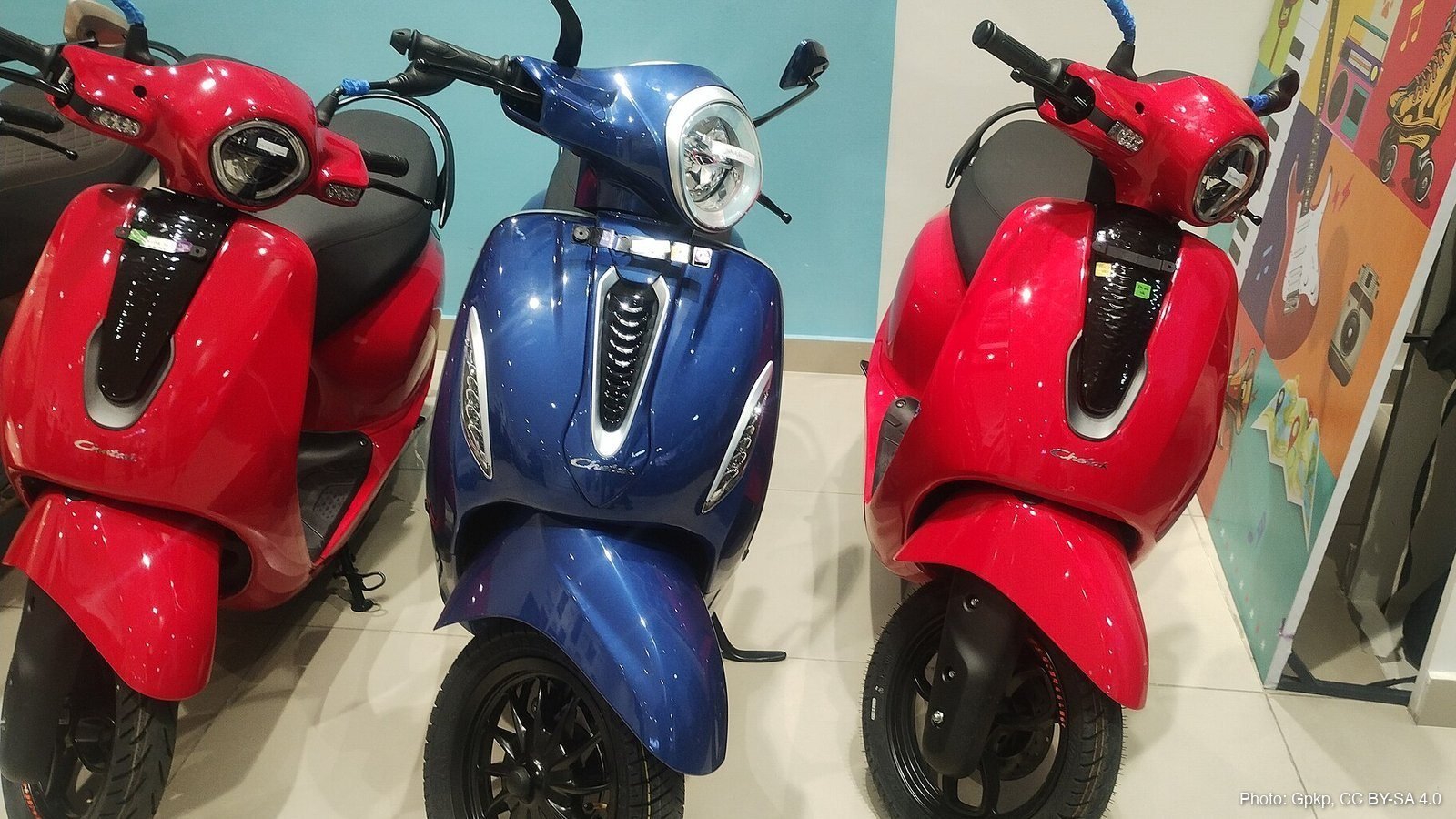
- Cover photo: Bajaj Chetak electric scooters at a Chetak store, RR Nagar, Bangalore (2026), by Gpkp, CC BY-SA 4.0

You may republish this story under CC BY 4.0: credit Pranav Sharma and link to this page.