Bail Kolhu maker BL Agro plans Rs 7,000 crore in Tanzania for oil, cows and crops
Version 1 of 1 saved 22 Oct 2026, 1:38 pm IST · Chain line 138
As it was first published
Bail Kolhu maker BL Agro plans Rs 7,000 crore in Tanzania for oil, cows and crops
The Bareilly oil company is going abroad for the first time, starting with a sunflower oil plant, and wants Rs 30,000 crore in business by FY29.
Picture an oil company from Bareilly in Uttar Pradesh crossing the ocean to grow sunflowers, raise cows and press cooking oil in East Africa. That is the plan BL Agro, the maker of Bail Kolhu mustard oil, shared on Thursday, 22 October 2026.
The company said it will put Rs 7,000 crore into Tanzania over the next 10 years, across cooking oil, dairy, farming, research and manufacturing. It is the first time the company is building a business outside India.
Who is BL Agro?
BL Agro started as a business that traded mustard seeds. Today it is a big FMCG company. FMCG means "fast moving consumer goods": things you buy again and again, like oil, atta, soap and biscuits. Its oils and foods sell under two brand names, Bail Kolhu and Nourish.
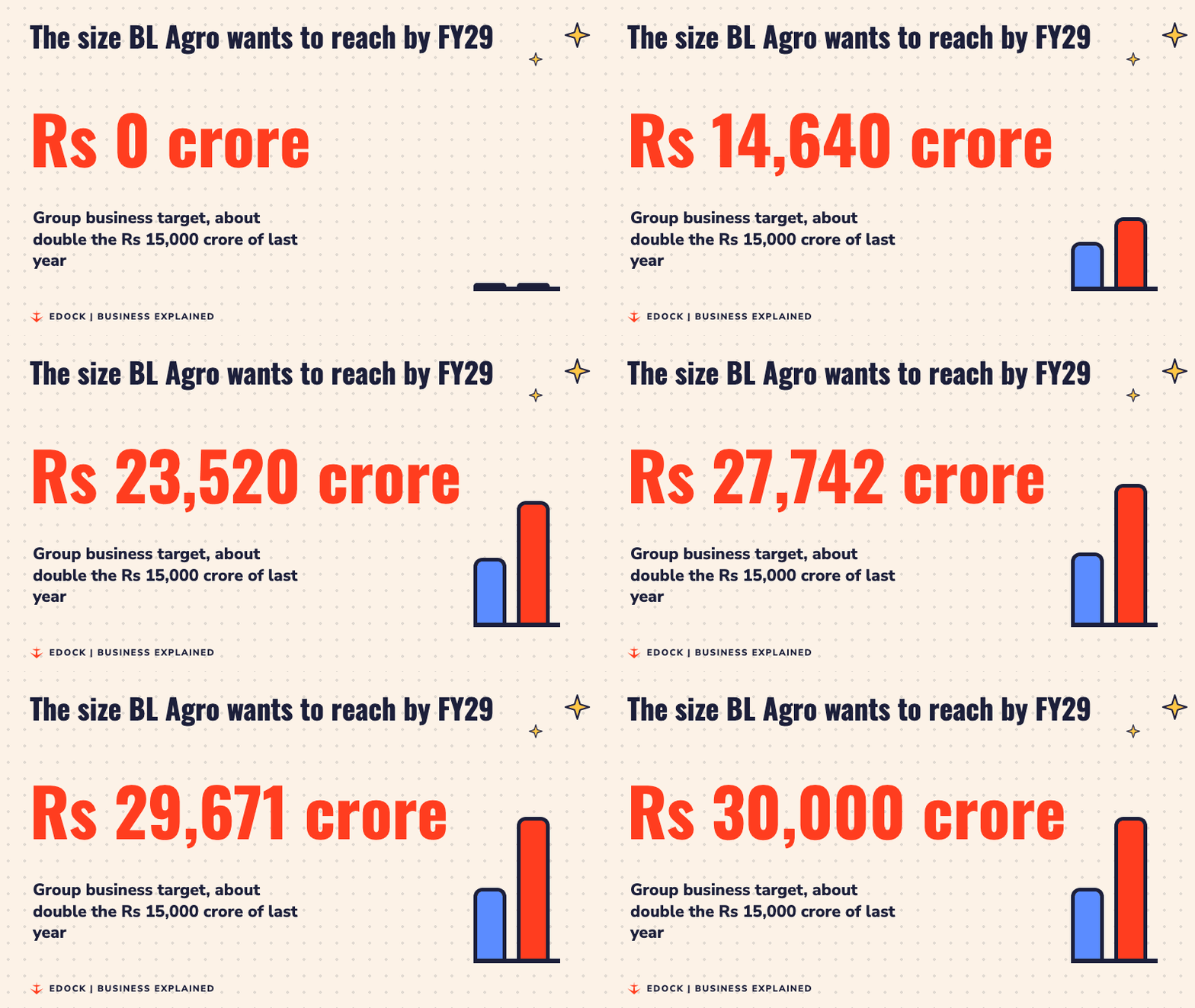
Its managing director, Ashish Khandelwal, told ETRetail that the group did business of about Rs 15,000 crore last year. The company now wants to cross Rs 30,000 crore by FY29.
What do "revenue" and "FY29" mean?
Think of a samosa stall. If it sells 1,000 samosas at Rs 20 each, the money that comes in is Rs 20,000. That money is called revenue. It is not profit, because the stall still has to pay for potatoes, oil and rent.
FY29 means "financial year 2029". In India, a company's money year does not run from January to December. It runs from April to the next March. So FY29 is the year that ends in March 2029.
Going from about Rs 15,000 crore to Rs 30,000 crore means doubling the business in a few years. ETRetail reports this target is ahead of the company's earlier 2030 goal. In its announcement, the company spoke of becoming a Rs 30,000 crore group by 2030.
Why would an Indian oil company go to Africa?
The sources give a few reasons.
- Land. Khandelwal said Tanzania was picked for its large land bank and good climate. BusinessLine reports that the Tanzanian government is offering 7 lakh hectares at low rates on a 99-year lease. A lease is like renting a flat, just for a very long time.
- Raw material. Tanzania is one of the world's leading sunflower producers, says The Economic Times. Sunflower seeds are what sunflower oil is made from, the way mustard seeds become mustard oil.
- Nearby markets. The company sees Tanzania as a possible base for reaching other East African markets. Khandelwal told PTI that seven more countries use Tanzanian ports, BusinessLine reports. A port is like a railway station for ships.
The plan was announced while Tanzania's President Samia Suluhu Hassan was visiting India. It also came after a five person team from BL Agro visited Tanzania to meet officials.
Step one: a giant sunflower oil plant
In the first phase, BL Agro will spend about Rs 1,500 crore on a vegetable oil complex that can process 1,100 tonnes a day. BusinessLine says it is slated to start by April 2027. ETRetail puts the cost at Rs 1,200 to 1,500 crore and says the company expects it within three years.
Here is a fun fact. Khandelwal said Tanzania needs about 1,100 tonnes of cooking oil a day. That is the same as the capacity BL Agro runs in India. The oil made in Tanzania will first be sold only in Tanzania, under the Nourish brand. It will not be shipped to India.
The plant will crush the seeds, pull out the oil and clean it, all in one place. ETRetail notes that one of these steps, called solvent extraction, is something BL Agro does not run in its Indian plants today.

Cows, crops and tractors
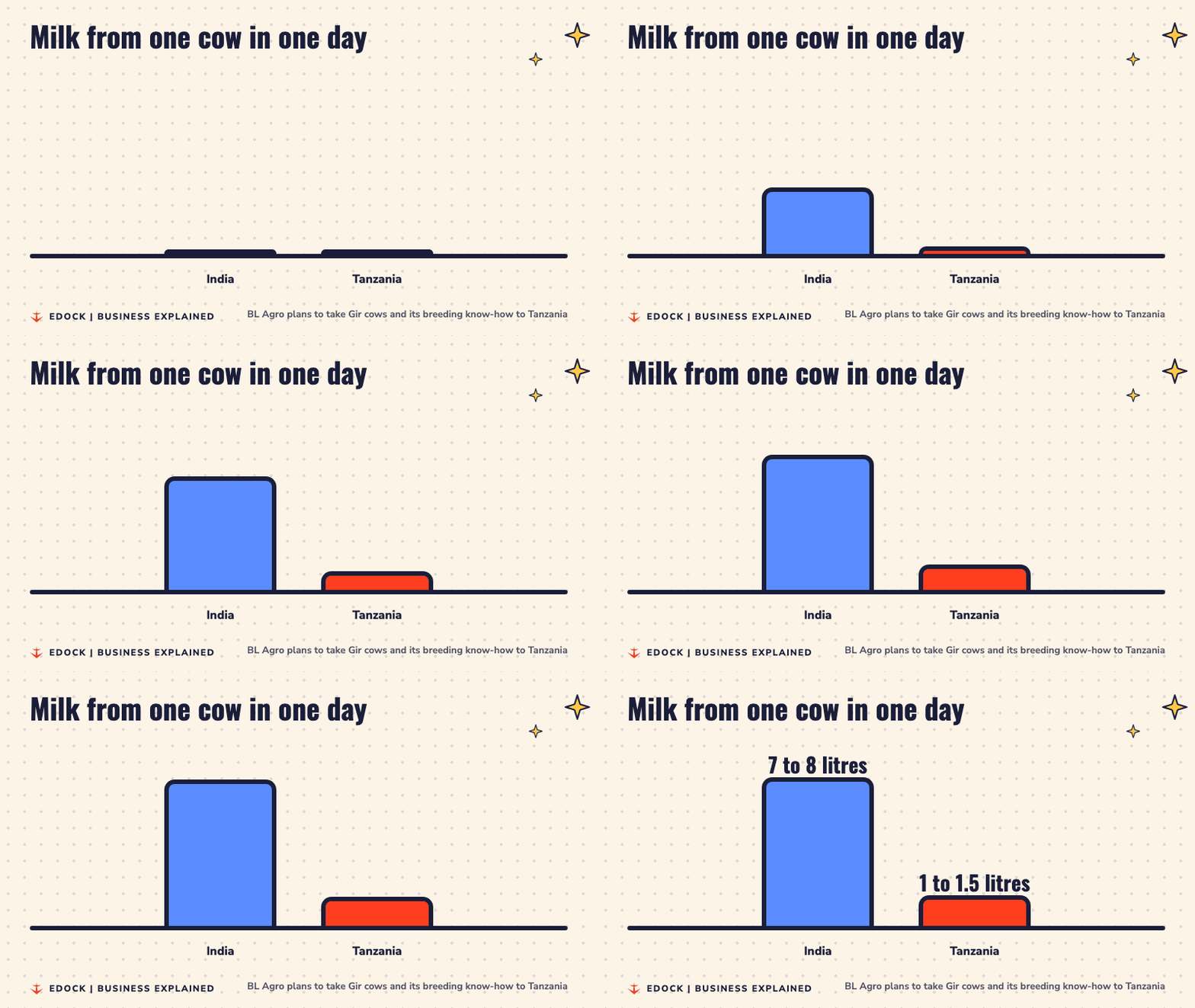
The plan is not only about oil. BL Agro wants to copy its Indian cow breeding work in Tanzania, with about Rs 2,000 crore set aside for it. The reason is simple. A cow in Tanzania gives just 1 to 1.5 litres of milk a day, against 7 to 8 litres in India, says BusinessLine. The company plans to use only Gir cows, an Indian breed.
Crops are a similar story. Tanzania's sunflower farms grow about 800 to 900 kg per hectare, against about 2.5 tonnes per hectare in India, Khandelwal told ETRetail. A hectare is a square of land 100 metres on each side, a little bigger than a football ground. So the same land in India grows about three times as much.
Another Rs 1,500 crore is set aside for farm related building, including making tractors locally, ETRetail reports. The company is also looking at working with local farmers through contract farming. That means a company agrees in advance to buy a farmer's crop, so the farmer knows there is a buyer before sowing.
Add it up: about Rs 1,500 crore for oil, Rs 2,000 crore for cows and Rs 1,500 crore for farm building comes to about Rs 5,000 crore. The reports do not break down the rest of the Rs 7,000 crore.
Where will the money come from?
At first, BL Agro will pay from its own savings, which companies call internal accruals. It is also looking at bank loans. Khandelwal said listing on the stock market is only an early idea, and ETRetail reports it would not be considered before FY29.
Big plans also take time to pay off. ETRetail reports that BL Agro expects real revenue from Tanzania to start around 2030. Khandelwal said the whole investment could break even within seven years. Break even means the money earned finally matches the money spent, like a stall owner who has earned back the cost of the cart.
Why this matters to you
Many big money stories are about money coming into India. This one goes the other way: an Indian brand that grew from mustard trading is taking its money and know-how abroad. ETRetail reports that the projects could create around one lakh employment opportunities in Tanzania.
Tanzania's High Commissioner to India, Anisa K Mbega, welcomed the plan. She said it would "empower our farmers through local value addition".
The plan also shows how much of a food business sits behind one bottle of oil: seeds, farms, factories, ports and even cow breeds.
Here is a short look at how BL Agro makes its oils today, from the company's own channel.
Sources
- BL Agro to invest Rs 7,000 cr in Tanzania over 10 years, BusinessLine, 22 October 2026
- BL Agro plans Rs 7,000 cr Tanzania investment, targets Rs 30,000 cr revenue by FY29, ETRetail, 22 October 2026
- BL Agro heads to Africa with Rs 7,000 crore Tanzania plan, The Economic Times, 22 October 2026
- BL Agro announces Rs 7,000 crore investment in Tanzania, Dairynews.today, 22 October 2026
- A glimpse of what goes behind BL Agro's brands Bail Kolhu and Nourish, BL Agro on YouTube
- Cover photo: Sunflower field, Moldova, by Guttorm Flatabø, CC BY 2.0