Axis Bank's Freecharge gets an early RBI nod to work as a payment aggregator
More than three years after its application was sent back, Freecharge has a first yes from the RBI. Here is what a payment aggregator does and why the licence matters.

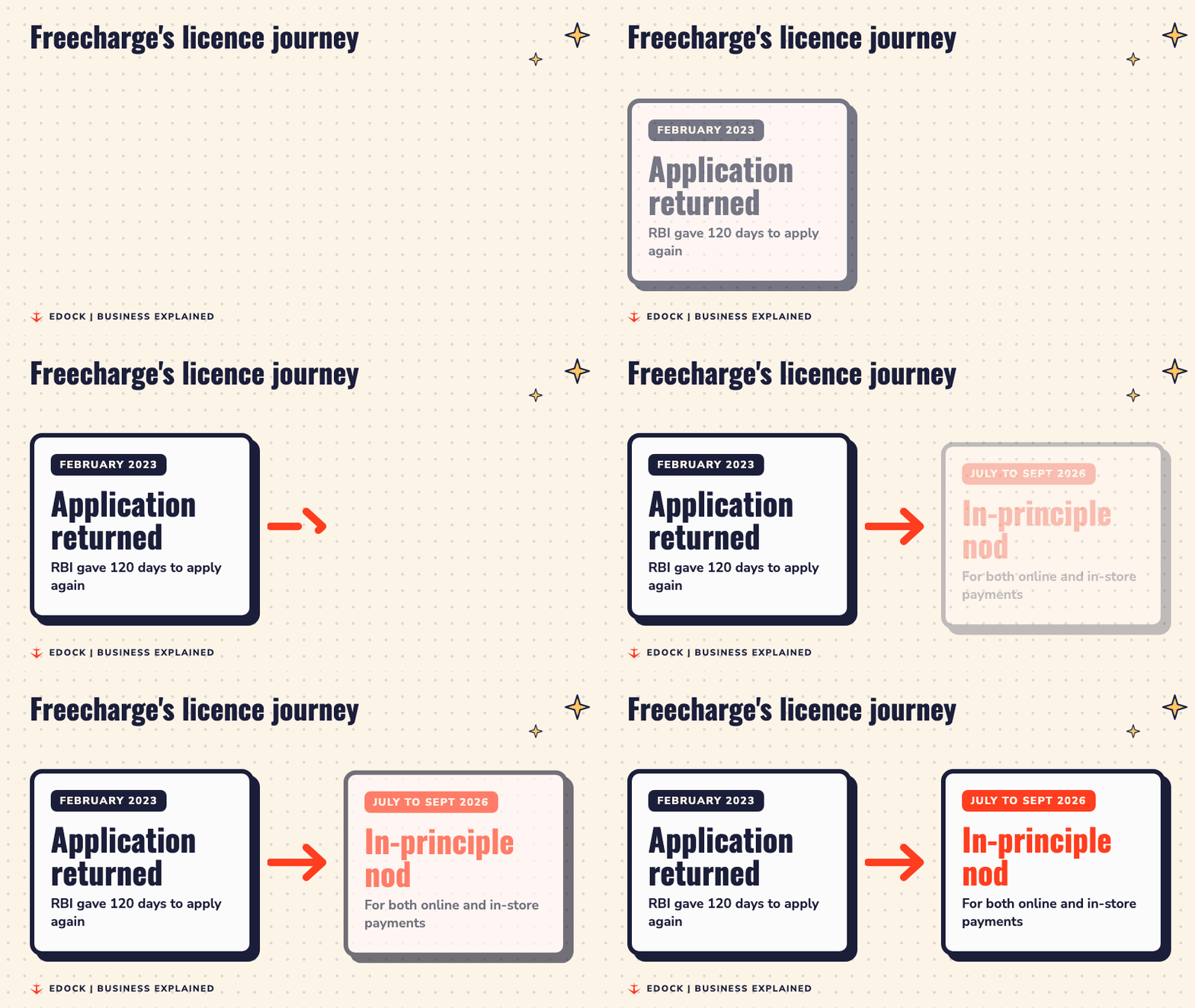
Picture this. In February 2023, the Reserve Bank of India sent Freecharge's licence application back to it. On Saturday, 17 October 2026, its owner Axis Bank said the same company has now got a "yes" from the RBI. The Economic Times reported that Freecharge Payment Technologies got in-principle approval to work as a payment aggregator, for both online and physical (in-store) payments. The approval came during the July to September quarter, and Axis Bank shared the news in an investor presentation on Saturday.
That sounds like a lot of big words. So here is the story, one small piece at a time.
First, what is a payment aggregator?
Think of a samosa stall near a college. Fifty students pay every evening. Some pay by UPI, some by card, some through a shopping app. The stall owner does not want to set up a deal with every bank and every card company. That would be a headache.
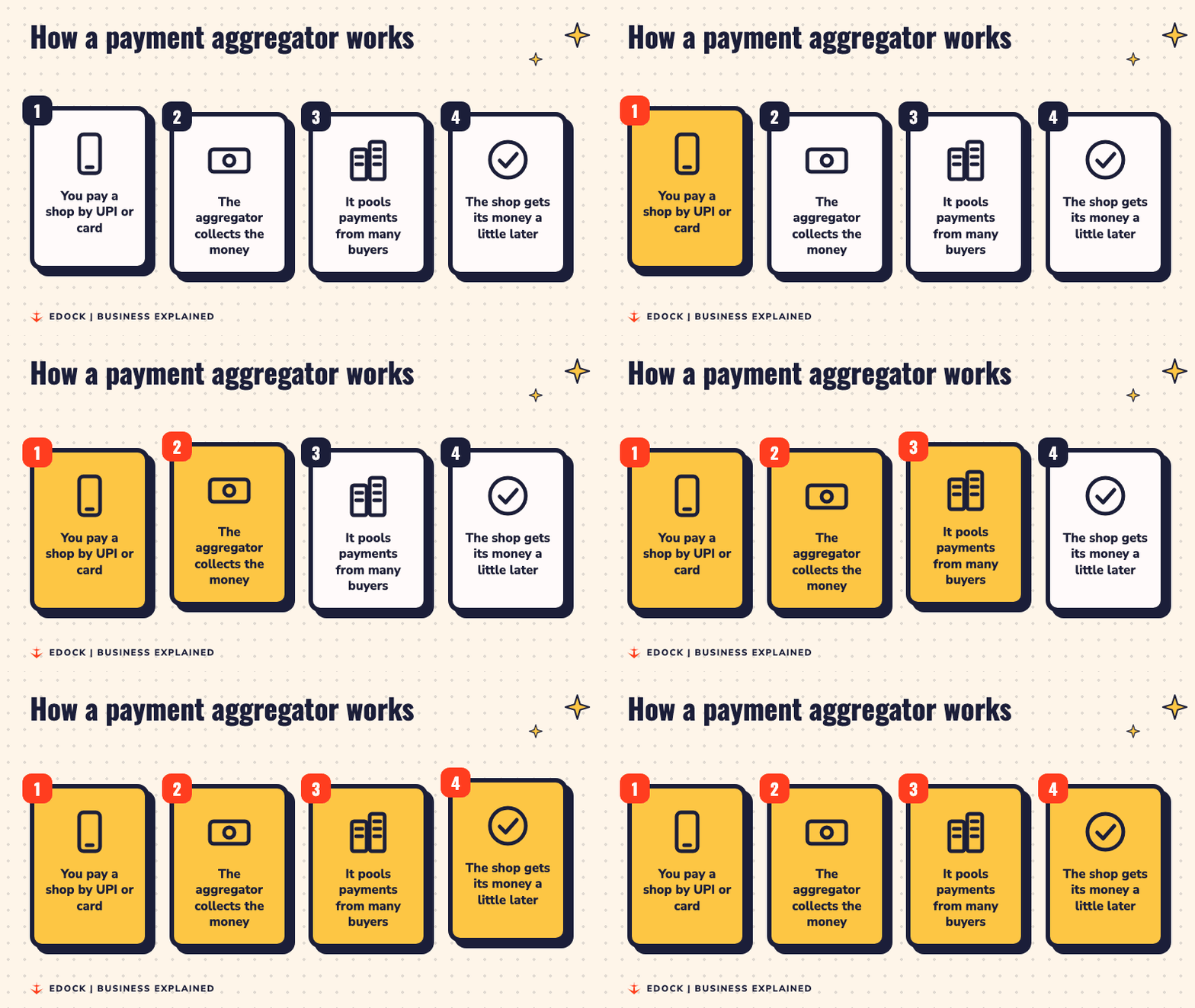
A payment aggregator fixes this. It is a middle company that takes money from buyers on behalf of the shop. As Moneycontrol explains, a payment aggregator lets companies offer payment services to sellers by accepting payment instruments from customers. It pools the money it gets from buyers and then passes it on to the seller after a set period of time.
So the aggregator is like a class monitor collecting money for a school trip. Everyone pays the monitor, and the monitor hands one neat bundle to the teacher.
There are two kinds. An online aggregator handles payments on apps and shopping sites. A physical one handles payments inside real shops, through things like QR codes, card machines and small speaker boxes that announce each payment. For example, when MobiKwik got its in-principle nod for the physical kind in May 2026, Moneycontrol noted that it serves sellers through UPI QR codes, Soundbox devices and card machines. Freecharge has now been cleared for both kinds.
Why does a licence matter so much?
A licence is official permission from the RBI, India's central bank, which is the referee of money in the country. The RBI released its rules for payment aggregators in March 2020. Under those rules, a company that wants to sign up shops and help them accept digital payments needs this licence.
There is also a money test. To get the in-principle nod, a company needed a net worth of Rs 15 crore by March 2021 and Rs 25 crore by March 2023, and must keep Rs 25 crore at all times after that, says the same Moneycontrol report. Net worth is simply what a company owns minus what it owes. It is like checking that a stall owner has real savings, not just borrowed money, before trusting them with everyone's cash.
The bigger reason is trust. Licensed aggregators are watched directly by the RBI. For a shop, picking a licensed company is like picking a cricket team that plays in the official league instead of a random street match.
What does "in-principle" mean?
In-principle approval is a first "yes", not the final one. It is like getting a provisional admission letter from a college. You are in, but you still have to submit your documents.
Once a company gets this nod, it comes under the RBI's watch. If problems show up, the RBI can still refuse the final licence, an industry person told Moneycontrol in 2023. Sources in that report also said every player has to submit an audit report to get the full licence.
The comeback part of the story
Here is why this news is a bit of a comeback. In February 2023, the RBI gave in-principle approval to around 32 companies. About 28 were still under review. And four applications were returned, Moneycontrol reported. Freecharge Payment Technologies was one of those four, along with Paytm Payments Services, PayU and Tapits Technologies.
Returned does not mean rejected forever. The RBI gave those companies 120 days to apply again. Until then, they could keep running but could not sign up new sellers. Now, more than three years later, Freecharge has the first "yes".
Wait, how did a bank end up owning Freecharge?
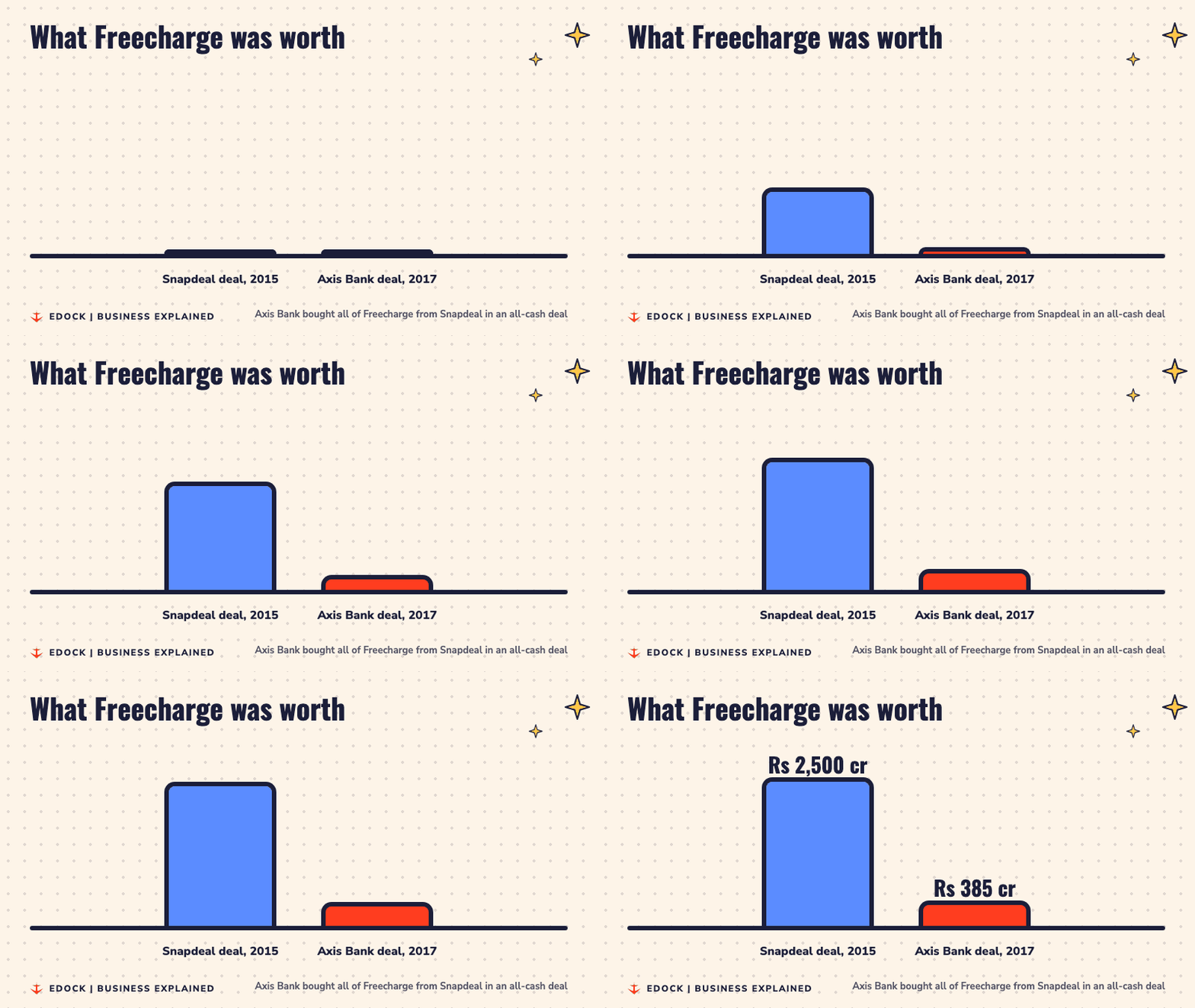
Freecharge is a payments app and mobile wallet. In 2015, the shopping site Snapdeal bought it in a deal that valued Freecharge at Rs 2,500 crore, or about $400 million, according to The Times of India.
Things did not go to plan. Snapdeal struggled to raise money for Freecharge, and its value fell fast. On 27 July 2017, Axis Bank bought Freecharge for about $60 million, or three hundred and eighty five crore rupees. The Times of India report said it was an all-cash deal for the full company, and around 250 Freecharge staff moved over too.
That is like buying a cycle for Rs 2,500 and selling it two years later for well under a fifth of that.
Why Axis Bank cares about this
Axis Bank is already big in digital payments. In the July to September quarter, the total value of its UPI payments grew 34% compared with a year ago, The Economic Times reported. It held around 38% of the market by number of transactions among apps and banks that send UPI payments for customers.
It also does a lot on the shop side. Axis held about 25.7% of the market in terminal acquiring, based on RBI data as of August 2026, the same report said. Terminal acquiring means providing the card machines and payment setups that shops use to take money. Its Axis Mobile app had about 16 million monthly users, and around 12 million of them were not even Axis Bank customers.
So a licensed aggregator in the family could help Axis serve even more shops, both online and in real stores. That is the bank's bet, though how it plays out is still to be seen.
And the bank's results that same day
The Freecharge news came out alongside Axis Bank's quarterly results. Net profit, which is what is left after paying all costs, jumped 38% to Rs 7,003 crore in the July to September quarter, up from Rs 5,090 crore a year earlier, Fortune India reported. Still, the profit came in slightly below what market watchers had expected, Moneycontrol noted.
Why should a student care?
Every time you scan a QR code for chai, pay for a movie ticket on an app or split a bill with friends, a payment company is quietly moving that money. The RBI's licence system decides which of these companies get to do that job. More licensed players can mean more choice for shops, and more careers in fintech, which is short for financial technology.
Want to see the idea explained in a few minutes? This video walks through it.
Sources
- Axis Bank's Freecharge gets in-principle RBI nod to operate as payment aggregator, The Economic Times
- Why is RBI's Payment Aggregator License significant for fintech companies?, Moneycontrol
- MobiKwik gets RBI nod for offline payment aggregator licence, Moneycontrol
- Axis Bank Q2 results: net profit rises 38%, misses estimates, Moneycontrol
- Axis Bank Q2 profit jumps 38% to Rs 7,003 crore, Fortune India
- Axis Bank's acquisition of FreeCharge is proof that Indian banking is changing, Scroll
- FreeCharge sold to Axis Bank in all-cash deal, The Times of India
- Cover photos: Paying with a Credit Card, by Hloom Templates, CC BY 2.0; Pots for sale, by McKay Savage, CC BY 2.0; Indian pigments, by Dan Brady, CC BY 2.0


You may republish this story under CC BY 4.0: credit Arshdeep Singh and link to this page.